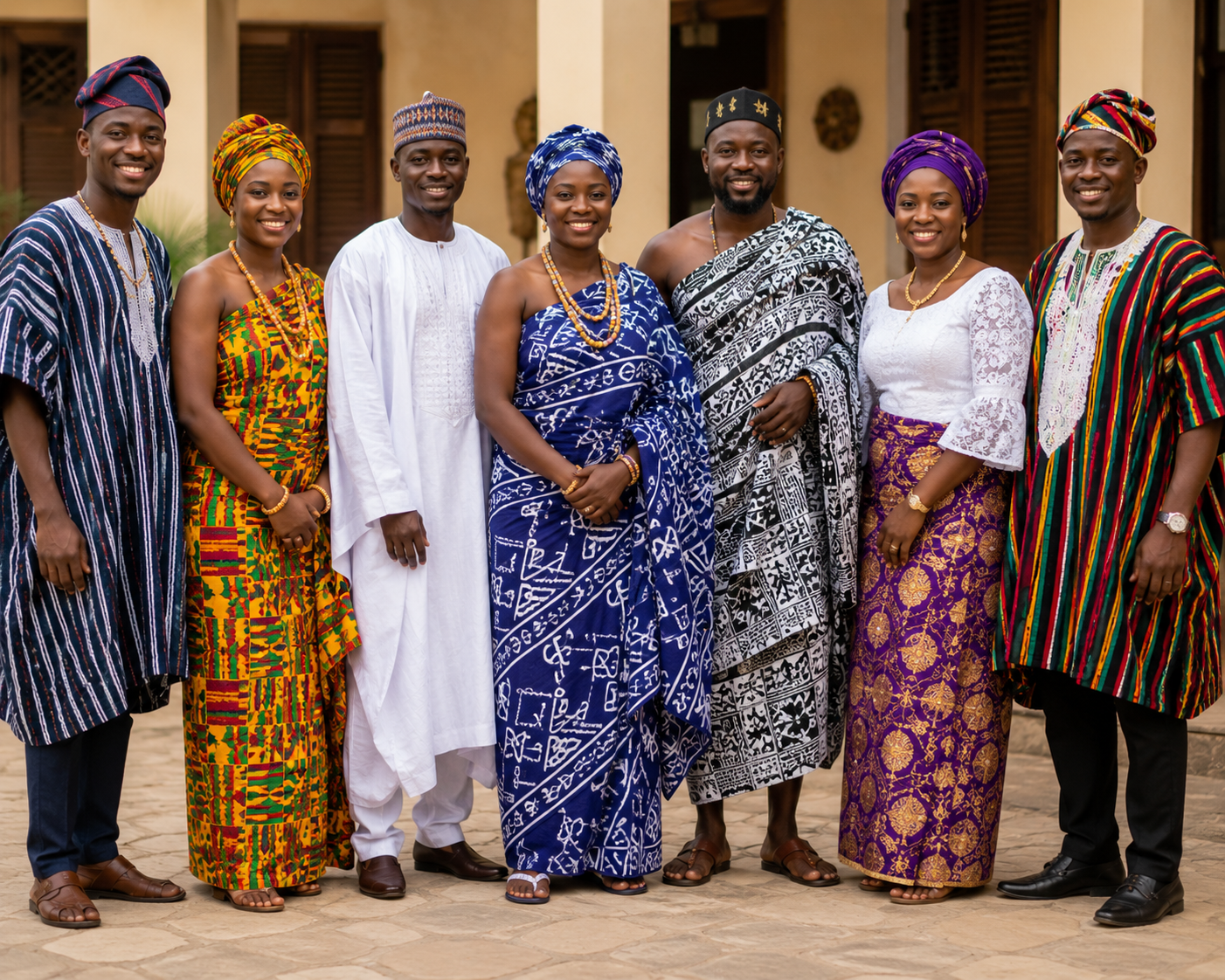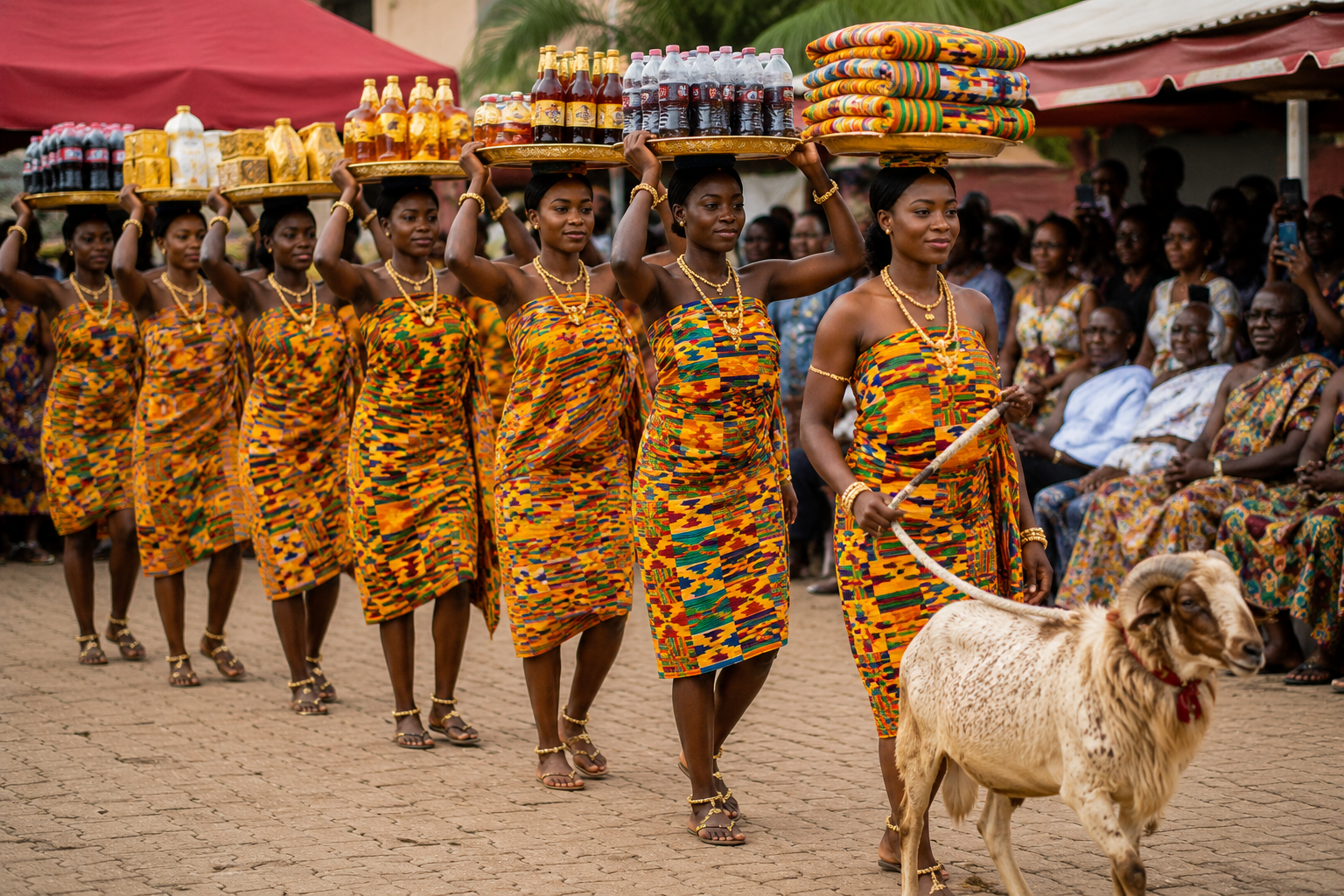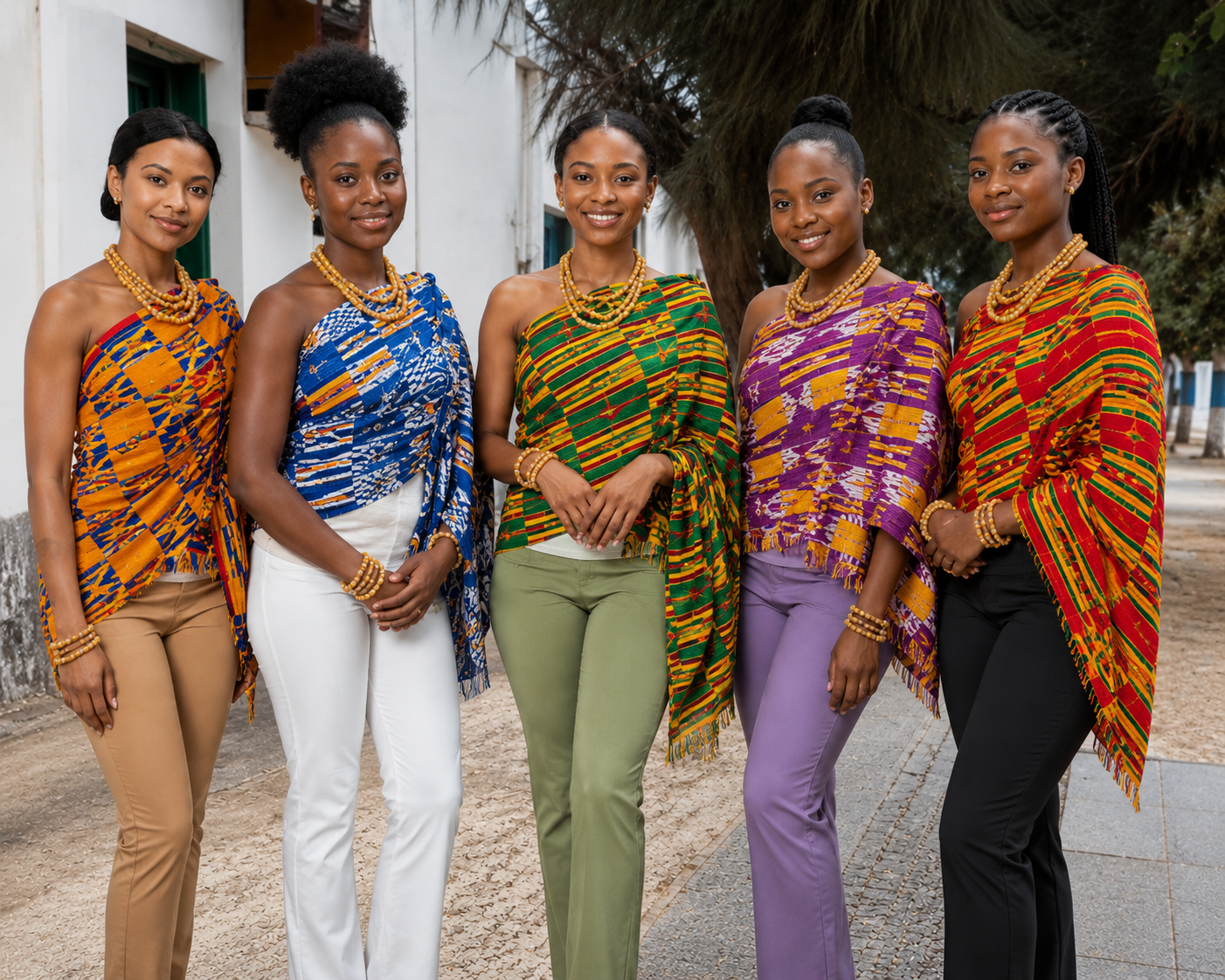
Badudwan: The Akan Ceremony That Honors Women for Prolific Childbearing
A description of a major Akan cultural ceremony to honor women for prolific childbearing
105 results for “society”

A description of a major Akan cultural ceremony to honor women for prolific childbearing

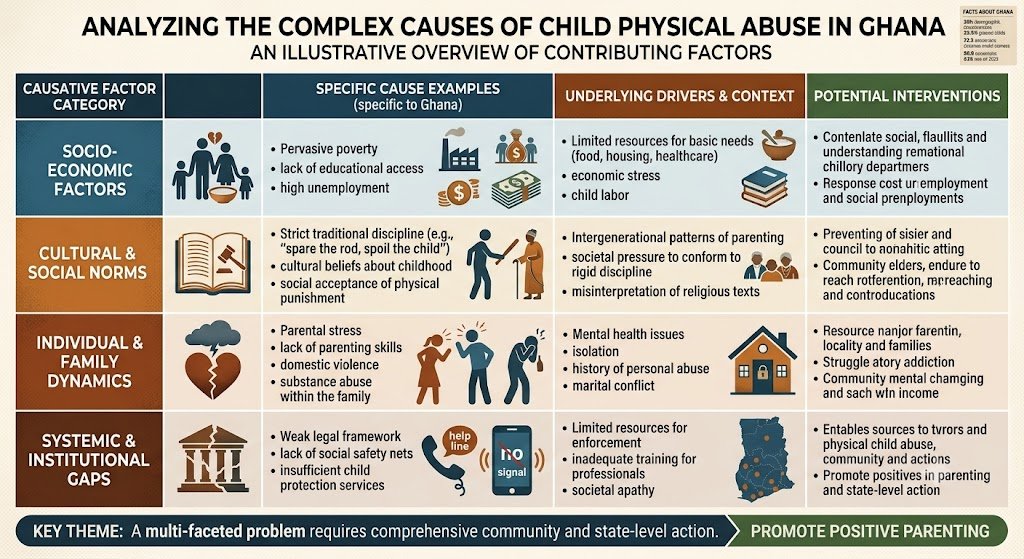
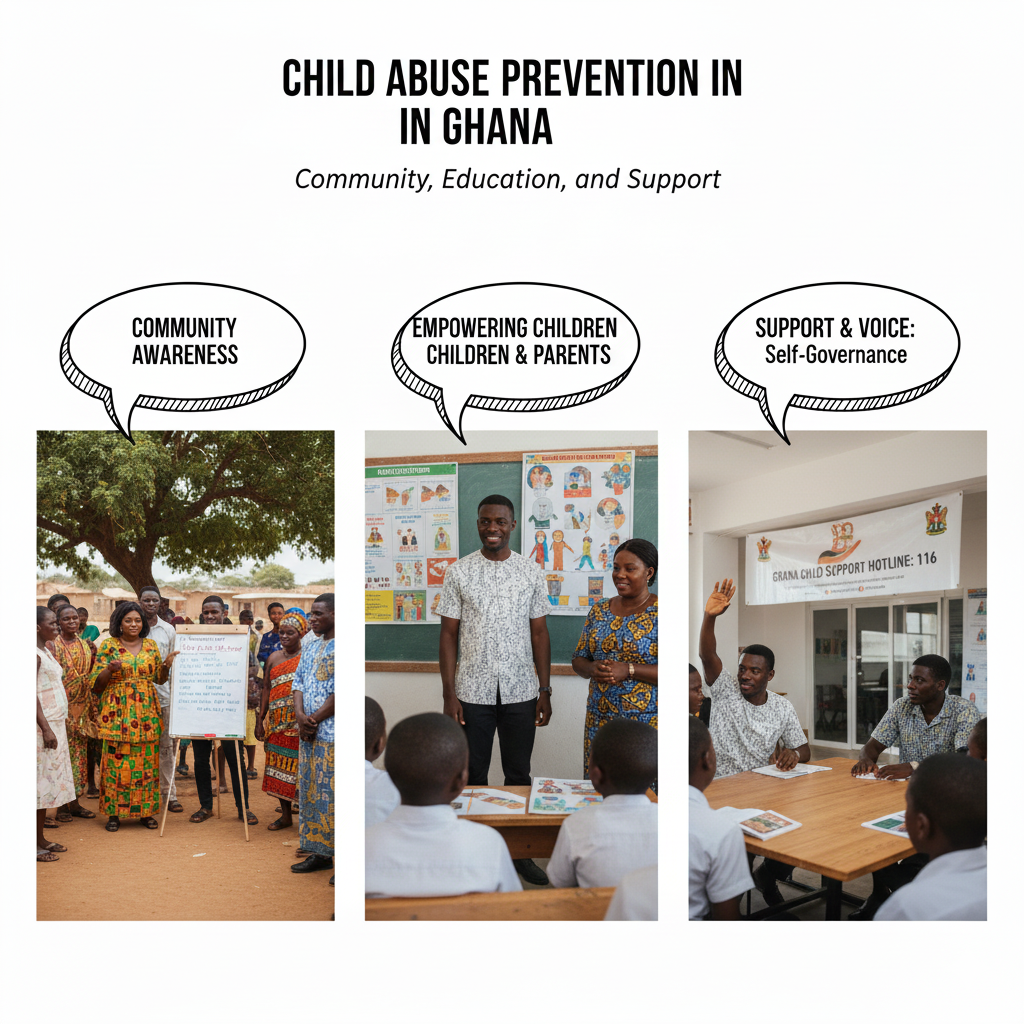
A Disturbing Reality One only needs to read local newspapers or browse Ghana-based online news platforms to appreciate the disturbing frequency of child abuse cases occurring in homes across the coun

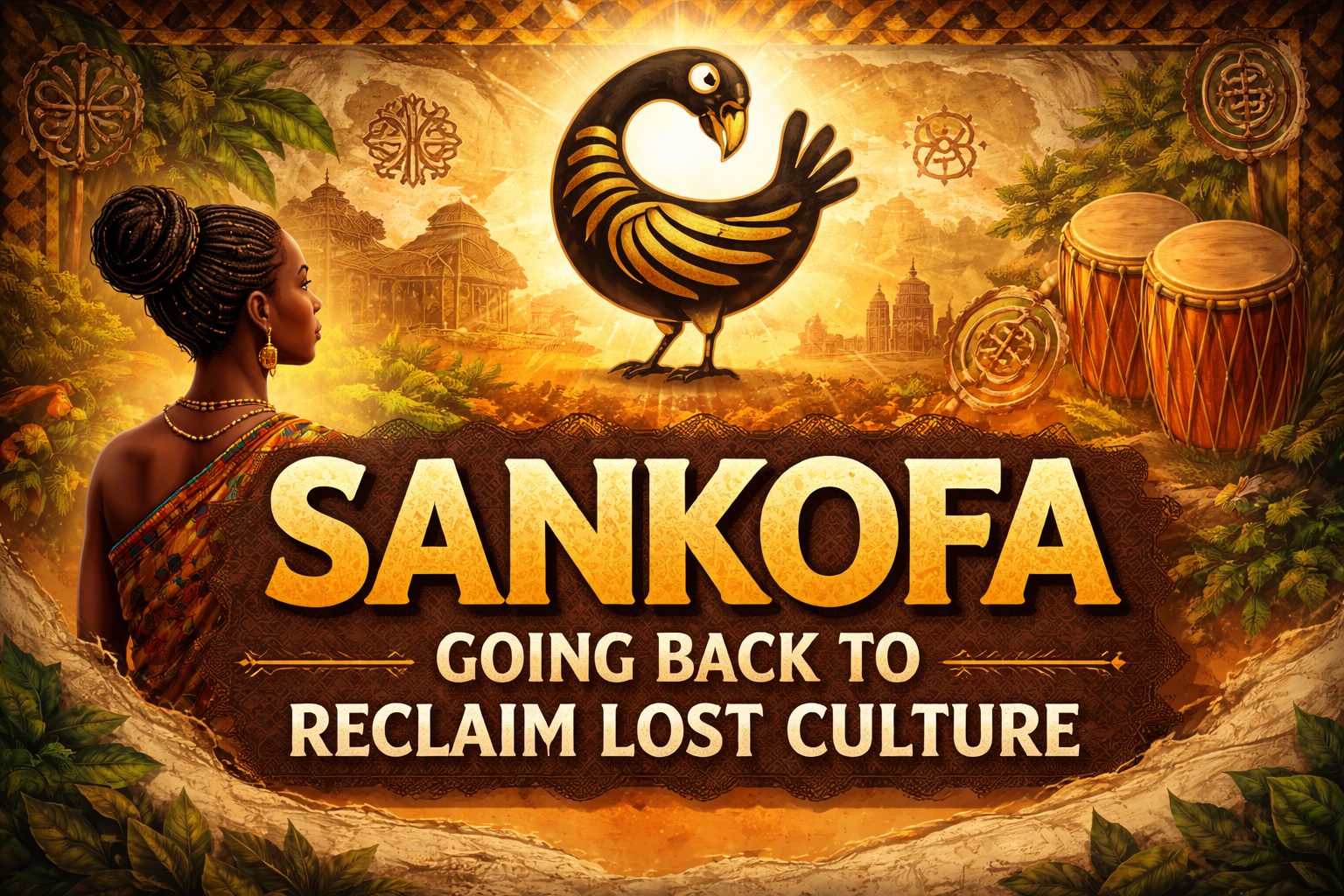
Ghana is a country with a rich and vibrant cultural heritage. Long before the arrival of Europeans, the people who inhabited the territory now known as Ghana had developed sophisticated political syst

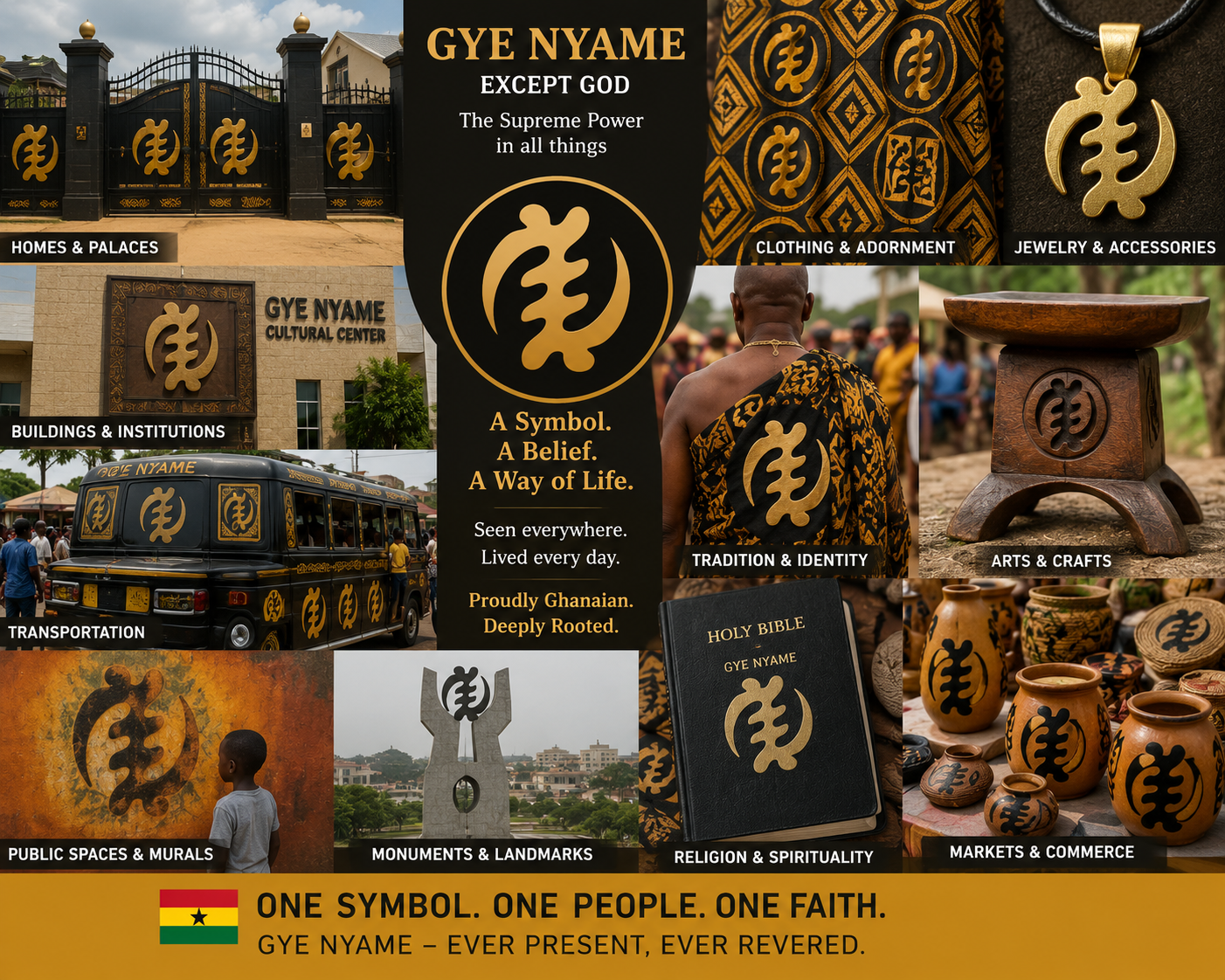
Among the Akan people of Ghana, belief in God occupies a central place in everyday life. The Akans have long regarded God, known as Nyame, as the Creator of the universe, the source of all life, and t

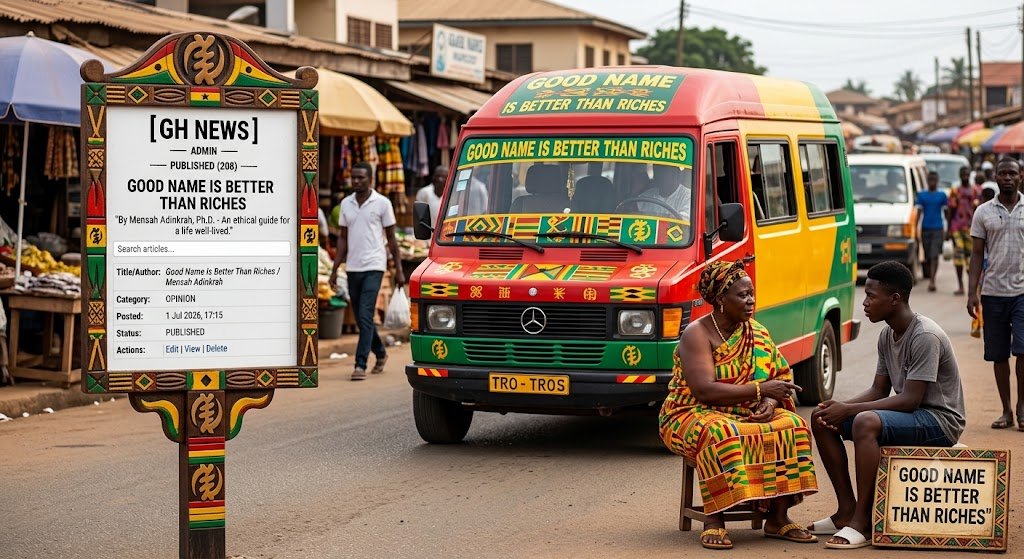
Introduction One of the most profound pieces of wisdom in Ghanaian culture is the saying: "Good name is better than riches." The Akan version, "Din Pa Yɛ Sen Ahonya," conveys the same timeless messag

A Popular Ghanaian Vehicle Inscription Ghanaian commercial vehicles are often adorned with colorful inscriptions that convey wisdom, faith, humor, and life lessons. One common inscription seen on veh

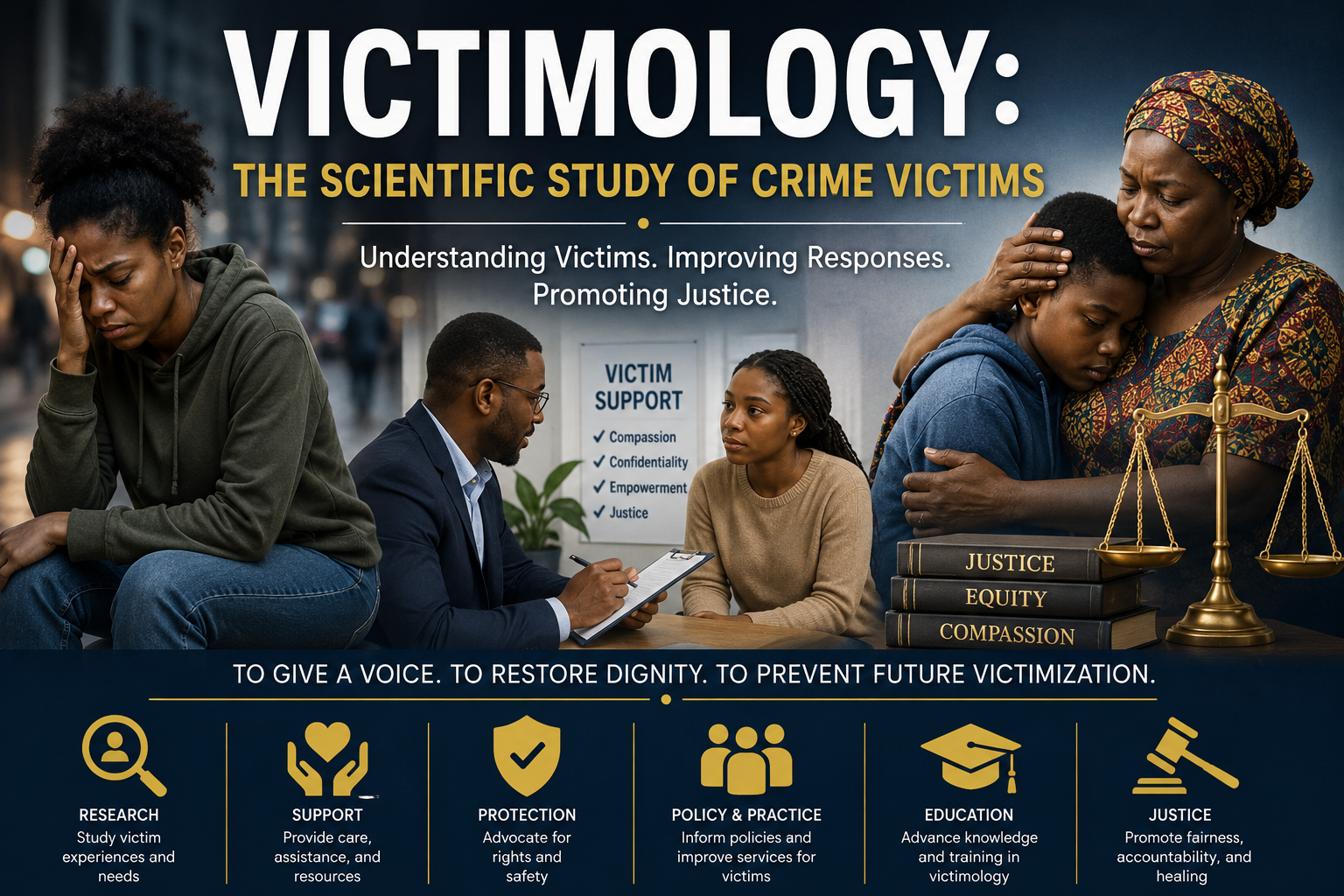
The Neglect of Crime Victims For many decades, the study of crime was largely concerned with offenders. Criminologists focused their attention on criminals, criminal behavior, and the causes of crime

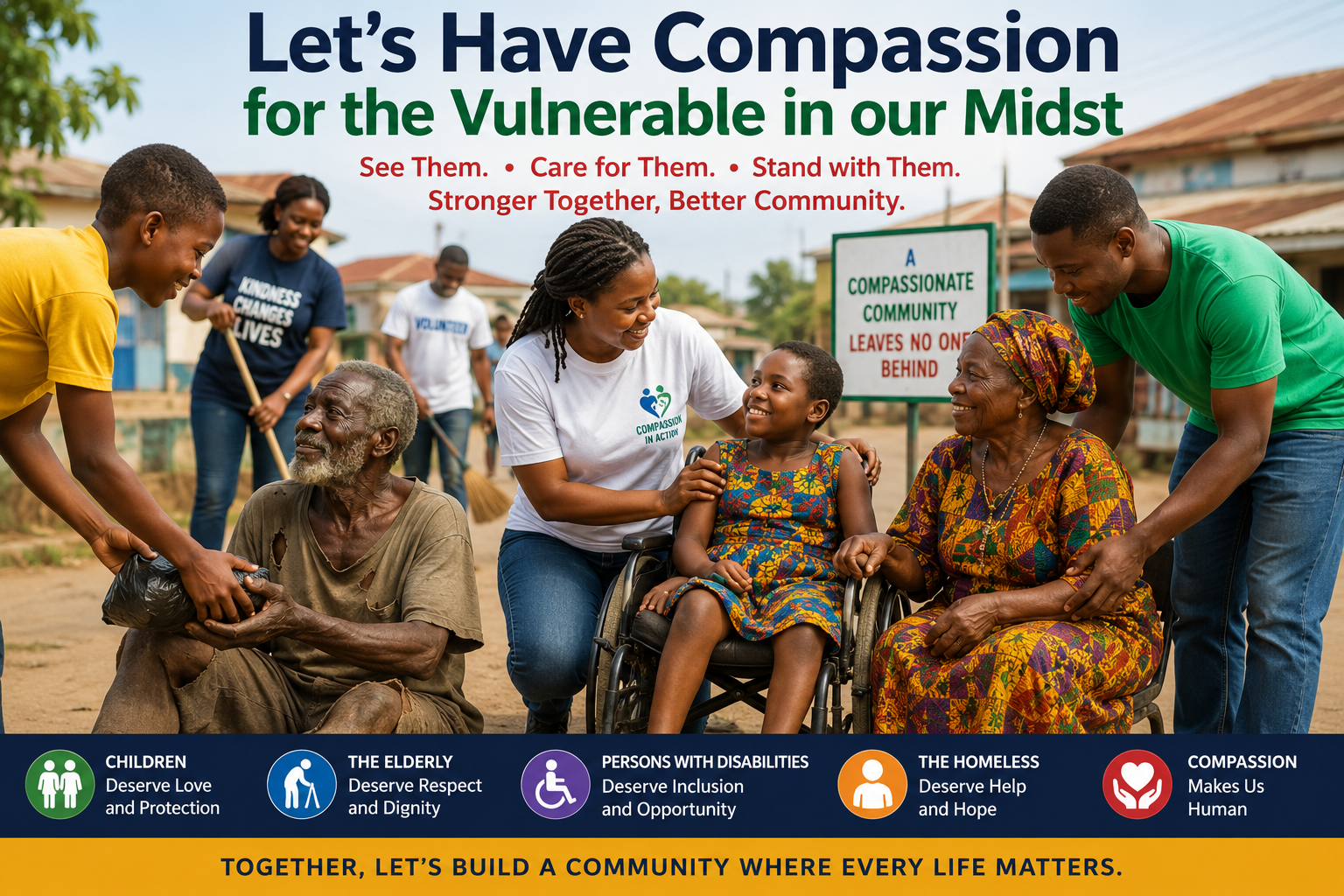
Introduction A society is often judged not by how it treats its rich, powerful, and influential citizens, but by how it treats its weakest and most vulnerable members. Children, the elderly, and pers

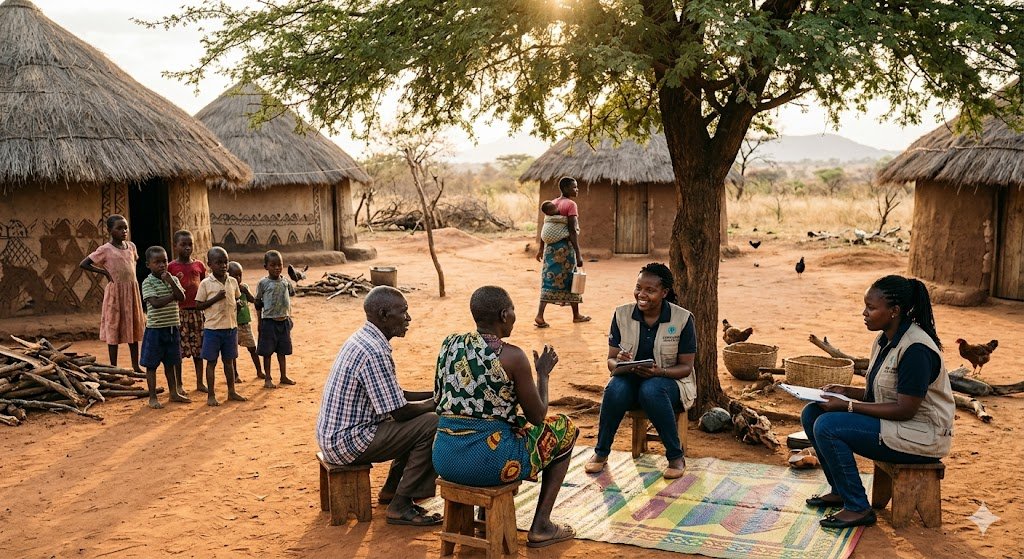
Introduction In today's world, research has become an important part of national development. Governments, universities, hospitals, non-governmental organizations (NGOs), and international agencies r

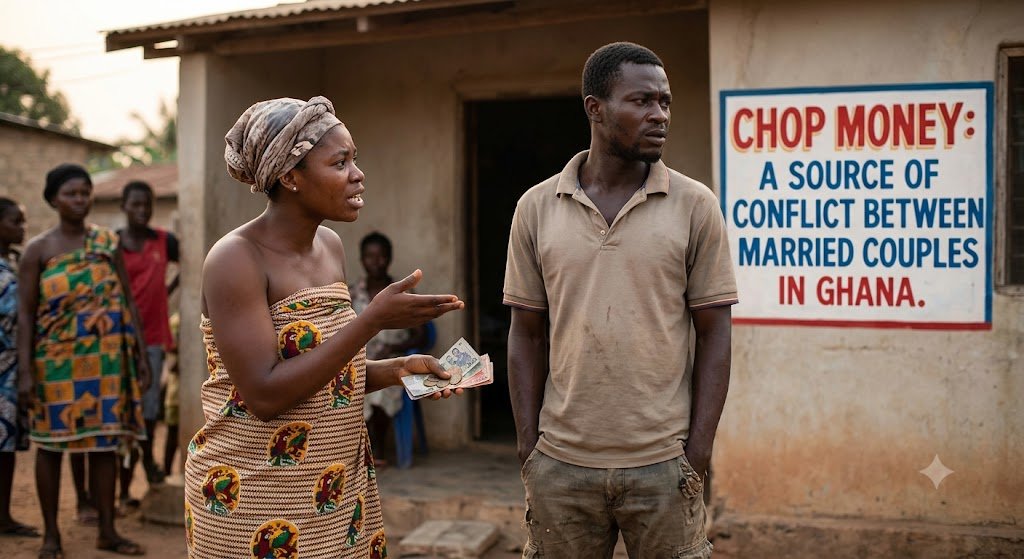
The Institution of Chop Money Chop money is oftentimes a source of conflict between Ghanaian husbands and their wives. Some of such conflicts result in verbal assaults, verbal disagreements, physical

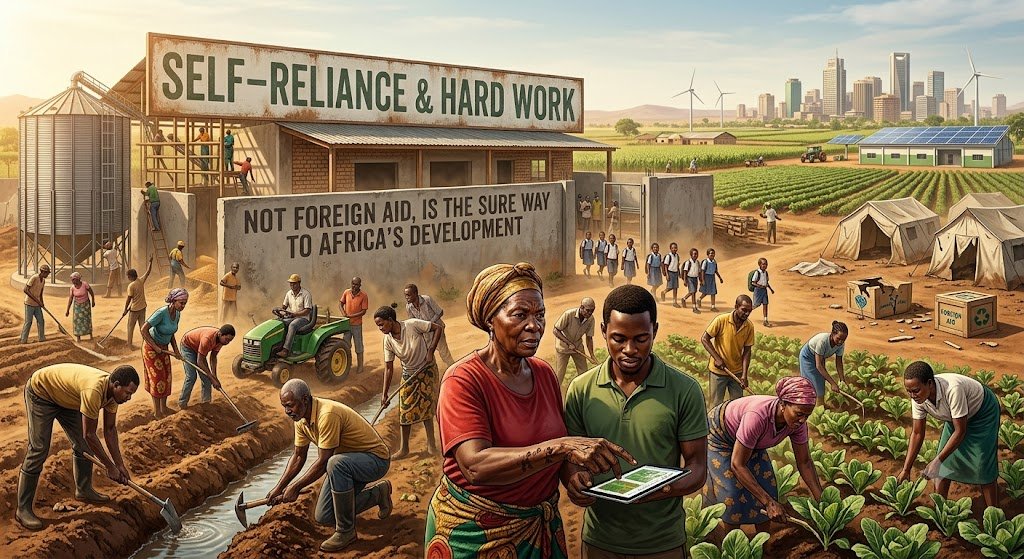
Introduction For decades, African leaders have boarded planes to Europe, North America, Asia, and the Middle East in search of foreign aid. Every year, countless international conferences, donor meet

A Generation Dissatisfied with the Status Quo Many young people around the world are deeply dissatisfied with the state of the world today. They are troubled by persistent injustices, armed conflicts

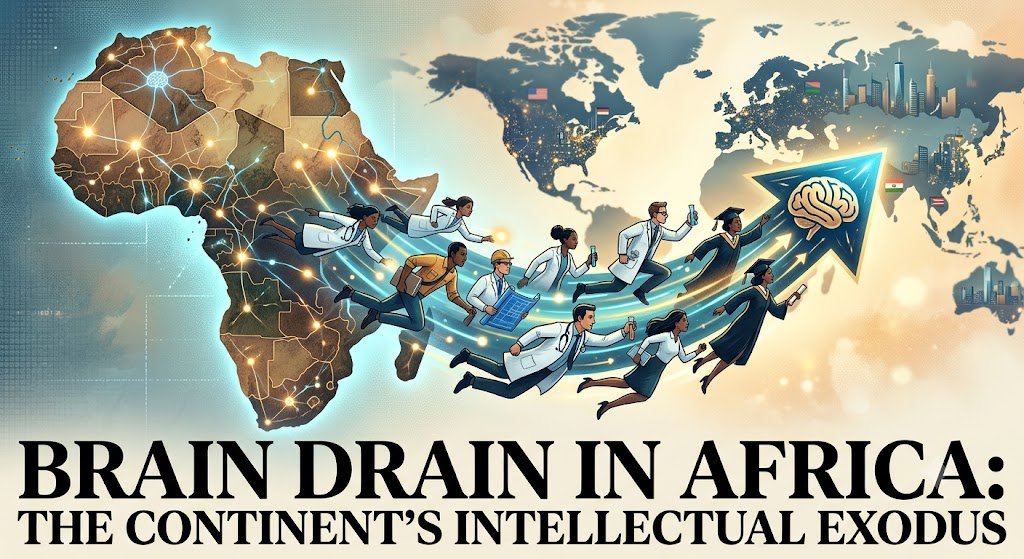
Introduction One of the greatest challenges confronting African countries today is the phenomenon known as "brain drain." Every year, thousands of highly educated and skilled Africans leave their hom

Ghana is widely celebrated as one of Africa's most stable democracies. Since the return to constitutional rule in 1992, the country has conducted regular elections, witnessed peaceful transfers of pow

Ghana is often celebrated as one of Africa’s most peaceful and culturally vibrant nations. From the bustling markets of Accra to the fishing communities along the coast, from the savannah settlements

In traditional Ghanaian society, old age is not merely a biological stage of life; it is a position of honor, wisdom, and social responsibility. Elderly men and women occupy a special place within fam
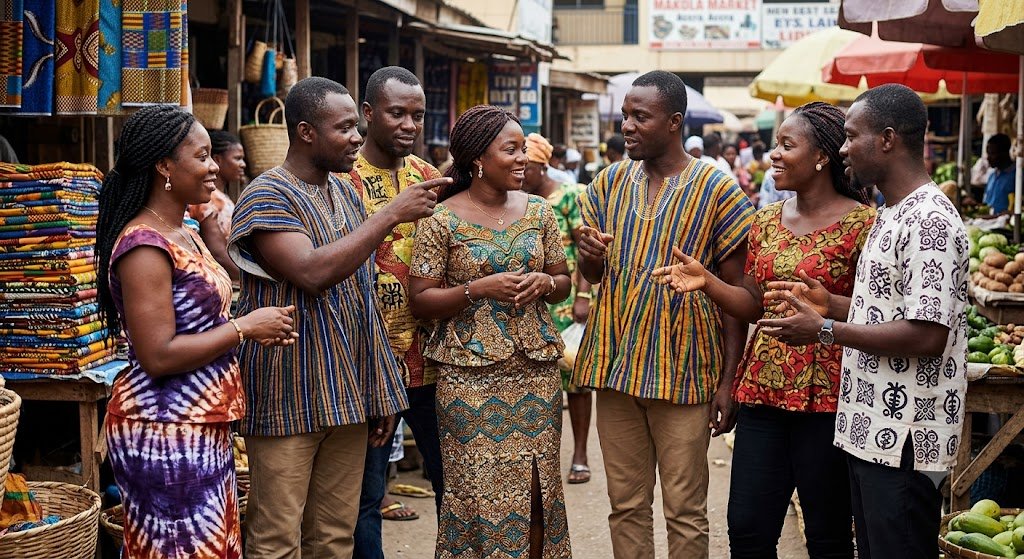
multilingualism, language

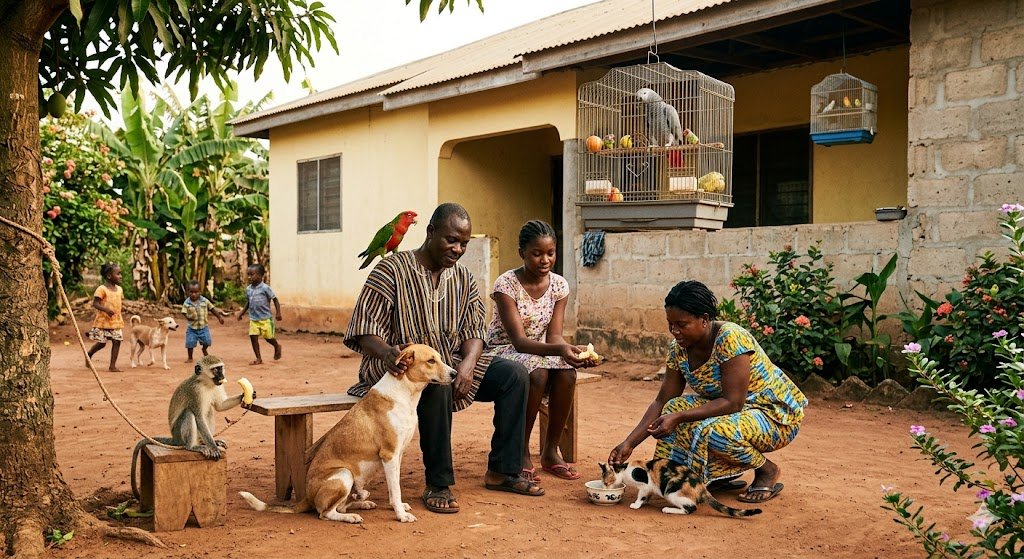
pet ownership

Conspicuous Consumption and the Funeral Arena The term “conspicuous consumption” was coined by the American economist and sociologist Thorstein Veblen in his classic work The Theory of the Leisure Cl

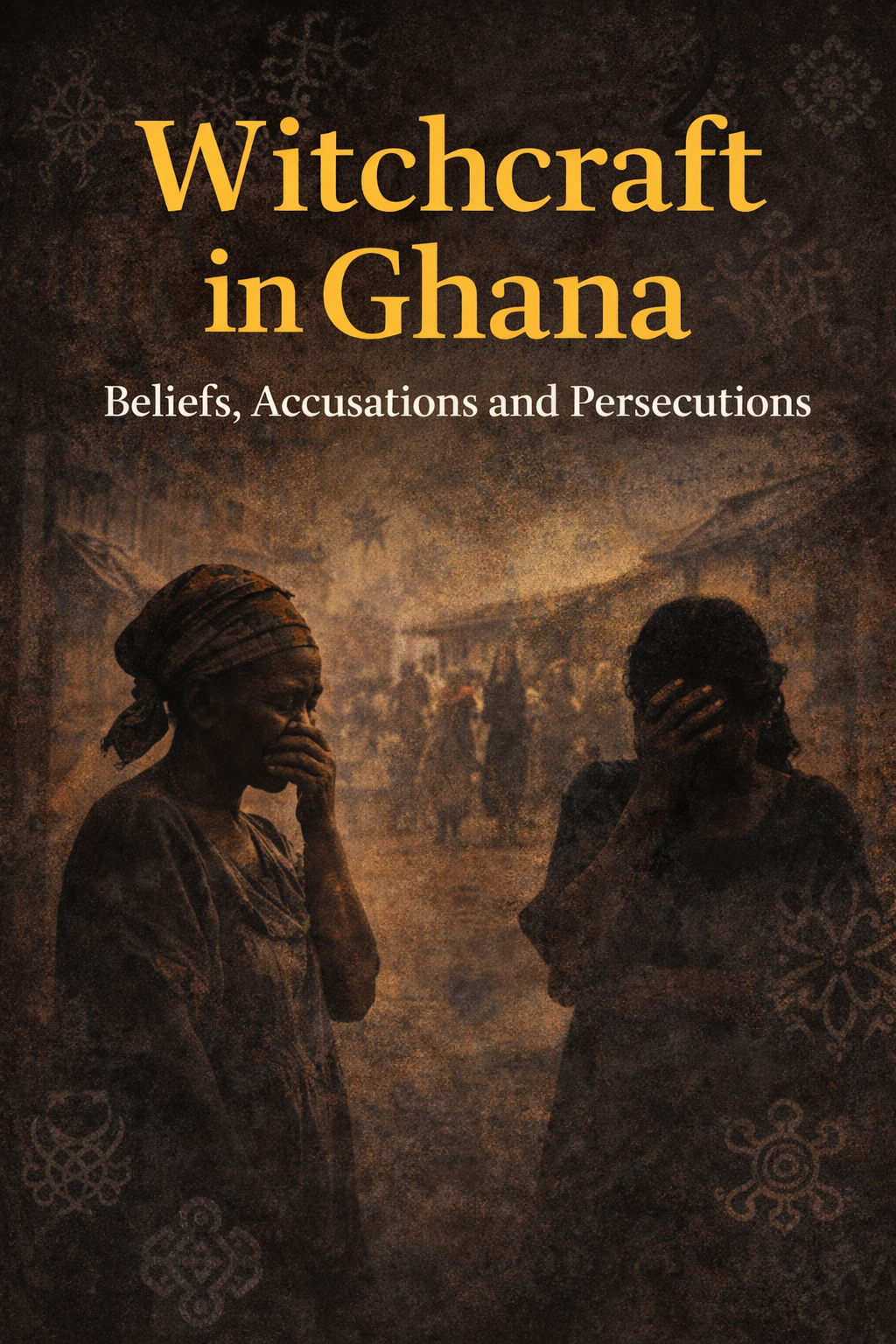
Understanding One of Ghana’s Most Enduring Social Questions Research on witchcraft in Ghana spans nearly a century and reflects the country’s continuing struggle to understand belief, accusation, fea

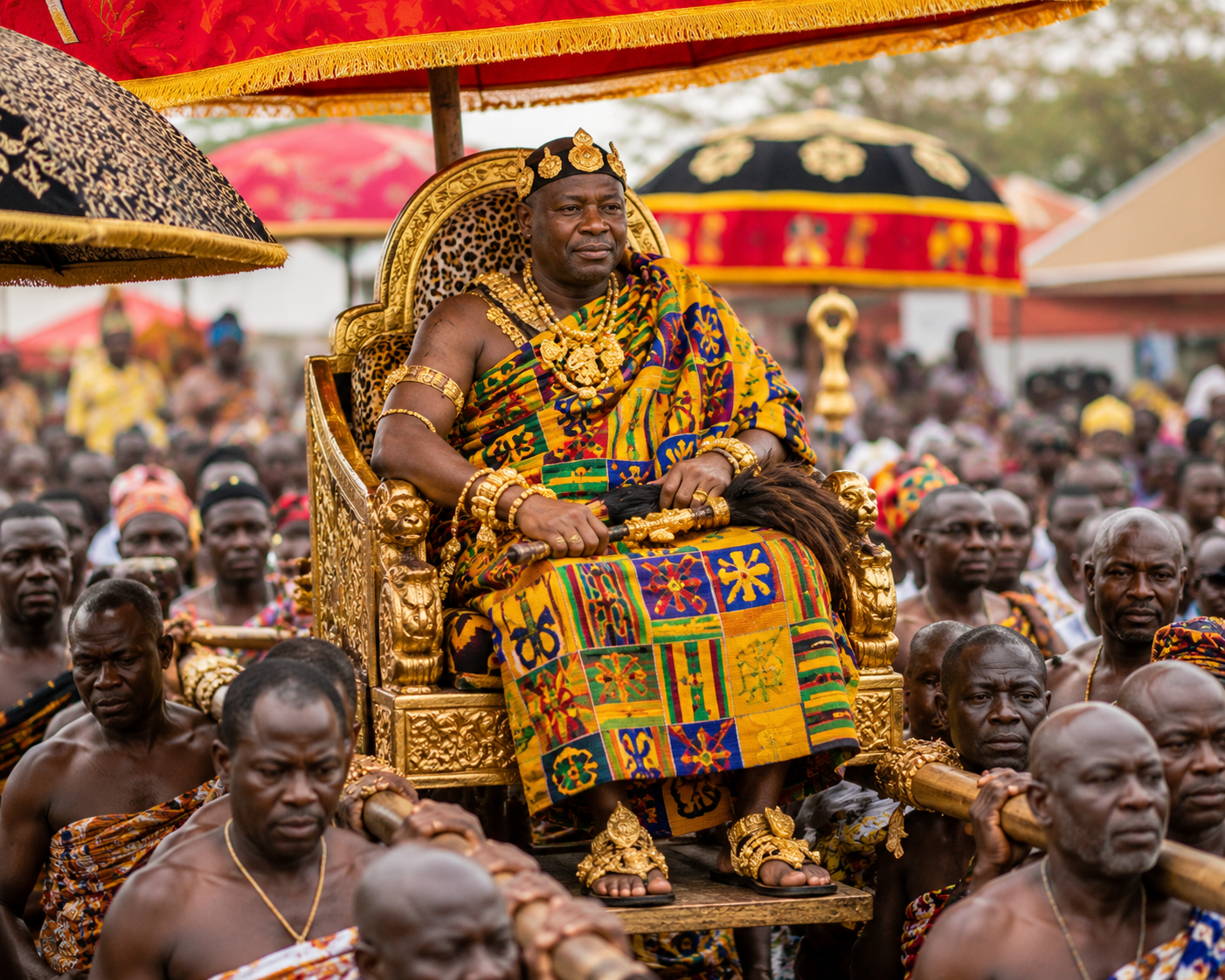
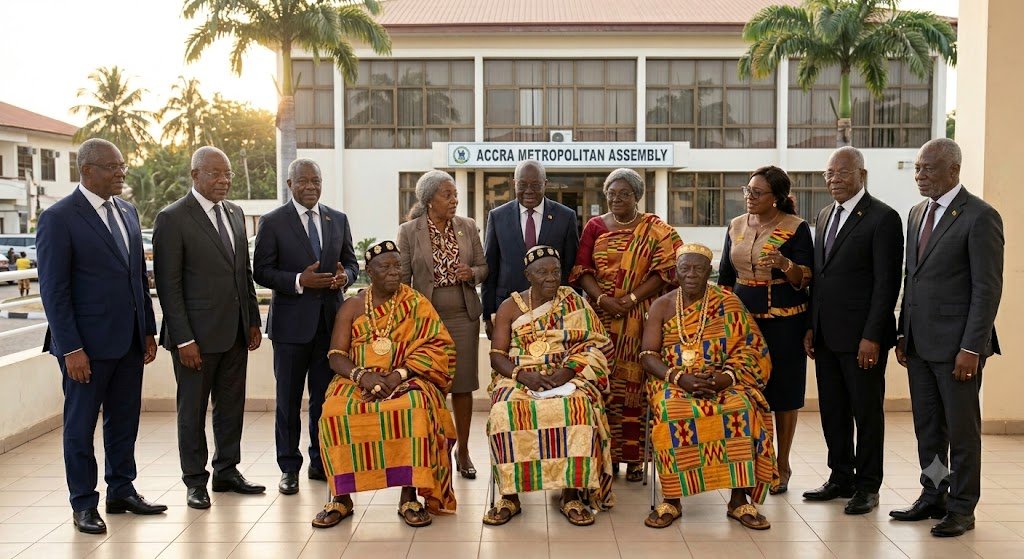
In Akan society in Ghana, a chief occupies a revered and sacred position. He is the custodian of the land, the representative of the ancestors, and the moral leader of the community. The stool symboli

For centuries, Ghana has stood at the crossroads of global cultural encounters. Long before the modern era of globalization, the land now called Ghana was already a bustling center of trade and intera

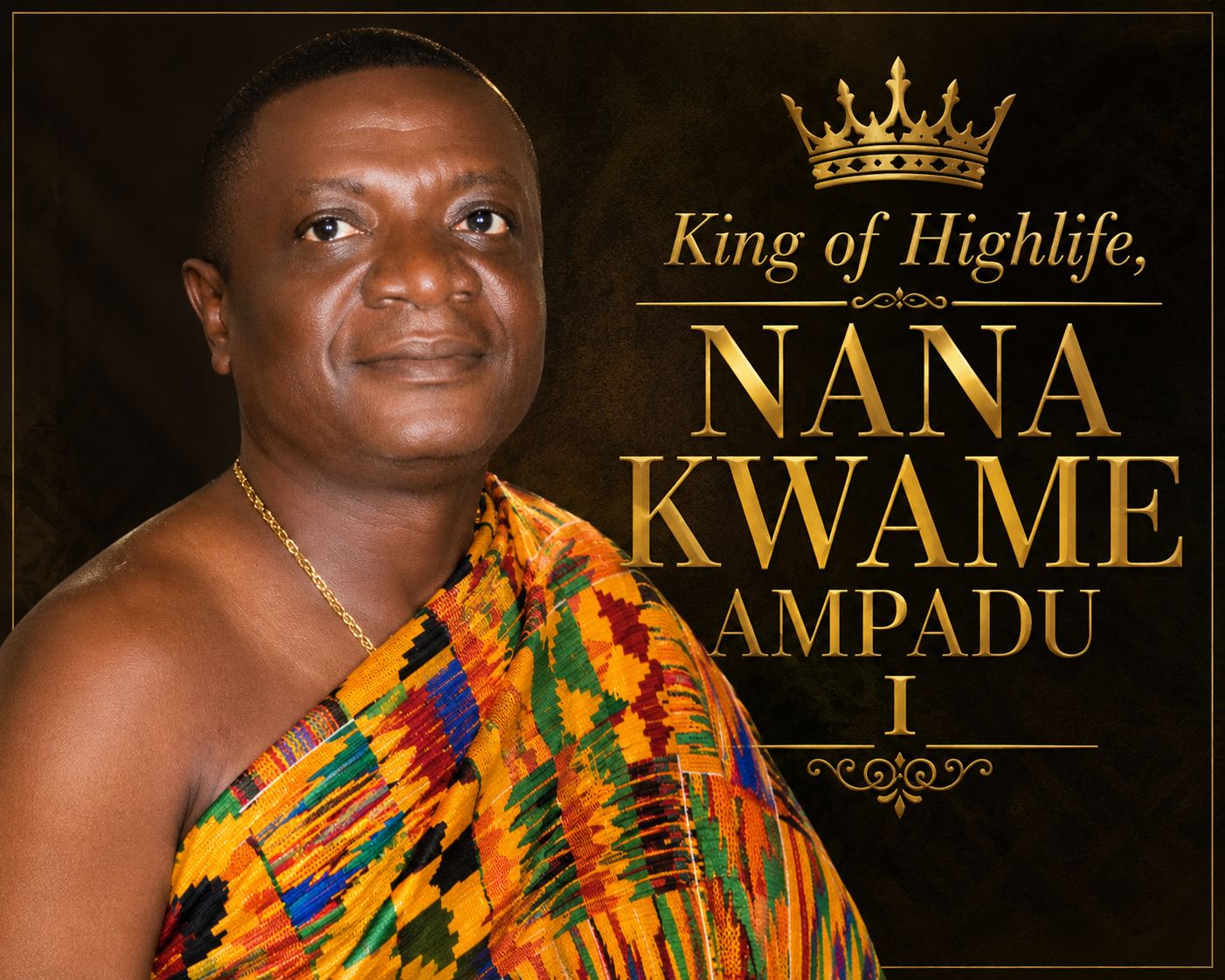
King of Highlife, Nana Ampadu Among the pantheon of Ghanaian musicians who shaped the soundscape of modern West African music, few names command the reverence accorded to Nana Kwame Ampadu I. A compo

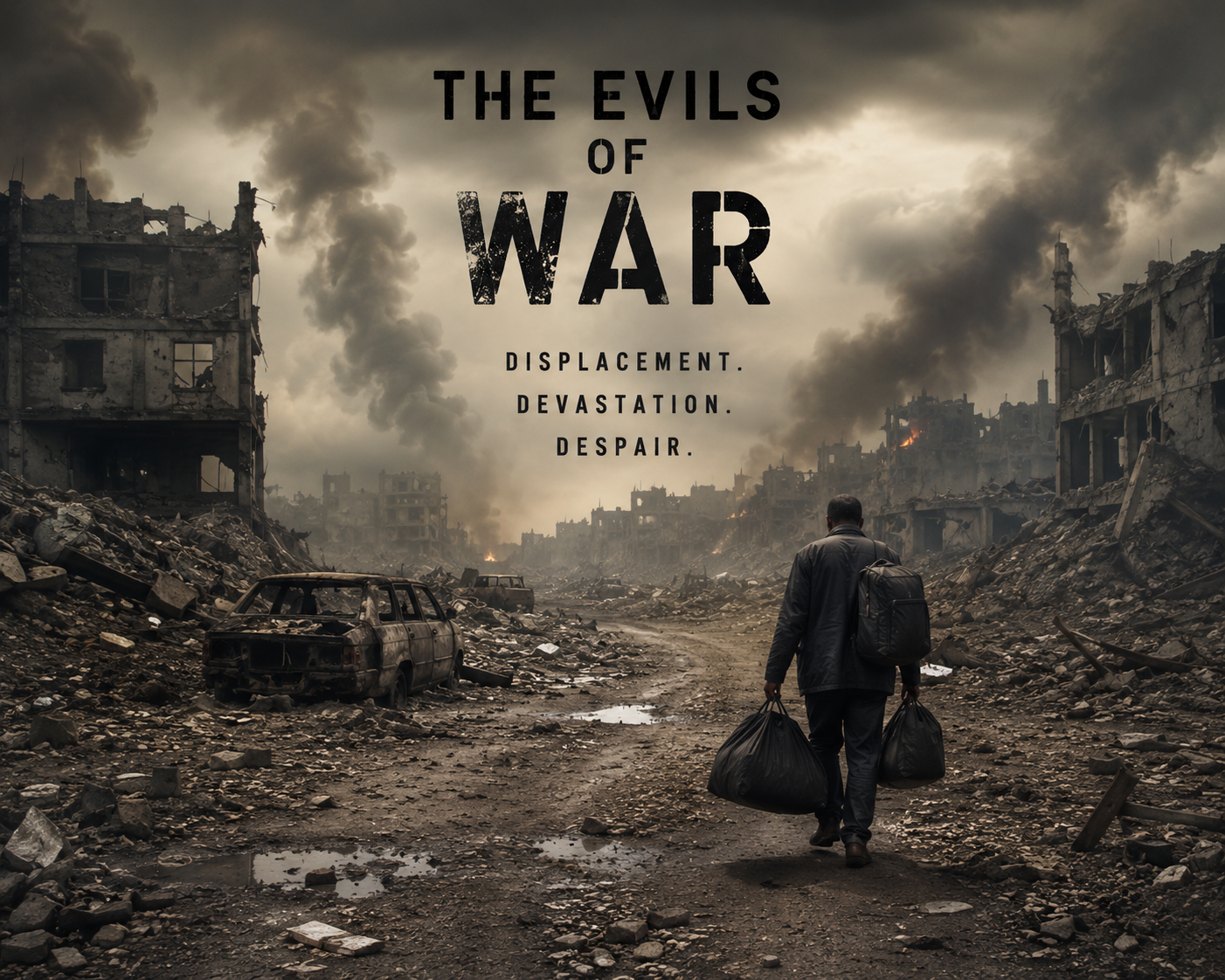
From Childhood Fascination to Lifelong Pacifism My father used to tell us stories about the Second World War. As children, we listened with a mixture of awe and excitement. The accounts of military a

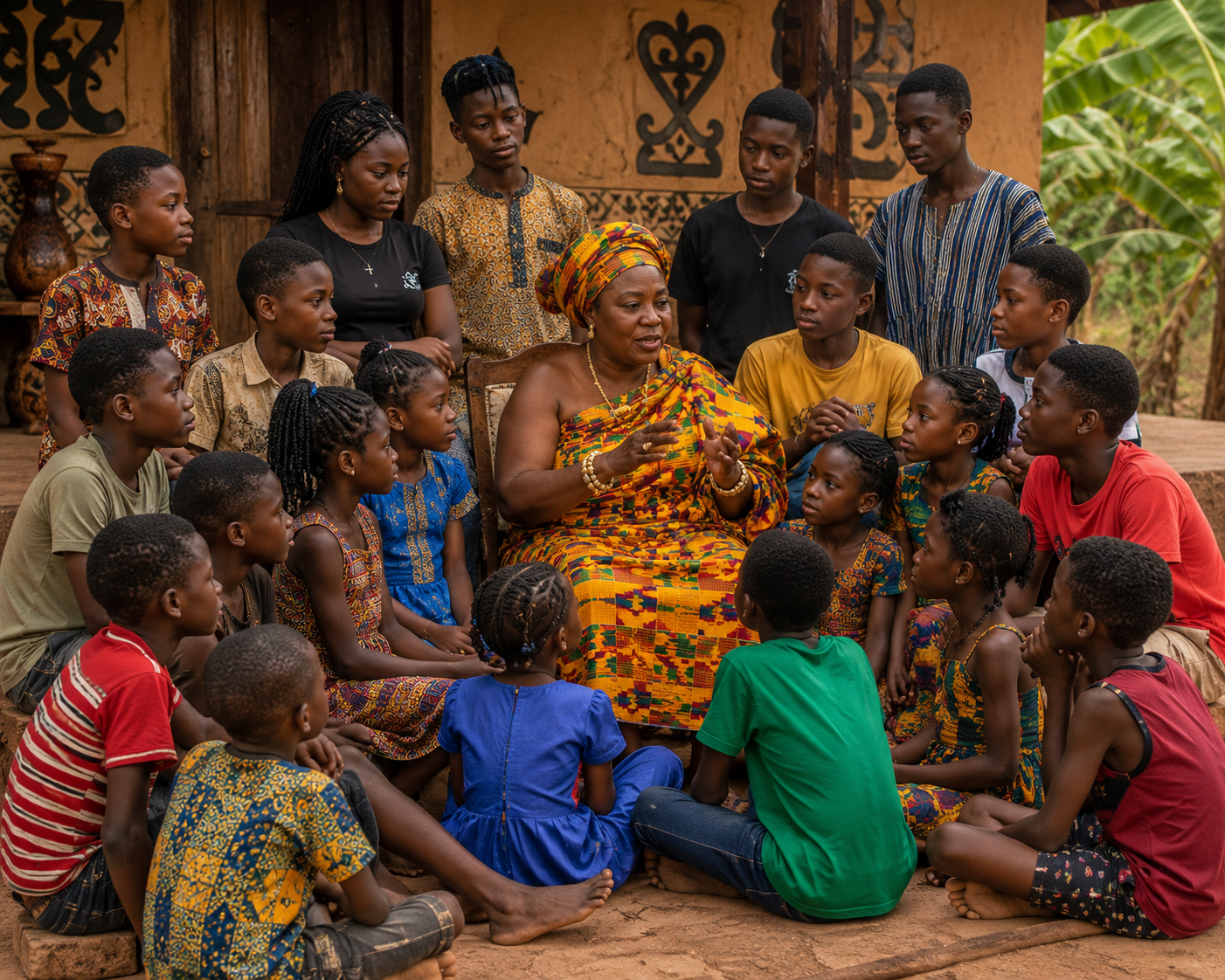
A Mother with Sixteen Children to Raise Growing up in Ghana in the 1970s, my mother taught her eight biological children and eight non-biological children the enduring virtues of self-reliance, hard work, and personal dignity. She was a woman of uncommon wisdom who believed that excessive dependence

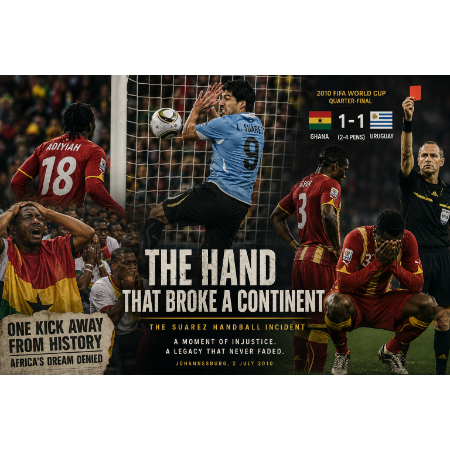
There are football matches that end with a scoreline, and there are matches that never truly end. The 2010 FIFA World Cup quarter-final between Ghana national football team and Uruguay national football team belongs firmly in the second category. More than fifteen years later, the image still burns

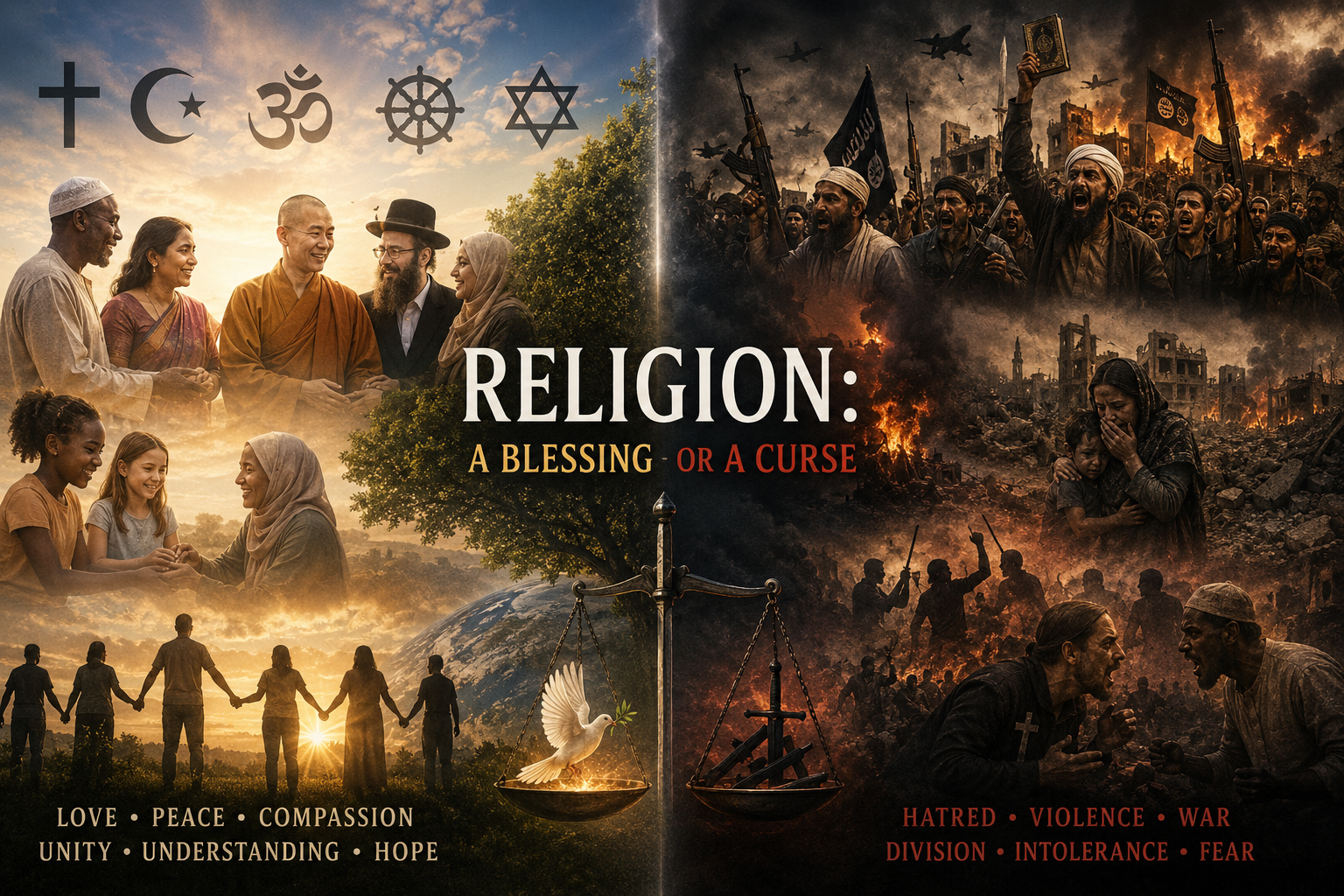
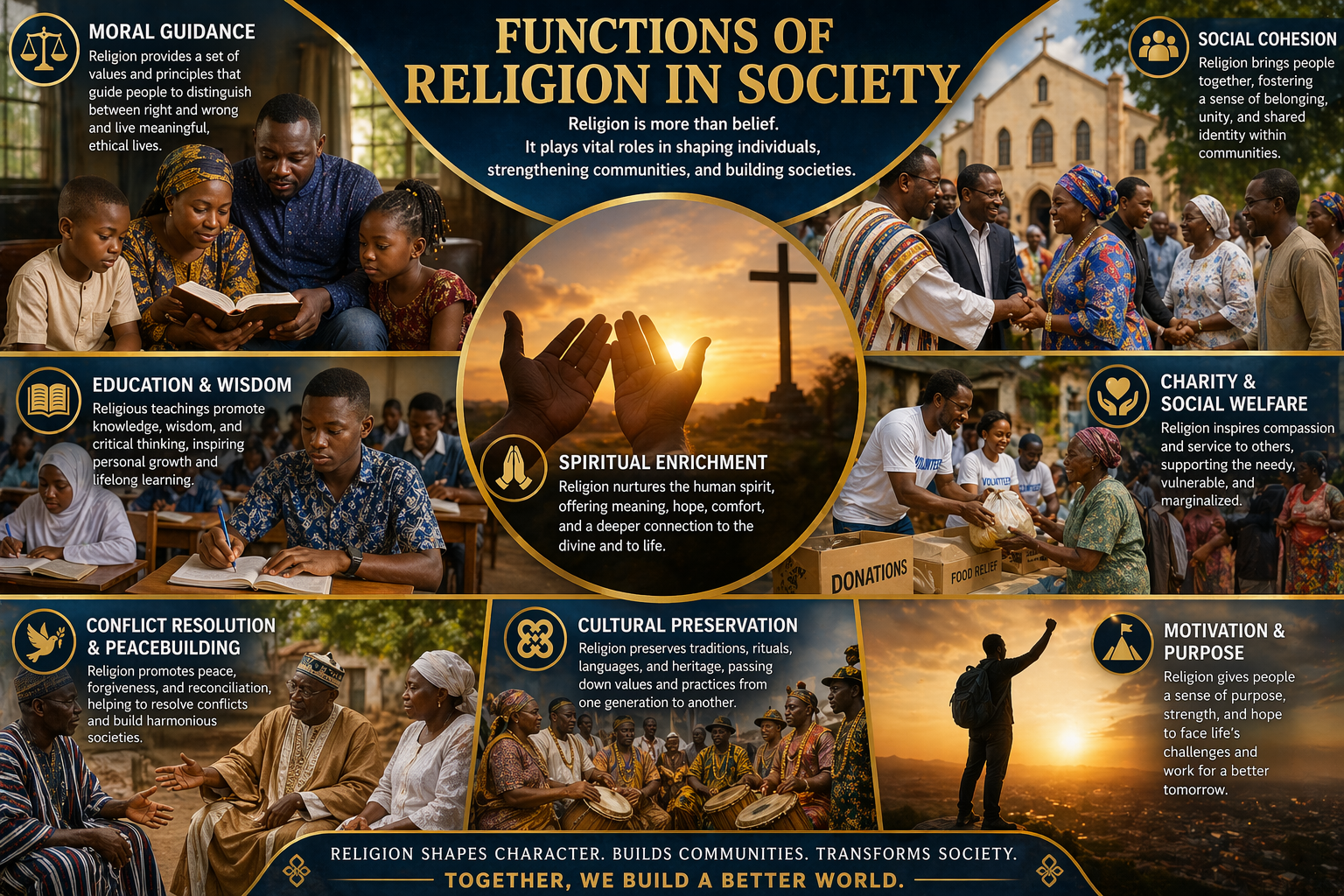
The world today is full of religions. By merely casting a cursory glance around us, we encounter Christians and Christianity, Hindus and Hinduism, Muslims and Islam, atheists, agnostics, traditionalists, Zionists, Jews and Judaism, Confucianists and Confucianism, Shintos and Shintoism. Religion, as

Scholars who study society—sociologists, anthropologists, and others—have long observed that religion exists in every known culture. Because of this, religion is often described as a cultural universal. It is not limited to one people or place; it is a shared human experience. In today’s world, reli

Sociologists define religion as a system of shared beliefs and practices through which people relate to what they consider sacred or supernatural. In simple terms, religion helps people make sense of life, death, and the world beyond what we can see. A Cultural Universal One important idea in sociol

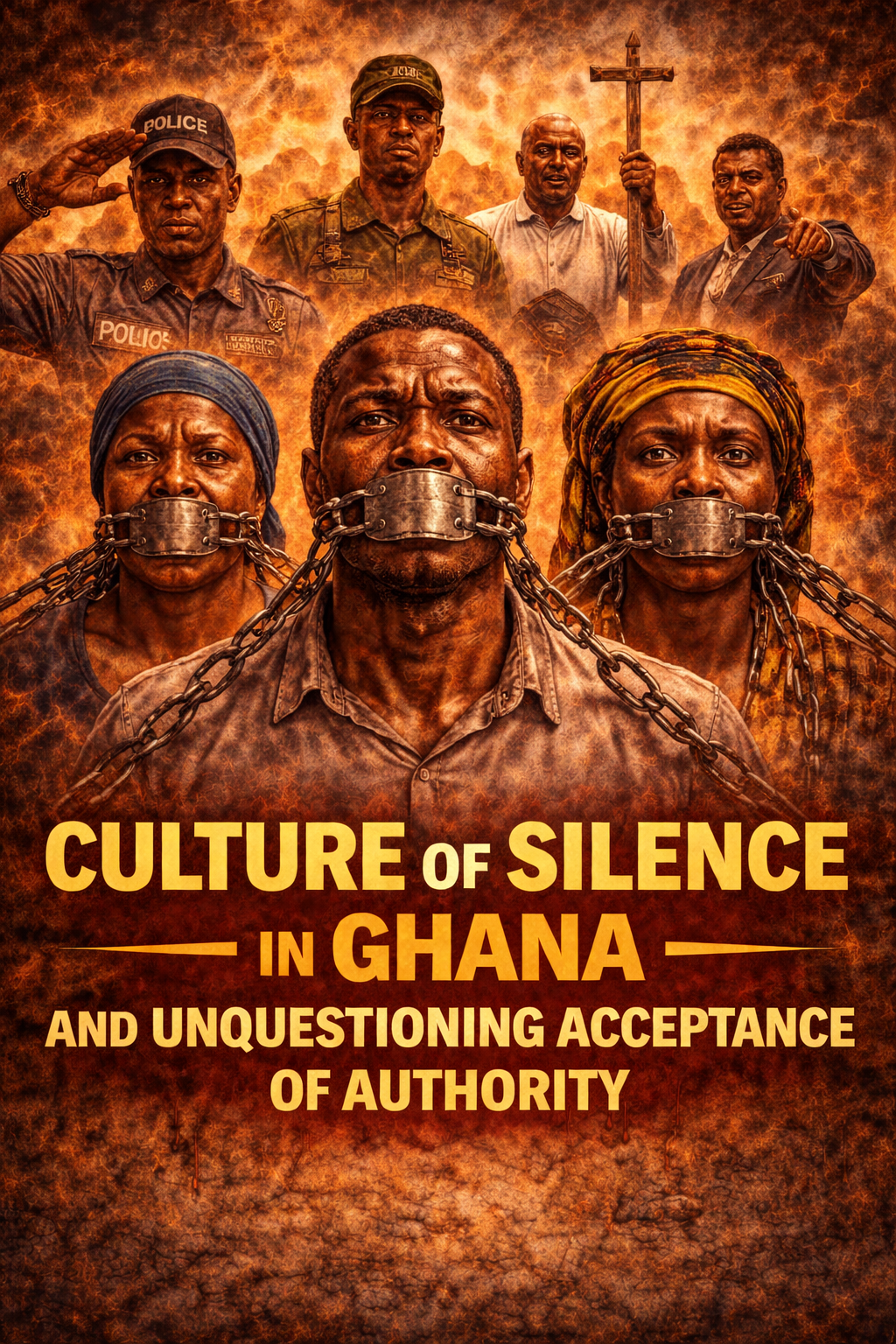
An observable feature of Ghanaian social life is a recurring tendency toward silence in moments that might otherwise call for resistance or confrontation. Even when individuals experience clear forms of mistreatment, there is often a strong social and cultural pull toward restraint rather than actio

Introduction The question of whether the criminalization of witchcraft accusations would have any meaningful impact in Ghana requires careful and systematic analysis. At present, witchcraft accusations are largely non-criminal, meaning there are no specific laws prohibiting individuals from accusing

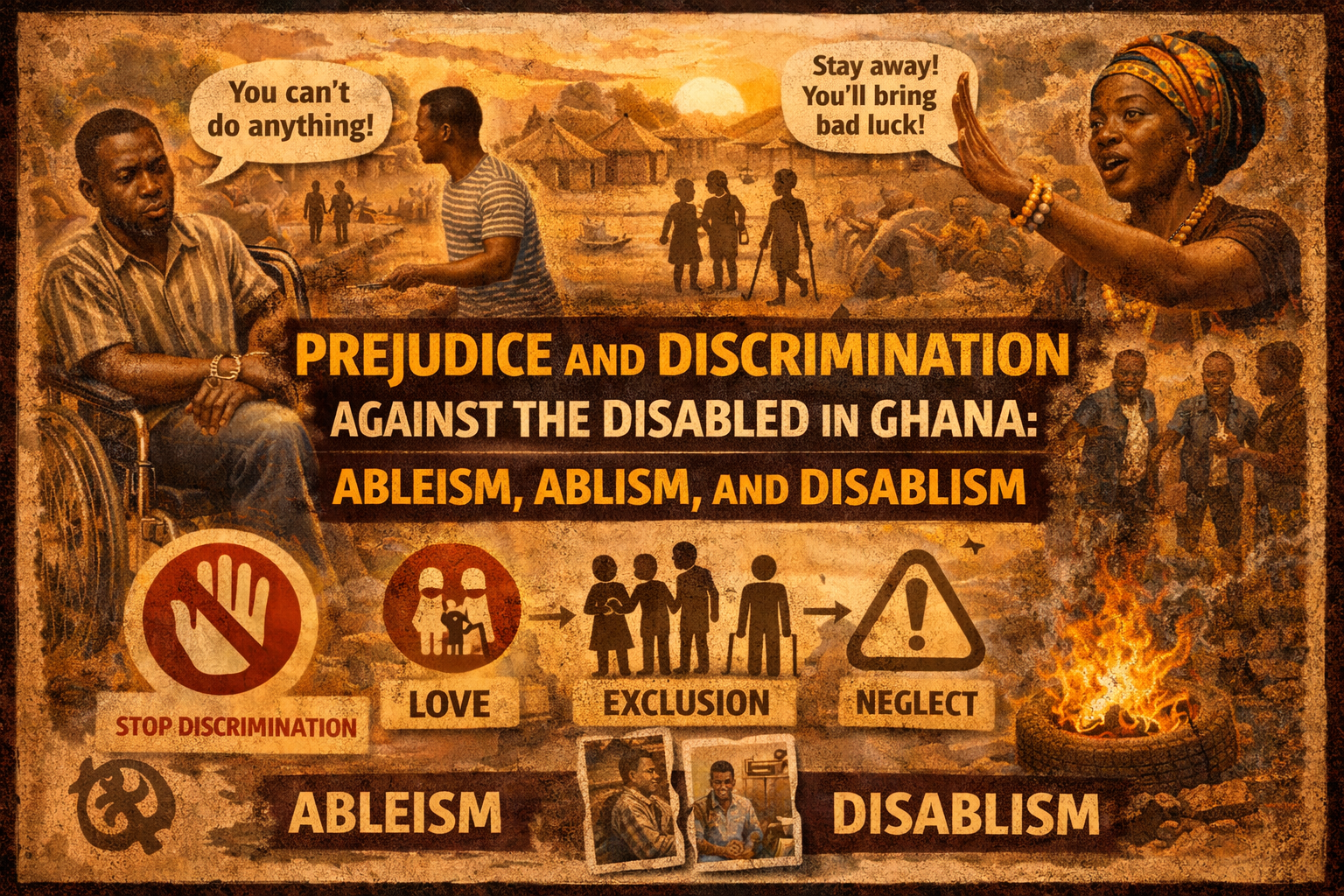
In every society, including Ghana, there exist disabled people living with various forms of disability. These disabilities take many shapes and forms. Some are physical, affecting mobility, sight, hearing, or bodily function. Others are mental or psychological, influencing cognition, emotional regul

Marxism, as developed by Karl Marx and Friedrich Engels, is a theoretical framework that seeks to explain the organization, functioning, and transformation of society, particularly under conditions of capitalism. Class Structure: Bourgeoisie and Proletariat At the center of Marxist analysis is a dis
All human societies are governed by rules. These rules regulate behavior by defining what individuals may do and what they must refrain from doing. Without such rules, social life would be chaotic and unpredictable. In sociology, these rules are referred to as norms. Norms are the shared expectation

Rules, Laws, and Social Order All human societies are governed by rules. These rules regulate behavior by defining what individuals may do and what they must refrain from doing. Without such rules, social life would be chaotic, unpredictable, and ultimately unsustainable. Rules make social interacti

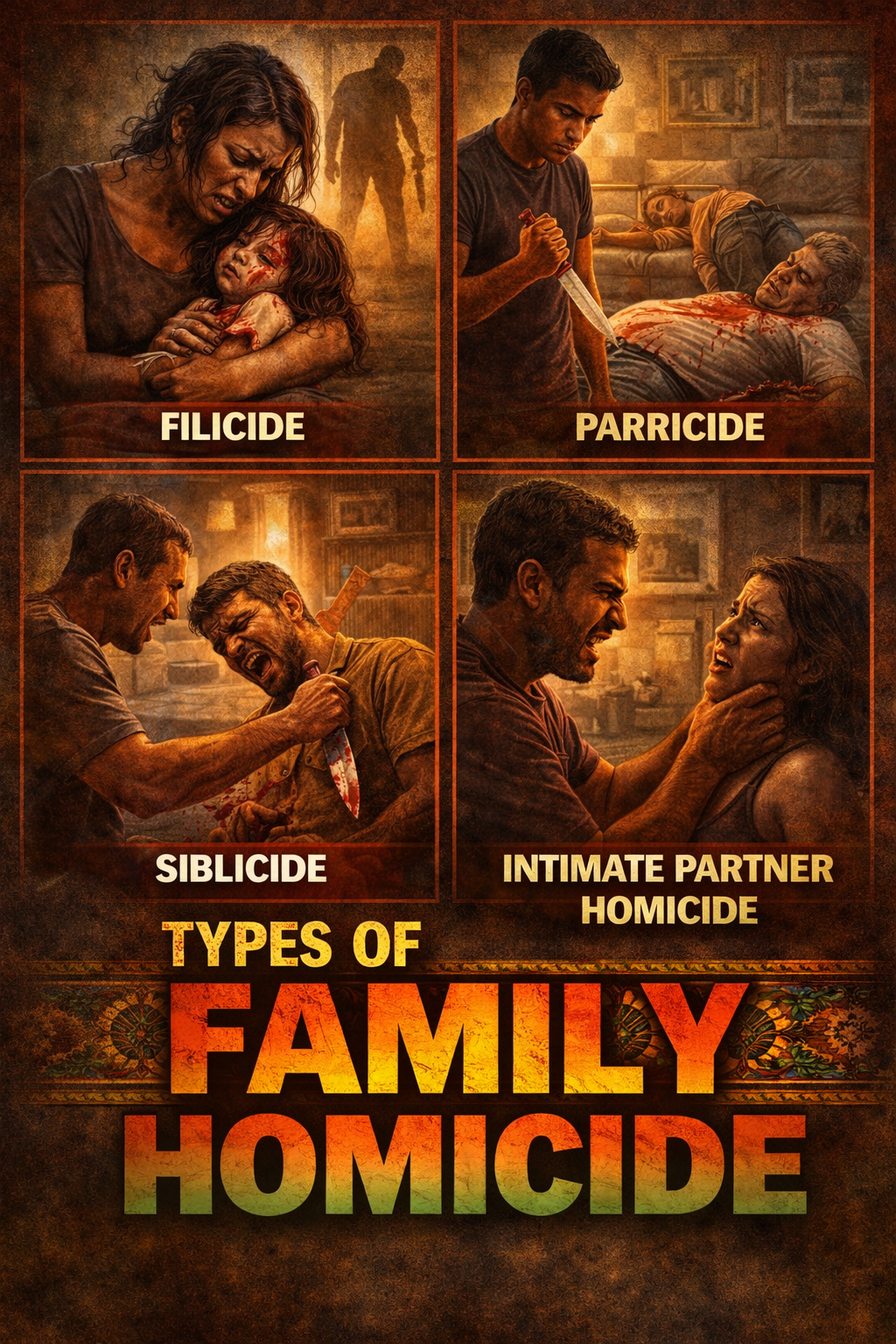
Introduction: The Hidden Face of Family ViolenceHomicide refers to the killing of one person by another, and within this broad category lies a deeply troubling subset known as family homicide, which involves the killing of one family member by another. Although the family is often idealized as a hav

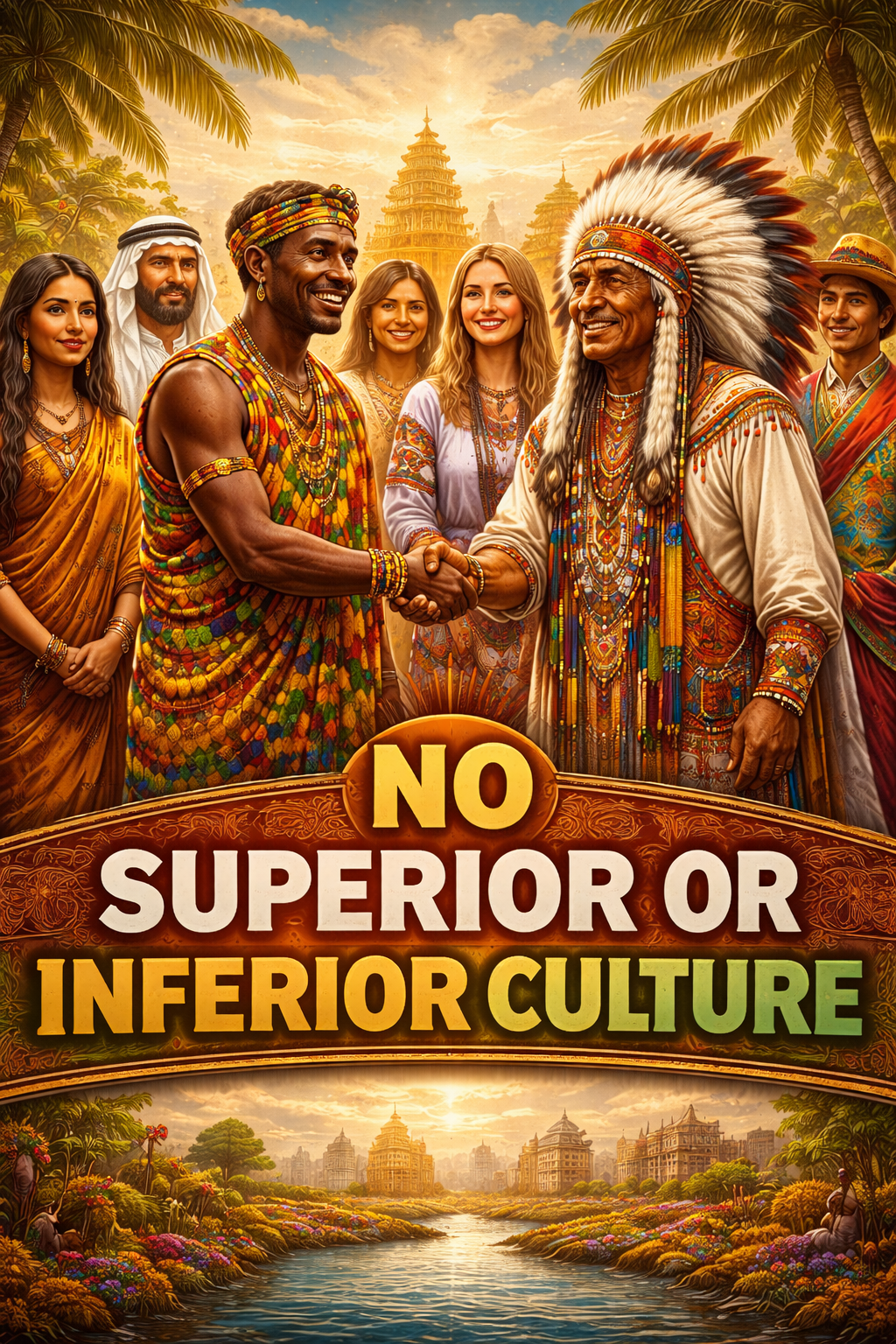
Let’s be clear from the outset: no culture is superior to another, and no culture is inferior. This should not be a controversial statement in the 21st century—yet, in practice, it still is. Culture remains one of the most misunderstood concepts in public discourse. When people misunderstand culture

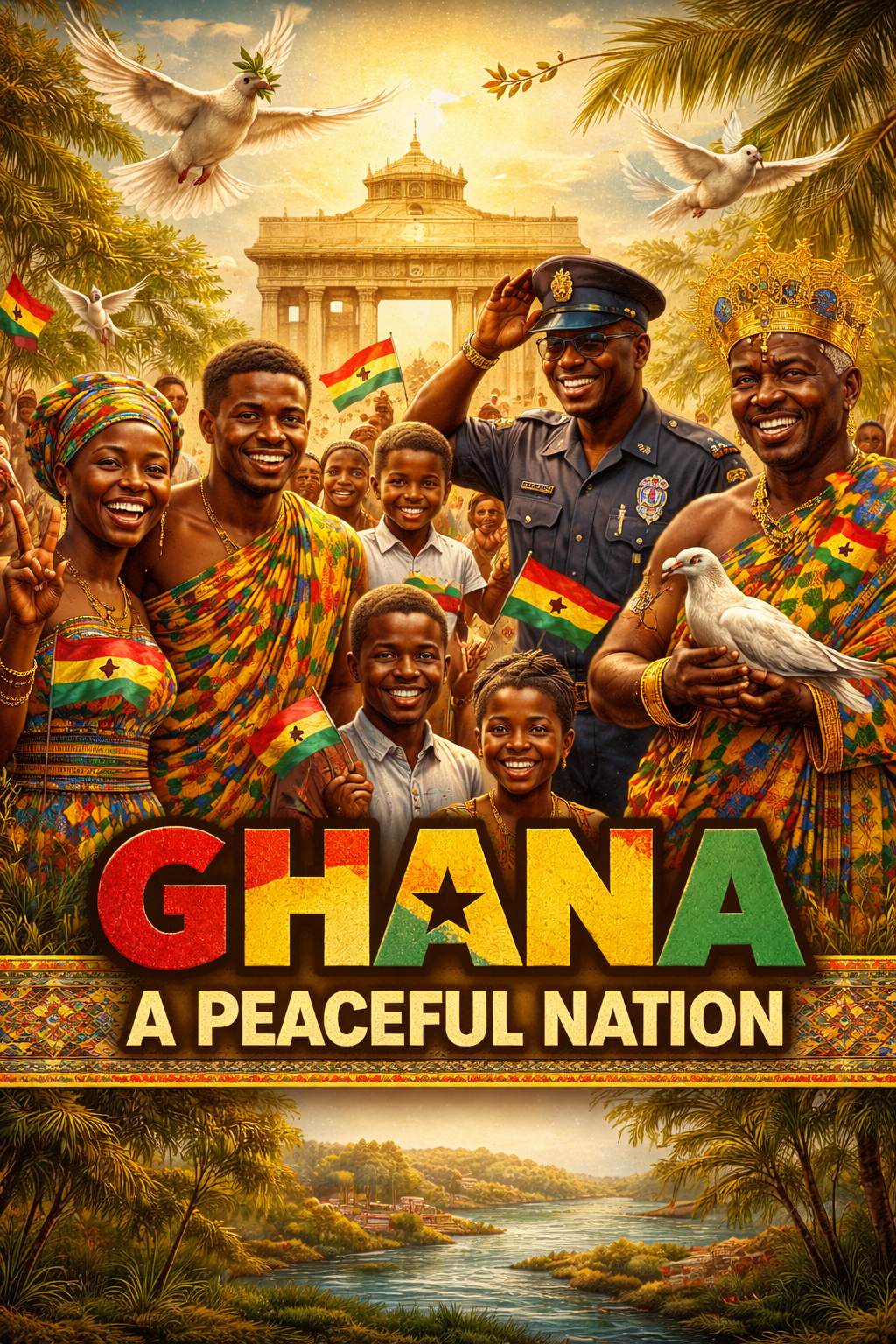
A Nation Defined by Peace In a region and continent that have, at various historical moments, been scarred by conflict and instability, Ghana stands out as a compelling example of relative peace. Since gaining independence in 1957, the country has largely avoided the large-scale civil wars that have

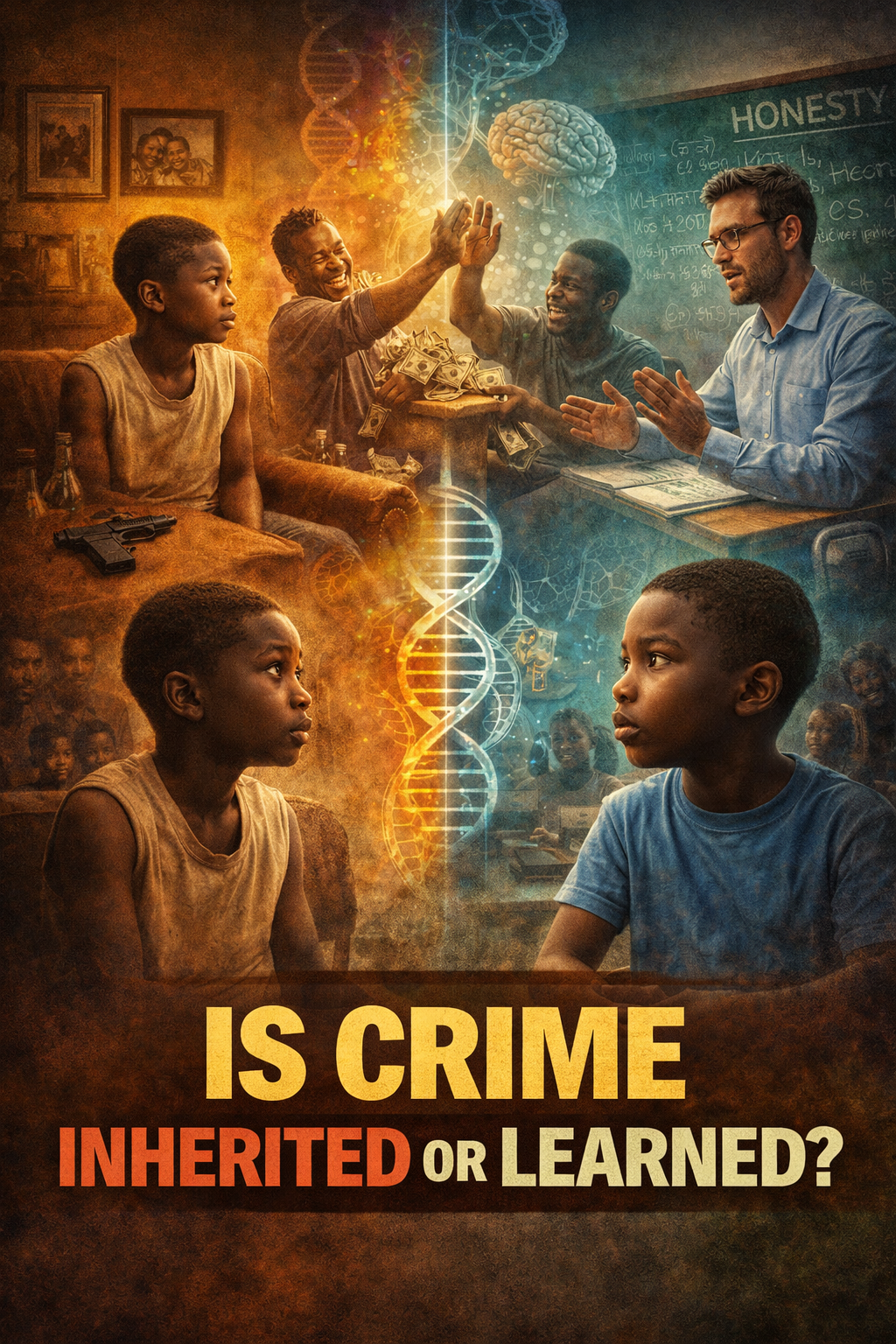
Are people born criminals, or do they learn to become criminal? Is there a “crime gene”? Can criminal behavior be inherited, or do people have control over their actions? These questions have intrigued scholars, parents, and the public for decades. Some people assume that crime is inherited. They lo

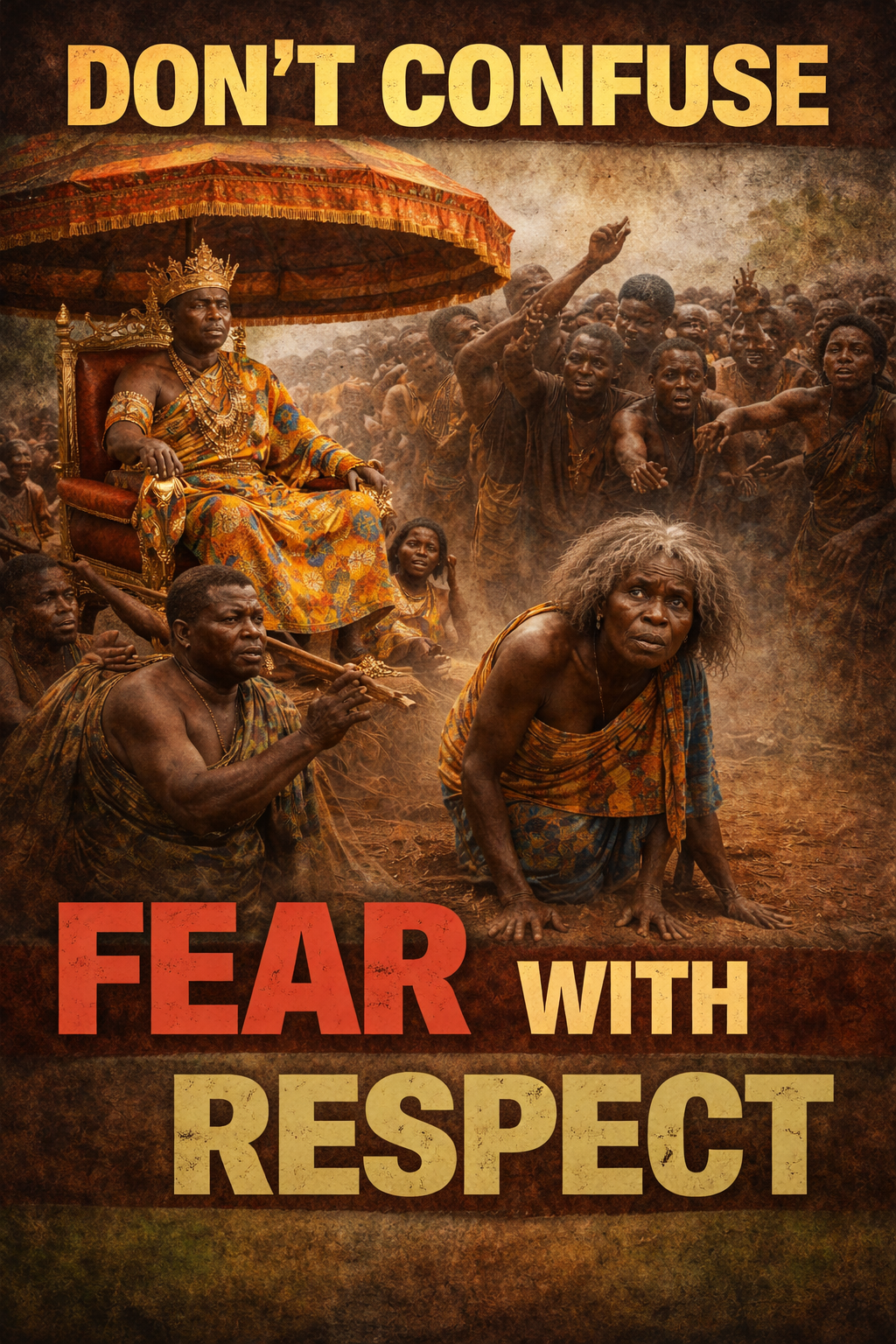
Oftentimes, in Africa, people conflate respect with fear, treating them as if they are interchangeable. Yet within Akan moral language, a clear distinction is maintained between fɛreɛ (respect) and suro (fear). To say “me fɛre wo” is fundamentally different from “me suro wo.” The former connotes est

Introduction: A Name That Became a Symbol In the sociological imagination of the Gold Coast—what is today Ghana—names are never merely labels; they are identities, narratives, and sometimes prophecies. The name Abedi Pele transcends the ordinary. It is a fusion of biography, mythmaking, and cultural

Robert Mensah: A Football Story and Tragedy in the Ghanaian Football In the annals of Ghanaian sporting history, few names evoke as much reverence, myth, and sorrow as Robert Mensah. His story is not merely about football; it is a narrative woven into the socio-cultural fabric of late colonial Gold

Few names in African sport command as much reverence as Azumah Nelson. In the annals of global boxing history, Nelson stands not merely as a champion but as an embodiment of discipline, intellect, and tactical brilliance. His nickname—“The Professor”—suggests a fighter whose victories were not only

When people discuss the early history of football, the narrative often begins in Britain and gradually expands to the rest of the world. Rarely, however, does the conversation turn toward West Africa—particularly the historic Gold Coast, present-day Ghana. Yet one of the most remarkable pioneers of

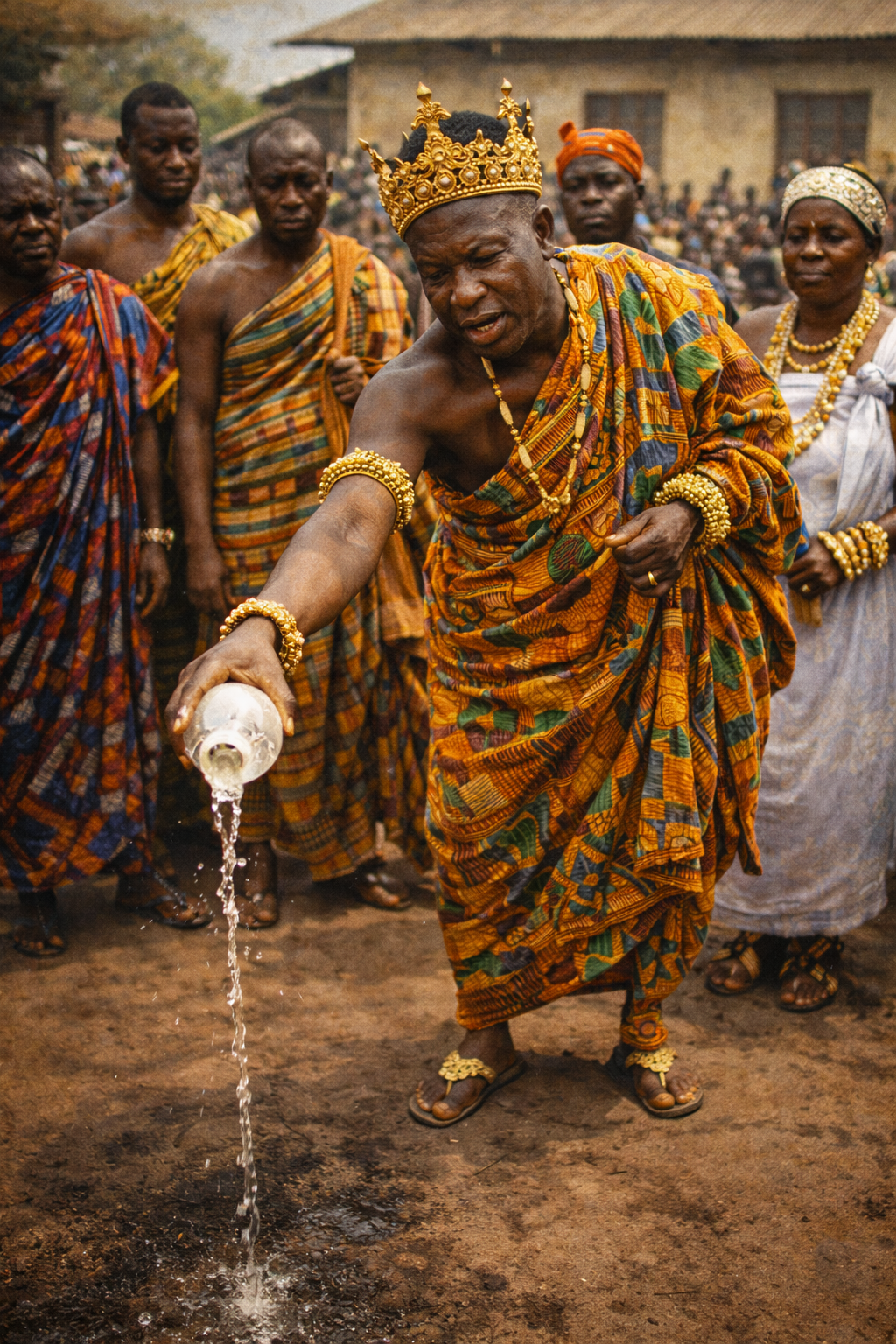
Among the Akan people of Ghana, pouring libation is one of the most important traditional religious practices. It is a solemn ritual through which people communicate with the spiritual world. The act symbolizes reverence for the ancestors, recognition of the Supreme Being, and a request for protecti

The leadership of Yaa Asantewaa in the 1900 war against British colonial rule remains one of the most extraordinary and symbolically powerful episodes in African resistance history. Her decision to lead the Ashanti (Asante) in armed rebellion was not an accident of circumstance—it emerged from a com

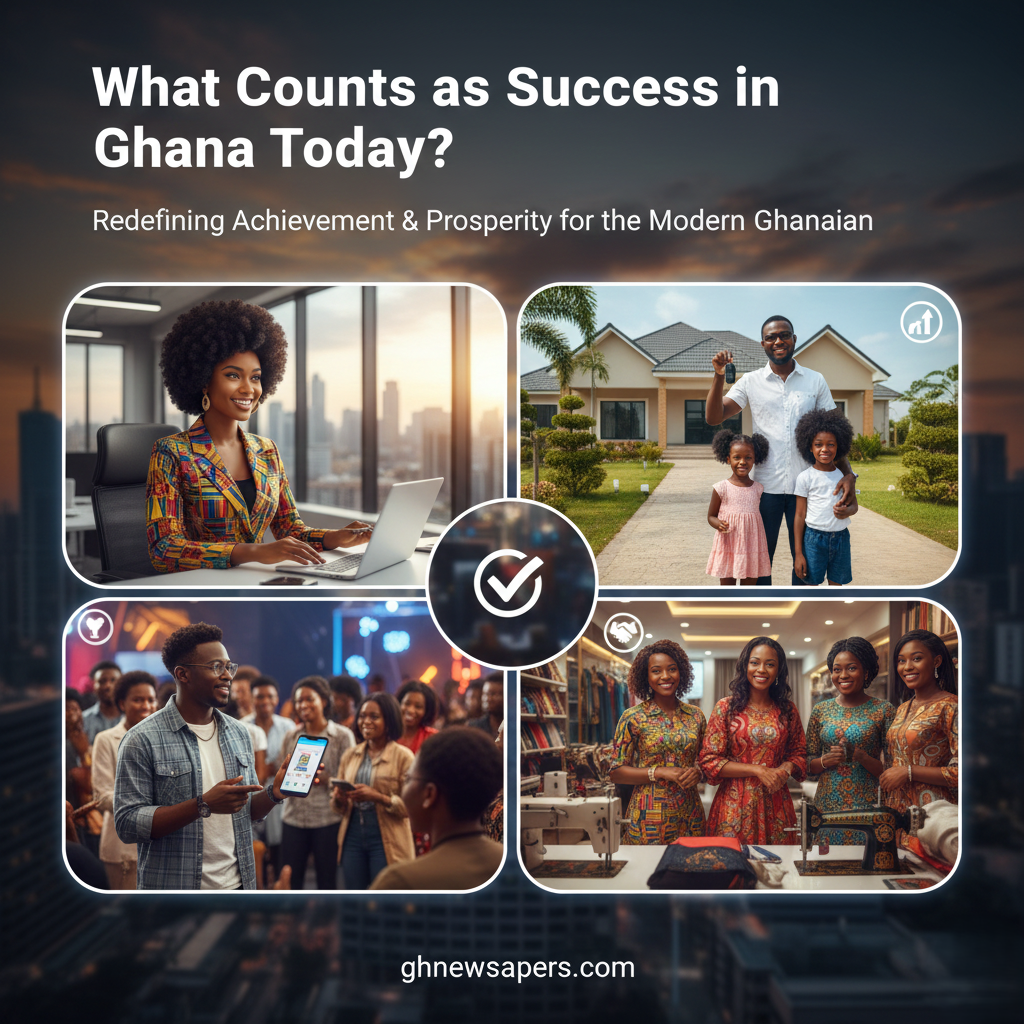
In every society, there are culturally accepted symbols of success. There are also culturally approved means for attaining these symbols of success. These aspirations and goals form what can be called a society’s “dream.” In the same way that some people speak of their national dream, it is possible

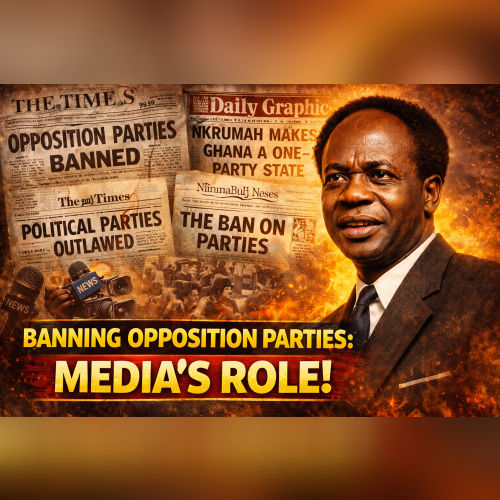
The banning of opposition parties in Ghana during the late 1950s and early 1960s stands as one of the most consequential moments in the country’s political and media history. Newspapers of the era did not merely report the development—they actively shaped how the public understood the meaning of pol

In the years surrounding Ghana’s independence and early nation-building period (roughly the mid-1950s through the early 1960s), one of the most persistent and consequential public discussions revolved around the tension between press freedom and national unity. Newspapers themselves became both the

The development of newspaper culture in the Gold Coast—today known as Ghana—was inseparable from the spread of formal education during the nineteenth and early twentieth centuries. Education did far more than teach reading and writing; it fundamentally reshaped social structures, created new intelle

The growth of newspaper readership in the Gold Coast—modern-day Ghana—cannot be understood without examining the critical role played by nineteenth-century mission schools. These educational institutions, established by European Christian missions, were not only centers of religious instruction but

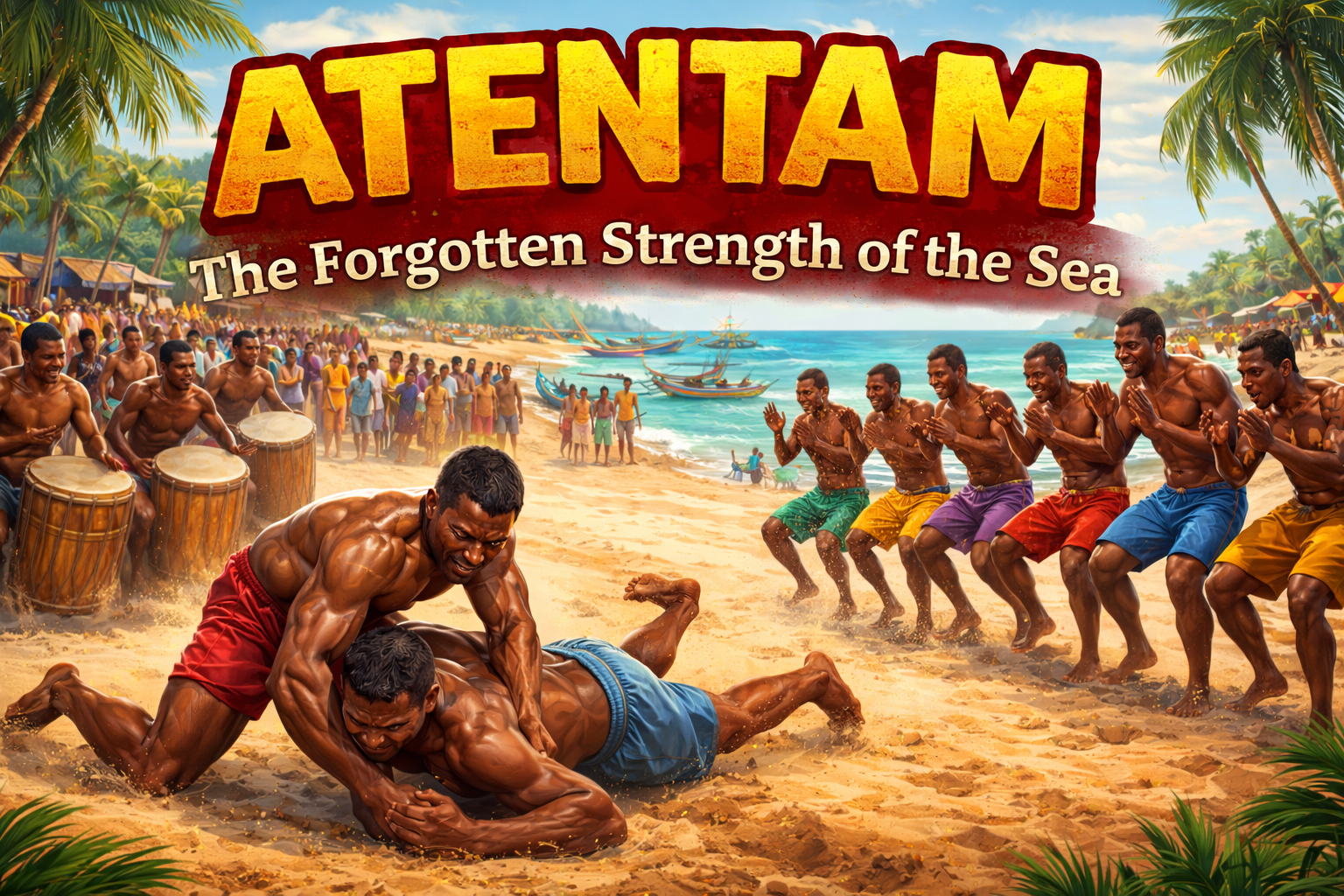
Along the wind-carved coastline of southern Ghana, among the Fante, physical games were never idle diversions. They were social rehearsals—training grounds for endurance, hierarchy, and communal rhythm. Two in particular—Atentam and Osibir—stand out in the historical record. Atentam derives from the
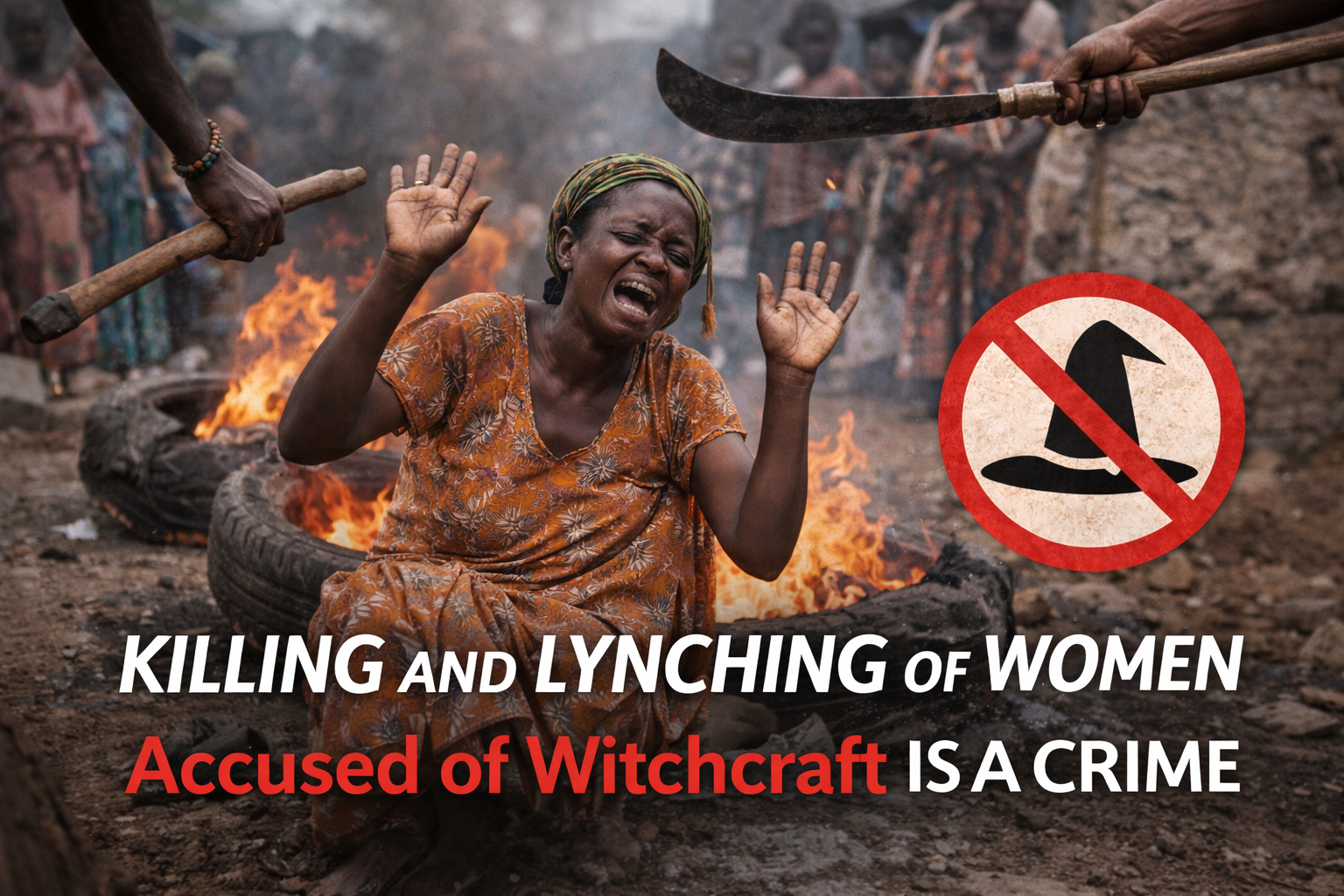
Violence against persons accused of witchcraft remains a troubling reality in parts of Ghana. Although our nation prides itself on hospitality, communal solidarity, and deep respect for human dignity, allegations of witchcraft too often trigger acts of cruelty that contradict these cherished values.

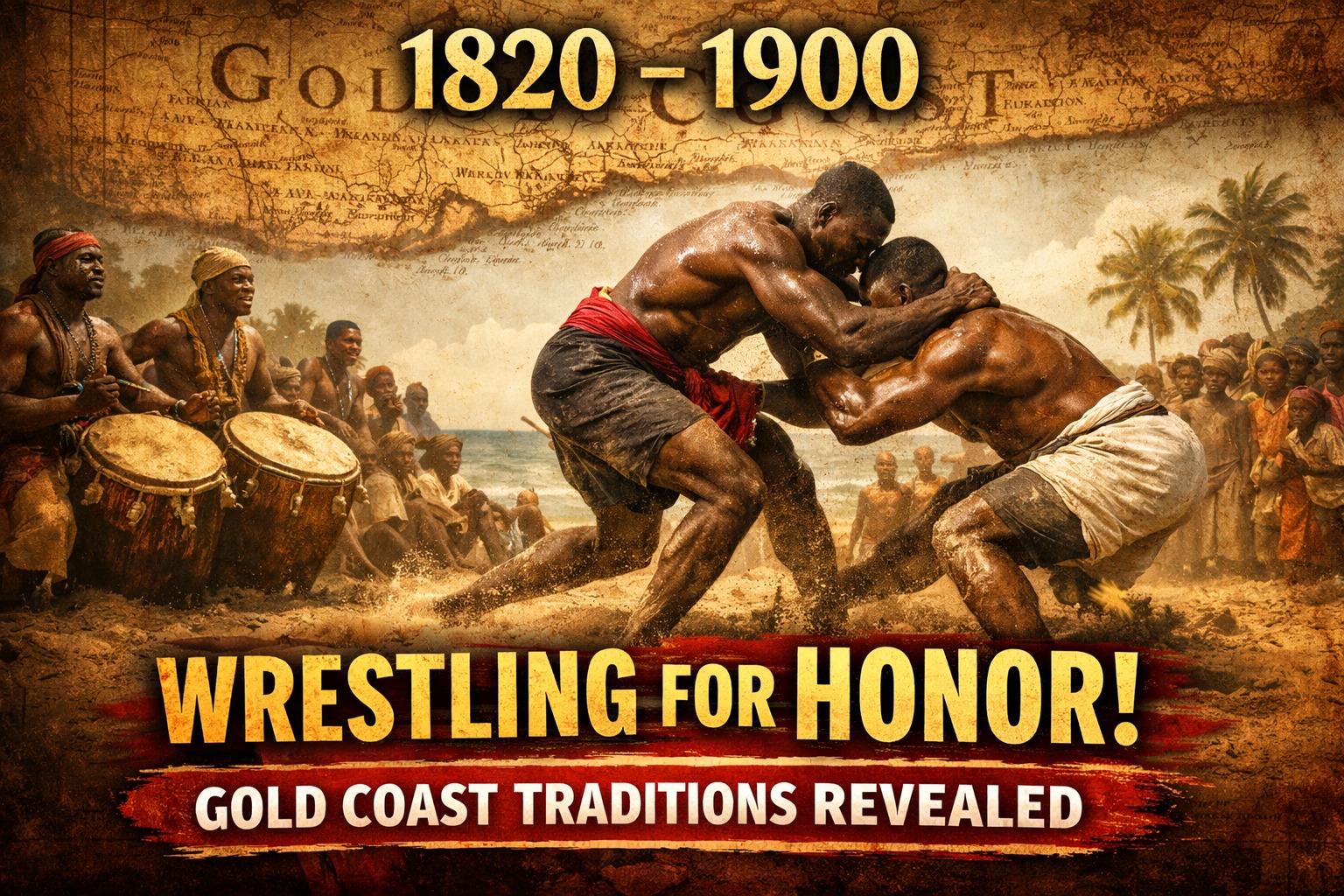
Long before colonial stadium lights and organised leagues, the sandy shores and village squares of the Gold Coast—today’s Ghana—were vibrant arenas where traditional wrestling was among the most respected cultural practices. From the early 19th century up to the turn of the 20th century, indigenous

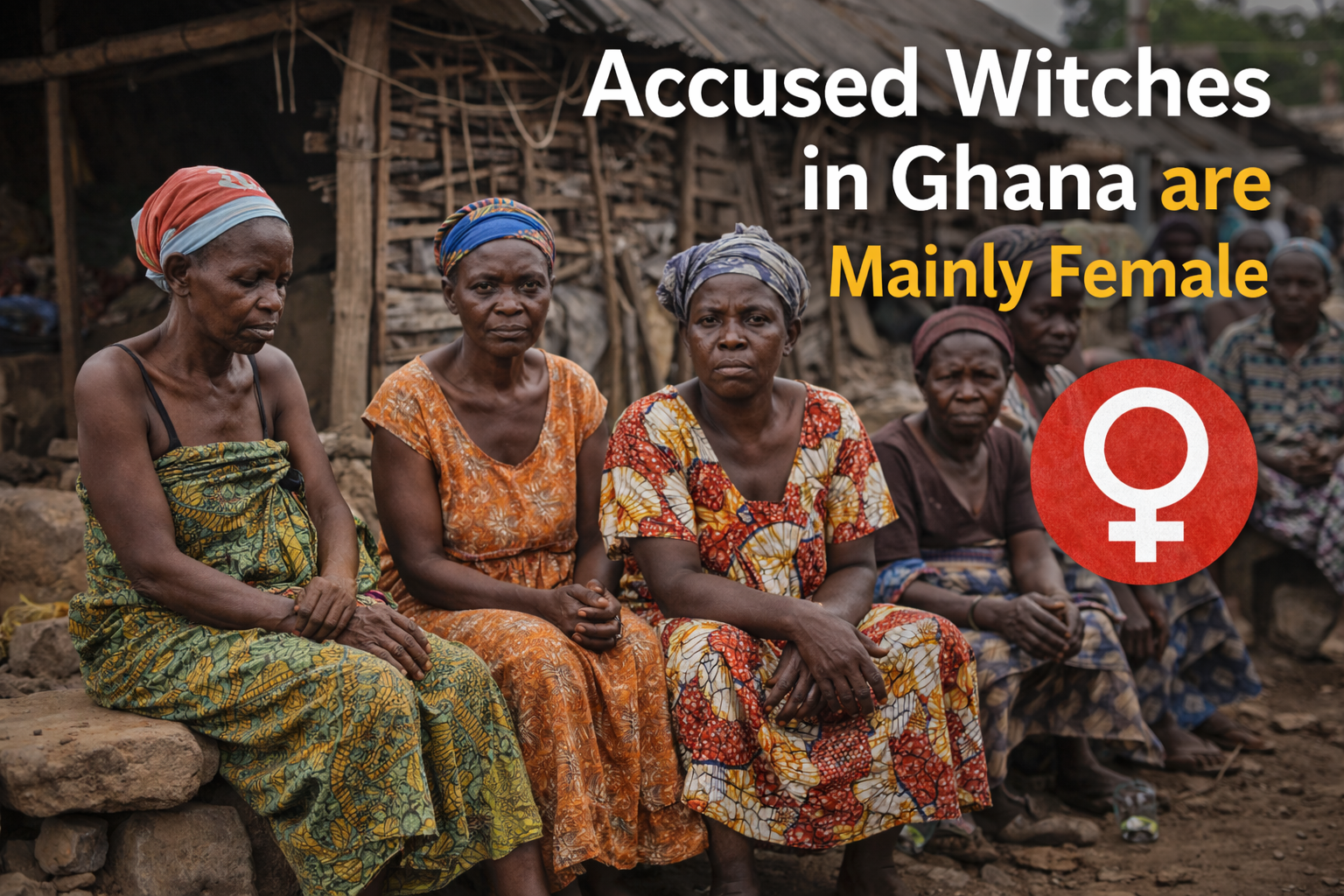
In Ghana, the overwhelming majority of people accused of witchcraft are women and girls. Nearly all victims killed during witch hunts are female. In the so-called “witch camps” or “outcast homes” in northern Ghana, it is rare to find a man among the residents. The population is almost entirely women

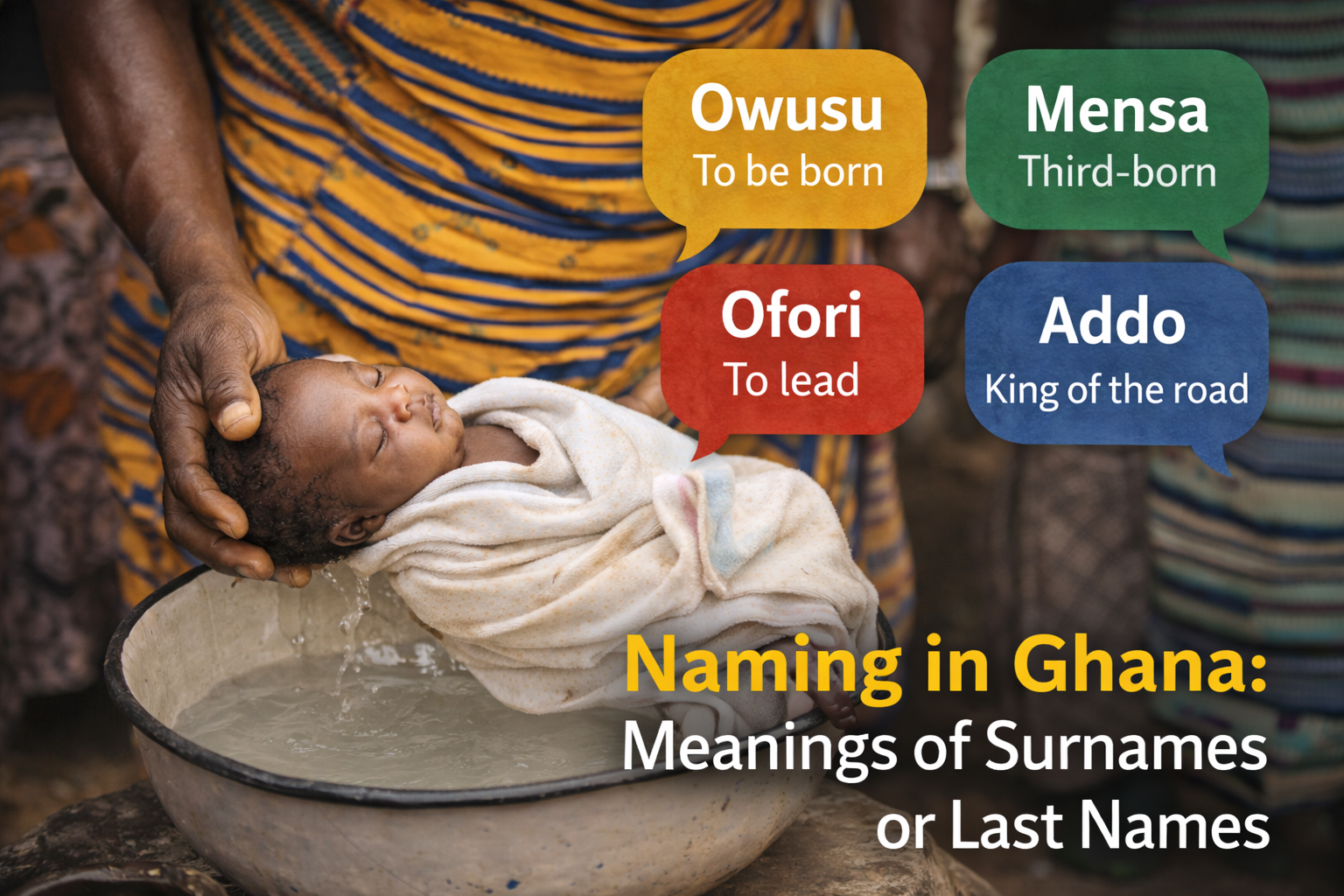
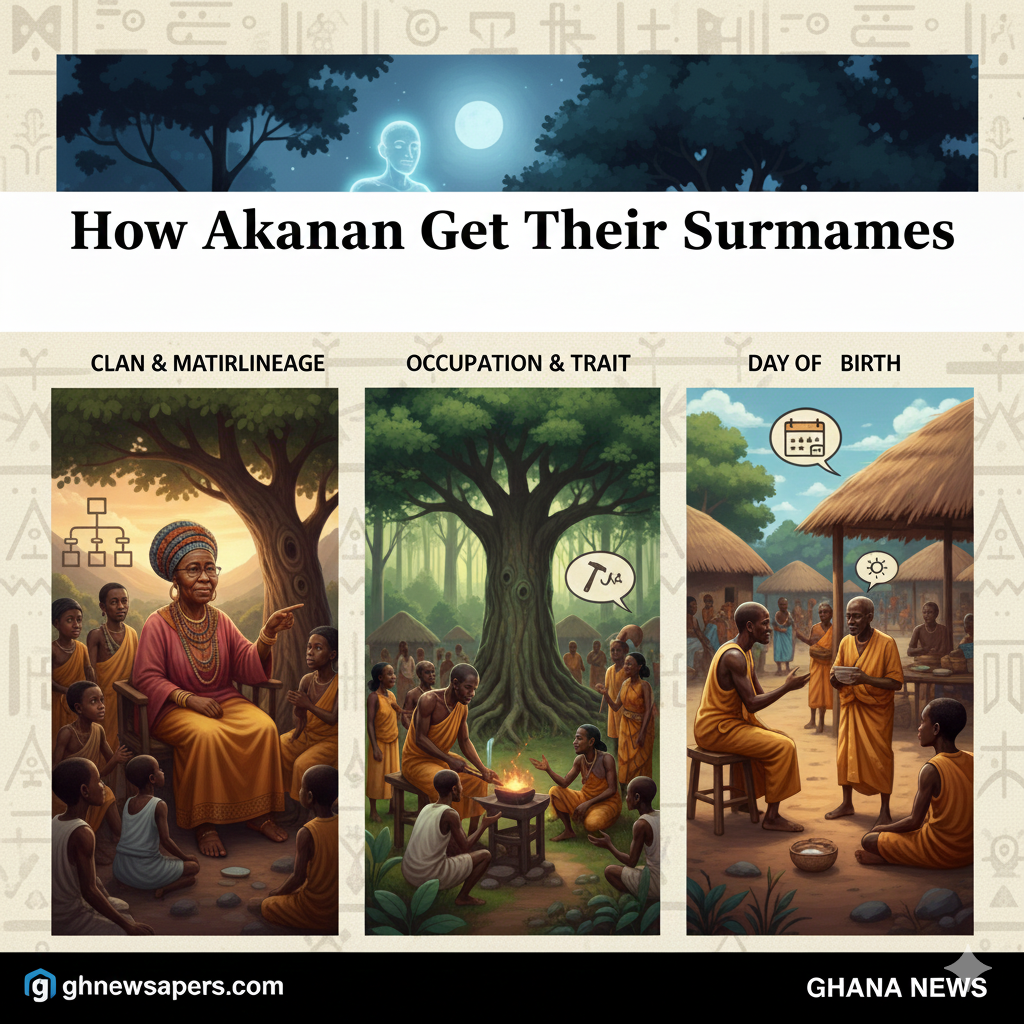
In Ghanaian society, names are never random. A name is a story, a memory, a prayer, a verdict on experience, or a declaration of destiny. Ghanaian surnames—particularly Akan surnames—carry deep cultural meanings that often encode family history, spiritual beliefs, social struggles, and moments of tr

The Akan constitute one of the major ethnic groups in Ghana, accounting for approximately 46 percent of the national population. They speak Twi, a language that is understood and spoken by nearly 90 percent of the country’s population. The Akan are made up of several subgroups, including the Asante,

Children and the Future of the Nation Children are the future of every society. When a nation fails to nurture and guide its children properly, it mortgages its own future. Ghana today faces a troubling situation: unless deliberate efforts are made to mould children into disciplined, responsible, an

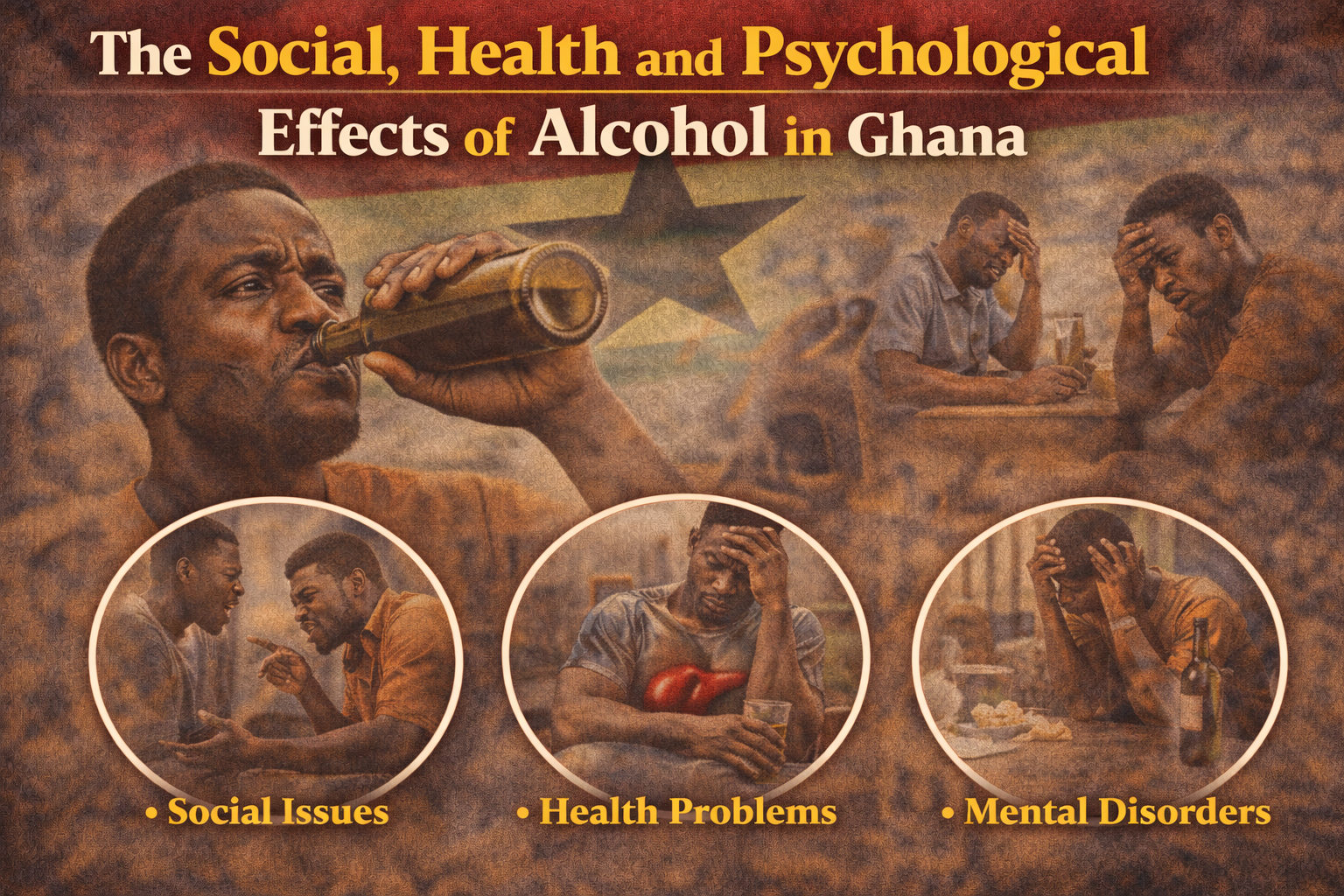
Irresponsible alcohol consumption has become a growing social problem in Ghana, with serious consequences for individuals, families, and communities. Some drinkers spend a large proportion of their income on alcohol, leaving little or nothing for basic necessities such as food, clothing, rent, medic

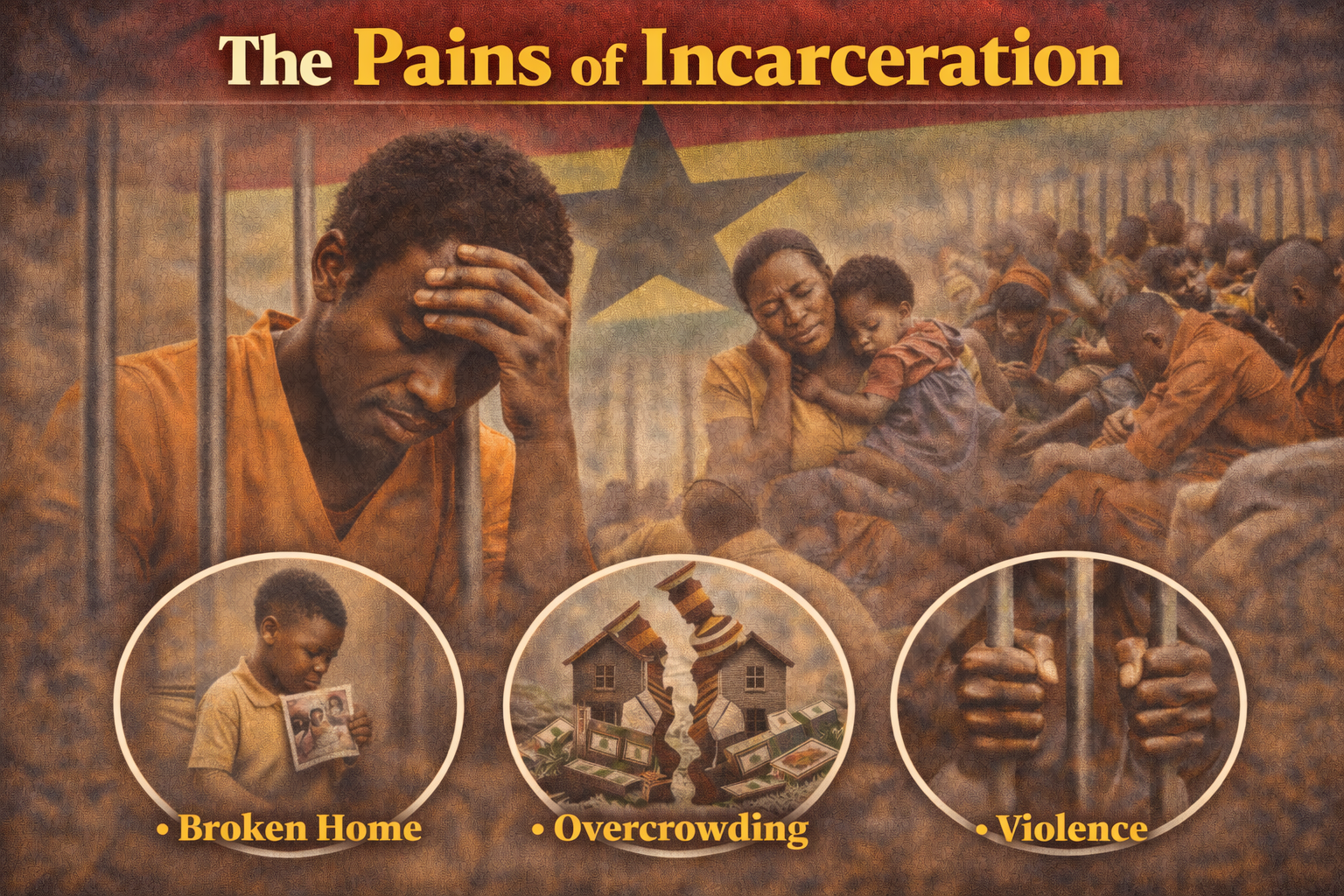
Imprisonment, also known as incarceration, is one of the most severe penalties imposed by courts in Ghana and elsewhere. Judges and magistrates have several sentencing options at their disposal, including fines, probation, community service, and custodial sentences. Prison is usually reserved for pe

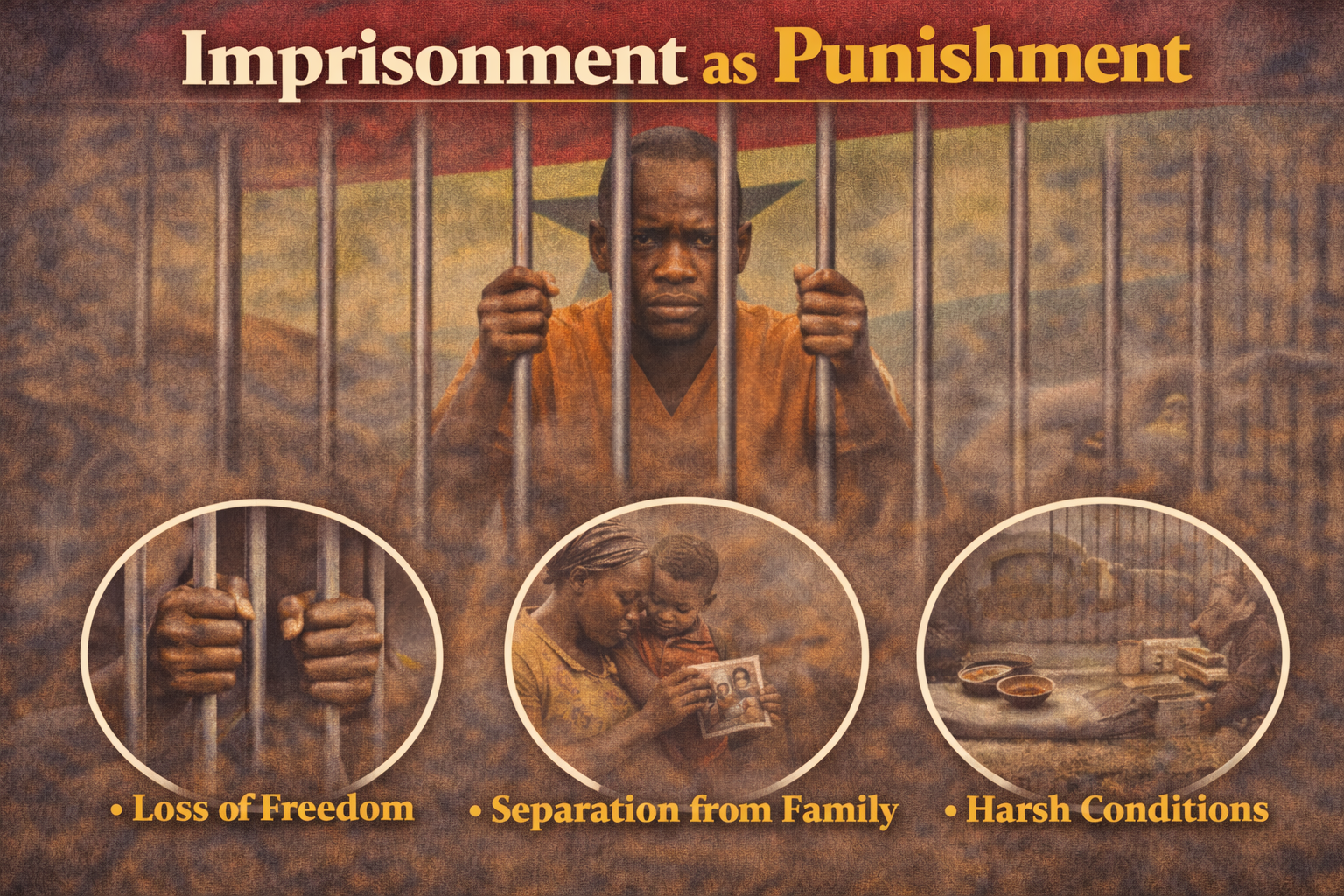
Imprisonment is one of the most common punishments for crime in many societies, including Ghana. It is also known as incarceration. While courts have several options for punishing offenders—such as fines, probation, or community service—prison sentences are usually reserved for serious crimes like r

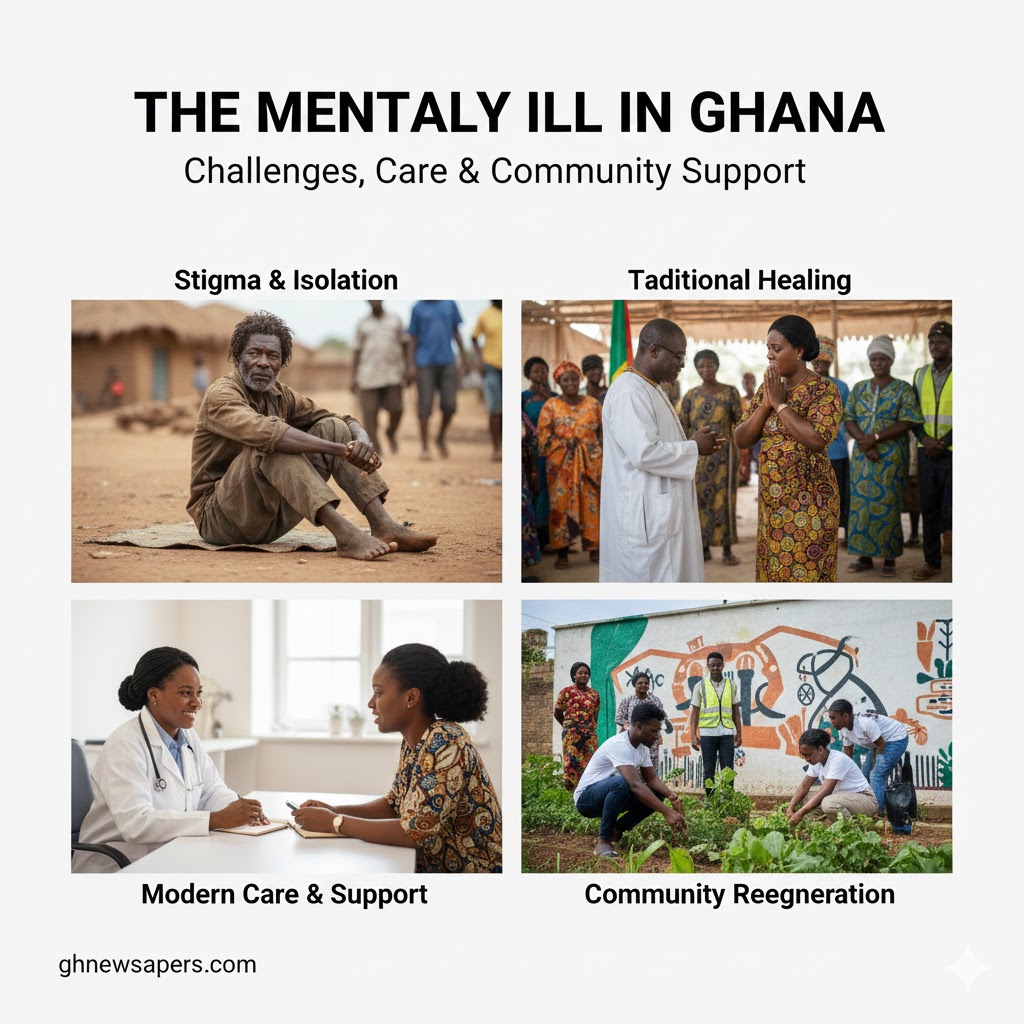
Life on the Streets: A Visible Social Failure On the streets of Ghana, many people living with mental illness wander without care, shelter, or dignity. Some are dressed in dirty, tattered clothing; others are barely clothed, and a few are completely naked. Their presence is a visible reminder of a d

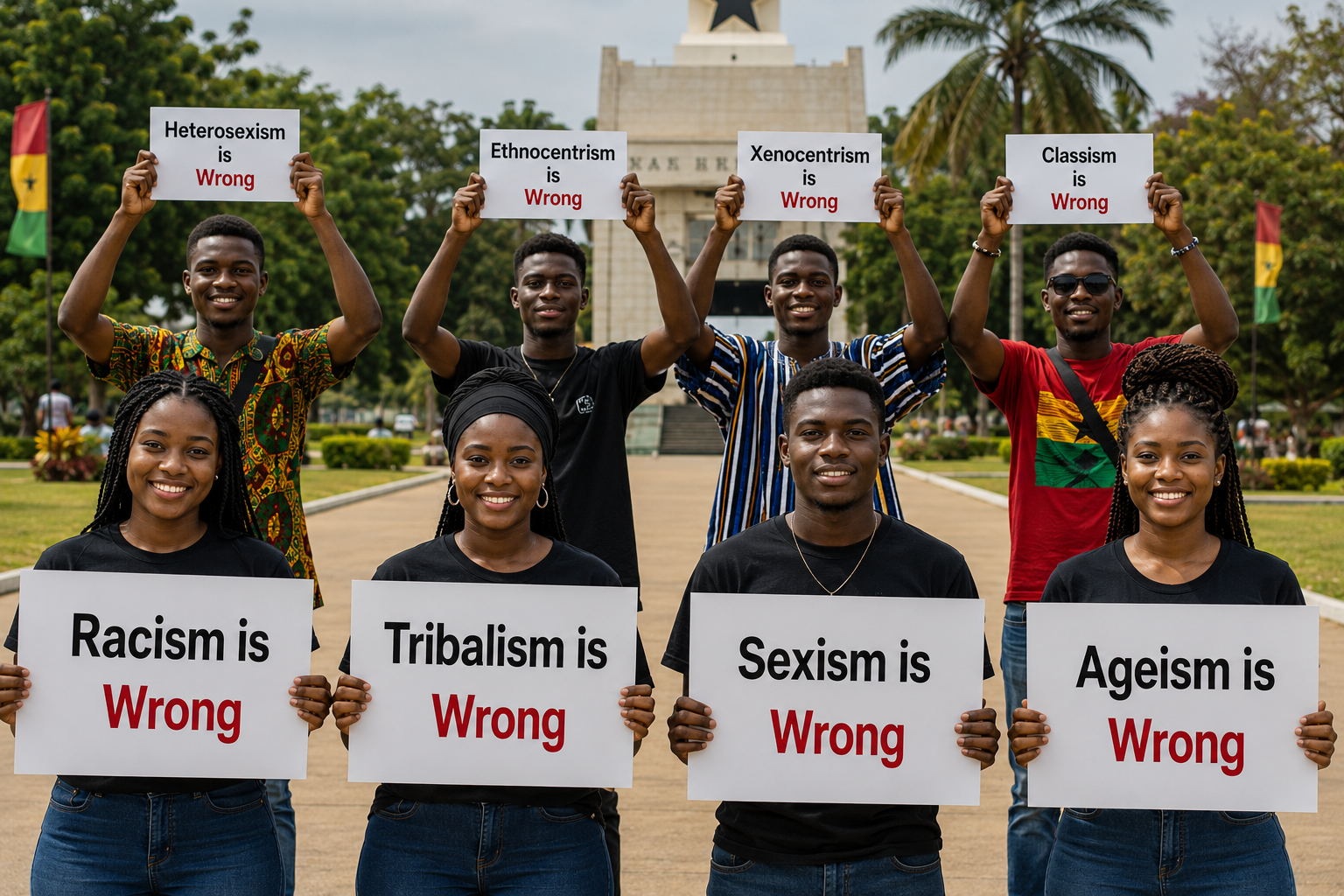
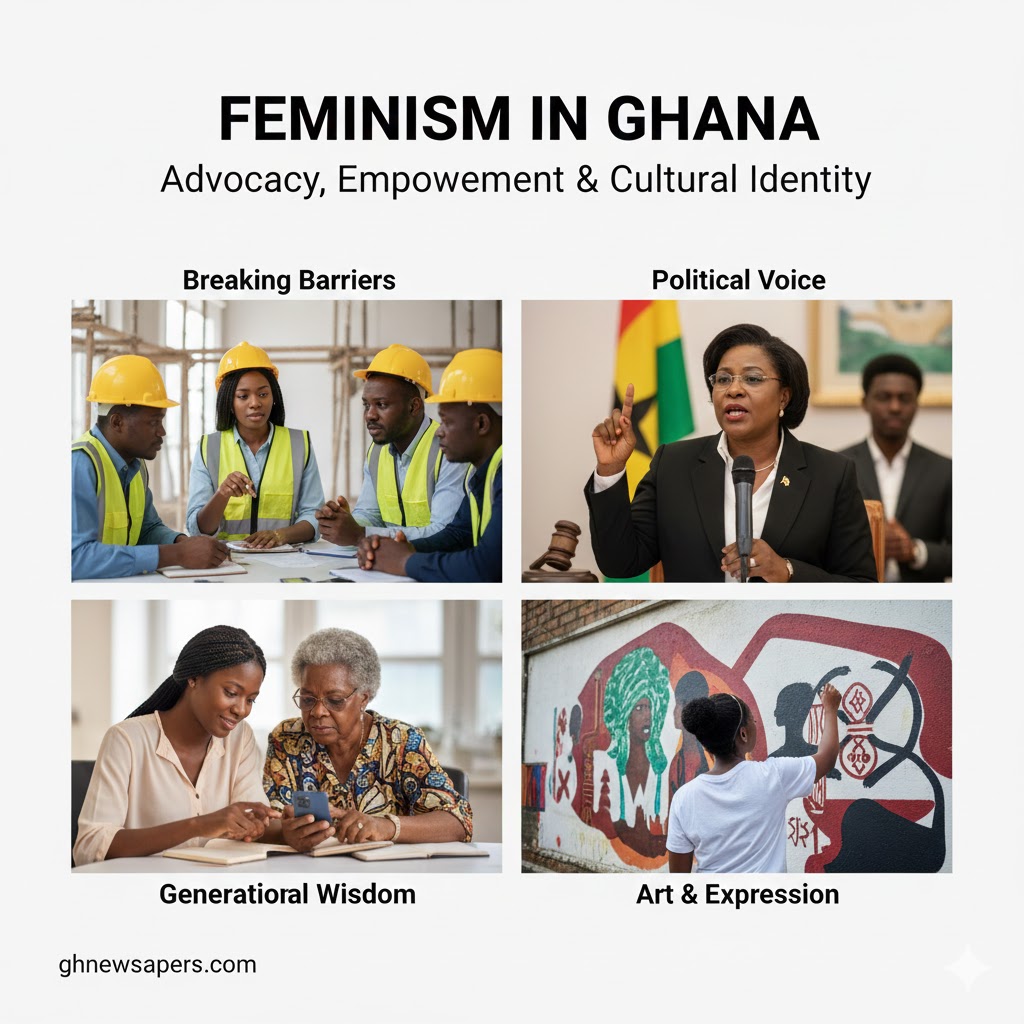
Feminism Is Not a Dirty Word Sexism is wrong. It is prejudice and discrimination against people because of their sex or gender. In many societies, including Ghana, sexist attitudes are often directed at women and girls. These attitudes show up in everyday behavior—how women are spoken to, how their

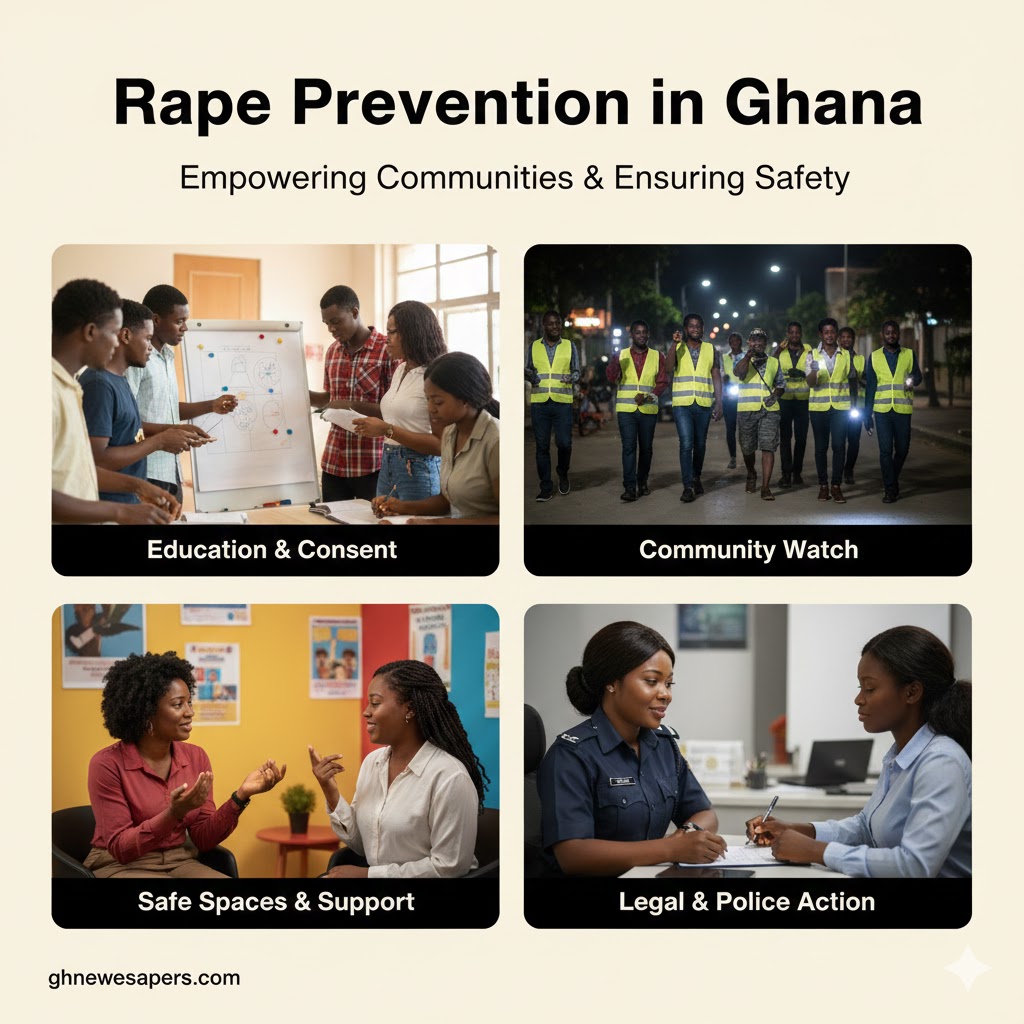
Rape and sexual assault are among the most serious crimes in Ghana, leaving victims with profound physical, emotional, and psychological scars. Despite public awareness campaigns and media reporting, sexual violence continues to occur in society, highlighting the urgent need for vigilance, education

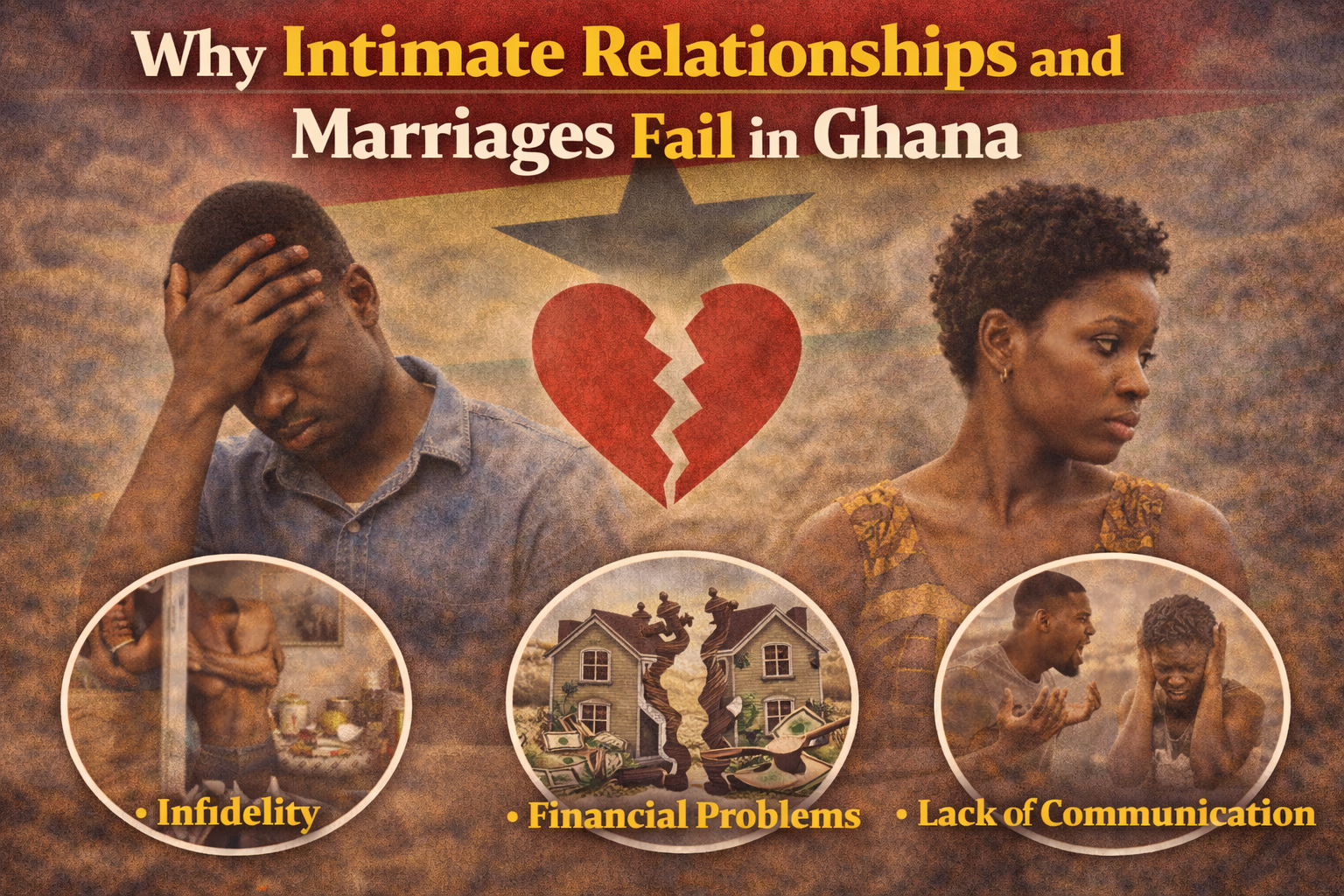
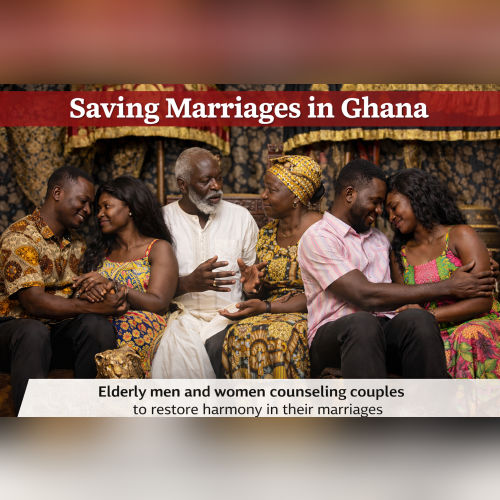
In the past, Ghanaian marriages endured. Separation was rare and divorce uncommon. Today, however, marriages are dissolving at an alarming rate. The critical question is this: what can be done to fortify marriages and restore their durability? Many of the challenges confronting contemporary marriage

In the past, Ghanaian marriages were widely regarded as enduring unions. Separations were rare, and divorce was uncommon. Marriages were expected to last a lifetime, sustained not only by the couple but also by their extended families and lineages. Today, however, the situation has changed dramatica

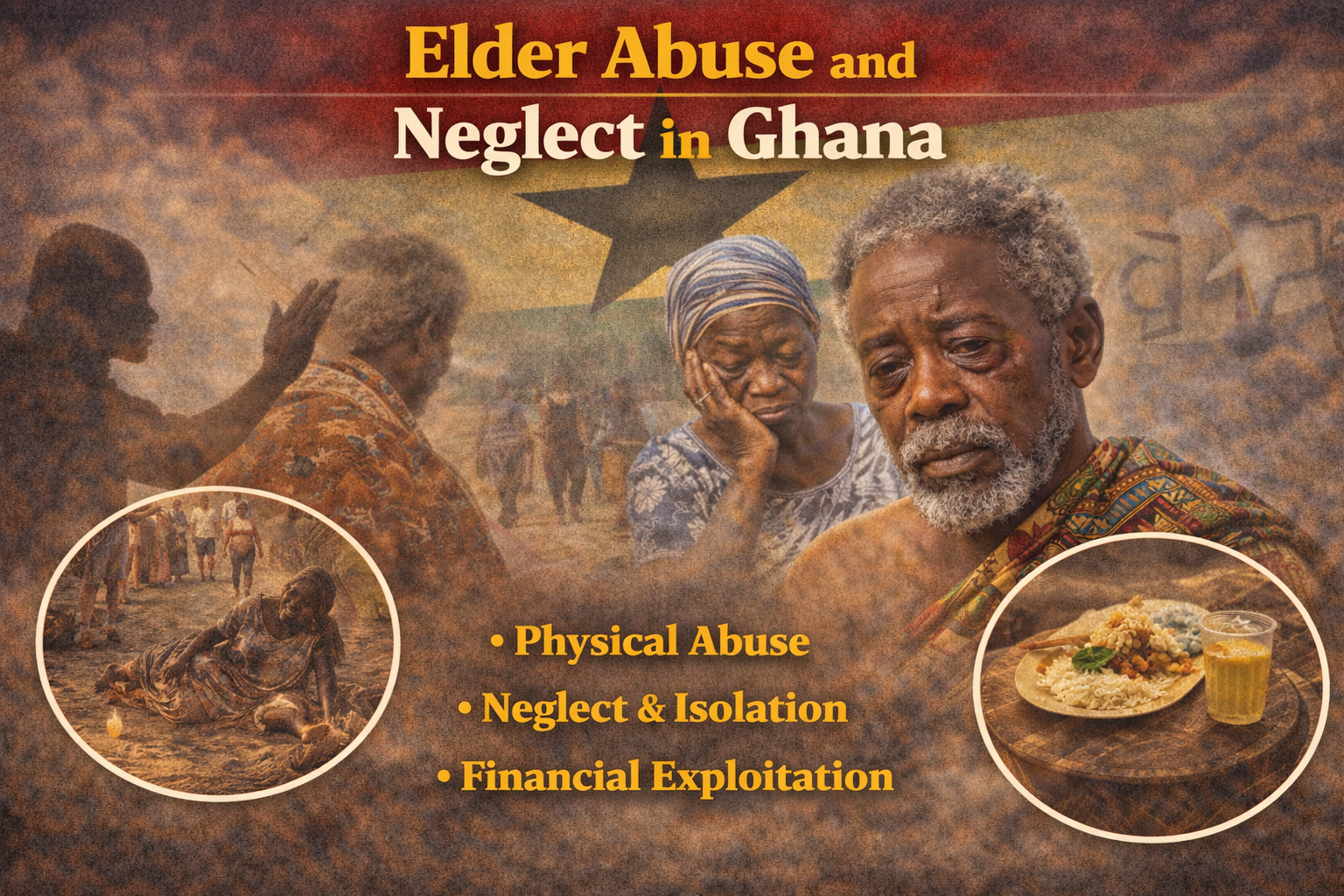
Ghanaian society traditionally values respect for the elderly. Older people are regarded as repositories of wisdom, custodians of tradition, and moral anchors of the family. Yet beneath this ideal lies a troubling reality: many elderly persons in Ghana experience neglect, abuse, and profound social

Every year, thousands of children in Ghana suffer abuse at the hands of those entrusted with their care—parents, guardians, and relatives. Reports of battered, neglected, and traumatized children frequently appear in the Ghanaian mass media, often accompanied by disturbing images and heartbreaking d

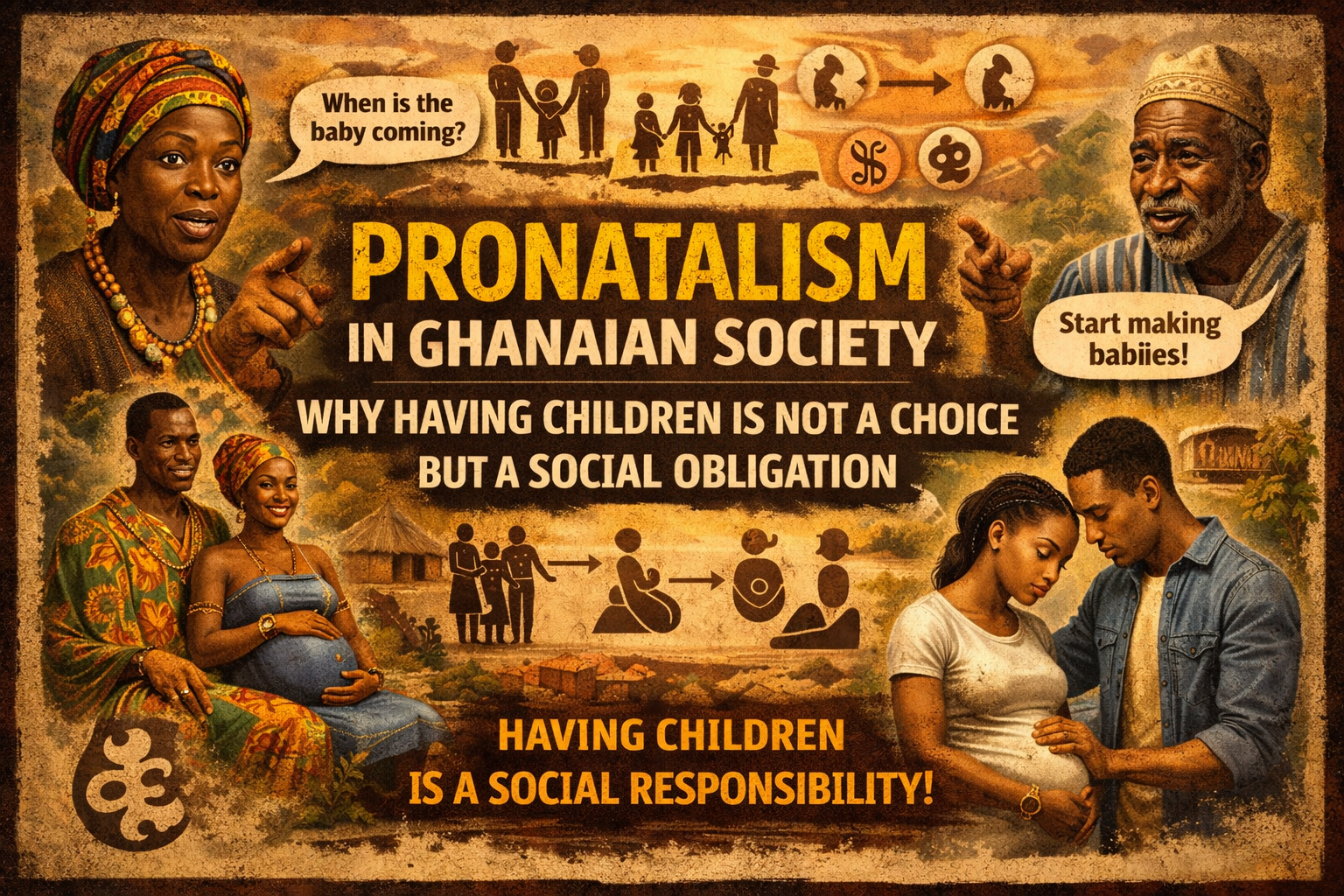
Pronatalism refers to a strong cultural and social preference for having children, often accompanied by expectations that adults should reproduce as a normal and desirable life course. In Ghanaian society, having one’s own child is not merely a personal choice; it is widely regarded as a social obli

Among the Akan people of Ghana, names are more than labels—they are living symbols of heritage, identity, social bonds, and spiritual connection. Akan naming traditions reflect a society where lineage, ancestry, and morality are woven into the very words that identify a person. Origins of Akan Surna

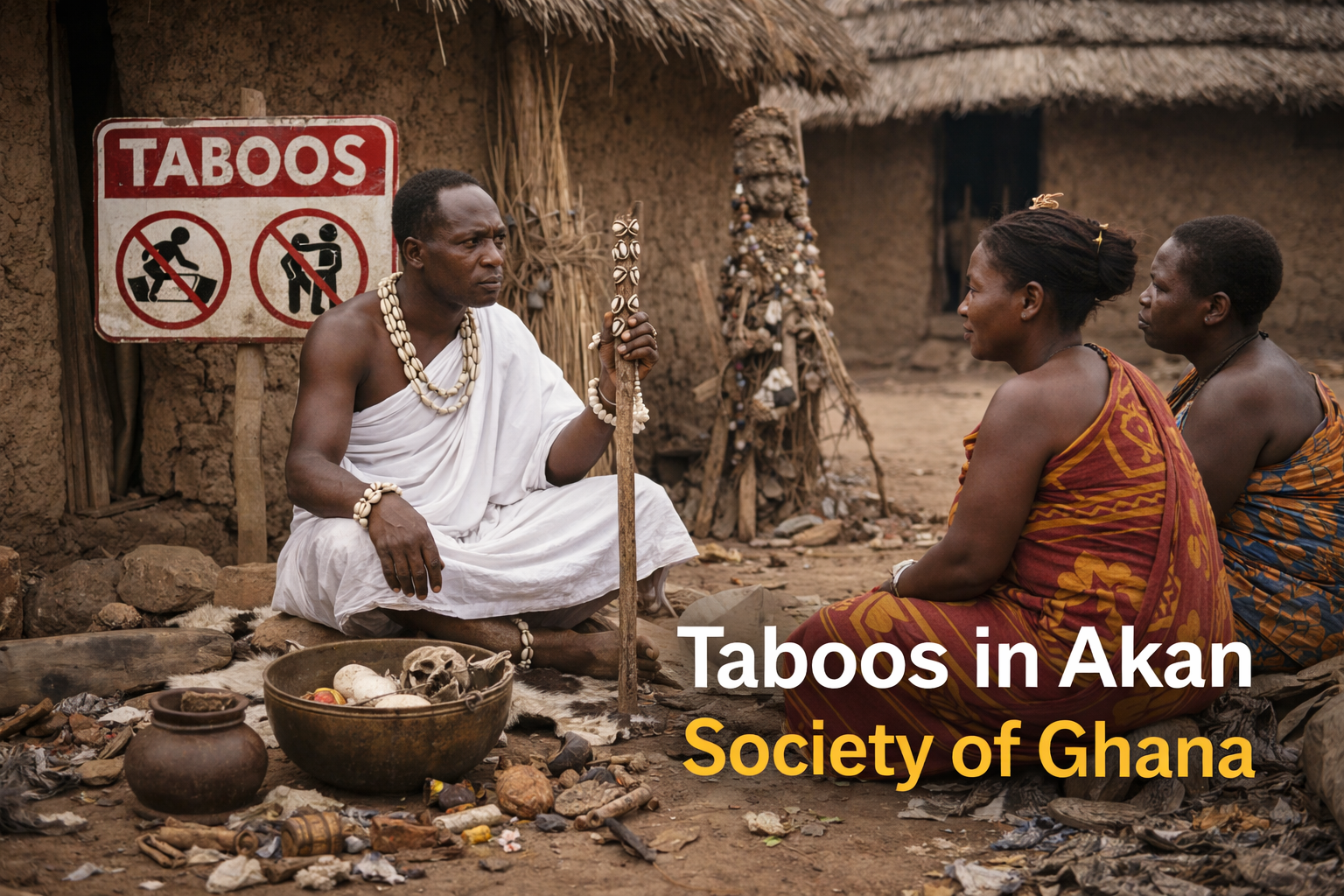
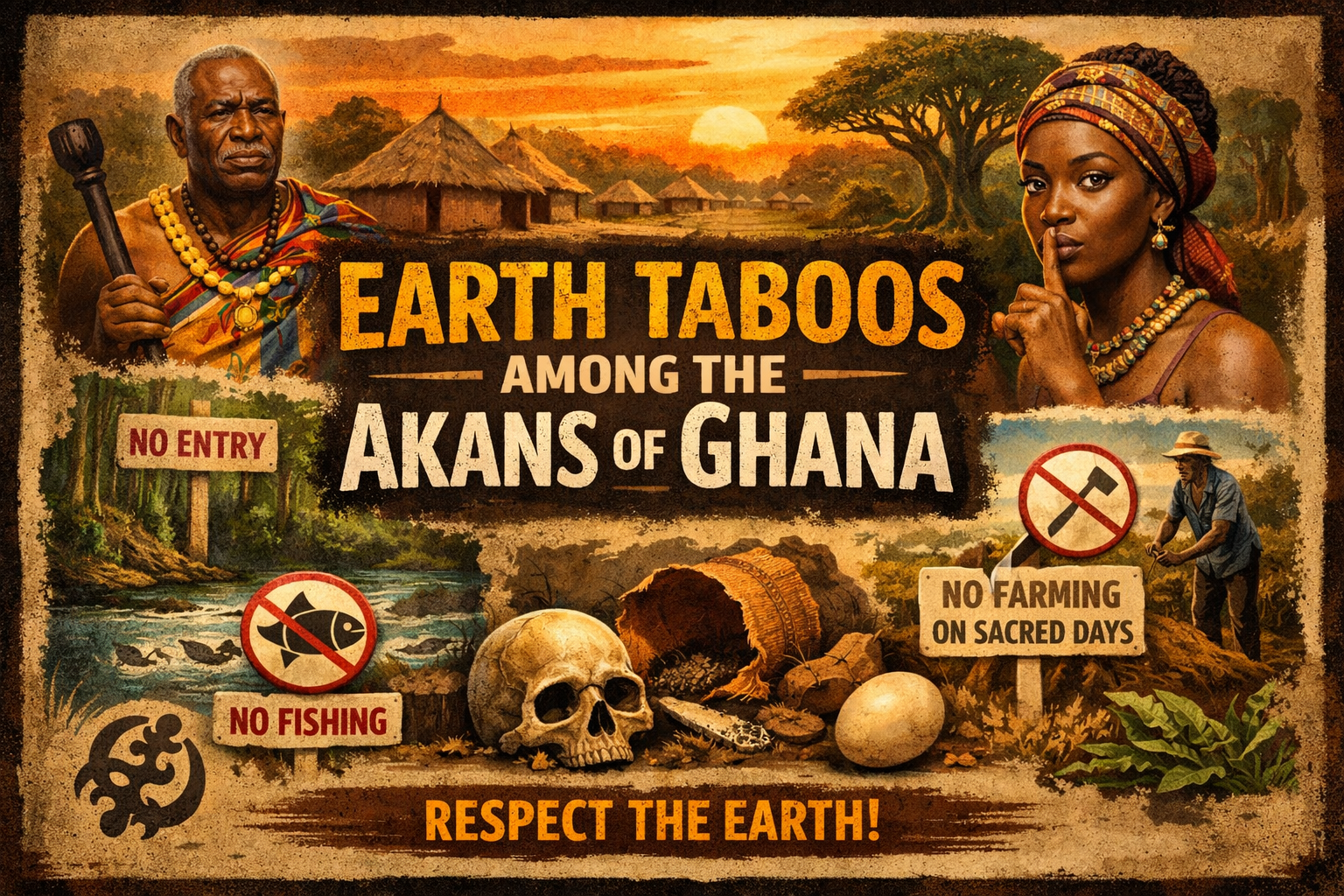
A taboo is an act so deeply forbidden that it provokes moral outrage, fear, or spiritual anxiety when violated. Taboos are cultural universals: every society draws invisible lines that must not be crossed. Yet these lines are not the same everywhere. What one society condemns as unthinkable may be o

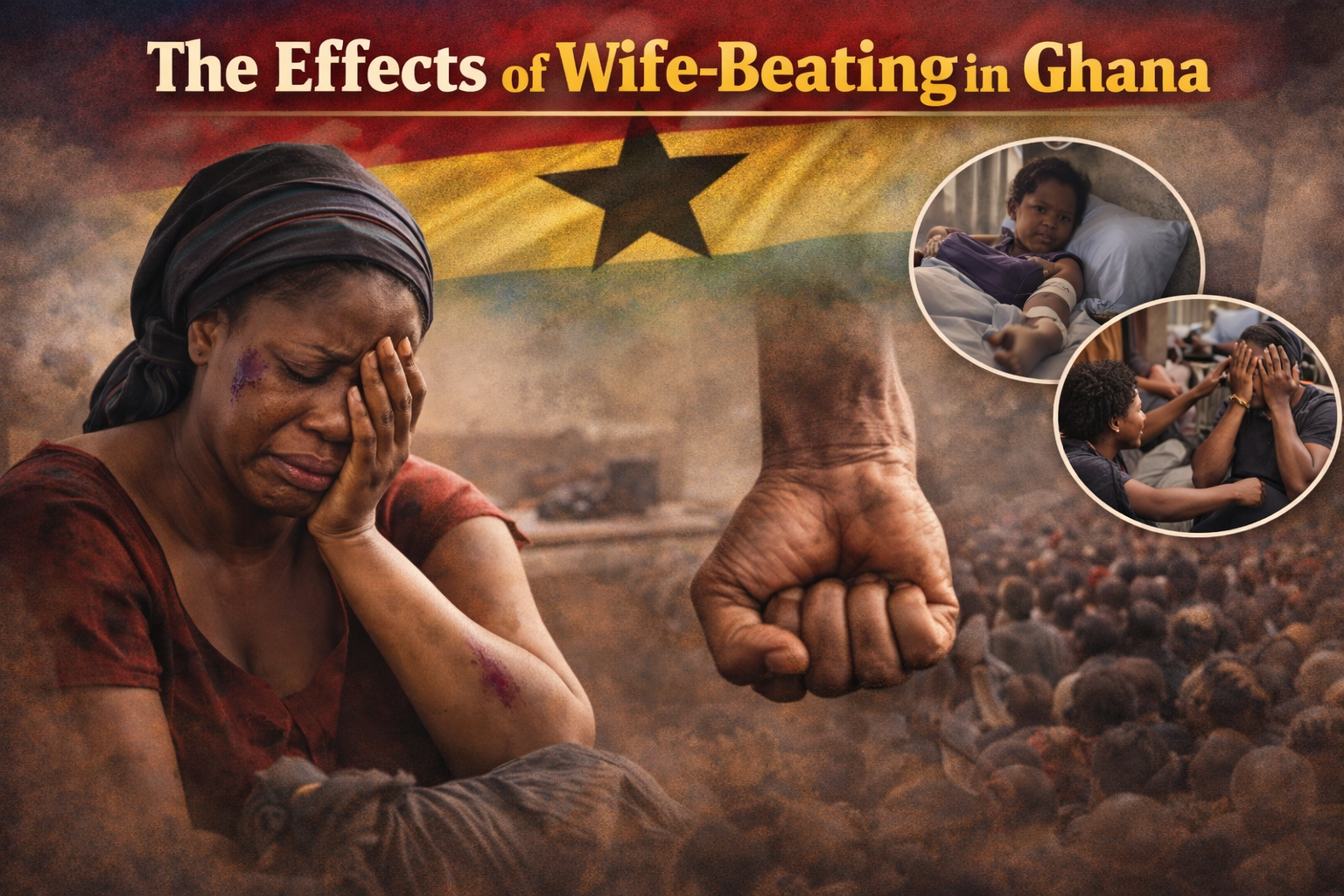
When Two Elephants Fight, the Earth Underneath Suffers Marriage is ideally meant to be a source of companionship, love, and emotional security between husband and wife. Yet in Ghana, as in many societies across the world, the promise of marital bliss is too often shattered by domestic violence, part

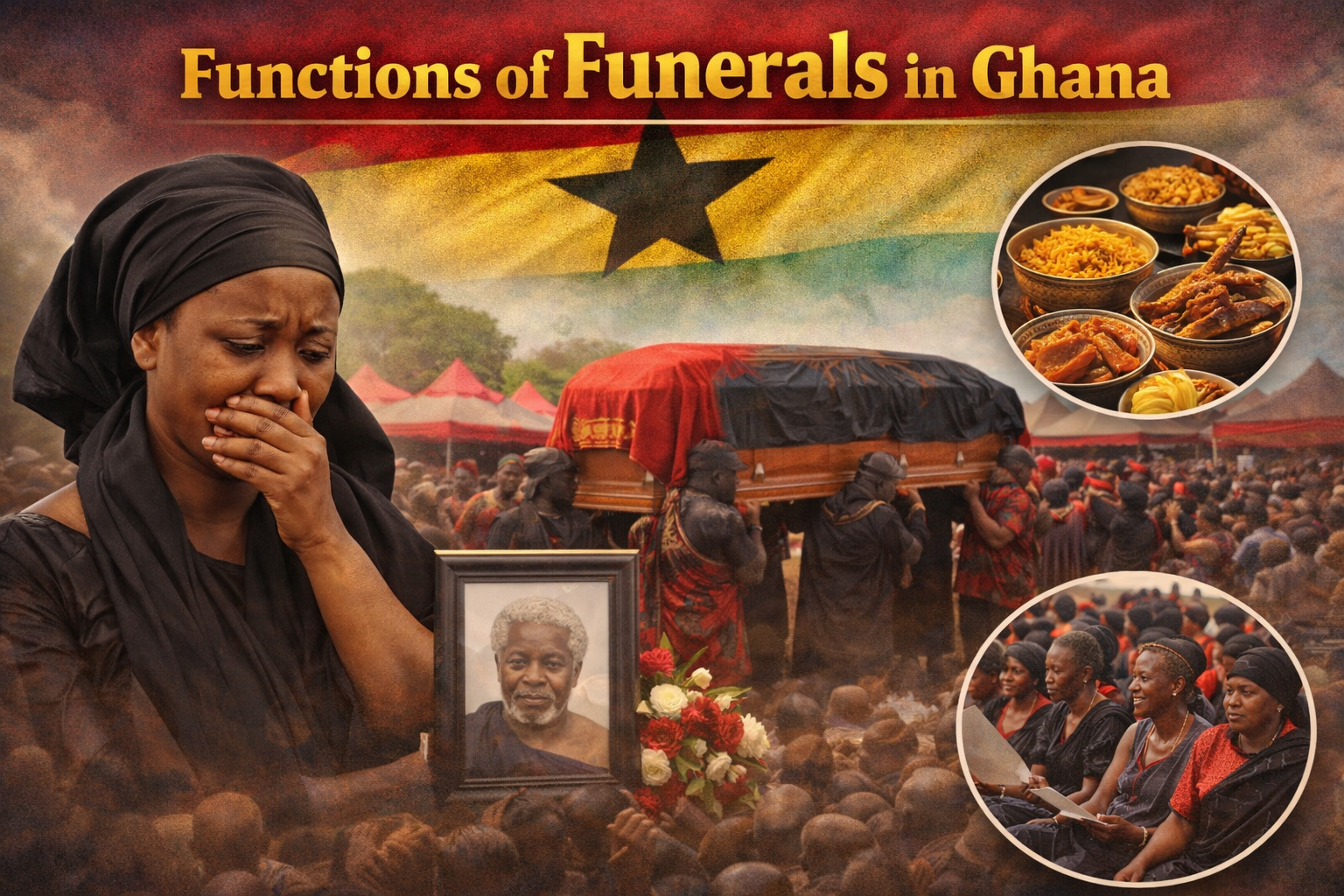
Among the Akan people of southern Ghana, funerals are more than ceremonies—they are profound cultural, spiritual, and social events that reflect the community’s understanding of life, death, and the afterlife. Central to Akan beliefs is the conviction that life continues after death. While the body

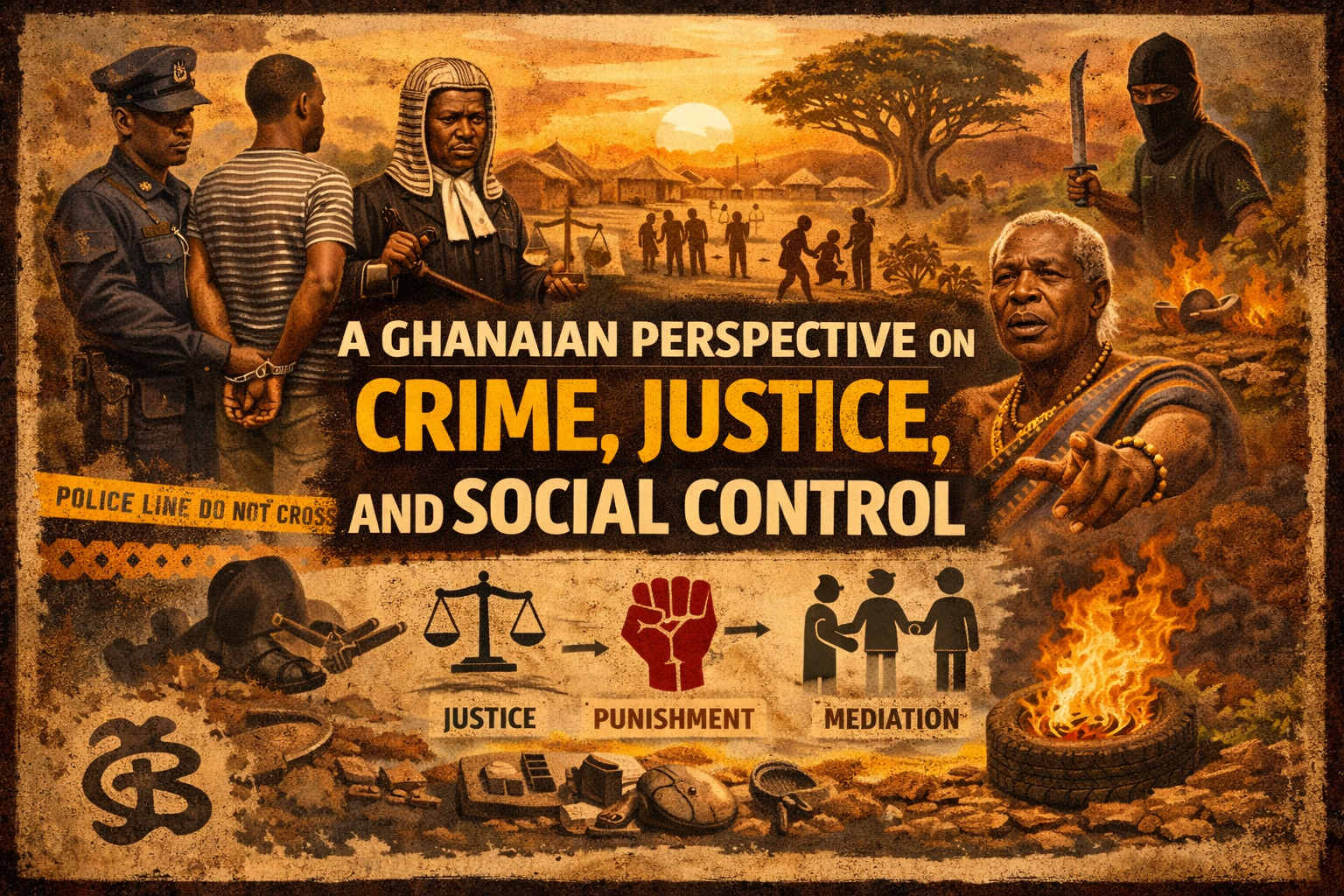
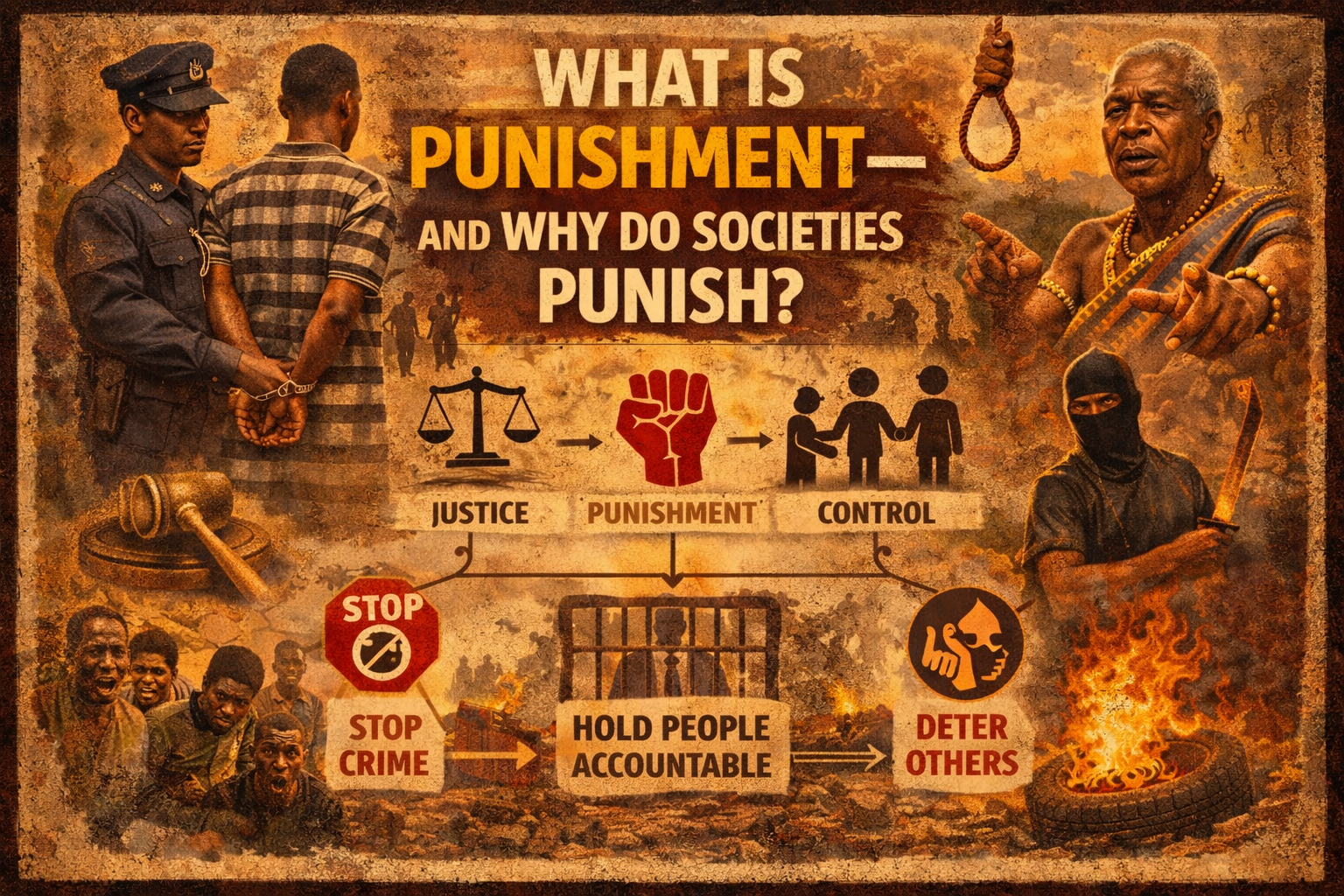
Punishment is a central feature of every organized society, including Ghana. While rewards are designed to encourage conformity and socially approved behavior, punishment exists to negatively sanction deviant behavior. When individuals act in ways that align with societal norms, they are often rewar

Punishment is a central feature of every organized society. While rewards are designed to encourage conformity and socially approved behavior, punishment exists to negatively sanction deviant behavior. When individuals act in ways that align with societal norms, they are often rewarded through prais

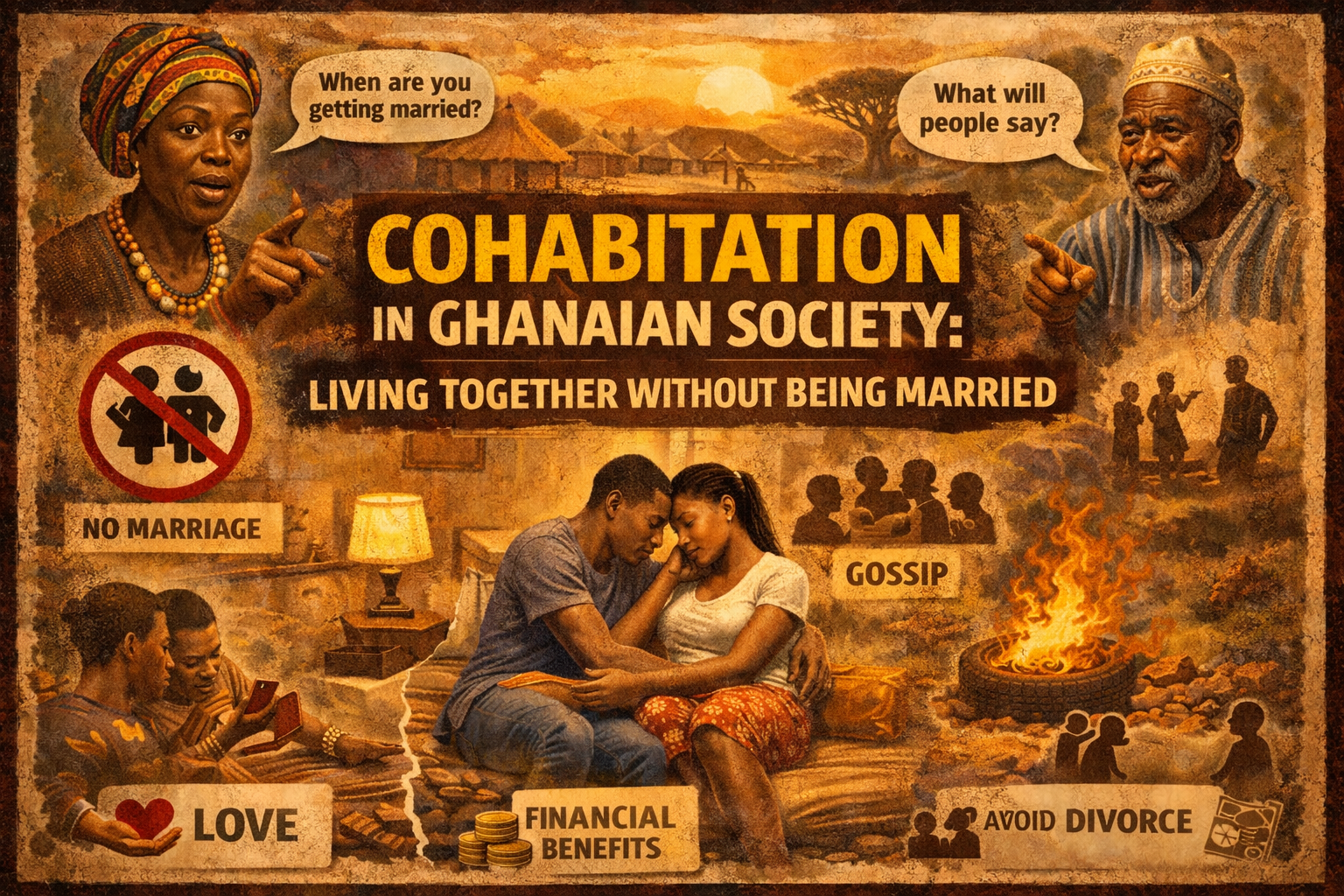
Cohabitation refers to an intimate arrangement in which a man and a woman live together in a shared residence without being formally married. While cohabitation has become increasingly common in many contemporary societies, it is generally frowned upon in Akan society and regarded as socially improp

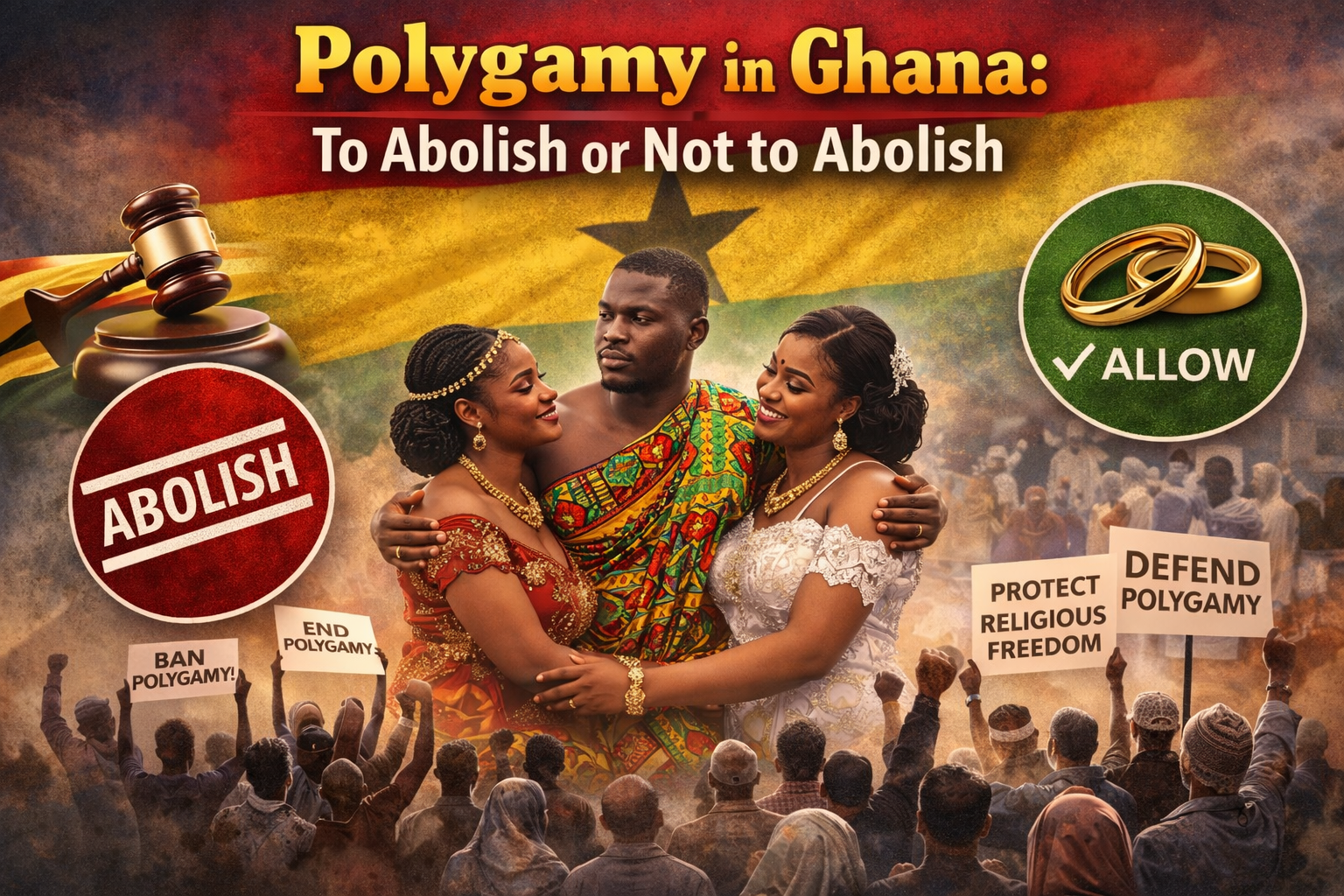
Polygamy refers to a marital arrangement in which a person is permitted to have two or more spouses at the same time. Although the term polygamy is often used loosely in everyday conversation, sociologists and anthropologists make important distinctions among its different forms. There are two main

Sociologists use the term ableism to describe prejudice, discrimination, and social exclusion directed against persons with disabilities. The terms ablism and disablism are also used in the scholarly literature to refer to the same phenomenon, namely, the systematic disadvantaging of people whose bo

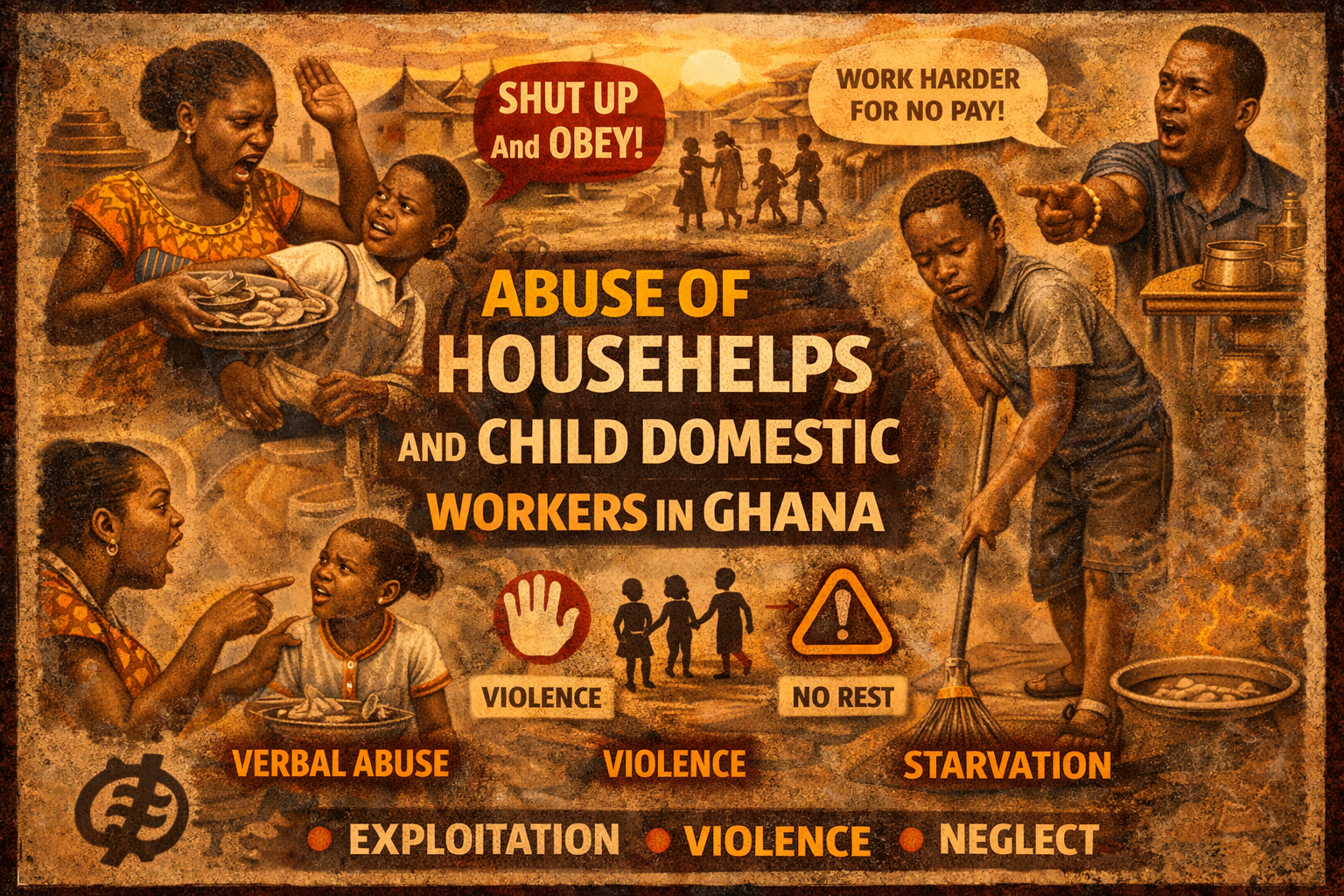
In Ghana, there exists a long-standing practice in which some parents send their children to live with other families as househelps. While this arrangement is often justified as a strategy for providing children with better opportunities, it has, in many cases, become a source of profound exploitati

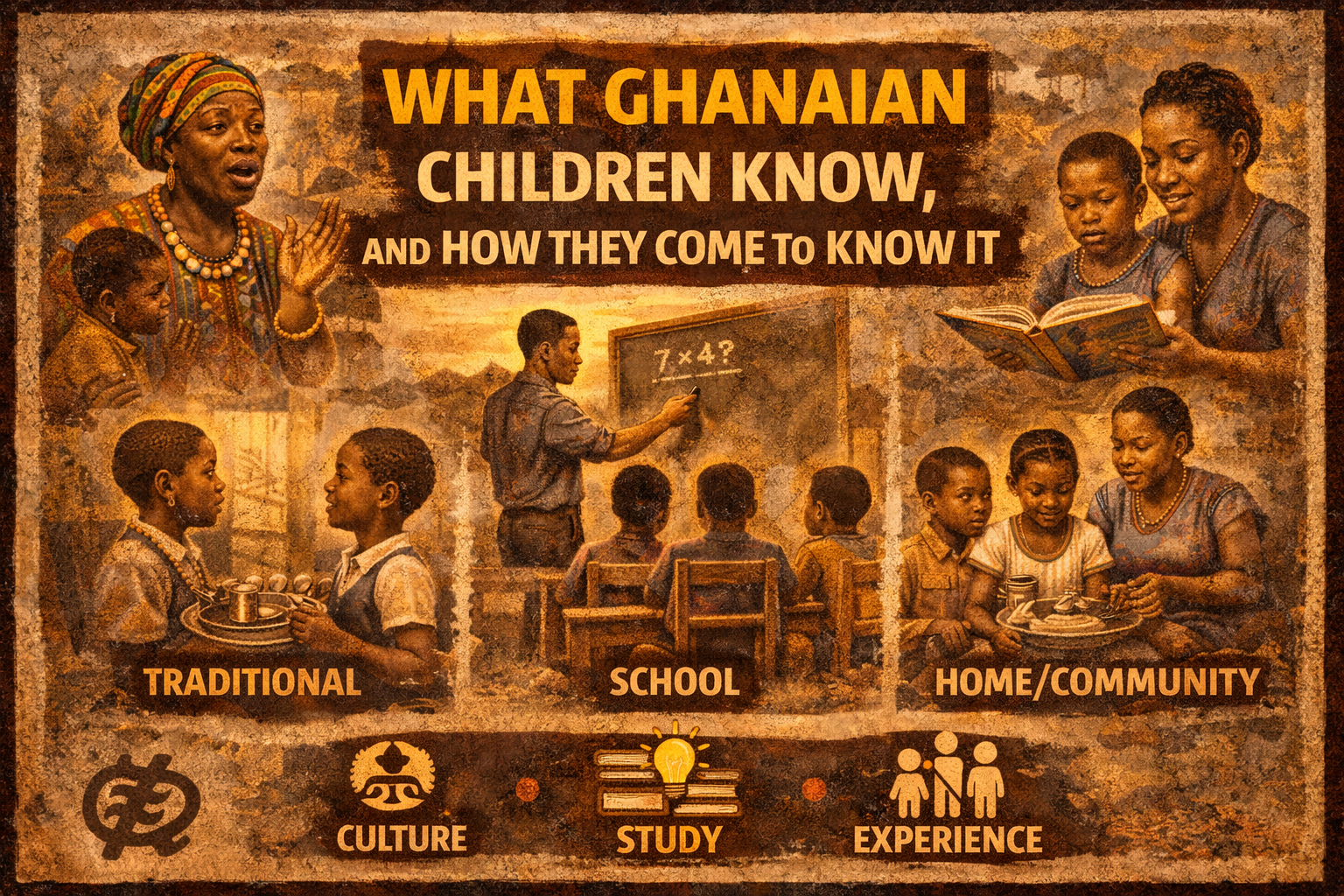
No one is born with knowledge. Human beings are born with the capacity to learn, but what they eventually know—how they speak, think, behave, believe, and interpret the world—is acquired from society. Knowledge, values, attitudes, and skills are socially produced and socially transmitted. By the tim

In every society, people occupy different positions called statuses. A status is simply the position a person holds in society. Throughout life, one person can have many statuses at the same time—for example, being a child, a parent, a worker, a student, or a citizen. Sociologists talk about two mai

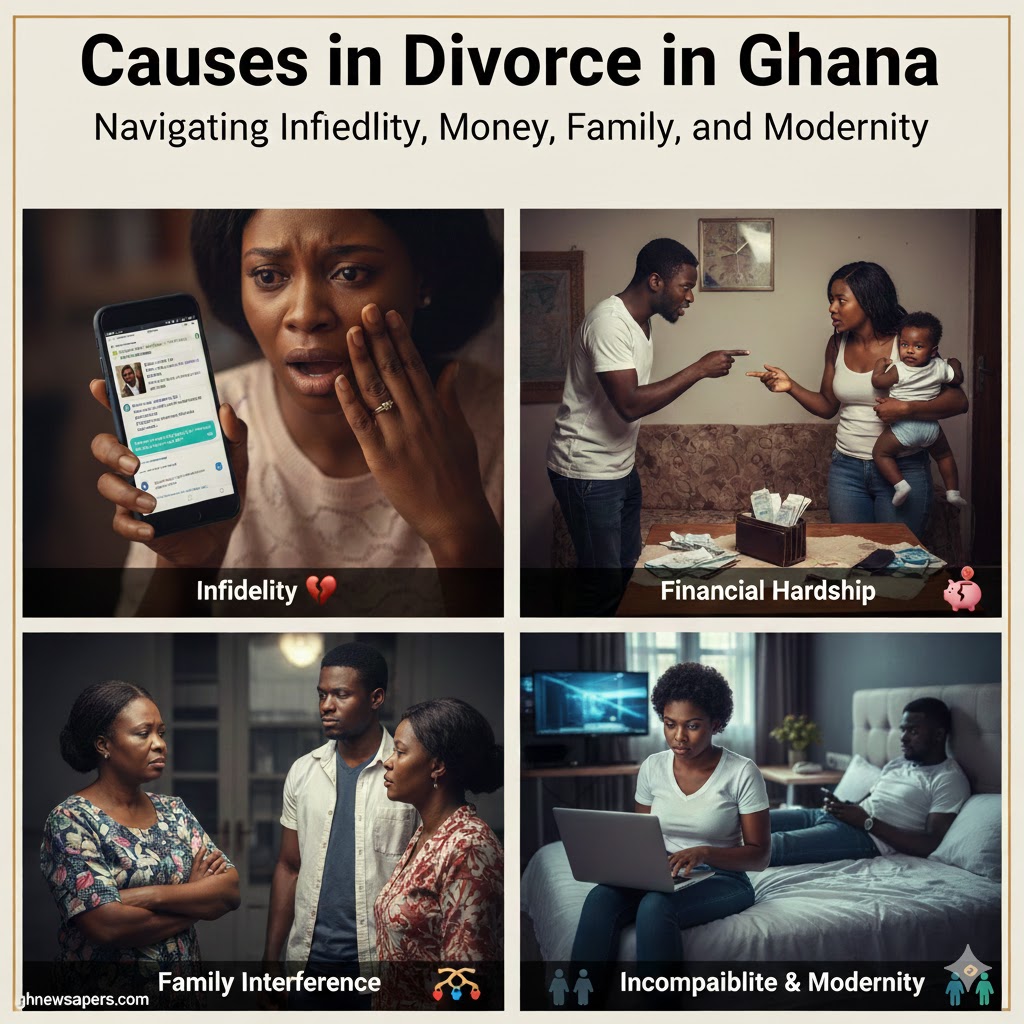
Marital and relationship breakdowns occur for many reasons, and these reasons often vary from one society to another. Pe

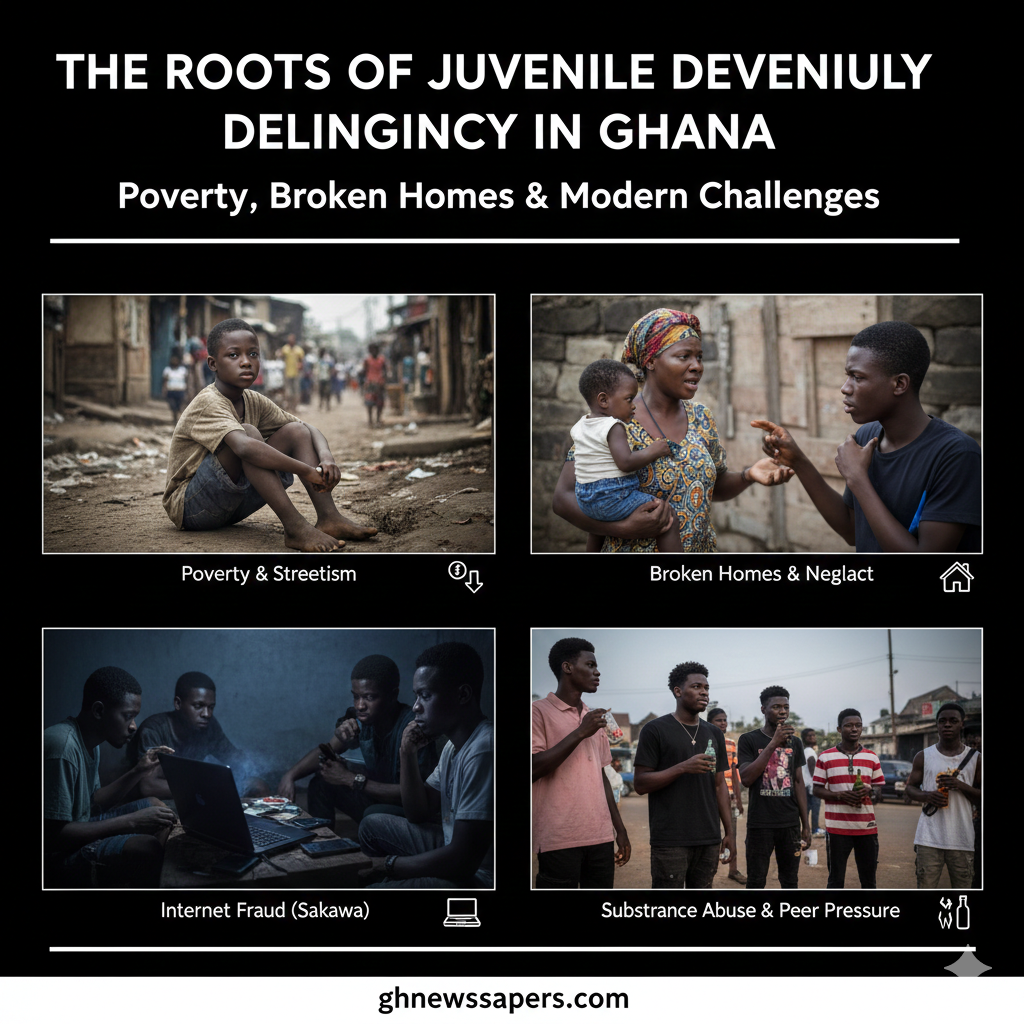
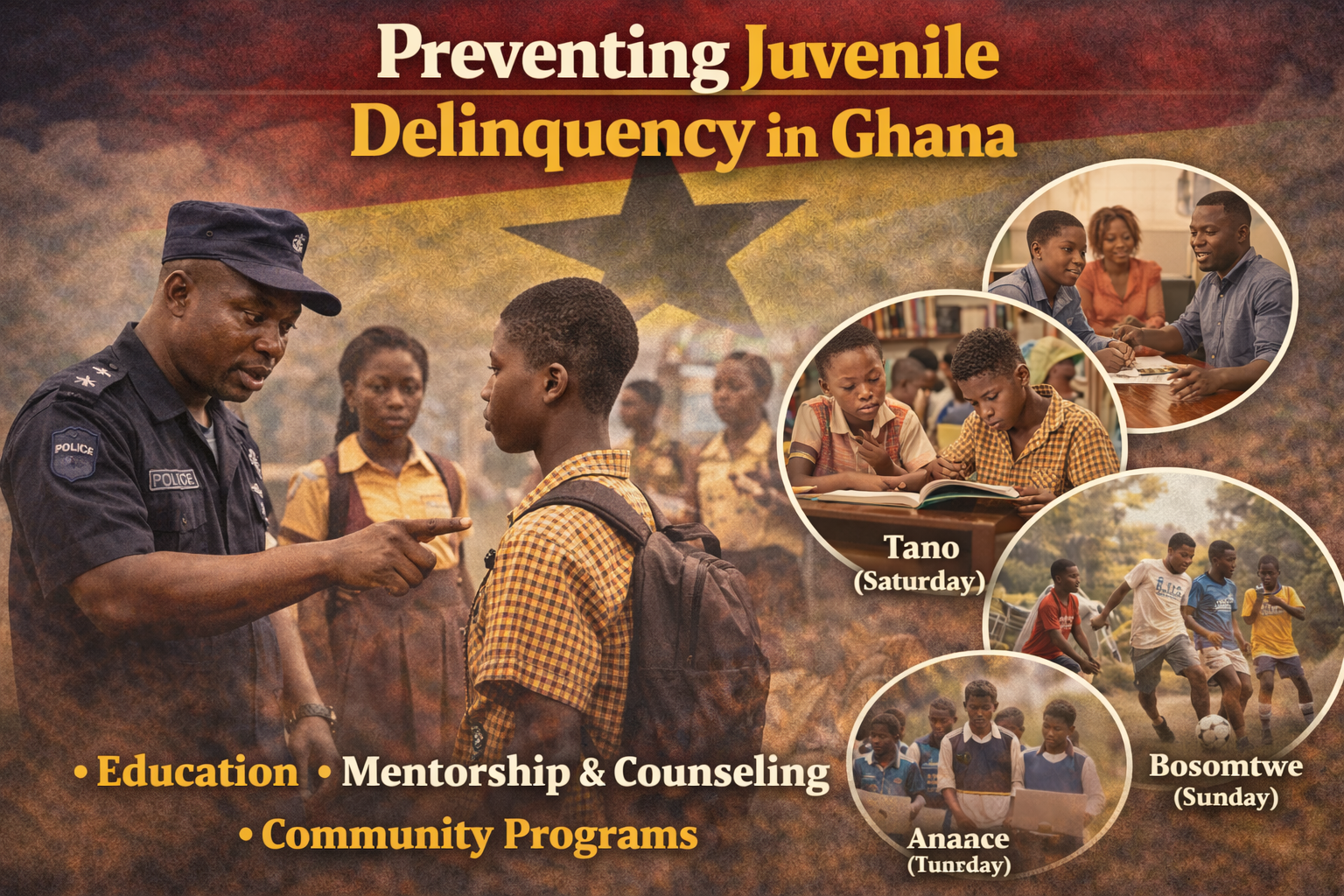
Children are the future of every society. Yet Ghana faces a serious challenge if urgent steps are not taken to ensure that today’s children are properly guided and nurtured to grow into law-abiding and responsible citizens. In recent years, there has been a noticeable increase in juvenile delinquenc

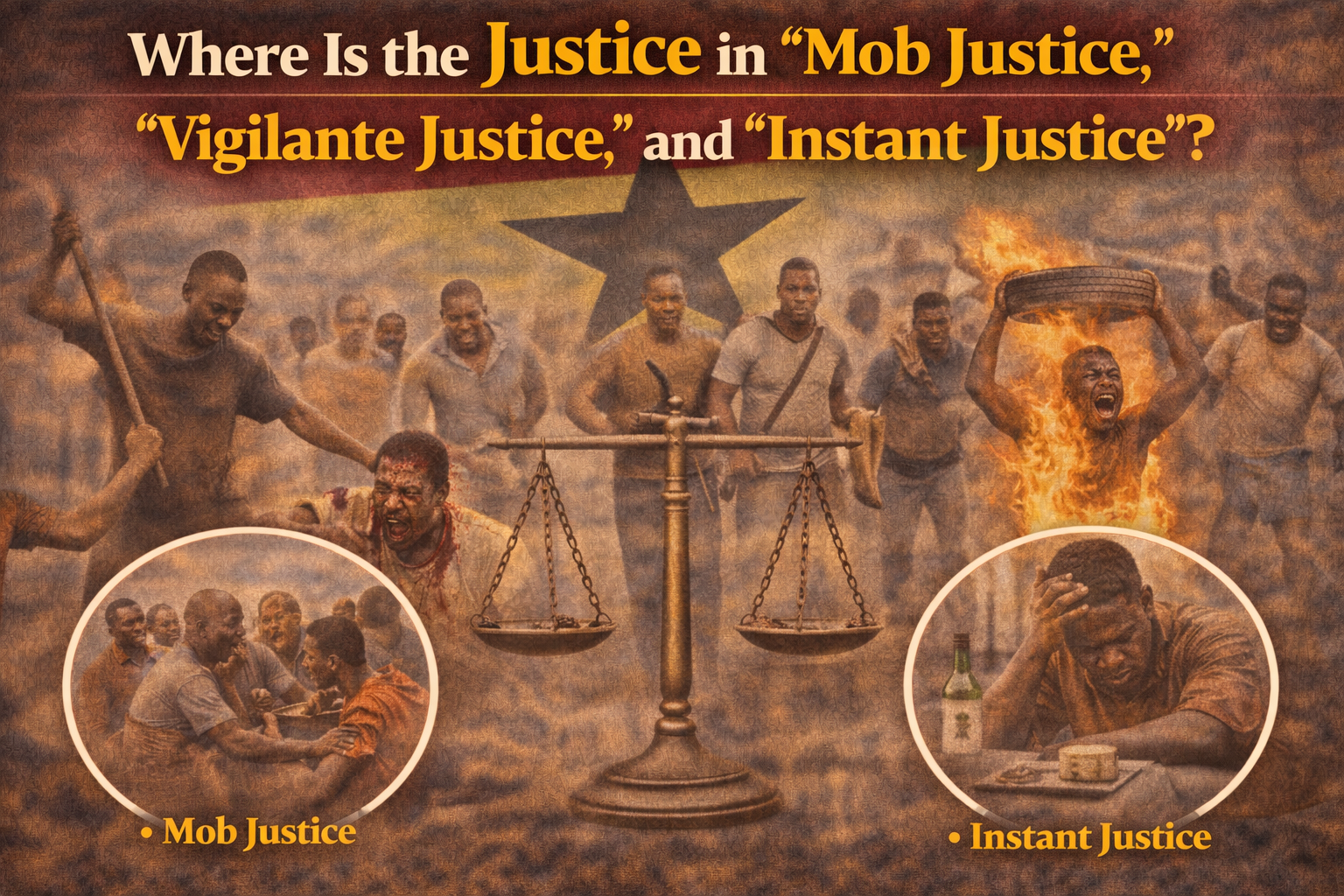
Some call it mob justice. Others describe it as instant justice or vigilante justice. But where, indeed, is the justice when a person is beaten, maimed, or killed without a proper trial or lawful conviction by the legally constituted justice system of the land? Every year in Ghana, scores of individ

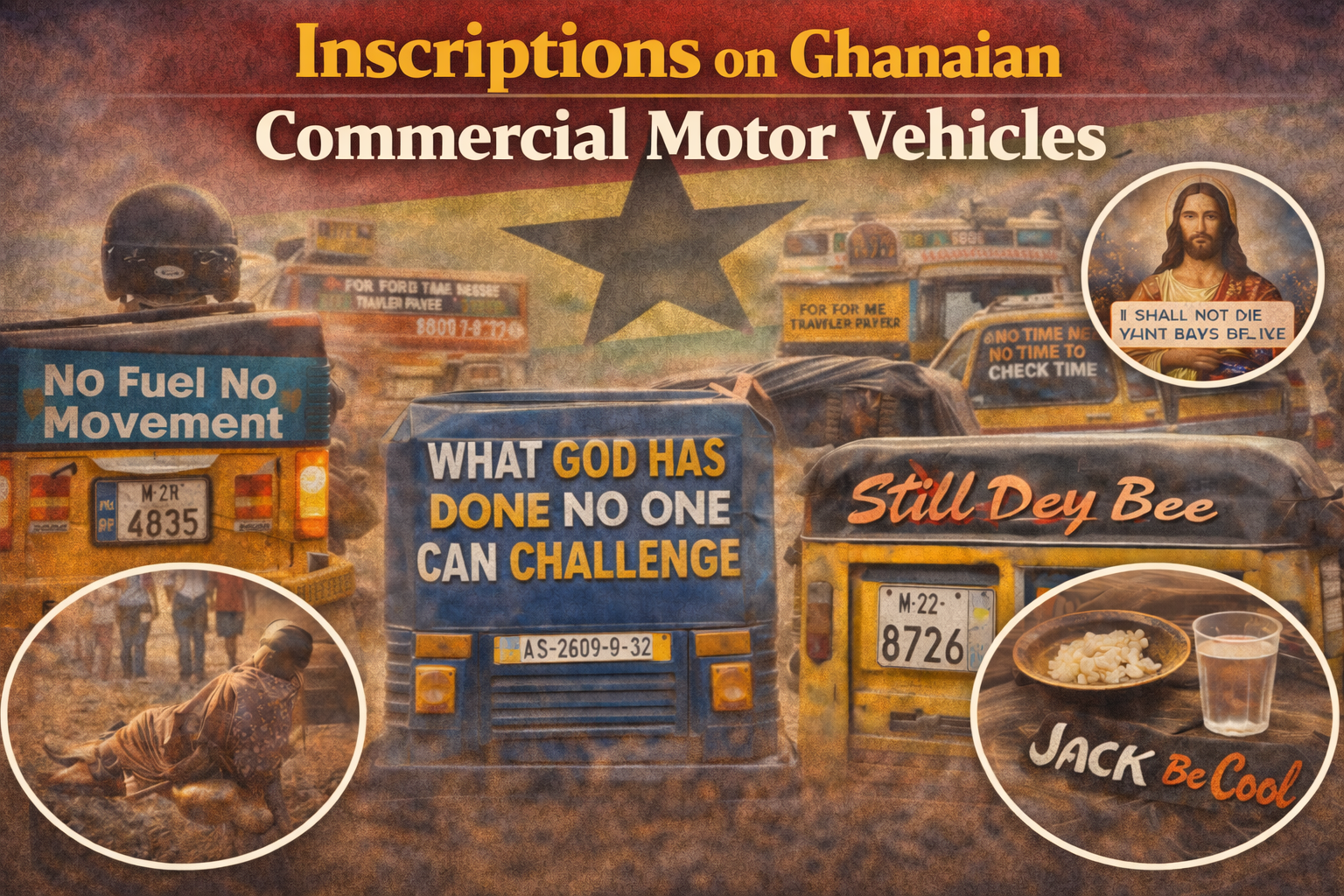
A visitor to Ghana will quickly notice something striking on the roads: commercial motor vehicles speak. Tro-tros, buses, taxis, and long-distance vehicles often carry inscriptions—short messages painted boldly on the body of the vehicle. These inscriptions may appear on the back of the vehicle, acr

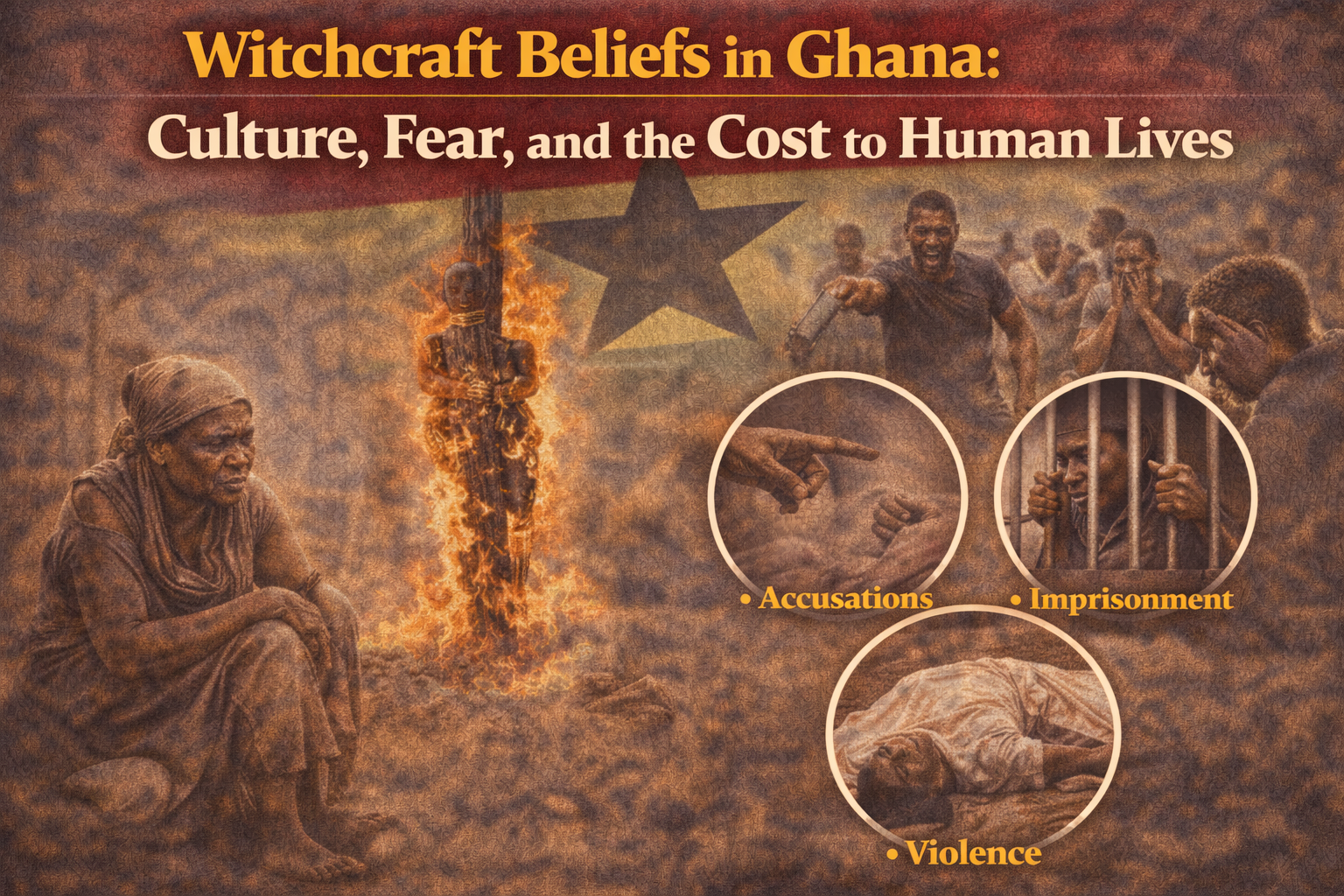
Witchcraft is commonly understood in Ghana as a supernatural power believed to be possessed by some individuals, enabling them to influence the behavior, health, fortune, or misfortune of others—either as victims or beneficiaries. Belief in witchcraft and witches remains widespread and deeply embedd

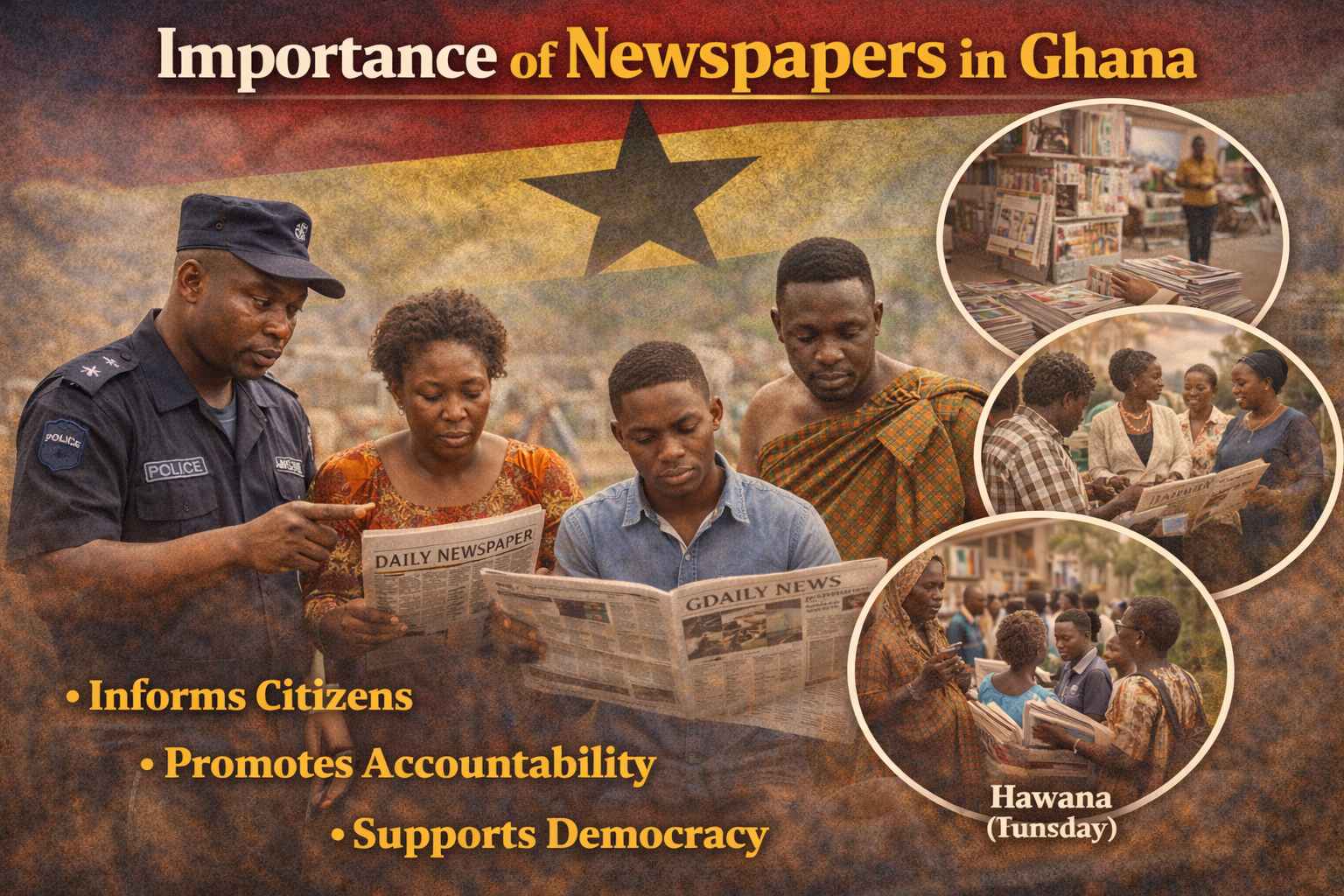
Newspapers occupy an important place in Ghanaian society. Long before the rise of social media and online news platforms, newspapers were the primary source of information for the public. Even today, despite digital competition, newspapers continue to serve critical social, political, educational, a

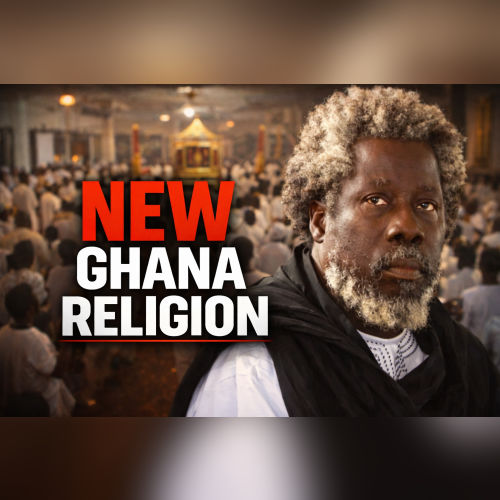
A new religious movement has emerged in Ghana known as Asomdwee Ntonton Som, a name that translates literally as “Peace and Exaltation Religion.” Ghana is a deeply multireligious society, long accustomed to religious plurality. Christianity—represented by historic denominations such as Catholic, Pre

Culture refers to the total way of life of a people. It encompasses both material and non-material elements. Material culture consists of tangible aspects that can be seen and touched, such as cooking practices, eating utensils, earthenware, palanquins, drums, and idiophones. Non-material culture, b

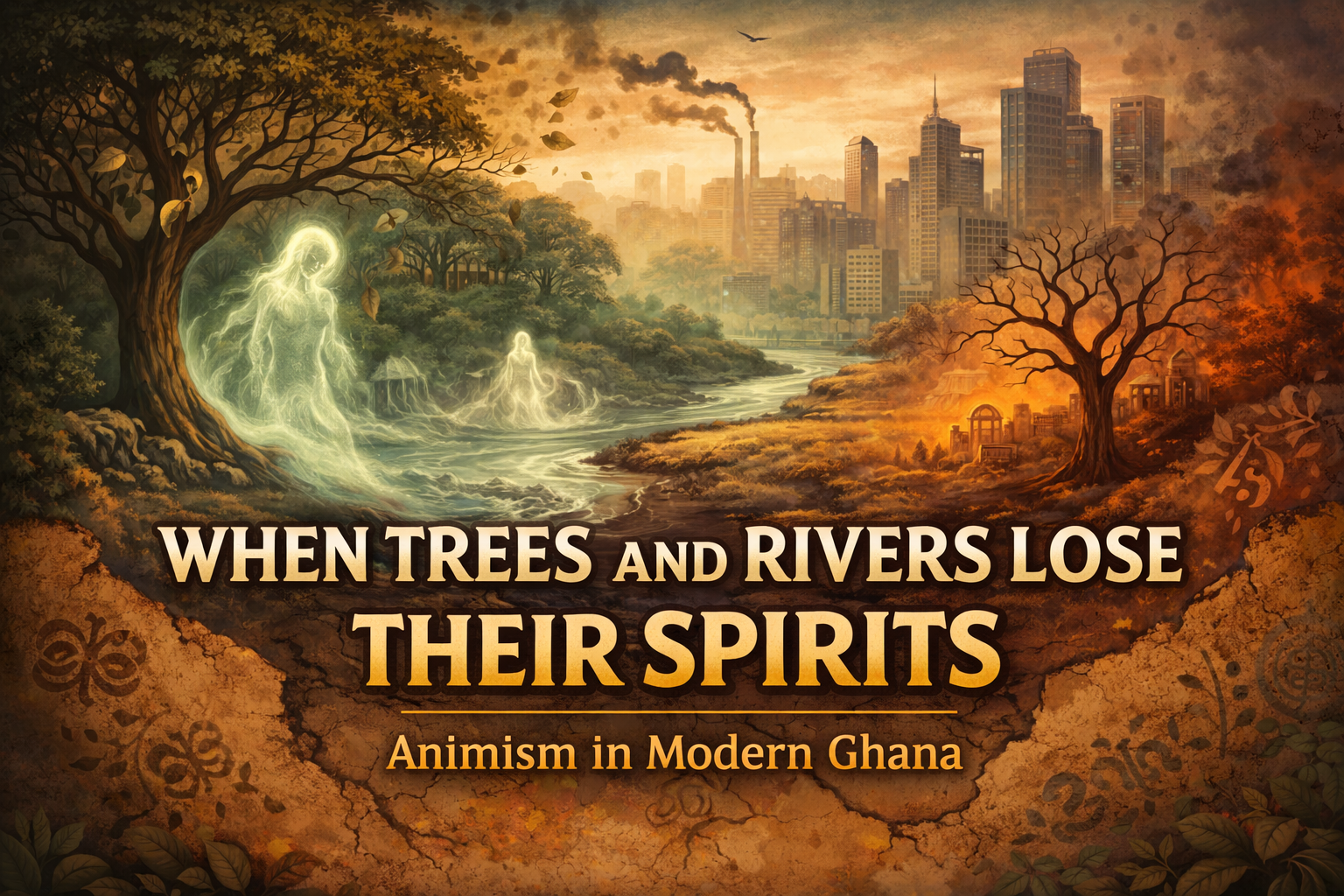
Animism is the belief that the environment and society are populated with spirits. Many Ghanaians hold animistic beliefs, maintaining that their surroundings are inhabited by spiritual beings. Some of these spirits are believed to be benevolent, while others are considered malevolent. Animistic beli

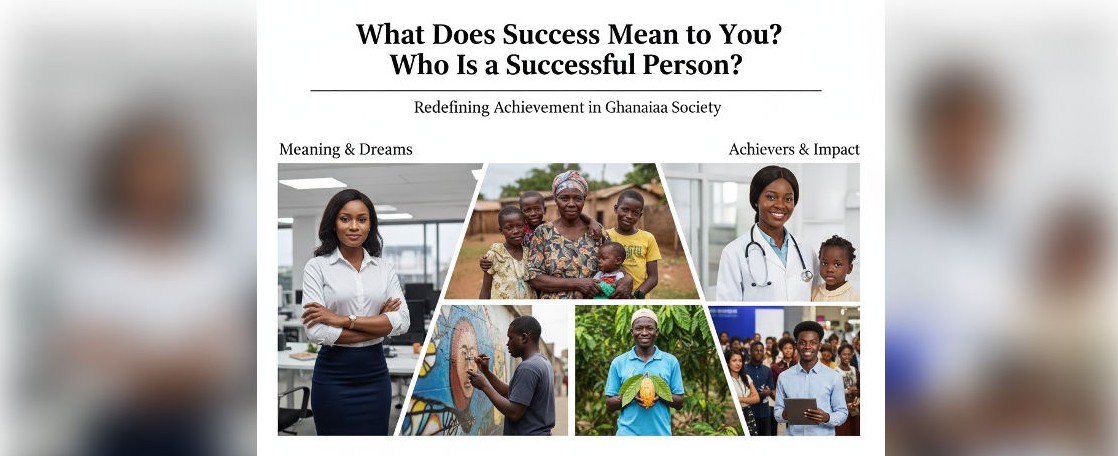
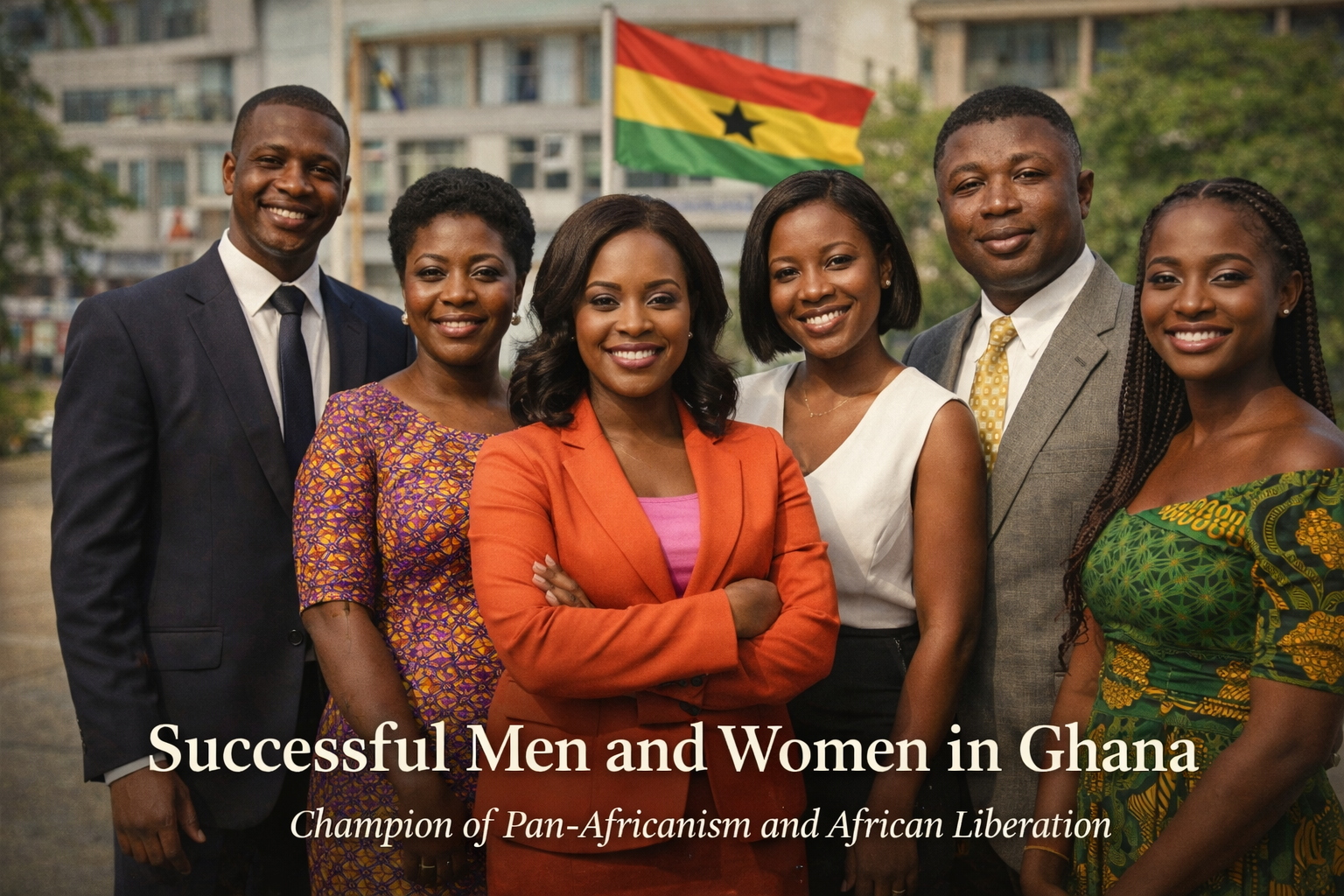
In Ghana, success is loudly celebrated, quietly envied, and endlessly debated. Yet, beneath the noise of social media displays, church testimonies, political slogans, and family expectations lies a deeper question we rarely pause to ask ourselves honestly: what does success truly mean to you? Not to

Almost everyone dreams of success. From childhood, we are taught to aspire, to achieve, and to “make it” in life. Parents encourage their children to succeed, communities celebrate successful people, and society often rewards those it considers accomplished. But an important question remains: What d

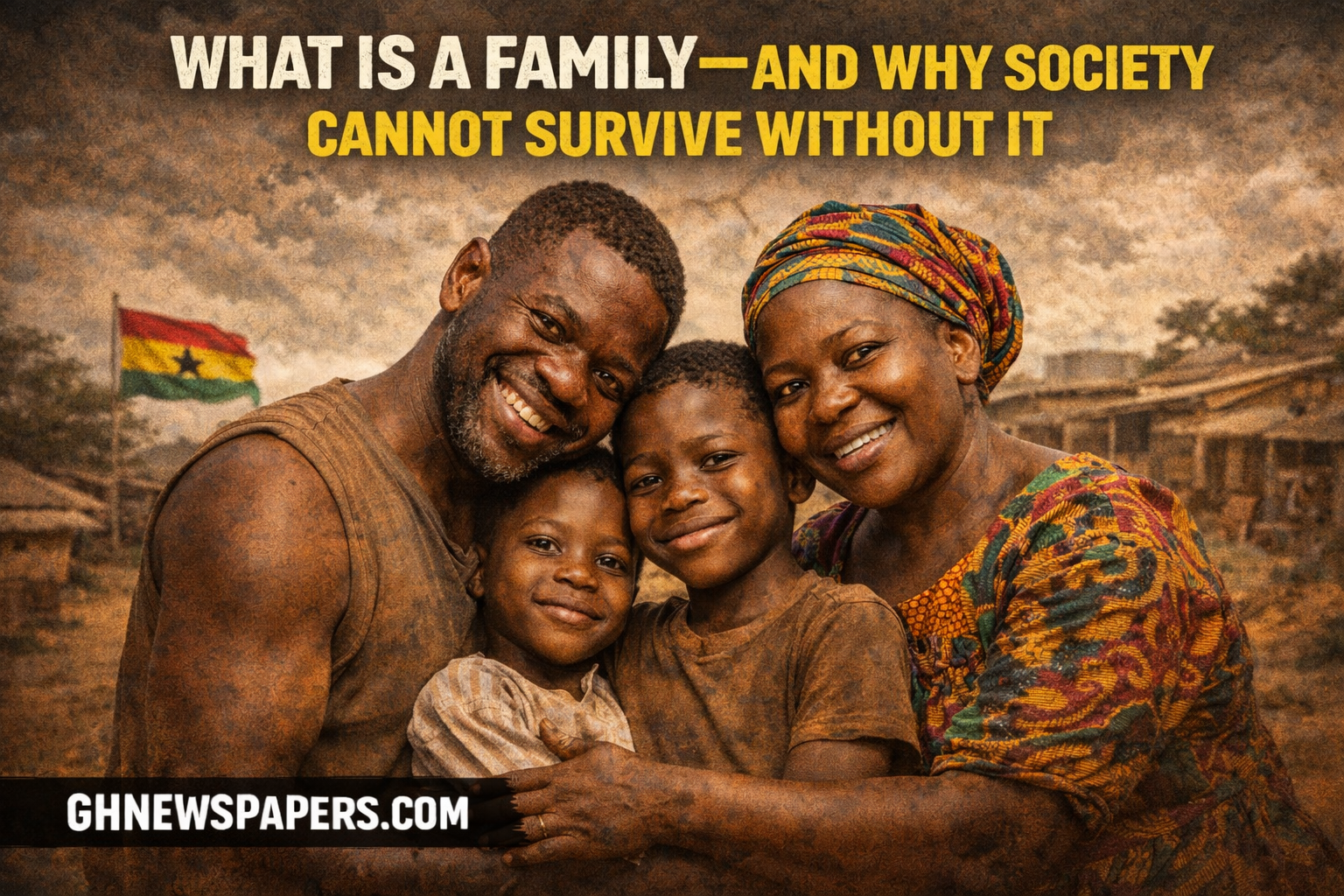
In an age of rapid social change, urbanization, and shifting lifestyles, it is worth asking a simple but important question: What is a family, and why do we still need one? Despite changes in how people live and relate to one another, the family remains the most fundamental institution in every soci

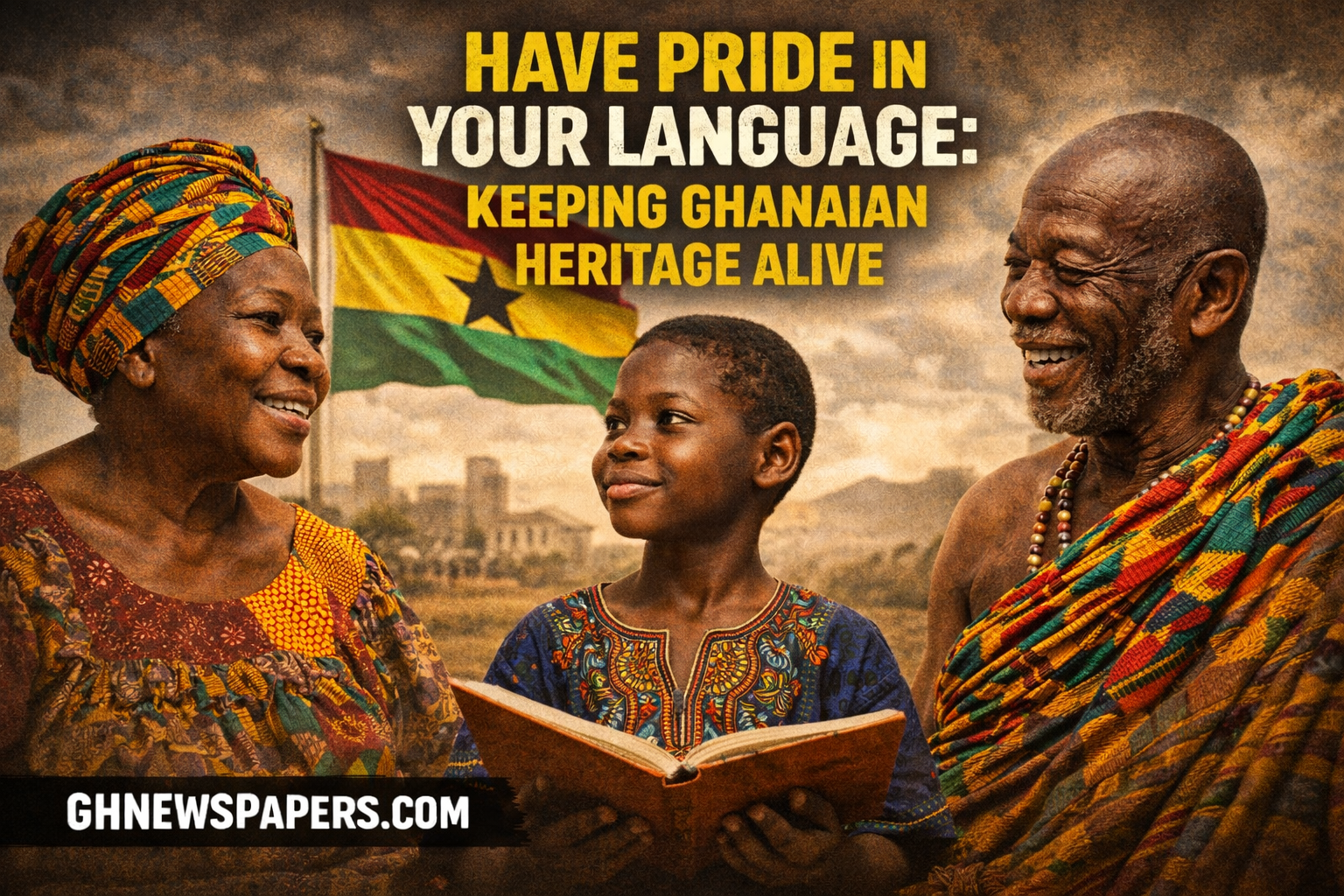
In Ghana today, many parents encourage their children to speak English, sometimes at the expense of local languages. This trend is common not only in Ghana but also among Ghanaian families living abroad. While parents may believe that prioritizing English will make their children academically bright

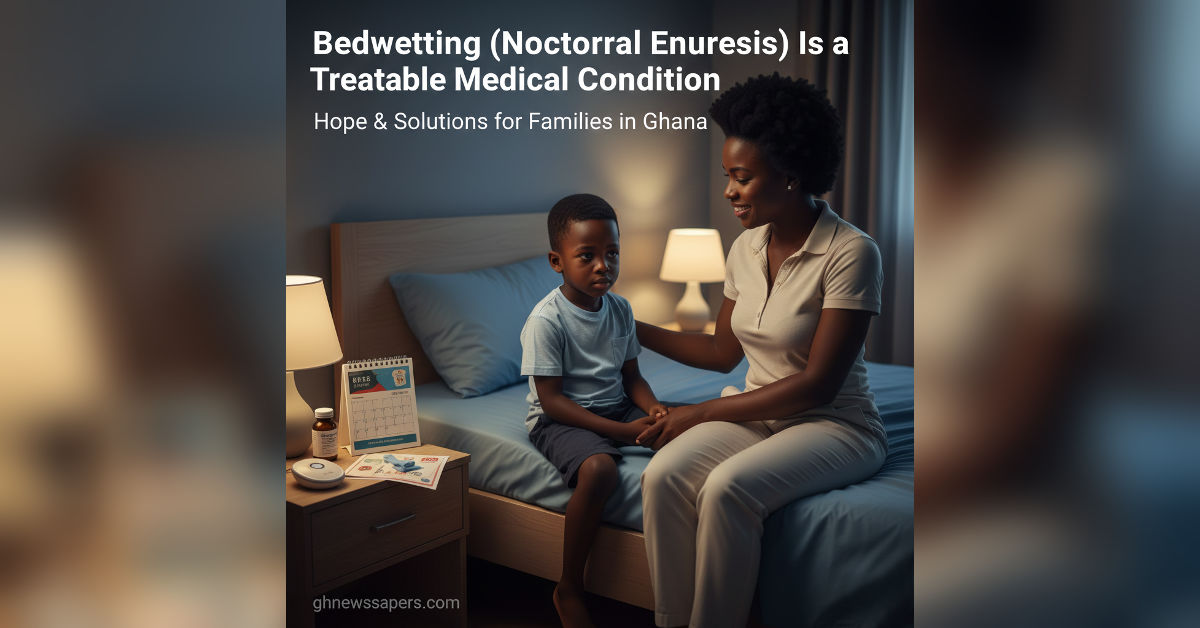
Across Africa, myths and misunderstandings about bedwetting continue to affect children and families. In Ghana, many parents still believe that children who wet their beds at night are lazy or unwilling to wake up to urinate. As a result, some children are physically disciplined. In past decades, pa

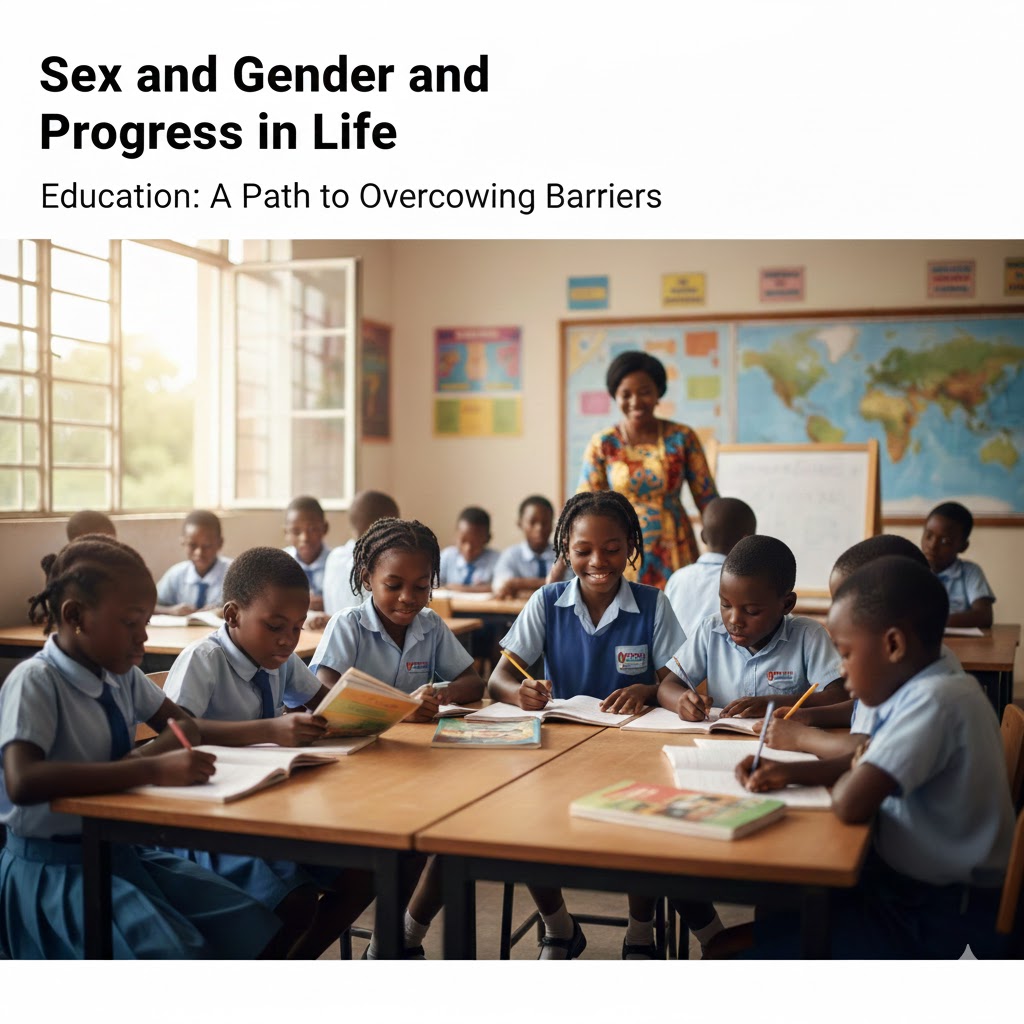
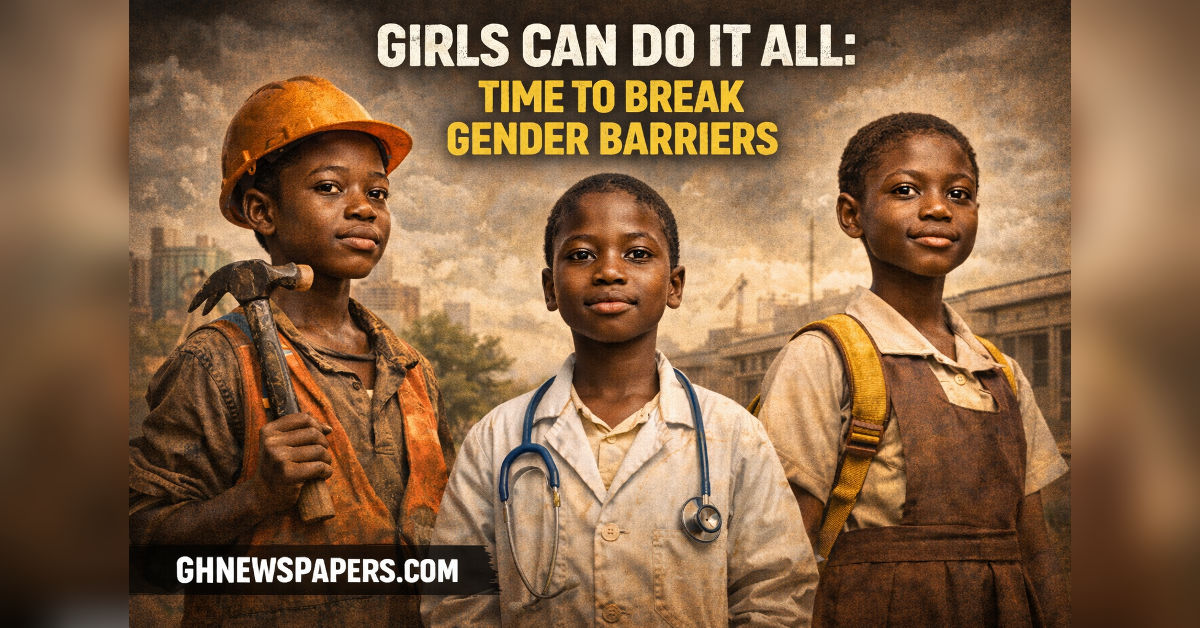
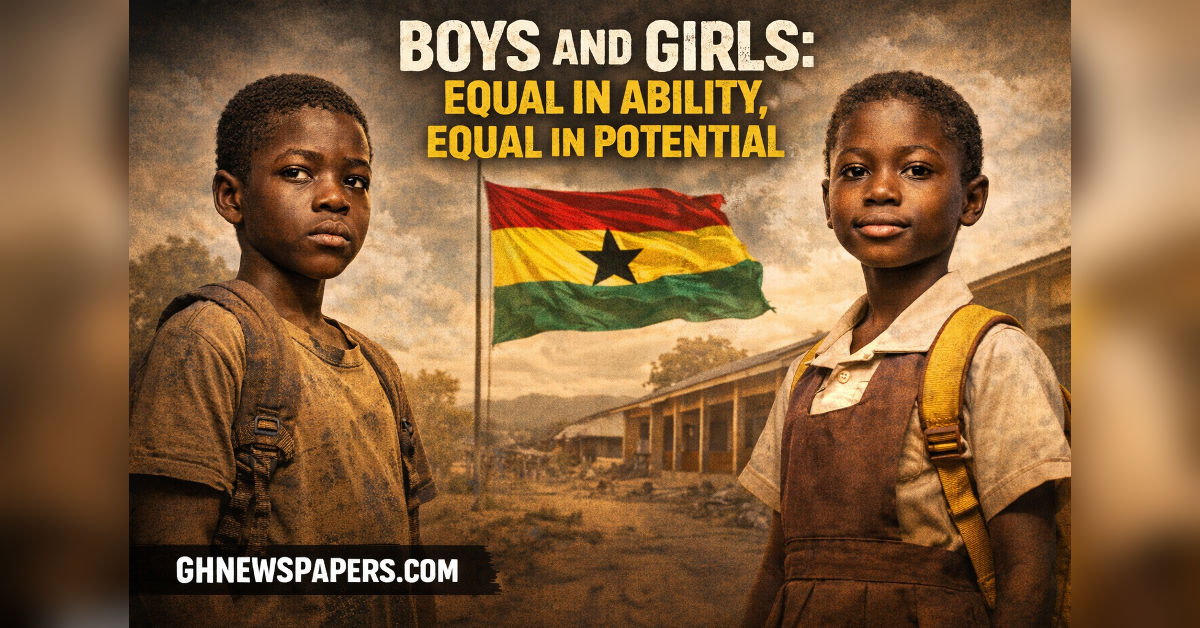
Time to Break Old Beliefs For too long, society has told girls they are weaker, less capable, or meant to play second fiddle to boys. It’s time to shatter that myth. Girls can do it all—excel in school, lead in government, innovate in business, and make decisions that shape nations. Gender does not

Discarding Outdated Beliefs It is time for Africans to discard the outdated belief that boys and girls differ in abilities and potential. For too long, harmful cultural attitudes have suggested that women should play second fiddle to men. But reality proves otherwise: for everything a boy or a man c

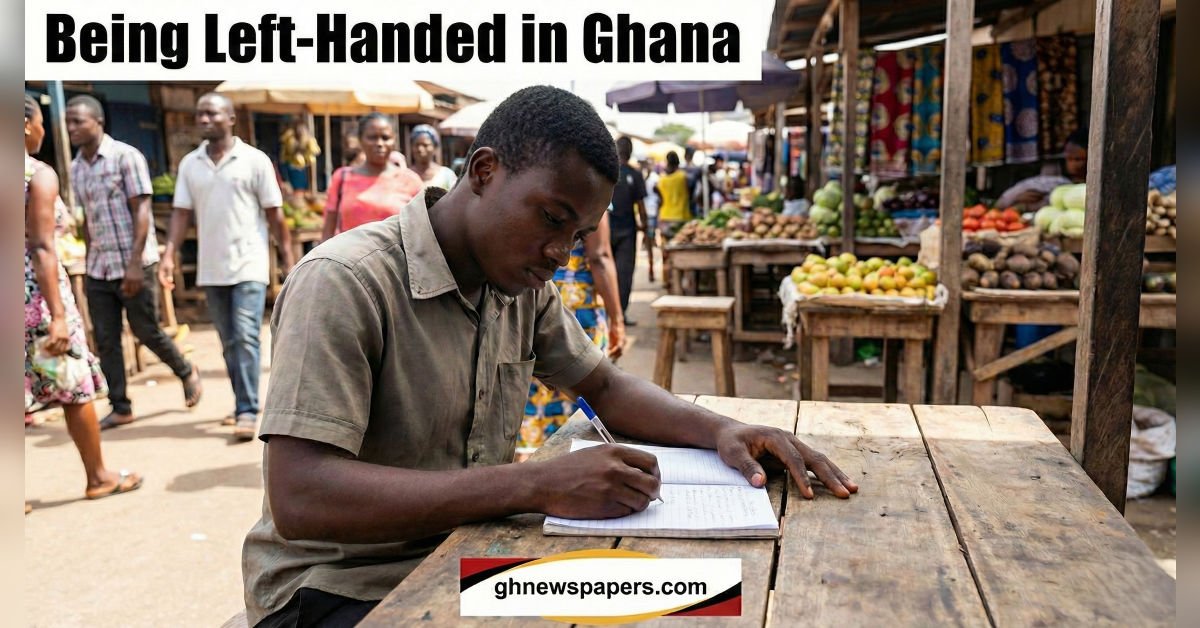
Every society has norms, which are rules that guide behavior. One important norm in Ghana concerns the use of the left hand in social interactions. Traditionally in Ghana, using the left hand in social interactions can be problematic. Giving something to someone or receiving something with the left

We often hear the word homicide, but many people do not fully understand its meaning or the nature of the crime. In this essay, I discuss what homicide is, the different types of homicide, and why it is considered one of the most serious crimes in society. Homicide is the killing of one person by…

Prostitution is commonly defined as the exchange of sex for money. People who engage in prostitution provide sexual services in return for payment. A related question is whether exchanging sex for material items other than cash should also be considered prostitution. Some people say yes, others say

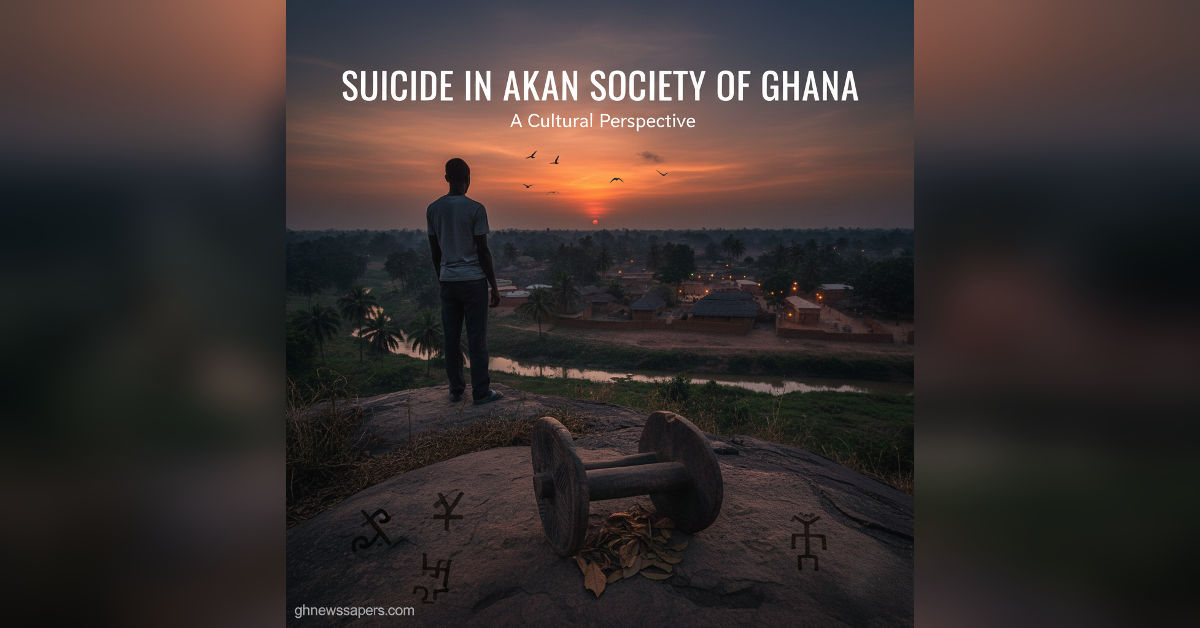
Suicide is defined as death resulting from self-directed harmful behavior carried out with the intent to die. A suicidol

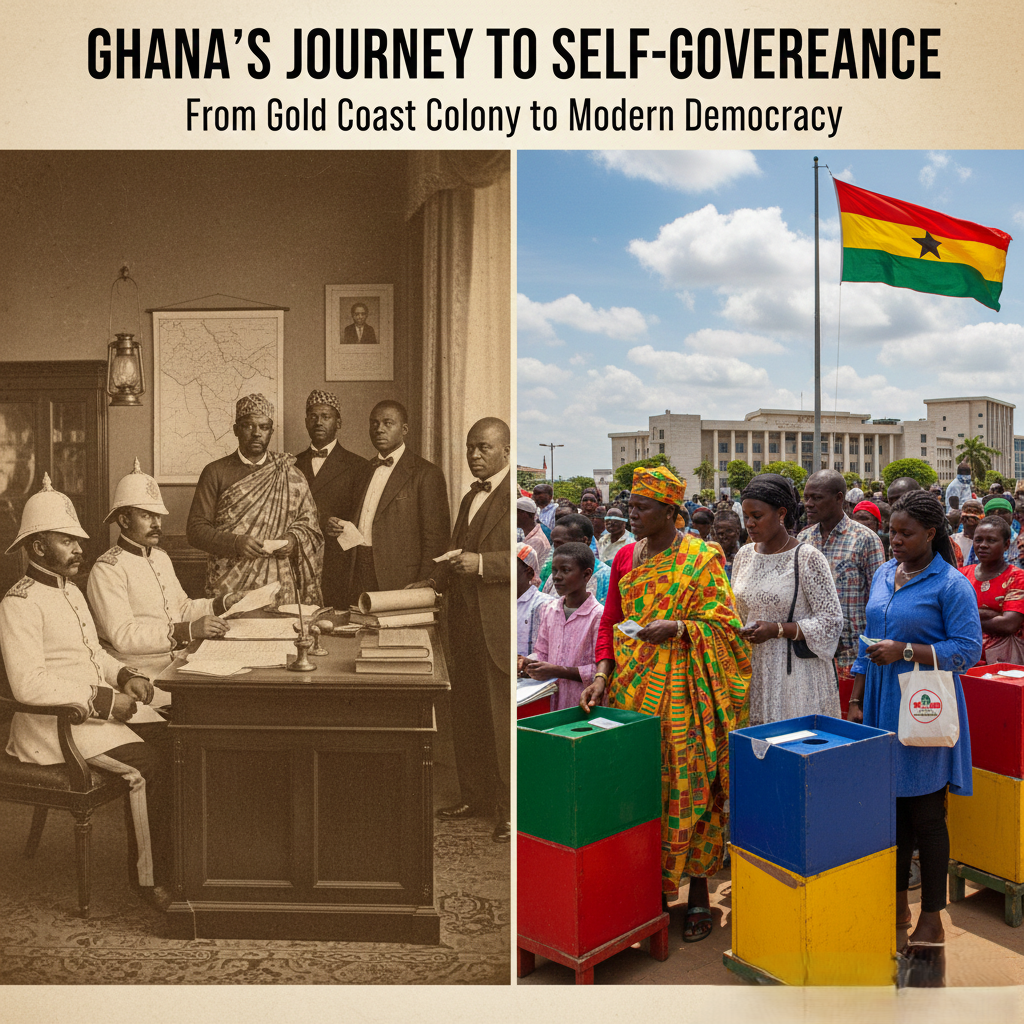
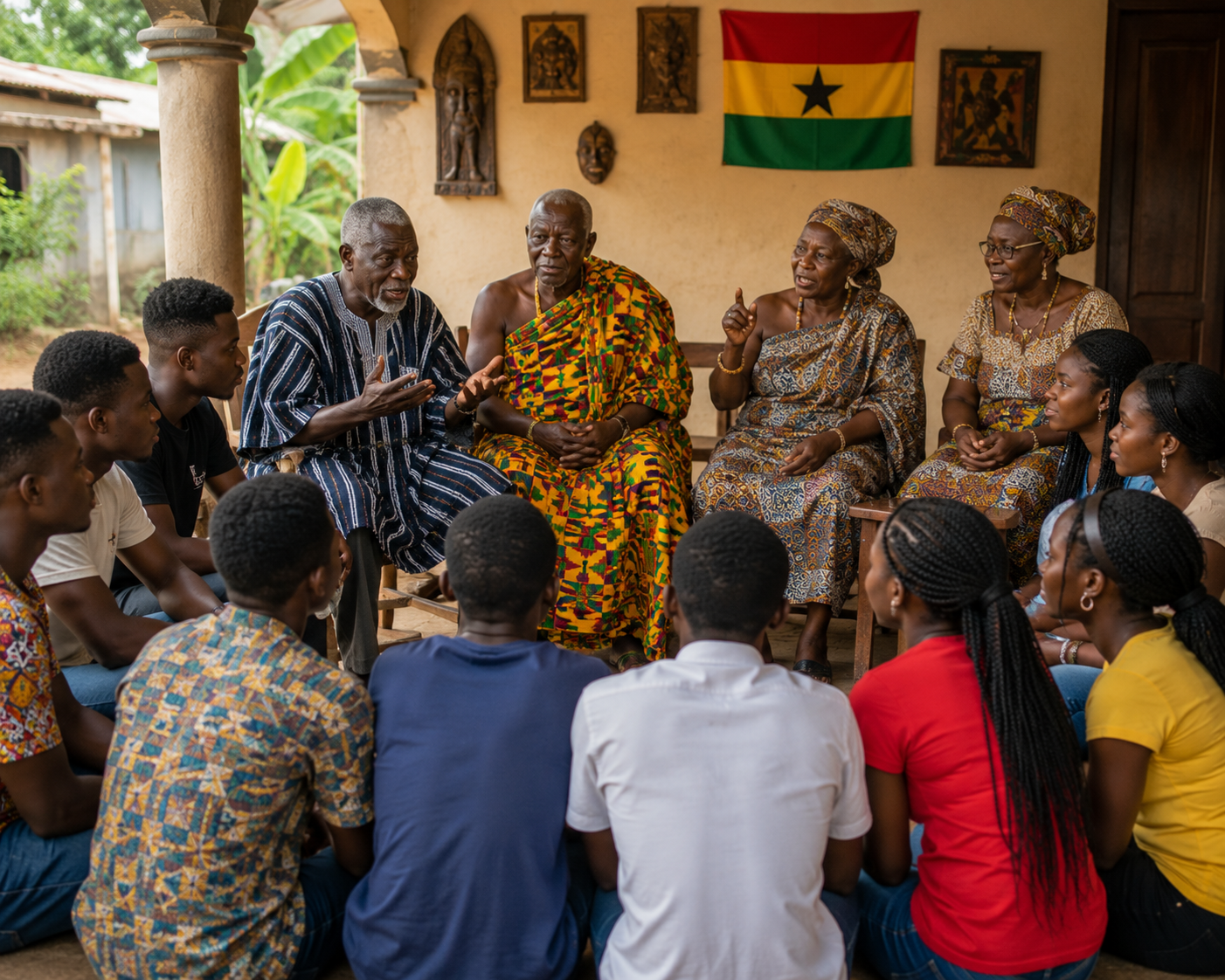
If there is one idea that has mattered more to Ghana than any other from the Gold Coast era to the present, it is the struggle for self-governance and accountable leadership. From colonial domination to modern democracy, Ghana’s history has been shaped by a single, powerful question: Who governs us,

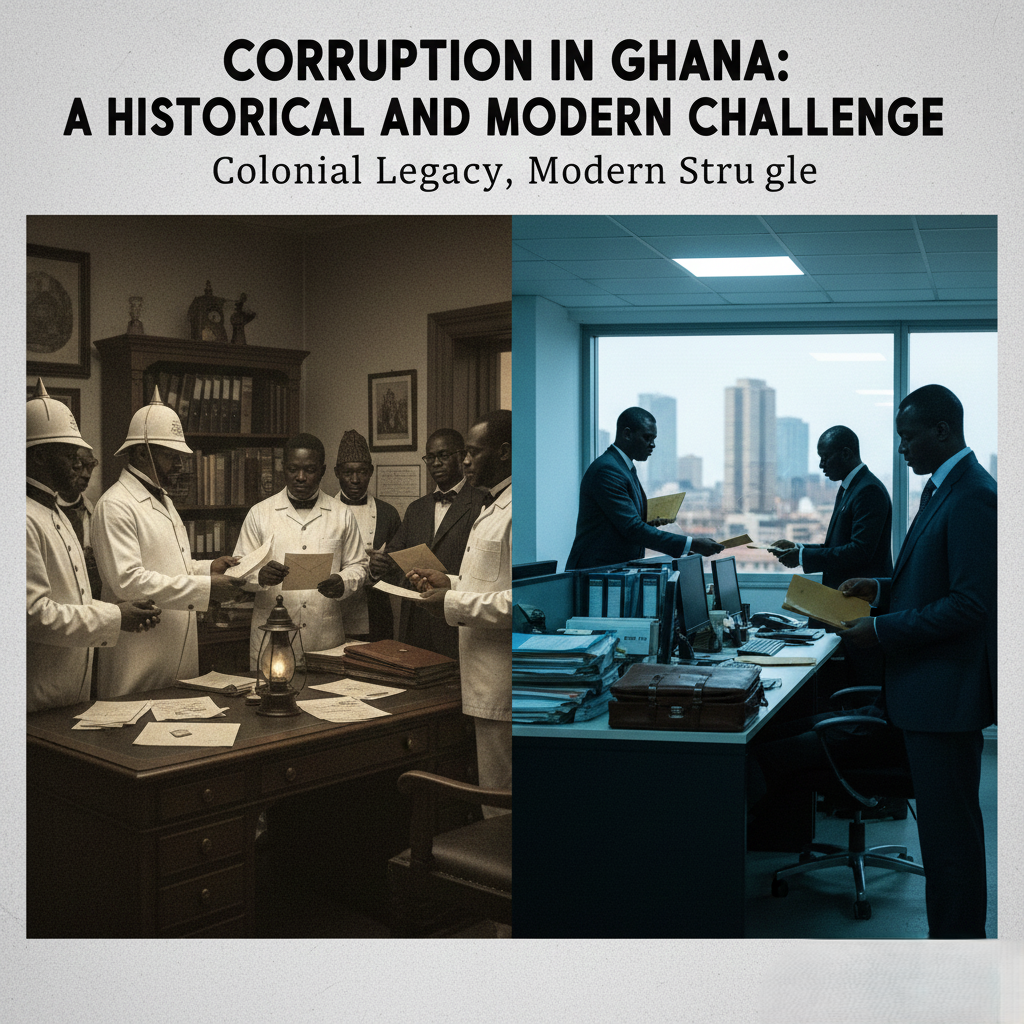
Corruption remains one of the most enduring social challenges confronting Ghana. Its roots stretch back to the colonial Gold Coast era (1821–1957) and continue to influence governance, public trust, and national development today. Understanding this long history is essential to appreciating why corr

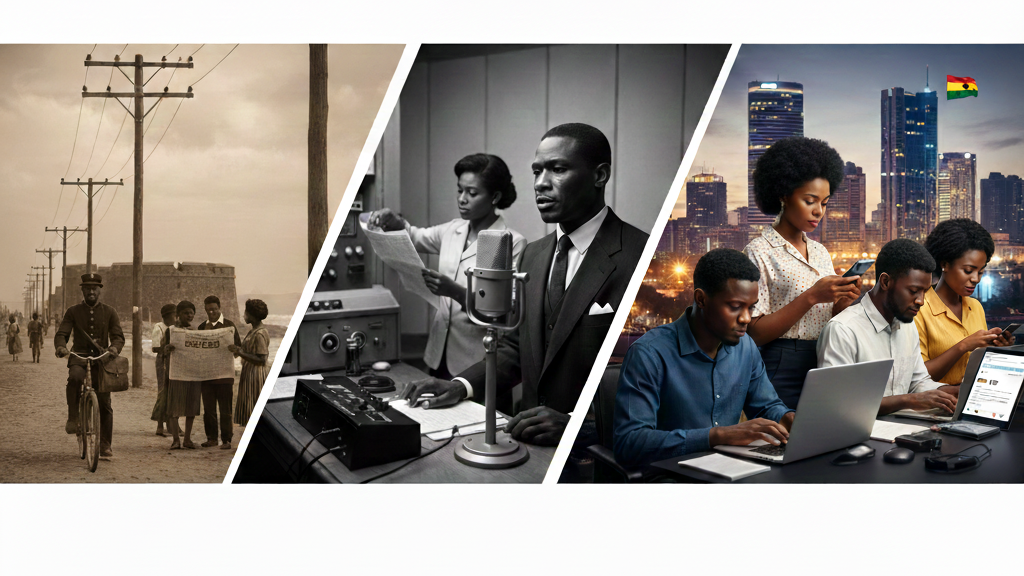
Few technological developments have reshaped Ghana as profoundly as the Advancement of communication technology. From the first telegraph lines laid by colonial authorities to today’s smartphones and internet-driven economy, communication has changed how Ghanaians trade, govern, organize, and connec

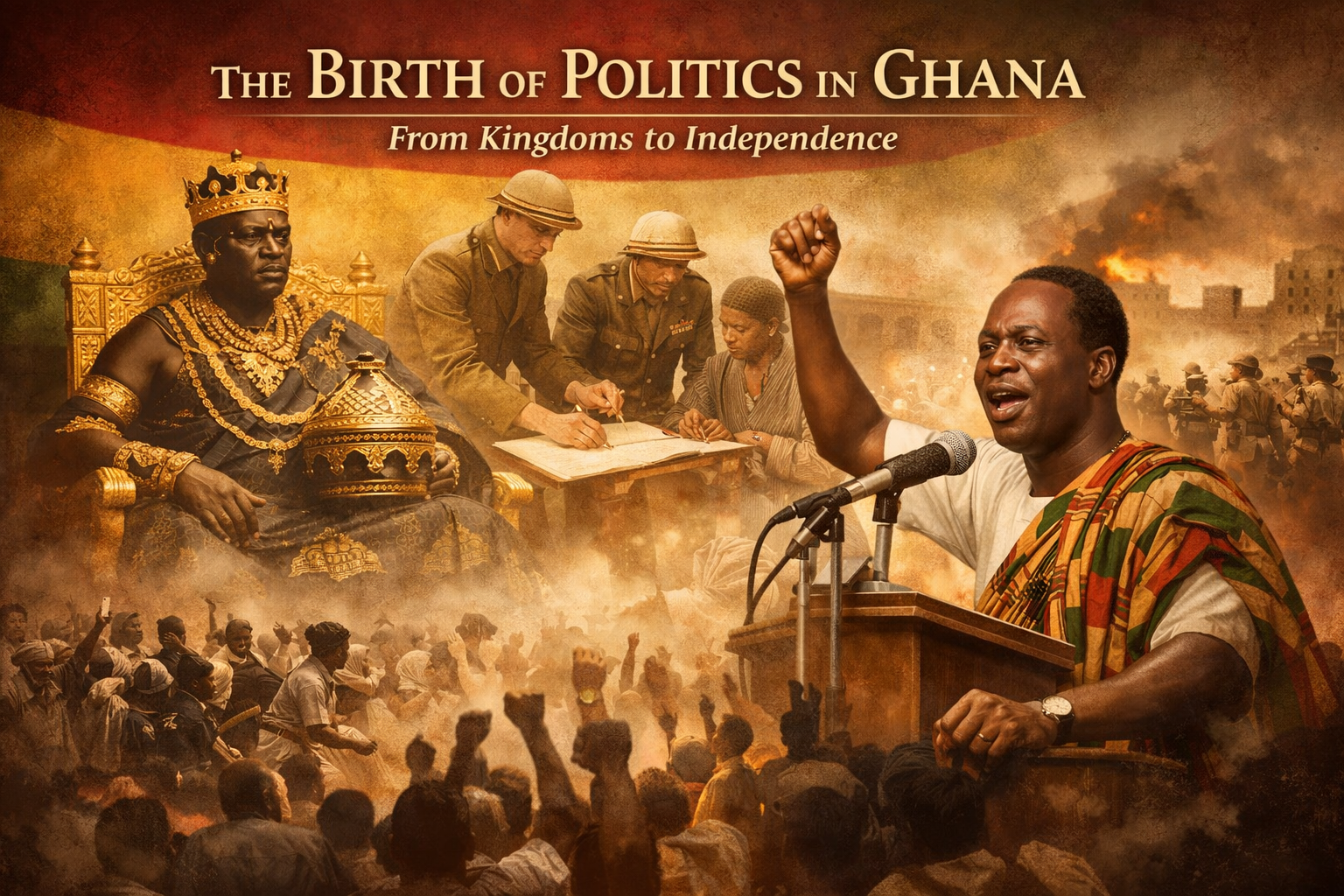
Politics Before the State Called Ghana Long before the name Ghana was adopted in 1957, the land and peoples of the Gold Coast had already developed sophisticated political systems. Politics in Ghana did not begin with Europeans or colonial rule; it evolved from indigenous governance structures, cust