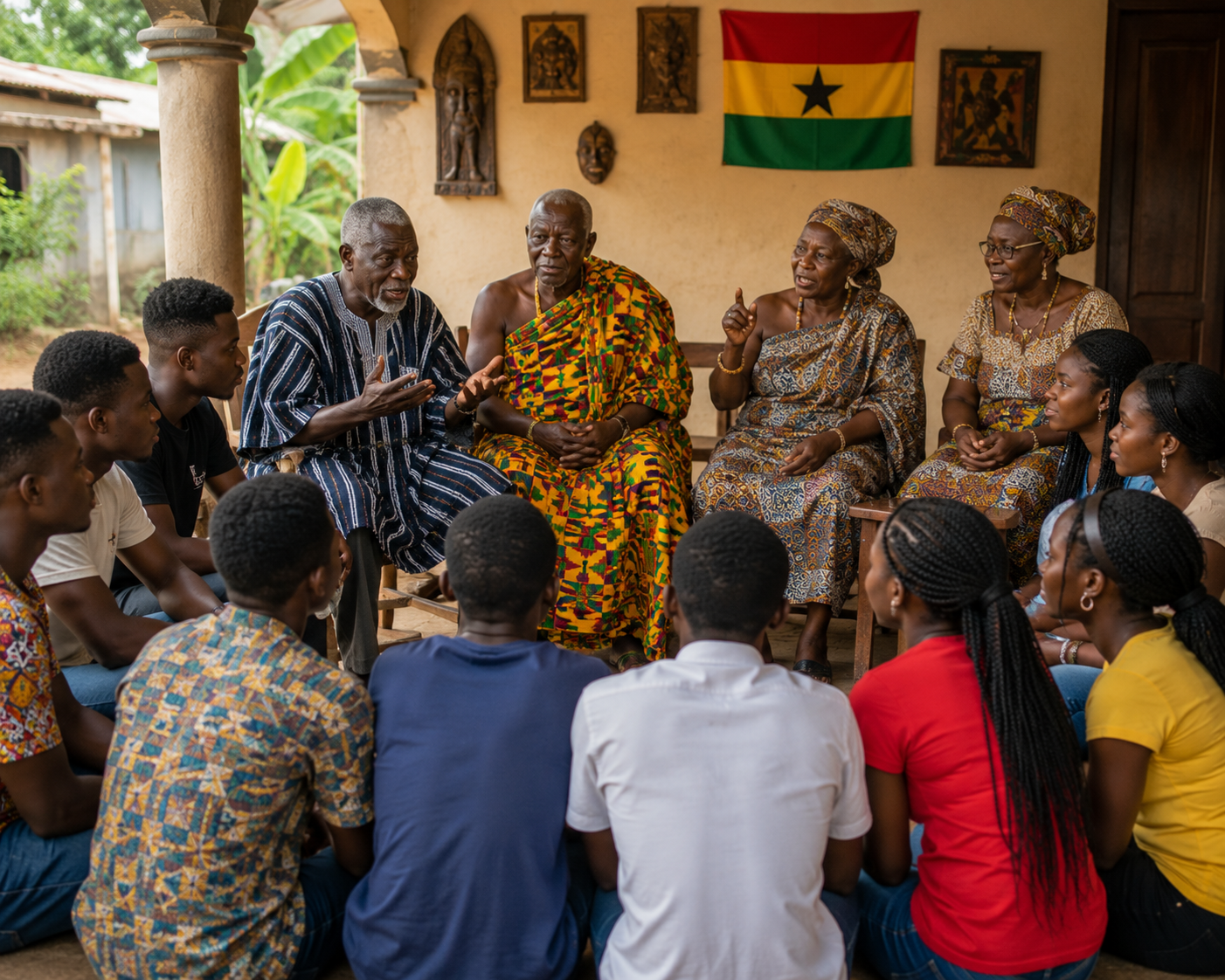
In traditional Ghanaian society, old age is not merely a biological stage of life; it is a position of honor, wisdom, and social responsibility. Elderly men and women occupy a special place within families, communities, and the nation as a whole. They are regarded as repositories of knowledge, custodians of tradition, mediators of conflict, and moral guides for younger generations. In many Ghanaian languages, terms used to refer to elders carry connotations of respect and authority, reflecting the esteem in which they are held.
Although modernization, urbanization, and globalization have transformed many aspects of Ghanaian life, the elderly continue to perform important functions that contribute to social stability and cultural continuity. Understanding their roles and responsibilities helps us appreciate their value and underscores the need to support and care for them in their later years.
Custodians of Cultural Heritage
One of the most important roles of the elderly in Ghanaian society is the preservation and transmission of culture. Elders serve as living libraries who possess knowledge of traditions, customs, proverbs, folklore, history, and indigenous beliefs. Before the advent of formal education and written records, much of Ghana's history was transmitted orally from one generation to another through the elderly.
In many communities, elders teach younger people about clan histories, family genealogies, traditional ceremonies, and cultural values. They explain the significance of festivals, naming ceremonies, marriage rites, funeral customs, and chieftaincy traditions. Through storytelling and everyday interactions, they ensure that cultural knowledge is not lost.
Without the active involvement of elders, many indigenous traditions would gradually disappear. Their role as custodians of cultural heritage is therefore essential to the preservation of Ghana's rich and diverse cultural identity.
Sources of Wisdom and Advice
The elderly are widely regarded as sources of wisdom. Having accumulated decades of life experience, they often provide guidance on personal, family, and community matters. Their opinions are sought on issues ranging from marriage and child-rearing to business decisions and conflict resolution.
The Akan proverb, "nea akɔdaa ahunu no ɛnnɛ no, ɔpanyin ahunu no dedaw,” literally meaning "What the child has seen today, the elder has already seen," captures the high regard for the wisdom of old age. The proverb reflects the belief that elders possess insights that can help younger people avoid mistakes and make sound decisions.
Many families continue to consult elderly relatives before making important decisions. Their counsel often carries considerable weight because it is grounded in experience rather than mere theory.
Guardians of Moral Values
The elderly also play a crucial role in maintaining moral standards within society. Traditionally, they serve as role models whose behavior demonstrates the values and norms expected of community members.
Through advice, correction, and personal example, elders teach younger generations the importance of honesty, respect, humility, hard work, generosity, and social responsibility. They often intervene when younger people engage in conduct deemed inappropriate or harmful to the community.
In many Ghanaian communities, the authority of elders helps reinforce social discipline and encourages adherence to accepted standards of behavior. Their moral influence contributes significantly to social order and community cohesion.
Mediators and Peacemakers
Conflict is an inevitable aspect of human society, but the elderly frequently help prevent disputes from escalating. Across Ghana, elders have traditionally served as mediators in conflicts involving families, neighbors, clans, and communities.
Their age and perceived neutrality often enable them to command respect from opposing parties. Because they are viewed as experienced and impartial, disputants are more willing to accept their judgments and recommendations.
Whether resolving disagreements over inheritance, marriage, land, or interpersonal disputes, elders often employ dialogue, negotiation, proverbs, and appeals to communal values to achieve reconciliation. Their efforts help maintain peace and harmony within society.
Leaders in Traditional Governance
In many Ghanaian communities, elderly individuals occupy leadership positions within traditional governance structures. Chiefs, queen mothers, clan heads, family heads, and members of councils of elders are often advanced in age and possess extensive knowledge of customary law and traditional administration.
These elders participate in decision-making processes that affect their communities. They advise chiefs, adjudicate disputes, supervise customary practices, and help formulate policies relating to community development.
Traditional leadership institutions continue to play important roles in contemporary Ghana, particularly in matters involving land administration, conflict resolution, and cultural preservation. The elderly remain central to the effectiveness of these institutions.
Caregivers and Family Supporters
Contrary to popular assumptions, elderly people are not always recipients of care; they are often providers of care. Across Ghana, grandparents play crucial roles in raising children and supporting families.
Many elderly individuals care for grandchildren while parents engage in economic activities. Others provide emotional support, guidance, and supervision to younger family members. In some cases, grandparents become primary caregivers when parents migrate for work or when families experience crises.
Their contributions help strengthen family bonds and provide stability for children. The support offered by elderly family members often allows younger adults to pursue educational and economic opportunities.
Preservers of Family History
The elderly are often the keepers of family memory. They remember important events, family relationships, ancestral origins, and significant achievements of previous generations.
This knowledge is especially important in a society where kinship and lineage remain significant social institutions. Elders help younger people understand their family backgrounds, obligations, and identities.
By preserving family histories, they create a sense of continuity between past, present, and future generations. Their memories serve as valuable resources that help families maintain a strong sense of identity and belonging.
Spiritual and Religious Roles
Many elderly Ghanaians occupy important positions in religious and spiritual life. They may serve as custodians of shrines, leaders of traditional rituals, church elders, prayer leaders, or respected advisers on spiritual matters.
In traditional communities, elders often oversee ceremonies intended to maintain harmony between the living, the ancestors, and the spiritual world. Their knowledge of rituals, prayers, and sacred traditions enables them to guide important religious activities.
Even within Christian and Muslim communities, older individuals frequently occupy positions of leadership and influence. Their spiritual guidance provides comfort and direction to many people.
Challenges Facing the Elderly
Despite their immense contributions, many elderly Ghanaians face significant challenges. Rapid urbanization, migration, changing family structures, and economic difficulties have weakened some of the traditional support systems that once protected older people.
Many elderly individuals experience loneliness, poverty, inadequate healthcare, and neglect. Some no longer receive the respect and support that were once guaranteed by custom and tradition.
As Ghana's population ages, it becomes increasingly important for families, communities, and policymakers to develop strategies that enhance the welfare of older citizens. Protecting the dignity and well-being of the elderly is both a moral obligation and a recognition of their invaluable contributions to society.
Conclusion
The elderly occupy a vital place in Ghanaian society. They are custodians of culture, sources of wisdom, guardians of morality, mediators of conflict, leaders in traditional governance, caregivers, preservers of family history, and spiritual guides. Their knowledge, experience, and service have helped shape generations of Ghanaians and continue to contribute to national development.
In a rapidly changing world, the wisdom and guidance of the elderly remain indispensable. Ghanaian society must therefore continue to honor, respect, and support its older citizens, recognizing that their contributions extend far beyond their families and communities. A society that values its elders preserves not only its past but also strengthens its future.