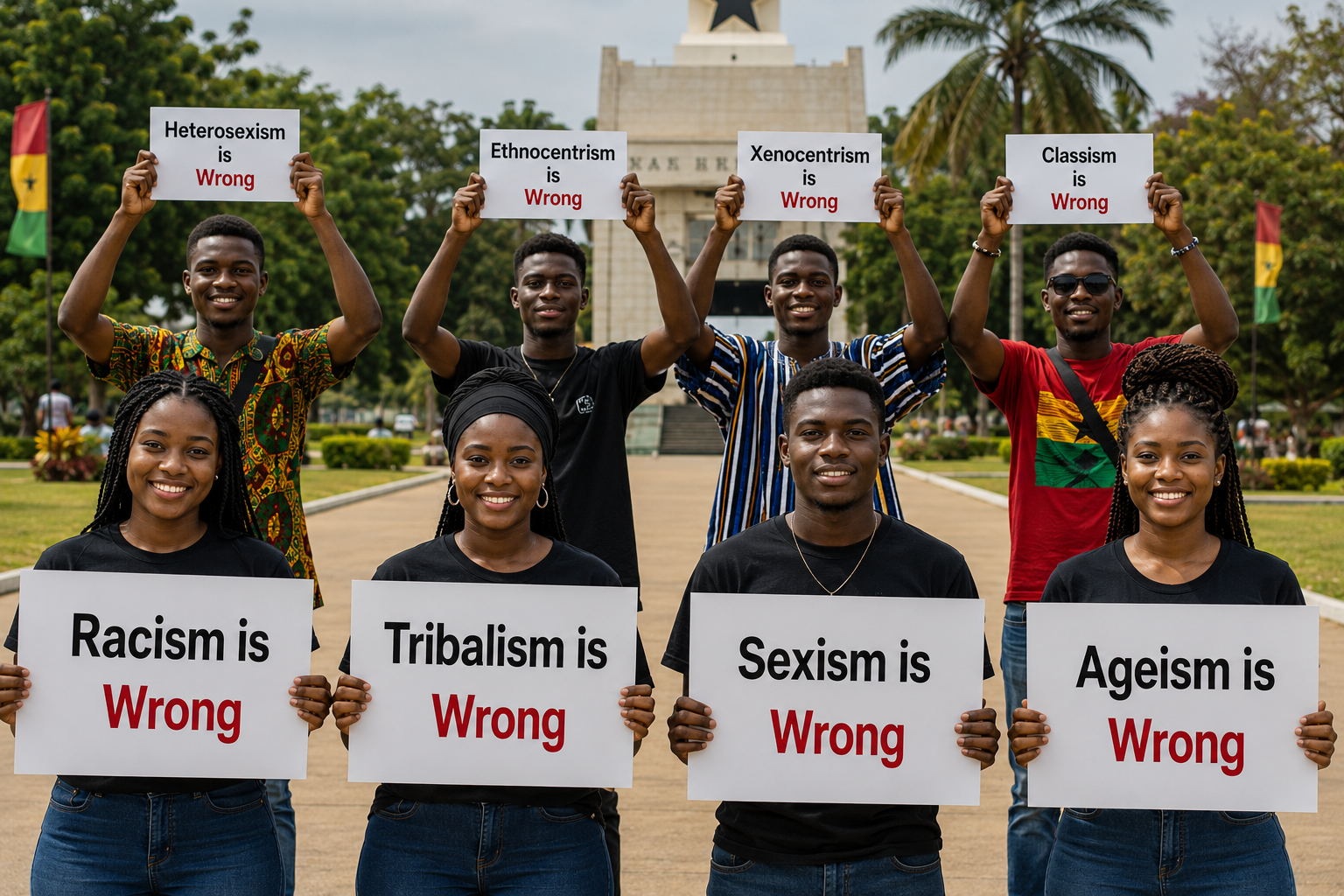
Human societies have developed various systems of beliefs and practices that create distinctions between groups of people, often assigning greater value, power, and privilege to some groups while marginalizing others. Many of these forms of prejudice and discrimination are represented by concepts ending with the suffix “-ism.” These interpersonal isms harm individuals and communities by producing economic disadvantages, psychological suffering, social exclusion, and political inequalities.
Racism The first major form of interpersonal ism is racism. Racism is based on the belief that members of one racial group are inherently superior or inferior to members of other racial groups. It produces prejudice, discrimination, and unequal treatment based on racial identity or ancestry. Racism can restrict access to employment, education, housing, healthcare, and political influence. Beyond its material consequences, racism can also cause psychological harm through experiences of humiliation, exclusion, fear, and social rejection.
Sexism The second form of interpersonal ism is sexism. Sexism is based on the belief that one sex is superior to another and that individuals should be treated differently because of their biological sex or gender. Historically, sexism has primarily disadvantaged women and girls by limiting their educational opportunities, economic independence, political participation, and personal autonomy. Sexism also reinforces restrictive gender expectations that prevent individuals from fully expressing their abilities and identities.
Ableism or Disablism The third form of interpersonal ism is ableism (also called disablism). Ableism refers to prejudice, stereotypes, and discrimination against people with disabilities. It assumes that persons without disabilities represent the standard of normality and that disabled individuals are less capable or less valuable. Ableism creates barriers to employment, education, transportation, accessibility, and social participation. It denies disabled persons equal opportunities, dignity, and inclusion.
Ageism Another form of interpersonal ism is ageism. Ageism involves prejudice and discrimination against individuals because of their age. It can be directed toward younger people, who may be stereotyped as inexperienced or irresponsible, as well as older adults, who may be viewed as incapable, unproductive, or socially irrelevant. Ageism produces economic, political, and social disadvantages by limiting opportunities and reinforcing harmful assumptions about people at different stages of life.
Heterosexism A further form of interpersonal ism is heterosexism. Heterosexism is based on the assumption that heterosexuality is the only normal or acceptable sexual orientation. It creates prejudice and discrimination against people who are lesbian, gay, bisexual, or otherwise non-heterosexual. Heterosexism can result in social exclusion, psychological distress, unequal treatment, and restrictions on individuals’ ability to live openly and participate fully in society.
Tribalism Another harmful interpersonal ism is tribalism. Tribalism refers to excessive loyalty, favoritism, or prejudice toward one’s own ethnic, tribal, or cultural group while displaying hostility, suspicion, or discrimination toward members of other groups. Although ethnic and tribal identities can provide people with belonging, cultural connection, and social support, tribalism becomes harmful when it creates beliefs of superiority and inferiority among groups. Tribalism can contribute to ethnic conflict, political polarization, unequal distribution of resources, and social division. It can influence decisions about employment, marriage, political leadership, and access to opportunities. When tribal identity becomes a basis for discrimination, it undermines social cohesion and equality.
Chauvinism Another form of interpersonal ism that harms human beings is chauvinism. Chauvinism refers to an exaggerated belief in the superiority of one’s own group, identity, nation, or social category over others. Although the term is often associated with extreme nationalism, it can apply more broadly to attitudes that promote domination and exclusion. Chauvinism may appear in the form of national superiority, cultural superiority, male superiority, or other beliefs that one group is naturally entitled to greater respect, power, or privilege. Such attitudes encourage discrimination, intolerance, and conflict because they deny the equal worth and dignity of others.
Classism Another harmful interpersonal ism is classism. Classism refers to prejudice, discrimination, and unequal treatment based on a person's social class or socioeconomic status. It is rooted in the belief that people who belong to certain social classes are more deserving of respect, opportunities, and resources than others. Classism can be directed against poor people, working-class individuals, or those perceived as belonging to lower social strata. It may manifest in employment practices, educational opportunities, housing, healthcare, and social interactions. Individuals who experience classism are often stereotyped as lazy, unintelligent, irresponsible, or morally deficient. Such attitudes can contribute to social exclusion, reduced life chances, and the perpetuation of poverty and inequality.
Nationalism Another form of interpersonal ism is nationalism, particularly when it takes an exclusionary or extreme form. Nationalism involves strong identification with and loyalty to one's nation. While a healthy sense of national pride can foster unity and collective identity, nationalism becomes harmful when it promotes the belief that one's nation is superior to others or that members of other nations are less worthy of respect and consideration. Extreme nationalism can encourage xenophobia, intolerance, hostility toward foreigners, and support for discriminatory policies. Throughout history, nationalist ideologies have contributed to international conflicts, ethnic tensions, political oppression, and violations of human rights. When national loyalty is combined with beliefs of superiority, nationalism can become a source of division and suffering.
Ethnocentrism A closely related form of interpersonal ism is ethnocentrism. Ethnocentrism is the tendency to view one's own ethnic group, culture, customs, values, and way of life as superior to those of other groups. People who are ethnocentric often judge other cultures using the standards of their own culture and may regard cultural differences as signs of inferiority or backwardness. Ethnocentrism can foster prejudice, discrimination, misunderstanding, and conflict between groups. It may lead individuals to dismiss, ridicule, or devalue the traditions, beliefs, languages, and practices of others. In multicultural societies, ethnocentrism can undermine social harmony and impede cooperation among diverse populations. Sociologists often emphasize the importance of cultural relativism as an alternative to ethnocentrism because it encourages understanding and appreciation of cultural diversity.
Conclusion The various forms of interpersonal isms—including racism, sexism, ableism, ageism, heterosexism, tribalism, and chauvinism—share a common foundation: they create systems of inequality by defining some people as superior and others as inferior. These attitudes and behaviors produce economic, psychological, social, and political harm. Recognizing and challenging these harmful belief systems is essential for creating societies based on equality, dignity, inclusion, and respect for all human beings.
Latest updates
Refreshes automaticallyThis live blog has started. Updates will appear here as they come in.