One of the joys of growing up in Ghana in the years following independence was listening to the fascinating stories that circulated among adults. Some were true, some were partly true, and others belonged to that grey area between history and folklore. One such story has remained with me for more than six decades.
As a child growing up in Ghana in the early 1960s, I frequently heard a remarkable tale about Ghana's independence celebrations. Ghana gained independence from British colonial rule on March 6, 1957, under the leadership of Prime Minister Kwame Nkrumah. It was a historic occasion that attracted the attention of the entire world. Dignitaries, diplomats, journalists, political leaders, and invited guests traveled from many countries to witness the birth of the first sub-Saharan African nation to achieve independence in the post-colonial era.
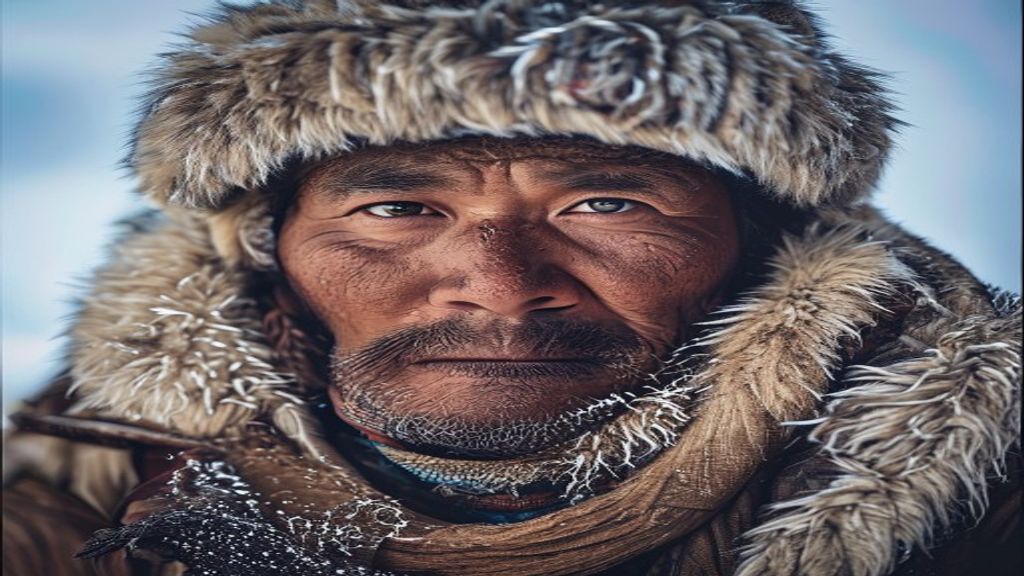
According to the story I heard as a child, among the many foreign guests who attended the celebrations was an "Eskimo." At the time, that was the term commonly used to describe the Indigenous peoples of the Arctic regions of North America and Greenland. The story further claimed that Ghana's tropical heat was so unbearable for the visitor that special arrangements had to be made to keep him comfortable. As the tale went, a refrigerated vehicle was specially constructed to transport him wherever he traveled in the country. While ordinary people rode in regular vehicles, the Eskimo supposedly moved about in a mobile cold room, protected from the scorching African sun.
For many years, I accepted the story as fact.
After all, to a child growing up in Ghana, an Eskimo seemed as exotic as a person could possibly be. We learned that Eskimos lived among snow and ice, hunted seals, traveled by dog sled, and inhabited some of the coldest places on earth. The idea that such a person would visit Ghana and struggle to survive our tropical climate appeared perfectly reasonable.
The story also seemed to confirm something else. Ghanaians were immensely proud of independence. We were told that people from every corner of the globe had come to witness the birth of the new nation. What better proof of Ghana's international importance than the presence of a visitor from one of the most remote regions of the world?
Then, in 1981, I left Ghana to pursue graduate studies in Canada.
One of the first questions I asked my Canadian colleagues was to show me an Eskimo and tell me where the Eskimos lived. My question produced amusement and laughter.
I soon learned that "Eskimo" was not the preferred term. The people I had heard about throughout my childhood were called Inuit. More importantly, I discovered that Inuit people were not the mysterious and exotic figures I had imagined. They were ordinary citizens living modern lives in Canada, just as other Canadians did. Some lived in northern communities, but they were not frozen relics inhabiting an entirely separate world.
That experience taught me an important lesson about the power of stories and the assumptions we sometimes carry from childhood into adulthood.
Over the years, I have made occasional efforts to verify the famous story of the Eskimo who attended Ghana's independence celebrations. I have searched historical accounts, newspaper reports, and descriptions of the events surrounding March 6, 1957. I have found ample evidence that visitors from around the world attended the celebrations. Contemporary reports describe large numbers of foreign dignitaries, diplomats, journalists, and guests who converged on Accra to witness the historic occasion.
What I have not found is any documentary evidence of an Inuit visitor whose presence required a specially refrigerated vehicle.
Does this mean the story was entirely false?
Not necessarily.
One possibility is that there was indeed a visitor from Alaska, northern Canada, Greenland, or another Arctic region. Over time, as the story was retold from one person to another, details may have been added, altered, or exaggerated. A visitor from a cold climate could easily have become "an Eskimo" in popular retellings.
A second possibility is that ordinary efforts to keep a foreign visitor comfortable in Ghana's heat evolved into a more dramatic narrative involving a specially constructed refrigerated vehicle. Oral traditions often magnify unusual events to make them more memorable.
A third possibility is that the story was never intended to be taken literally. It may have functioned as a symbolic expression of Ghana's international significance. In the imagination of many Ghanaians, the independence celebrations were so important that people came from the furthest reaches of the earth to witness them. The Eskimo represented the most distant and unfamiliar corner of the globe imaginable.
Folklore often works in this manner. It preserves a deeper truth even when the literal details cannot be verified. Whether or not an Inuit visitor actually attended the celebrations is less important than what the story communicated. It reflected the excitement, pride, and optimism that accompanied Ghana's independence. It reminded listeners that the eyes of the world were fixed on the new nation.
Today, nearly seventy years after independence, the story remains one of the most intriguing tales from my childhood. Despite my efforts, I have been unable to determine whether it was fact, exaggeration, misunderstanding, or folklore. Yet perhaps that uncertainty is part of its enduring appeal.
History is built from documents, records, and evidence. Folklore is built from memory, imagination, and collective experience. Sometimes the two overlap in fascinating ways. The story of the Eskimo who supposedly came to Ghana may never be fully resolved, but it remains a vivid reminder of the excitement that surrounded one of the most important moments in our nation's history.
If any reader possesses documentary evidence, newspaper clippings, photographs, or personal recollections relating to this story, I would be delighted to hear from them. Until then, the tale of the Eskimo who came to Ghana remains one of the enduring mysteries of Ghana's independence era.
Latest updates
Refreshes automaticallyThis live blog has started. Updates will appear here as they come in.