Ghana is a country with a rich and vibrant cultural heritage. Long before the arrival of Europeans, the people who inhabited the territory now known as Ghana had developed sophisticated political systems, religious beliefs, artistic traditions, languages, customs, and social institutions. The Akan, Ga-Dangme, Ewe, Mole-Dagbani, Guan, Nzema, and many other ethnic groups possessed unique cultural practices that shaped their identities and guided their daily lives.
However, over the centuries, Ghana became exposed to powerful external influences. The country served as an important trading center for European merchants and later became a major site of the trans-Atlantic slave trade. Subsequently, Ghana was colonized by Britain, an experience that profoundly altered many aspects of Ghanaian life. These historical encounters brought about significant cultural transfer, cultural diffusion, and cultural change.
Today, many observers argue that Ghana is witnessing a process of re-traditionalization—a conscious effort to rediscover, preserve, and promote aspects of indigenous culture that were weakened or neglected during periods of foreign influence and modernization.
The Impact of Foreign Influences
The influence of Europe on Ghanaian society cannot be overstated. Colonialism introduced Western systems of education, governance, law, religion, and language. English became the official language and remains the primary medium of instruction in schools and universities.
Christianity also had a profound impact on Ghanaian society. Churches established schools, hospitals, and social welfare institutions. Christian beliefs and practices became deeply rooted in many communities. Likewise, Islam influenced large sections of the population, particularly in northern Ghana and among various trading communities. Islamic education, customs, and religious practices became integral parts of Ghanaian life.
In more recent decades, modernization, globalization, tourism, and technological advancement have introduced new cultural influences. Through television, movies, music, social media, and the internet, Ghanaians are constantly exposed to cultures from every corner of the world. Platforms such as TikTok, Facebook, WhatsApp, Instagram, and X have become powerful agents of cultural transmission.
These developments have brought many benefits. They have expanded educational opportunities, facilitated communication, promoted economic growth, and connected Ghana to the global community. Yet they have also contributed to the erosion of certain traditional practices and values.
Signs of Cultural Erosion
The effects of cultural change can be observed in many aspects of contemporary Ghanaian life.
Many young people are unable to speak their mother tongues fluently. In some urban homes, children communicate almost exclusively in English. Parents often take pride in their children's proficiency in English while paying less attention to their mastery of indigenous languages.
Similarly, many young people cannot sing traditional songs that were once common during festivals, communal labor, naming ceremonies, and family gatherings. Songs that carried moral lessons, historical narratives, and cultural wisdom are gradually disappearing from everyday life.
Traditional dances have also suffered. Many young Ghanaians can expertly imitate foreign dance styles they see online but struggle to perform cultural dances such as Adowa, Kete, Agbadza, Bamaya, Borborbor, or Kpanlogo.
Traditional dress has experienced a similar decline. While kente, smock, and other indigenous attire remain popular during special occasions, Western clothing dominates daily life. Some young people know very little about the cultural significance of traditional fabrics, beads, symbols, and hairstyles.
Traditional drumming is another area where cultural knowledge has diminished. In many Ghanaian societies, drums are not merely musical instruments. They are vehicles of communication. Skilled drummers can convey messages, recite proverbs, praise chiefs, and communicate historical events through drum language. Unfortunately, many young people neither understand nor appreciate these meanings.
Food habits have also changed significantly. Imported and processed foods increasingly compete with traditional dishes. Some young people are more familiar with pizza, burgers, and fried chicken than with dishes such as tuo zaafi, fufu with abunuabunu soup, akple, etor, ampesi, konkonte, aprapransa, or yam porridge. In some homes, traditional recipes that were passed down through generations are slowly being forgotten.
Why Culture Matters
Culture is more than entertainment or tradition. It is the foundation of a people's identity. Culture provides a sense of belonging and continuity. It teaches values, preserves history, and strengthens social bonds.
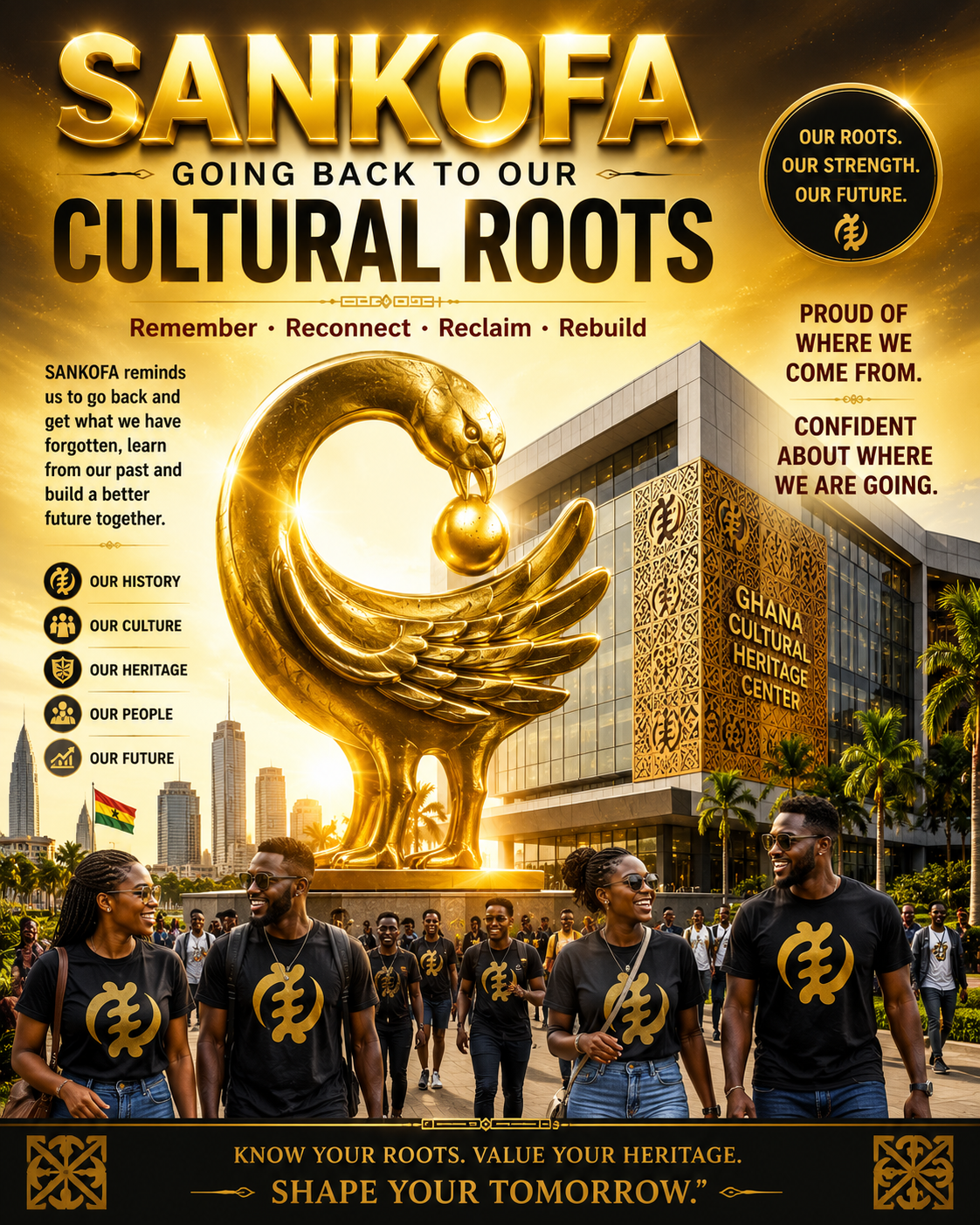
The Akan proverb, "Se wo were fi na wosankofa a, yenkyi," meaning "It is not wrong to go back and reclaim what you have forgotten," captures the importance of cultural preservation. A society that loses touch with its cultural heritage risks losing a part of its collective identity.
This realization has motivated cultural leaders, educators, policymakers, and traditional authorities to promote efforts aimed at preserving Ghana's rich cultural heritage.
Efforts to Rediscover Ghanaian Culture
In recent years, deliberate efforts have been made to encourage Ghanaians to reconnect with their cultural roots.
One important initiative has been the inclusion of cultural studies in school curricula. Ghanaian children now learn about traditional customs, folklore, music, dance, festivals, and indigenous knowledge systems. These lessons help young people appreciate their cultural heritage from an early age.
Traditional drumming, dancing, and singing are increasingly taught in schools. During cultural festivals and speech and prize-giving days, students proudly perform traditional dances and musical pieces that showcase Ghana's diverse cultural traditions.
Proverb competitions and storytelling contests have also become popular in some schools and communities. These activities encourage young people to learn the wisdom embedded in indigenous languages and oral traditions.
At the tertiary level, universities offer courses in African Studies, Ghanaian languages, folklore, history, and cultural anthropology. These programs provide students with a deeper understanding of African civilizations and indigenous knowledge systems.
Renewed Pride in Traditional Attire and Food
Another encouraging development is the growing promotion of traditional attire. Many organizations designate specific days during which employees are encouraged to wear traditional clothing. "African Wear Fridays" have become common in schools, businesses, government offices, and other institutions.
Traditional festivals continue to attract large crowds and receive extensive media coverage. Celebrations such as Homowo, Aboakyer, Hogbetsotso, Odwira, Damba, Apoo, and Kundum serve as important reminders of Ghana's cultural richness.
Food festivals have also become increasingly popular. These events encourage people to rediscover indigenous dishes and appreciate the nutritional value of traditional foods. Such festivals provide opportunities for younger generations to learn recipes and culinary techniques that might otherwise be lost.
Perhaps most encouraging is the growing pride with which many Ghanaians now speak their indigenous languages. Radio and television stations regularly broadcast programs in local languages, while social media platforms have become spaces where people celebrate linguistic and cultural diversity.
Looking to the Future
The re-traditionalization of Ghanaian society does not mean rejecting modernization or globalization. Ghana cannot isolate itself from the rest of the world, nor should it attempt to do so. The challenge is to strike a healthy balance between embracing modernity and preserving cultural heritage.
A nation can be modern without abandoning its traditions. Indeed, some of the world's most advanced countries have successfully maintained strong cultural identities while participating fully in the global economy.
Ghana's future will be stronger if its people remain connected to their roots. Traditional languages, foods, music, dances, customs, proverbs, and values are treasures that deserve preservation. They remind us of who we are, where we come from, and what we can contribute to the world.
As Ghana continues to develop, the effort to reclaim and celebrate indigenous culture is both timely and necessary. Going back to our traditional roots is not a step backward. Rather, it is a journey toward a deeper understanding of ourselves and a reaffirmation of our unique identity as Ghanaians.