A Disturbing Reality
One only needs to read local newspapers or browse Ghana-based online news platforms to appreciate the disturbing frequency of child abuse cases occurring in homes across the country. Hardly a month passes without reports of children suffering severe physical punishment at the hands of parents, guardians, stepparents, or other caregivers. These incidents raise serious concerns about child protection and the safety of vulnerable children within the very environments where they should feel most secure.
While Ghana has made significant progress in promoting children's rights through legislation and public education, the persistence of severe physical abuse in homes suggests that much work remains to be done.
The Many Forms of Abuse
Physical abuse of children in Ghanaian homes takes many forms. In some cases, children are beaten mercilessly with sticks, belts, electrical cords, or other objects. In other instances, the abuse is far more horrific.
News reports have documented cases in which caregivers poured hot or boiling water on children as punishment. Some have used hot irons to burn a child's skin, leaving permanent scars and disfigurement. Others have inflicted cuts, burns, bruises, and other serious injuries. Some children have suffered broken limbs, severe infections, and long-term physical disabilities as a result of such abuse.
Tragically, not all victims survive. Some children have died from injuries inflicted by parents or guardians who claimed they were merely disciplining them.
Why Are Children Being Abused?
The reasons cited by perpetrators often appear trivial when compared to the severity of the punishment inflicted.
Children have been assaulted for allegedly stealing money, food, or household items. Others have been subjected to severe punishment for bedwetting, refusing to run errands, arriving home late, performing poorly in school, or disobeying instructions.
In some of the most disturbing cases, children have been accused of witchcraft. Caregivers have alleged that the child was responsible for family misfortunes, illness, business failures, infertility, unemployment, or persistent poverty. Such accusations, rooted in superstition and misinformation, have sometimes resulted in severe abuse and even death.
Many of the victims are too young to understand the accusations being leveled against them or to defend themselves against them.
The Courts Have Taken a Firm Stand
Ghanaian courts have increasingly demonstrated their unwillingness to tolerate severe child abuse. Judges have imposed substantial custodial sentences on parents and guardians found guilty of causing serious harm to children.
In many cases, the courts have emphasized that parental authority does not confer the right to inflict cruelty on children. The legal system recognizes that children possess rights that must be protected, regardless of their age or behavior.
The harsh sentences imposed by the courts serve not only as punishment but also as a warning to others who may be tempted to resort to violence as a means of discipline.
Looking Beyond the Immediate Offence
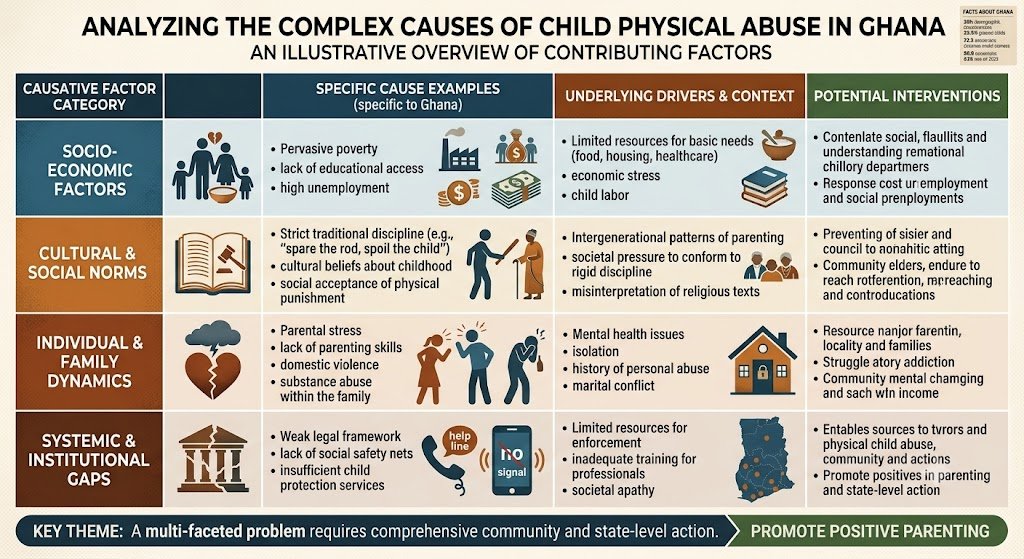
While perpetrators must be held accountable for their actions, it is important to look beyond the immediate offence and examine the deeper social conditions that contribute to child abuse.
Many abusive parents and guardians live under enormous economic and psychological pressures. Unemployment, underemployment, poverty, rising living costs, debt, overcrowded housing, and family instability can create chronic stress within households.
For some individuals, frustration accumulates over time until a minor act of misbehavior by a child triggers an explosive and disproportionate reaction. In such situations, the child becomes the unfortunate target of anger that has its origins elsewhere.
This does not excuse abuse. Rather, it helps us understand why it occurs and why punishment alone may not be sufficient to prevent future cases.
The Role of Alcohol and Substance Abuse
Alcohol abuse is another important factor in many cases of child maltreatment. Excessive drinking can impair judgment, reduce self-control, and increase aggression. Individuals who are intoxicated may react violently to ordinary childhood behavior that would otherwise be handled calmly.
Substance abuse can also contribute to neglect, family conflict, and financial hardship, all of which increase the risk of violence against children.
Addressing alcohol and substance abuse is therefore an important component of any strategy aimed at reducing child abuse in Ghana.
The Need for Public Education
Many parents continue to believe that severe physical punishment is an effective method of discipline. Some were raised in homes where harsh punishment was common and therefore see it as normal.
Public education campaigns should emphasize that discipline and abuse are not the same thing. Effective parenting does not require violence. Children can be taught responsibility, respect, and self-control through guidance, communication, supervision, and appropriate non-violent disciplinary measures.
Religious organizations, schools, traditional leaders, community groups, and the media all have important roles to play in educating the public about positive parenting practices.
Protecting Ghana's Children
Children are among the most vulnerable members of society. They depend on adults for protection, care, and guidance. When those entrusted with their welfare become their abusers, the consequences can be devastating.
Reducing child abuse in Ghana requires a multifaceted approach that combines law enforcement with poverty reduction, employment opportunities, mental health support, substance abuse treatment, and public education. Communities must also be willing to report suspected abuse rather than dismiss it as a private family matter.
Every child deserves to grow up in a safe and nurturing environment. Protecting children from violence is not only a legal obligation; it is a moral responsibility that belongs to all of us.