Introduction
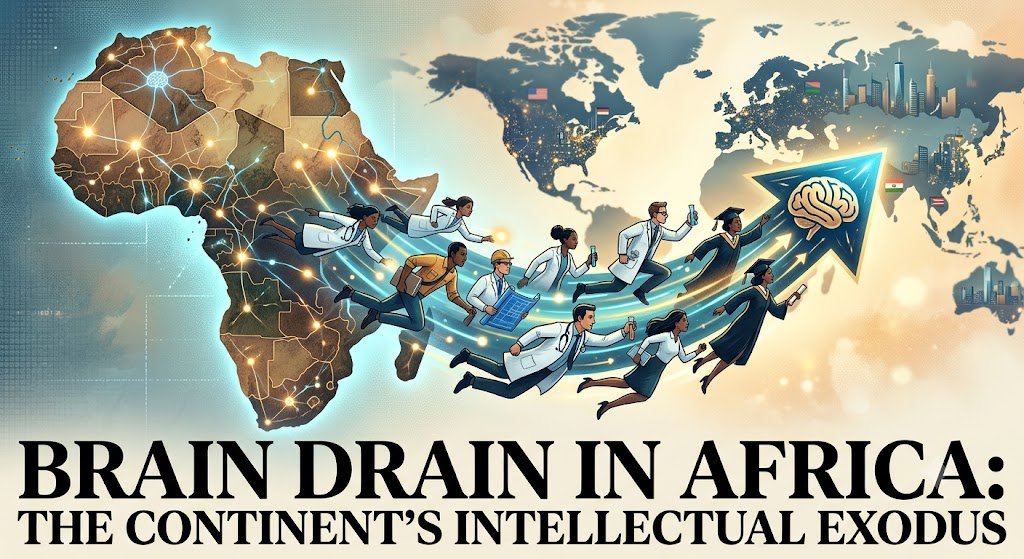
One of the greatest challenges confronting African countries today is the phenomenon known as "brain drain." Every year, thousands of highly educated and skilled Africans leave their home countries to seek better opportunities abroad. Doctors, nurses, engineers, scientists, university professors, information technology specialists, and other professionals migrate to countries in Europe, North America, Australia, and New Zealand in search of better salaries, improved working conditions, and greater professional opportunities.
While migration is a normal aspect of human society, the large-scale departure of highly trained professionals poses serious developmental challenges for many African nations. The continent invests enormous resources in educating its citizens, only to see many of its brightest minds contribute their talents to foreign economies. As a result, brain drain has become one of the most pressing social and economic issues facing Africa in the twenty-first century.
What Is Brain Drain?
Brain drain refers to the emigration of highly educated, skilled, and talented individuals from one country to another, usually from less developed countries to more developed ones. The term describes the loss of human capital that occurs when professionals leave their home countries to work elsewhere.
In the African context, brain drain involves doctors leaving Ghana for the United Kingdom, engineers departing Nigeria for Canada, scientists relocating from Kenya to the United States, or university lecturers moving from South Africa to Australia. These individuals often possess specialized knowledge and skills that are critically needed in their home countries.
The phenomenon is not unique to Africa, but its effects are often more severe on the continent because many African countries already face shortages of skilled personnel.
The Scale of the Problem
Every day, hundreds of educated Africans leave the continent in search of greener pastures overseas. Many are attracted by the promise of higher wages, better living standards, superior healthcare systems, advanced research facilities, and greater political stability.
Today, large numbers of African doctors, nurses, scientists, engineers, academics, and information technology professionals work in foreign countries. Some hospitals in Europe and North America rely heavily on healthcare workers originally trained in African countries. Similarly, universities and research institutions across the developed world employ thousands of African scholars and researchers.
The troubling aspect of this trend is that African governments often spend substantial public funds subsidizing the education and training of these professionals. Yet the benefits of that investment are frequently enjoyed by foreign economies rather than by the countries that financed their education.
Causes of Brain Drain in Africa
Lack of Employment Opportunities
One of the primary causes of brain drain is the lack of adequate employment opportunities. Many African graduates complete their education only to encounter high levels of unemployment or underemployment.
Even when jobs are available, they may not match the qualifications and aspirations of highly trained professionals. As a result, many talented individuals look abroad for opportunities that better utilize their skills and education.
Low Salaries and Poor Compensation
Salary differences between Africa and developed countries are often enormous. A doctor, engineer, or university lecturer may earn several times more in the United States, Canada, or the United Kingdom than in their home country.
For many professionals, migration is not simply a matter of seeking wealth but also of achieving financial security and providing a better future for their families. Faced with such disparities, many choose to relocate permanently.
Poor Working Conditions
Many professionals become frustrated by inadequate working environments. Doctors may lack essential medical equipment. Scientists may have limited access to laboratories and research funding. University lecturers may face overcrowded classrooms and insufficient teaching resources.
These challenges make it difficult for skilled professionals to perform at their highest potential and often encourage them to seek employment elsewhere.
Political Instability and Governance Challenges
Political instability, corruption, insecurity, and weak governance can also contribute to brain drain. Professionals are more likely to remain in countries where institutions function effectively, the rule of law is respected, and future prospects appear promising.
When political uncertainty becomes widespread, migration often becomes an attractive alternative.
Better Educational and Research Opportunities Abroad
Many talented Africans leave to pursue advanced education and research opportunities. Developed countries often offer world-class universities, sophisticated research facilities, generous scholarships, and greater funding for innovation.
Unfortunately, some students who leave for further studies never return home after graduation because they secure attractive employment opportunities abroad.
Consequences of Brain Drain
Shortage of Skilled Professionals
The most obvious consequence of brain drain is the shortage of qualified personnel. Hospitals may lack doctors and nurses, universities may struggle to recruit lecturers, and industries may face shortages of engineers and technical experts.
These shortages can slow national development and reduce the quality of essential public services.
Economic Losses
Brain drain represents a significant economic loss. Governments invest considerable sums in educating citizens through public schools, colleges, and universities. When these individuals emigrate, the returns on that investment often benefit foreign countries rather than local economies.
In effect, poorer nations subsidize the workforce needs of wealthier nations.
Slower Technological and Scientific Development
Innovation depends heavily on skilled professionals. When scientists, researchers, and engineers leave, countries may experience slower technological progress and reduced scientific productivity.
This can make it more difficult for African nations to compete in the global knowledge economy.
Some Benefits of Migration
Despite its challenges, brain drain is not entirely negative. Many Africans living abroad continue to contribute to their home countries in various ways.
Remittances
One major benefit is the flow of remittances. Migrants regularly send money to family members and communities back home. These remittances help pay for education, healthcare, housing, and business investments.
In many African countries, remittances constitute an important source of foreign exchange and contribute significantly to national economies.
Transfer of Knowledge and Skills
Members of the African diaspora often share expertise, technology, and professional networks with their home countries. Some return temporarily to provide training, participate in research projects, or assist with national development initiatives.
Others eventually return permanently, bringing with them valuable experience acquired abroad.
Solutions to Brain Drain
Improve Salaries and Working Conditions
African governments must strive to offer more competitive salaries and better working conditions for professionals. While matching Western salaries may be difficult, significant improvements can reduce the incentive to emigrate.
Create More Employment Opportunities
Economic growth, industrialization, and private-sector development can generate meaningful employment opportunities for graduates and professionals. When people can build successful careers at home, they are less likely to leave.
Invest in Research and Innovation
Governments should increase funding for universities, research institutions, and innovation centers. Creating environments where scientists and scholars can thrive will encourage many talented individuals to remain.
Strengthen Governance
Reducing corruption, improving public institutions, and promoting political stability can make African countries more attractive places to live and work.
Engage the African Diaspora
Rather than viewing emigrants solely as a loss, governments should develop policies that encourage diaspora engagement. Professionals abroad can contribute through investment, mentorship, research collaborations, and knowledge transfer programs.
Conclusion
Brain drain remains one of Africa's most significant developmental challenges. The migration of highly educated professionals deprives many countries of the expertise needed to drive economic growth, improve healthcare, strengthen education, and advance technological innovation. The problem is fueled by unemployment, low salaries, poor working conditions, and limited opportunities for professional advancement.
Nevertheless, all is not lost. Remittances, knowledge transfer, and diaspora engagement demonstrate that migration can also create benefits for African societies. The long-term solution lies not in preventing people from migrating but in creating conditions that make staying an attractive option. By improving employment opportunities, strengthening institutions, investing in research, and enhancing working conditions, African countries can retain more of their talented citizens and harness their skills for national development.