Introduction
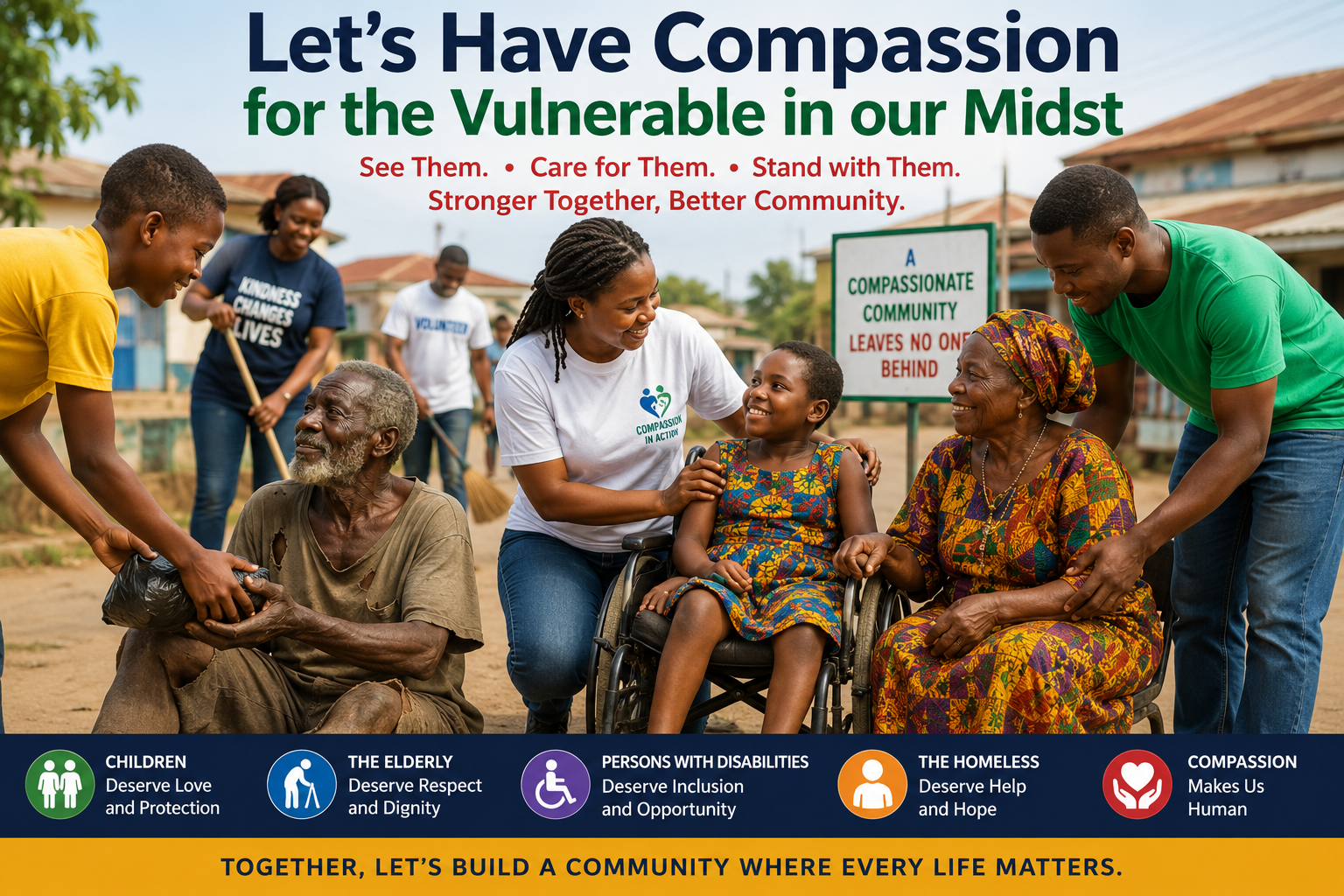
A society is often judged not by how it treats its rich, powerful, and influential citizens, but by how it treats its weakest and most vulnerable members. Children, the elderly, and persons with disabilities occupy a special place in every community. They depend on the care, protection, and goodwill of others. Unfortunately, these vulnerable groups are often the ones who suffer neglect, abuse, exploitation, and even death at the hands of those who should protect them.
Ghanaians have long prided themselves on being caring, family-oriented, and compassionate people. Traditional African values emphasize kindness, respect for elders, concern for children, and communal responsibility. Yet, modern social and economic pressures have sometimes weakened these cherished values. As a nation, we must renew our commitment to protecting and caring for the vulnerable among us.
Children Need Protection, Not Exploitation
Children are among the most vulnerable members of society. They lack the physical strength, life experience, and legal authority to defend themselves. Consequently, they are often easy targets for abuse and exploitation.
Across Africa, countless children are subjected to child labor. Some work long hours on farms, in mines, markets, and fishing communities under dangerous conditions. In parts of West Africa, including Ghana, reports have documented children being trafficked to work in fishing communities on Lake Volta. These children are often deprived of education, adequate nutrition, and a normal childhood.
Many children also suffer physical abuse in homes and schools. Some are beaten excessively in the name of discipline. Others endure emotional abuse, neglect, and abandonment. Cases occasionally emerge in the media of children being tortured, chained, starved, or even killed by caregivers.
Street children represent another vulnerable population. In cities such as Accra, Kumasi, Lagos, Nairobi, and Johannesburg, thousands of children live or work on the streets. They are exposed to crime, substance abuse, sexual exploitation, and disease. Instead of viewing such children as nuisances, society should see them as young people in need of assistance and protection.
Every child deserves love, education, healthcare, and a safe environment in which to grow and develop. Parents, teachers, religious leaders, and community members all share responsibility for safeguarding children from harm.
Respect and Care for the Elderly
Traditional African societies placed great value on older people. Elders were respected as custodians of wisdom, culture, and family history. Their advice was sought in important matters, and younger people cared for them in their old age.
Today, however, many elderly people face loneliness, neglect, and hardship. Rapid urbanization and migration have weakened traditional family support systems. Adult children often move to distant cities or abroad, leaving aging parents without adequate care.
Some elderly persons live in poverty and struggle to meet basic needs such as food, shelter, and healthcare. Others experience emotional neglect, receiving few visits from relatives and little social interaction.
Even more troubling are cases of violence against elderly persons. In some African communities, elderly women continue to face accusations of witchcraft. Such accusations have led to beatings, banishment, property confiscation, and even murder. Ghana has witnessed several tragic incidents involving elderly women accused of witchcraft and subjected to mob violence.
An elderly person's advancing age should never become a reason for mistreatment. Every older citizen deserves dignity, respect, security, and access to healthcare. The elderly cared for us when we were young; it is only fair that we care for them when they become dependent on others.
Persons with Disabilities Deserve Inclusion
Persons with disabilities constitute another group that frequently encounters discrimination and exclusion. Whether the disability is physical, visual, hearing-related, intellectual, or developmental, affected individuals often face barriers that limit their participation in society.
In many African countries, harmful myths and misconceptions about disability persist. Some people wrongly believe that disability is a curse, punishment, or sign of supernatural influence. Such beliefs contribute to stigma and social exclusion.
Children with disabilities are sometimes hidden away by their families. Some are denied educational opportunities because schools lack appropriate facilities or support services. Adults with disabilities often struggle to find employment despite possessing valuable skills and talents.
Yet history is filled with examples of persons with disabilities who have made extraordinary contributions to society. Across Africa and the world, people with disabilities have excelled as teachers, lawyers, entrepreneurs, athletes, artists, and political leaders when given opportunities and support.
Compassion means more than sympathy. It means creating accessible schools, workplaces, transportation systems, and public facilities. It means ensuring equal opportunities and treating persons with disabilities as valued members of society rather than objects of pity.
The Consequences of Neglect
When vulnerable people are neglected, the consequences affect the entire society. Abused children may suffer lifelong physical and emotional scars. Neglected elderly persons may experience deteriorating health and depression. Excluded persons with disabilities may be unable to realize their full potential and contribute their talents to national development.
Furthermore, violence against vulnerable groups erodes the moral fabric of society. A nation that permits the abuse of its weakest members undermines the very principles of justice, humanity, and social solidarity upon which stable communities are built.
Compassion Is Everyone's Responsibility
Protecting vulnerable populations is not solely the responsibility of government agencies, social welfare departments, or charitable organizations. Every citizen has a role to play.
Neighbors should report suspected cases of child abuse. Community members should intervene when elderly persons are neglected or mistreated. Employers should provide opportunities for qualified persons with disabilities. Religious organizations should support struggling families and vulnerable individuals. Schools should promote empathy, inclusion, and respect for diversity.
Traditional leaders, opinion leaders, and the media also have important roles in educating the public and challenging harmful practices that endanger vulnerable populations.
Building a More Caring Ghana
The measure of a nation's greatness is found not only in its economic growth, infrastructure, or technological achievements. It is also reflected in how it treats those who cannot easily protect themselves.
Ghana can become an even stronger and more humane society by embracing compassion, kindness, and social responsibility. Let us protect our children from abuse and exploitation. Let us honor and care for our elderly citizens. Let us create opportunities and remove barriers for persons with disabilities.
In doing so, we will uphold the finest values of our African heritage and create a society where every person—regardless of age, ability, or circumstance—is treated with dignity and respect.
The vulnerable among us are not strangers. They are our children, our parents, our relatives, our neighbors, and our fellow citizens. Their well-being is our collective responsibility. Let us therefore extend a helping hand, show compassion, and ensure that no vulnerable person is left behind.