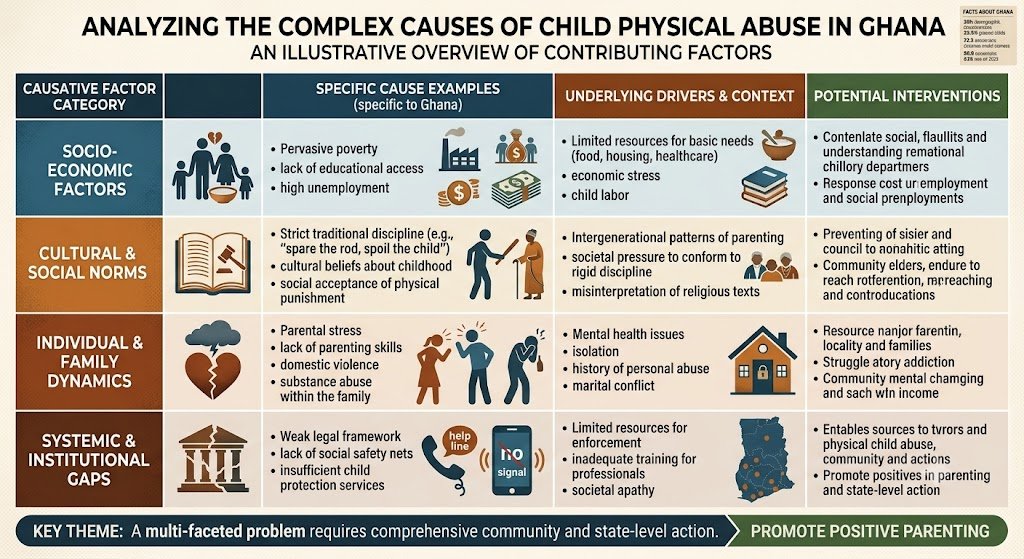
Physical Abuse of Children in Ghanaian Homes
A Disturbing Reality One only needs to read local newspapers or browse Ghana-based online news platforms to appreciate the disturbing frequency of child abuse cases occurring in homes across the coun
81 results for “physical abuse”

A Disturbing Reality One only needs to read local newspapers or browse Ghana-based online news platforms to appreciate the disturbing frequency of child abuse cases occurring in homes across the coun

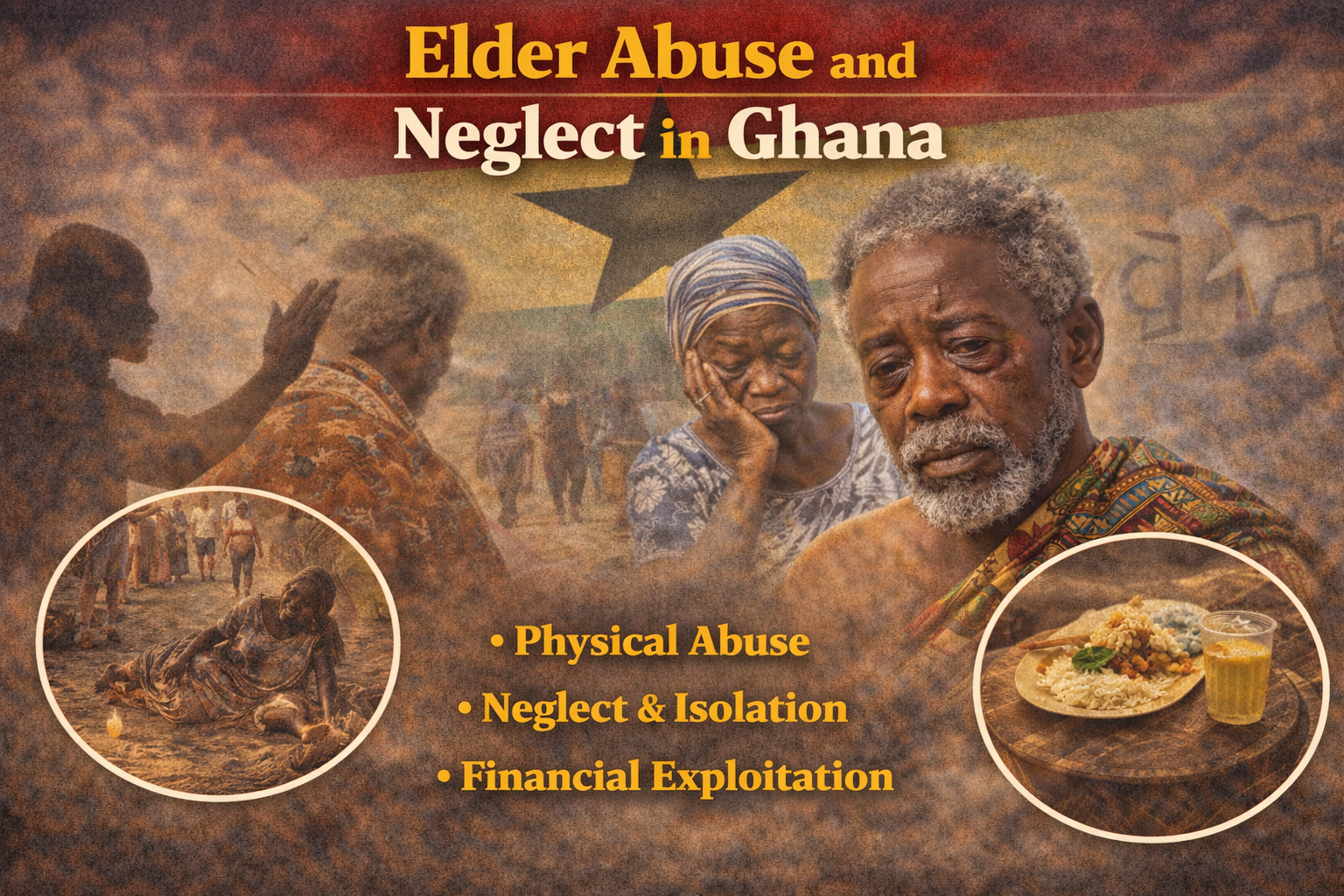
Ghanaian society traditionally values respect for the elderly. Older people are regarded as repositories of wisdom, custodians of tradition, and moral anchors of the family. Yet beneath this ideal lies a troubling reality: many elderly persons in Ghana experience neglect, abuse, and profound social

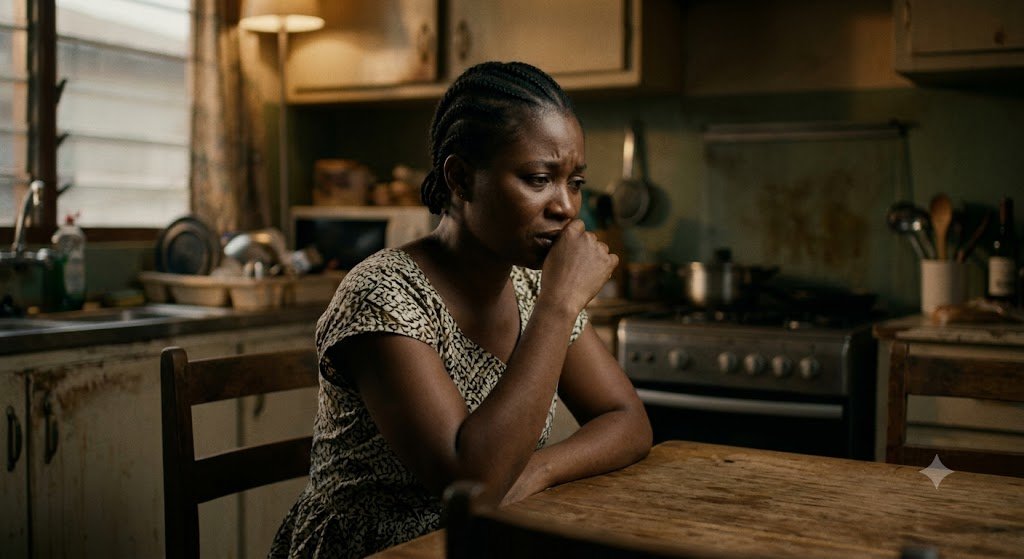
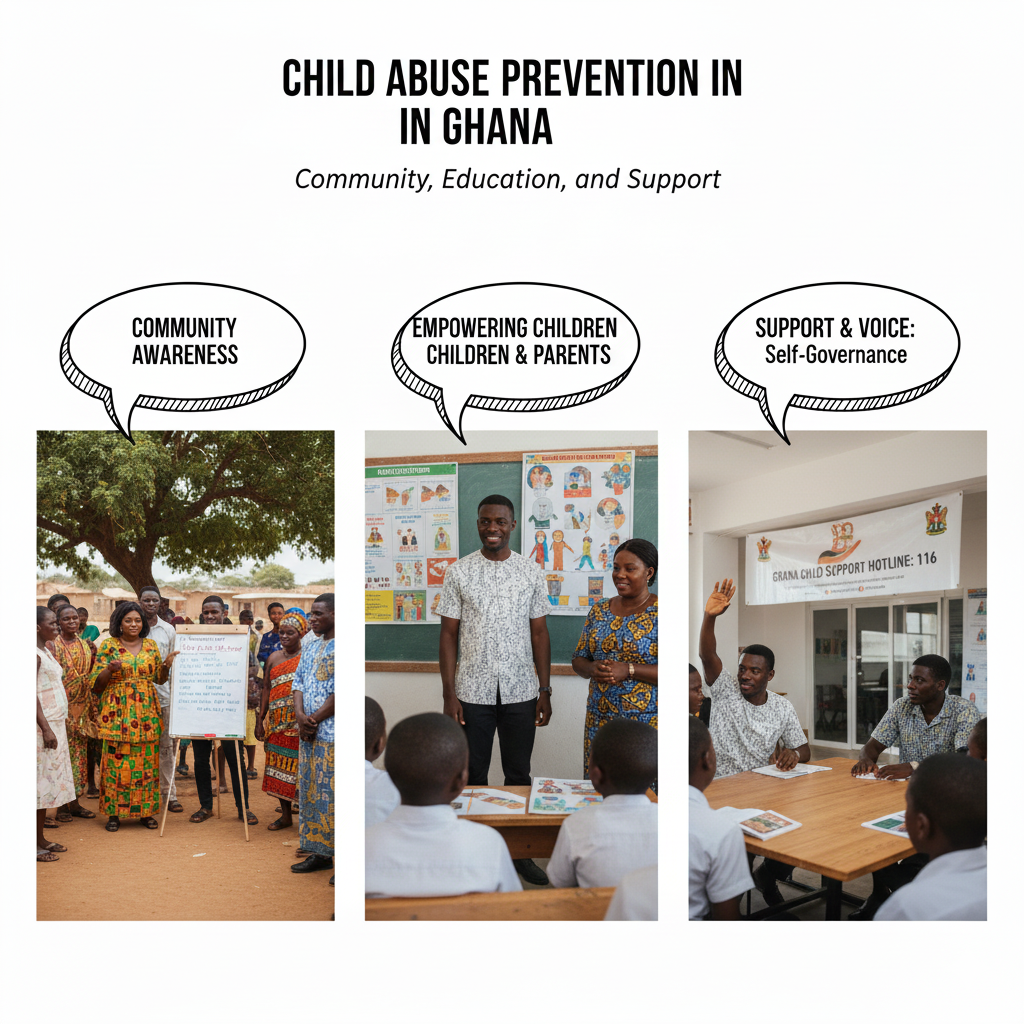
Every year, thousands of children in Ghana suffer abuse at the hands of those entrusted with their care—parents, guardians, and relatives. Reports of battered, neglected, and traumatized children frequently appear in the Ghanaian mass media, often accompanied by disturbing images and heartbreaking d

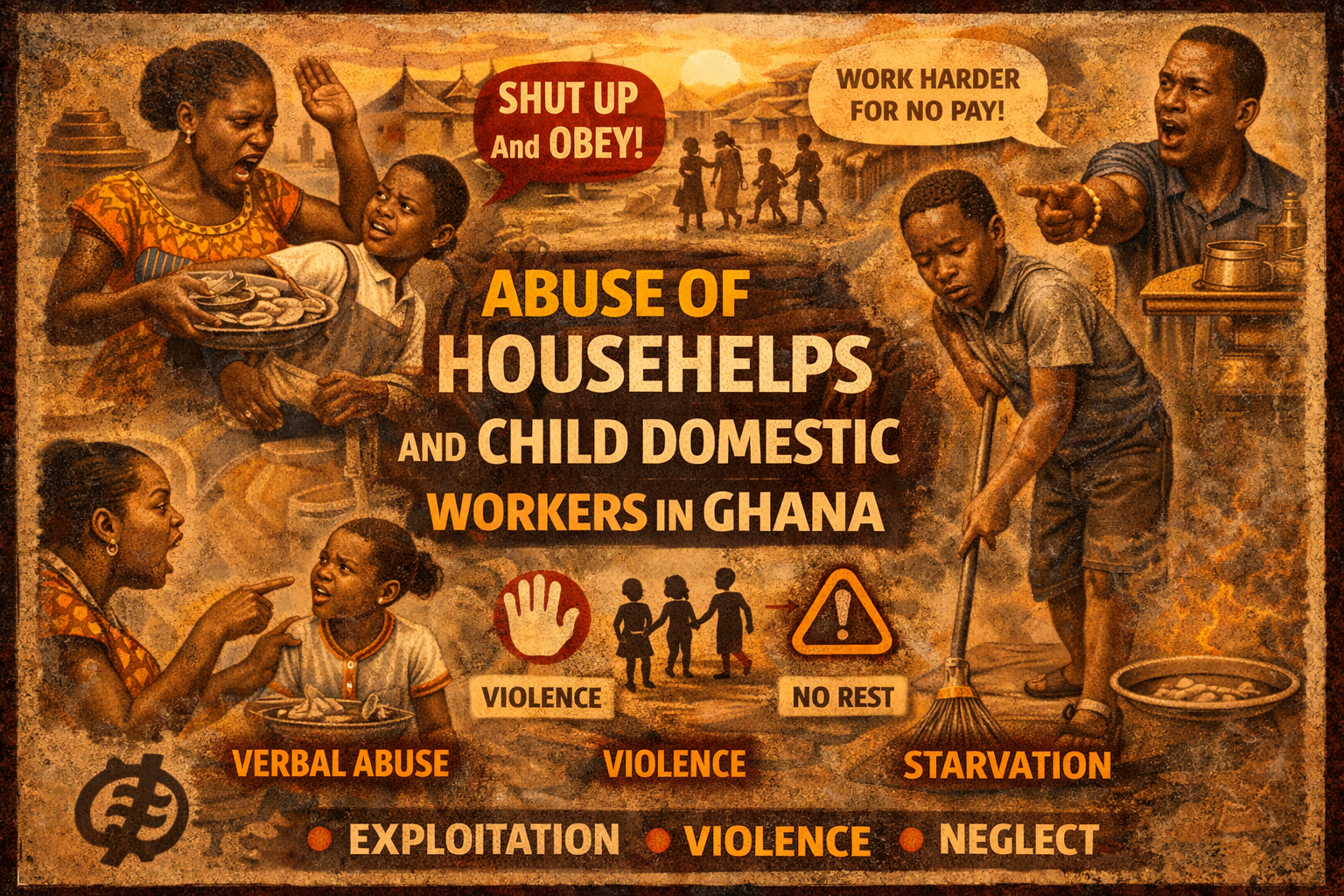
In Ghana, there exists a long-standing practice in which some parents send their children to live with other families as househelps. While this arrangement is often justified as a strategy for providing children with better opportunities, it has, in many cases, become a source of profound exploitati

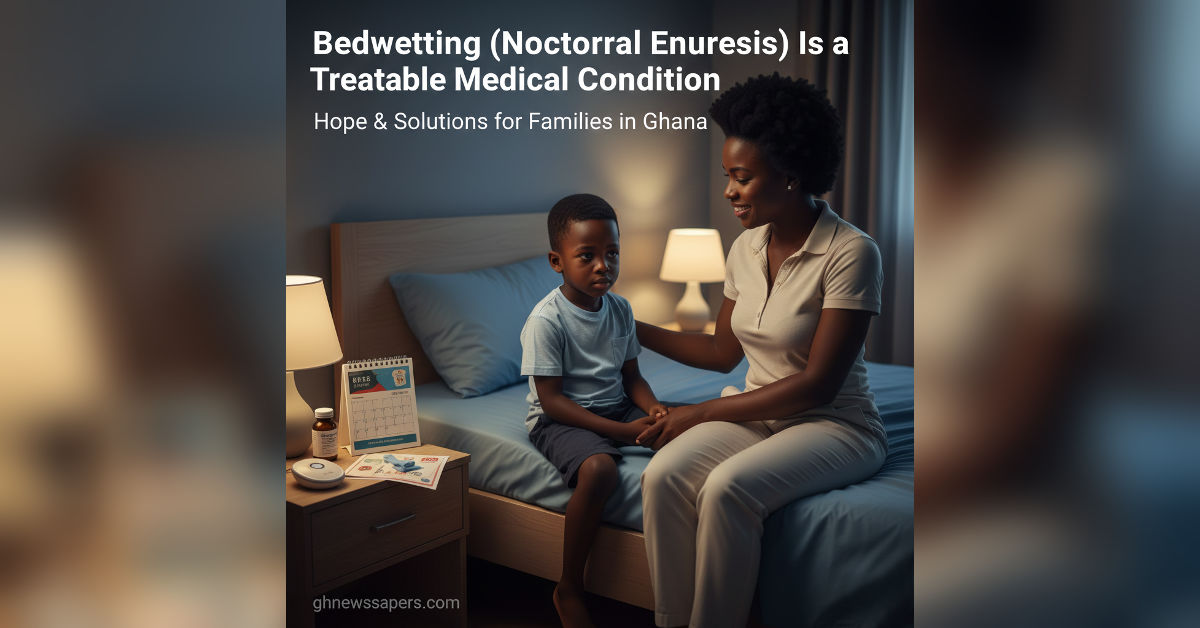
Across Africa, myths and misunderstandings about bedwetting continue to affect children and families. In Ghana, many parents still believe that children who wet their beds at night are lazy or unwilling to wake up to urinate. As a result, some children are physically disciplined. In past decades, pa

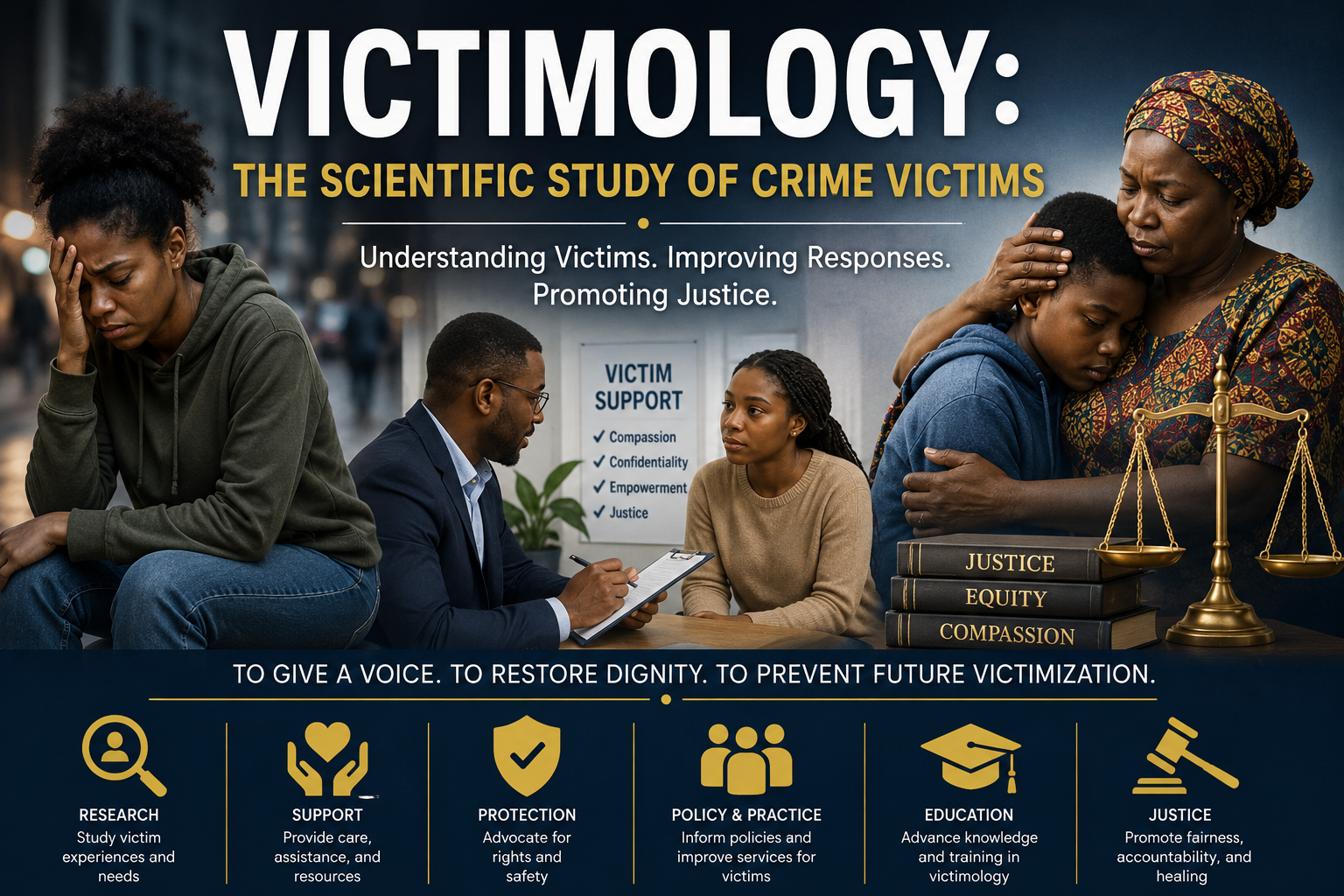
The Neglect of Crime Victims For many decades, the study of crime was largely concerned with offenders. Criminologists focused their attention on criminals, criminal behavior, and the causes of crime

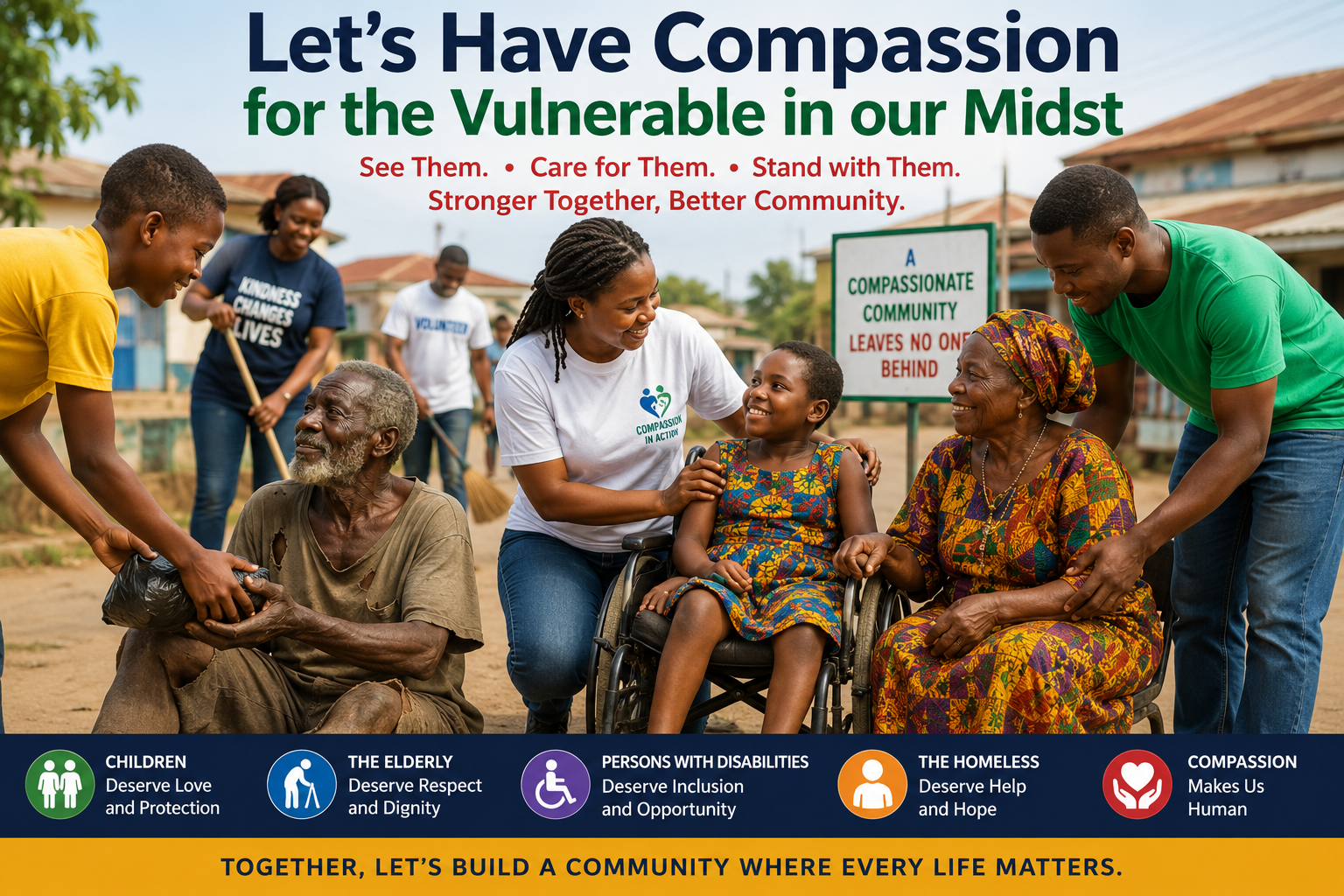
Introduction A society is often judged not by how it treats its rich, powerful, and influential citizens, but by how it treats its weakest and most vulnerable members. Children, the elderly, and pers

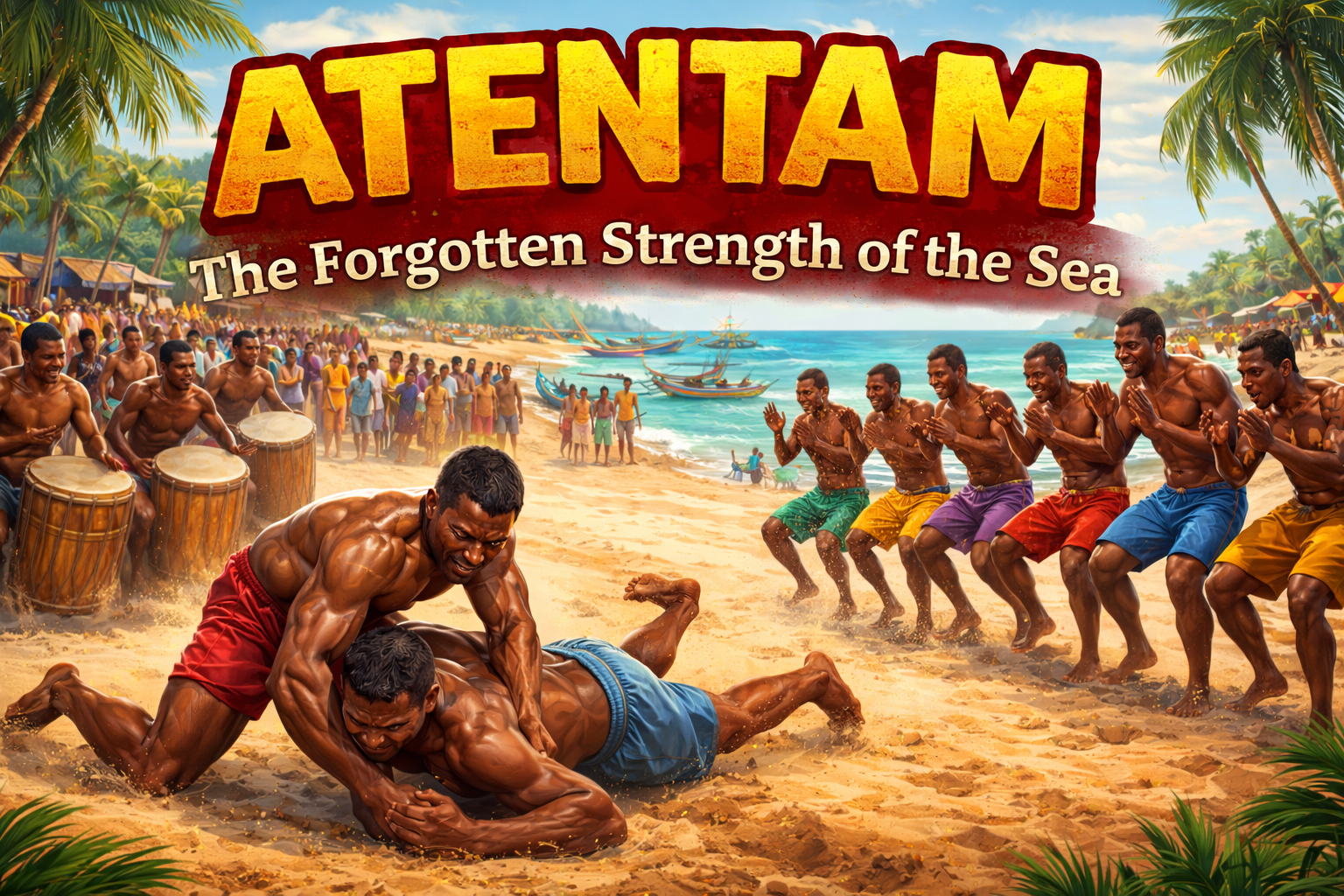
Along the wind-carved coastline of southern Ghana, among the Fante, physical games were never idle diversions. They were social rehearsals—training grounds for endurance, hierarchy, and communal rhythm. Two in particular—Atentam and Osibir—stand out in the historical record. Atentam derives from the

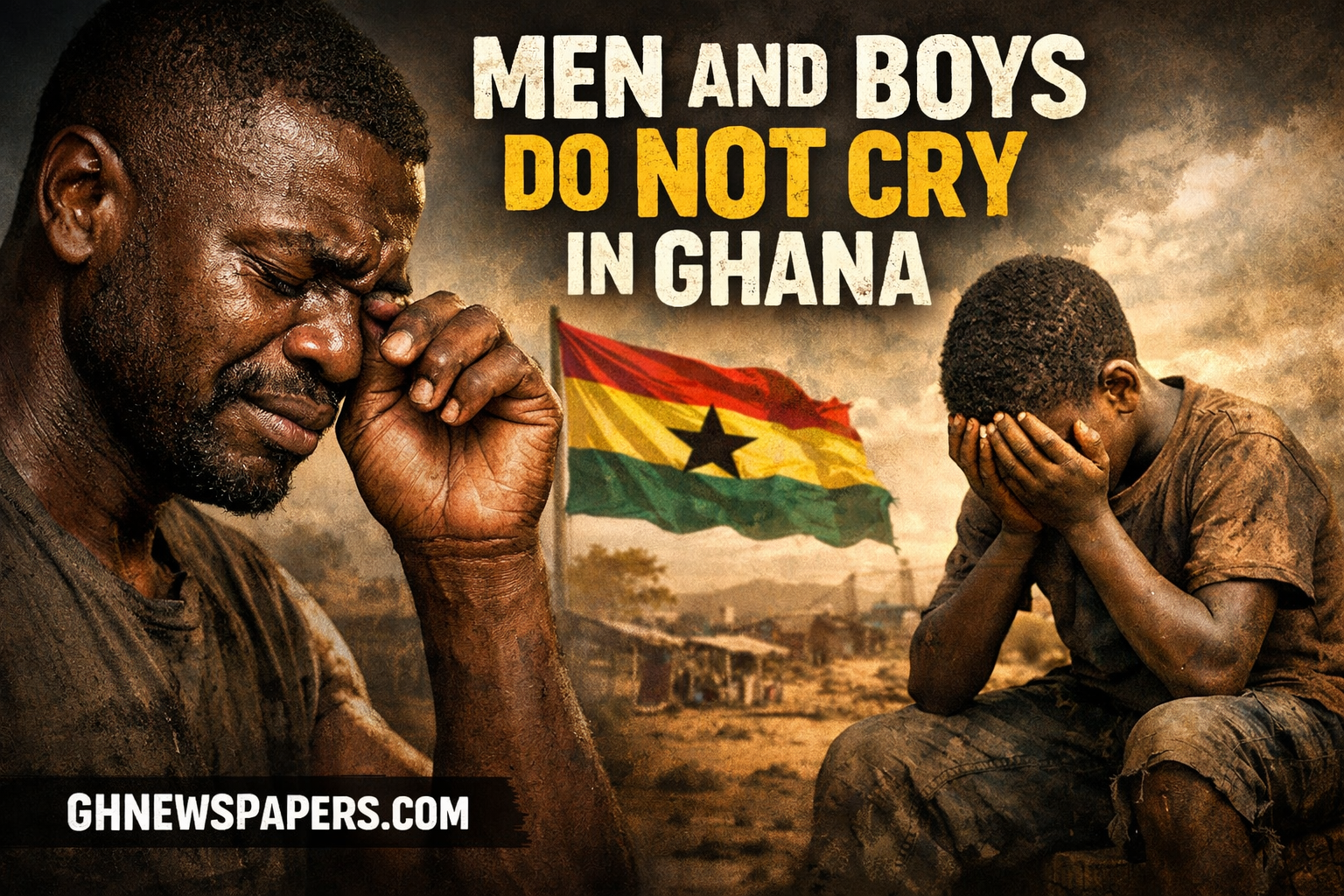
In Ghana, boys are socialized from an early age into the belief that boys do not cry. Among the Akan, any attempt by a boy to cry is frequently met with the admonition “gyae, barima nsu”—literally, “stop, boys do not cry.” This injunction reflects a broader cultural script that equates emotional res

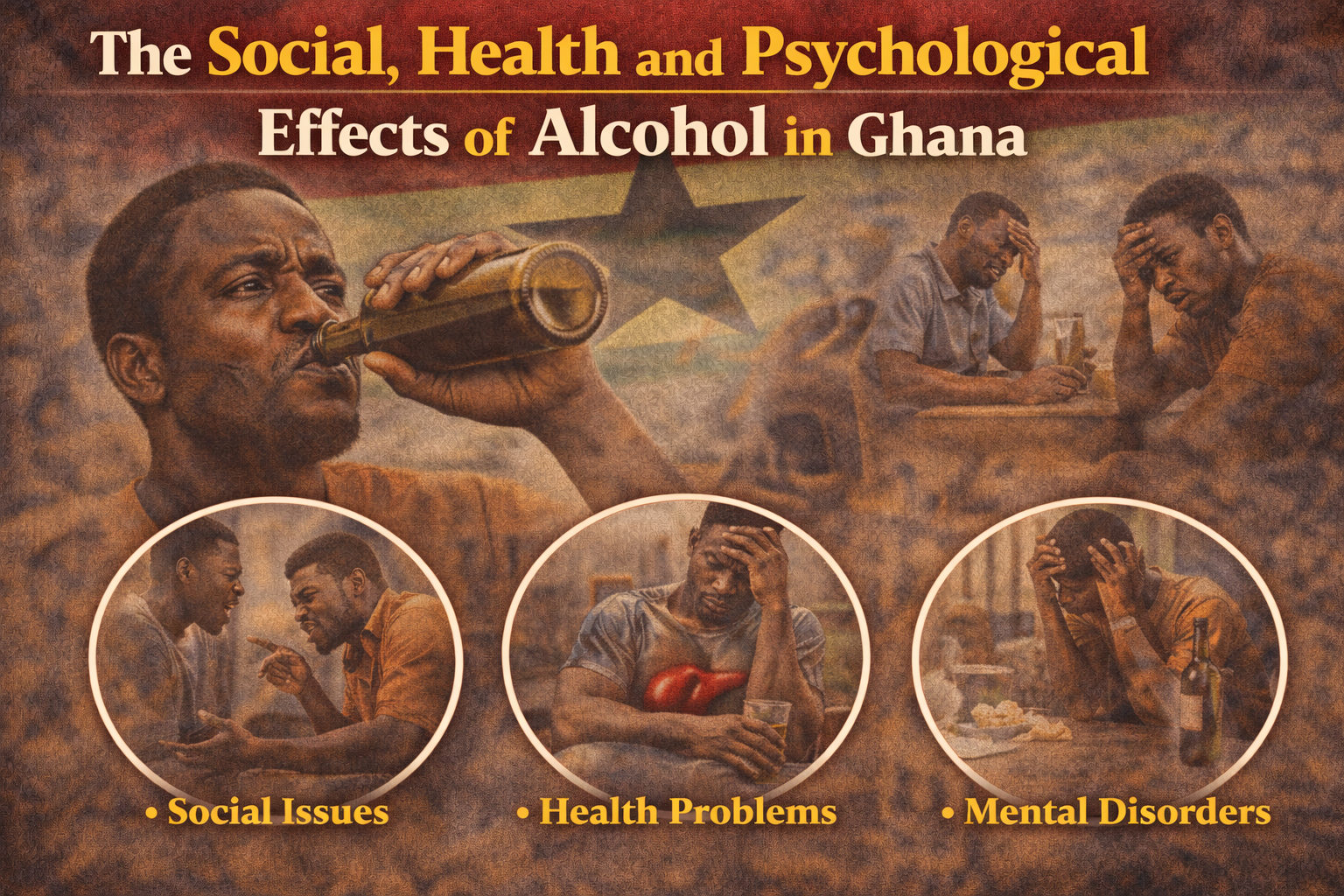
Irresponsible alcohol consumption has become a growing social problem in Ghana, with serious consequences for individuals, families, and communities. Some drinkers spend a large proportion of their income on alcohol, leaving little or nothing for basic necessities such as food, clothing, rent, medic

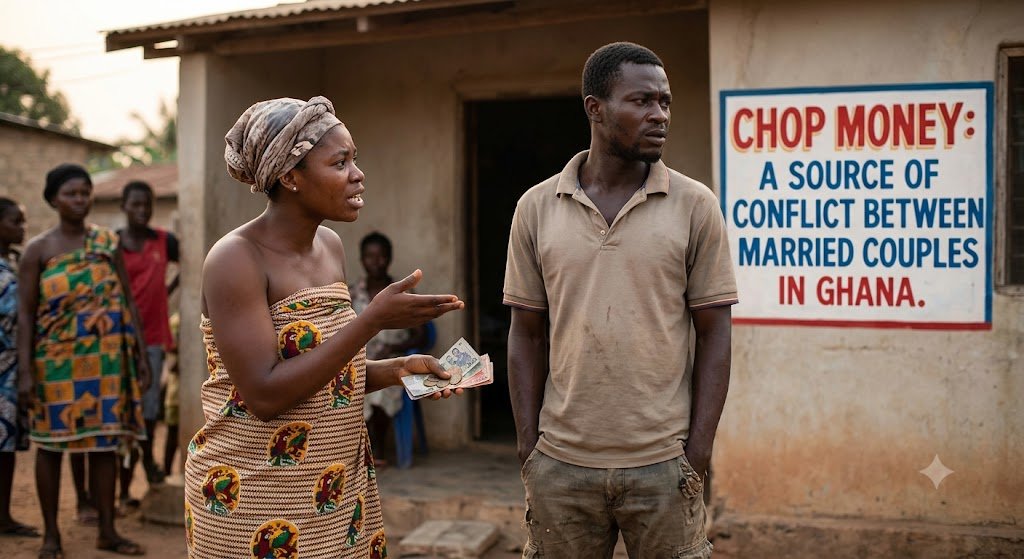
The Institution of Chop Money Chop money is oftentimes a source of conflict between Ghanaian husbands and their wives. Some of such conflicts result in verbal assaults, verbal disagreements, physical

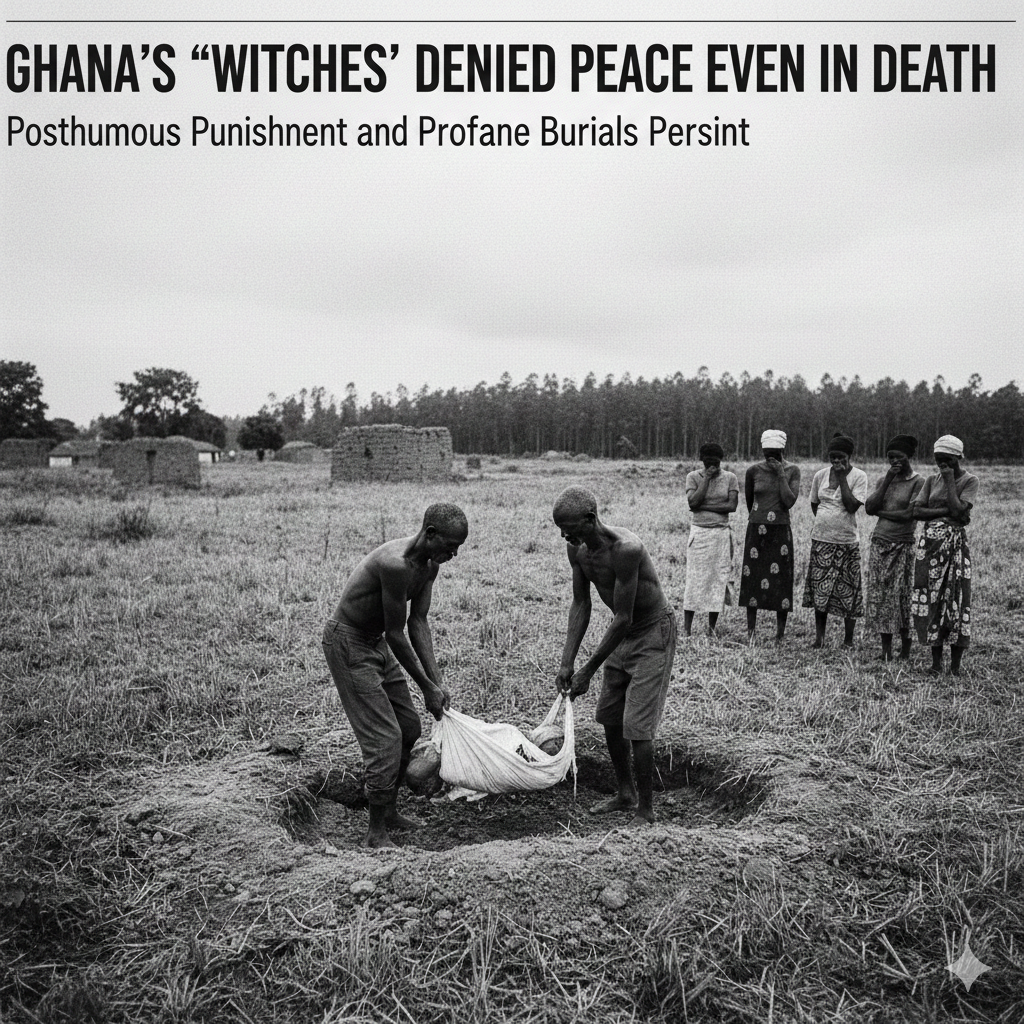
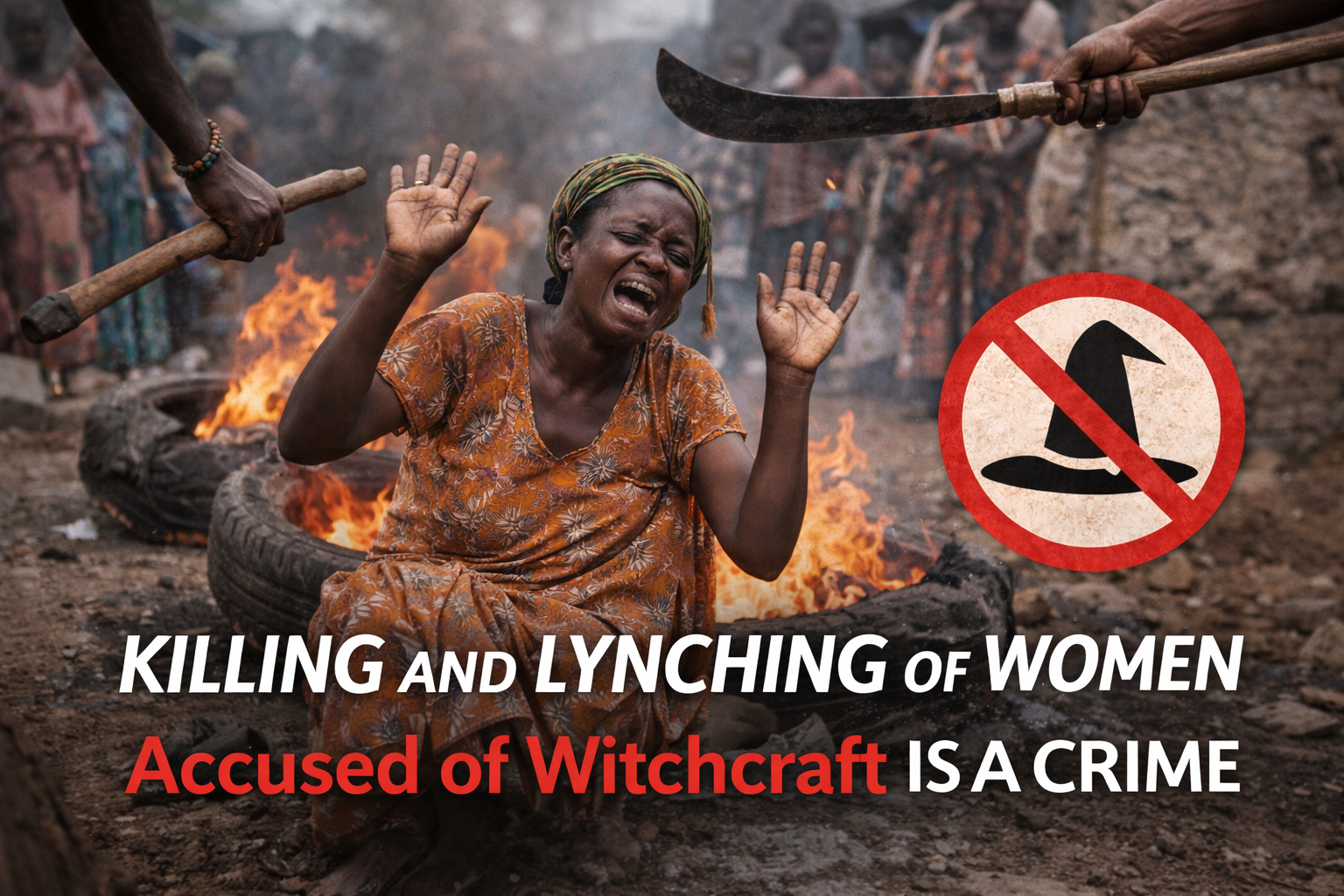
In many Ghanaian communities, accusations of witchcraft generate intense moral outrage and social hostility. Persons believed to be malevolent witches are frequently subjected to verbal abuse, physical assault, forced displacement, and, in extreme cases, extrajudicial killing (Adinkrah, 2004, 2015).

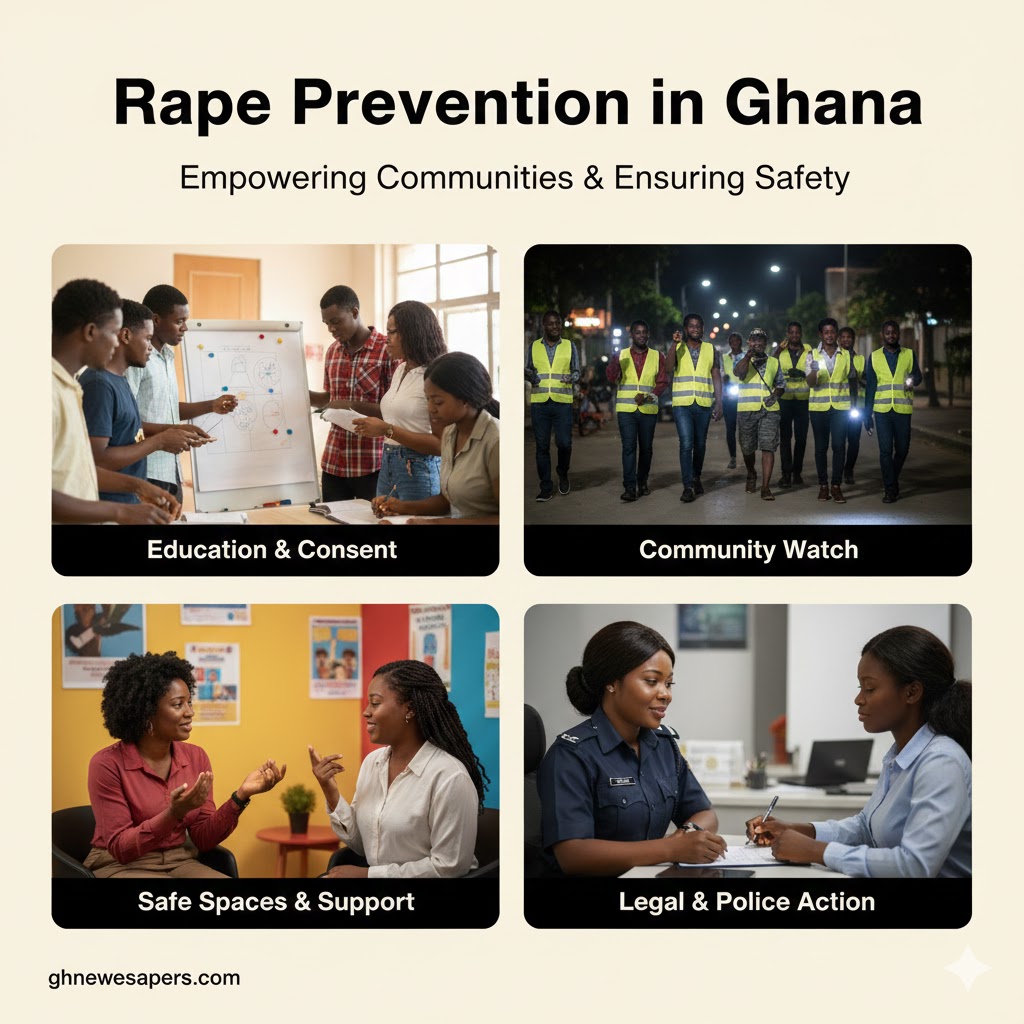
Rape and sexual assault are among the most serious crimes in Ghana, leaving victims with profound physical, emotional, and psychological scars. Despite public awareness campaigns and media reporting, sexual violence continues to occur in society, highlighting the urgent need for vigilance, education

Corporal punishment is when an adult uses physical force to discipline or control a child, with the aim of causing pain, though not serious injury. In simple terms, it means hurting a child’s body to punish them. Examples of corporal punishment include beating or caning, slapping or spanking, whippi


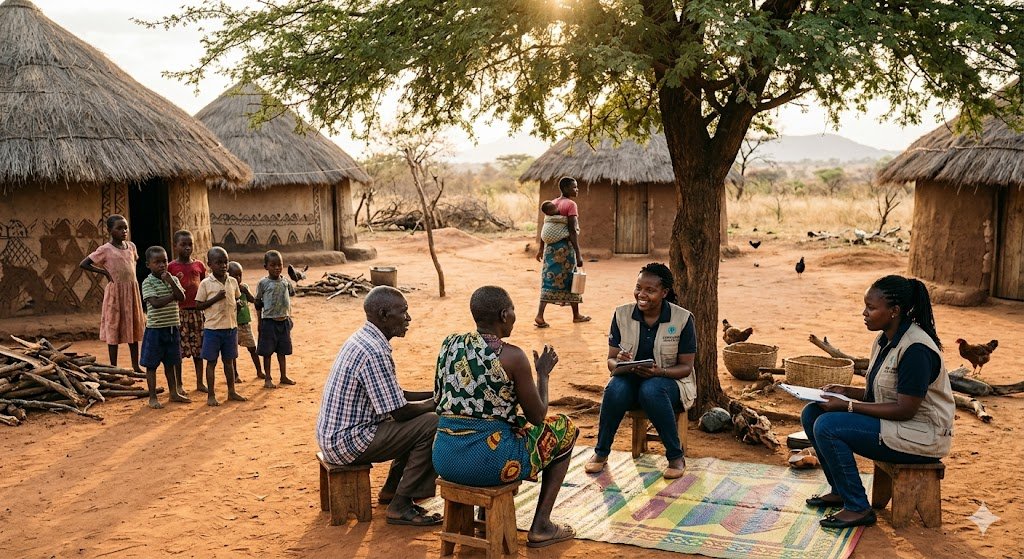
Introduction In today's world, research has become an important part of national development. Governments, universities, hospitals, non-governmental organizations (NGOs), and international agencies r

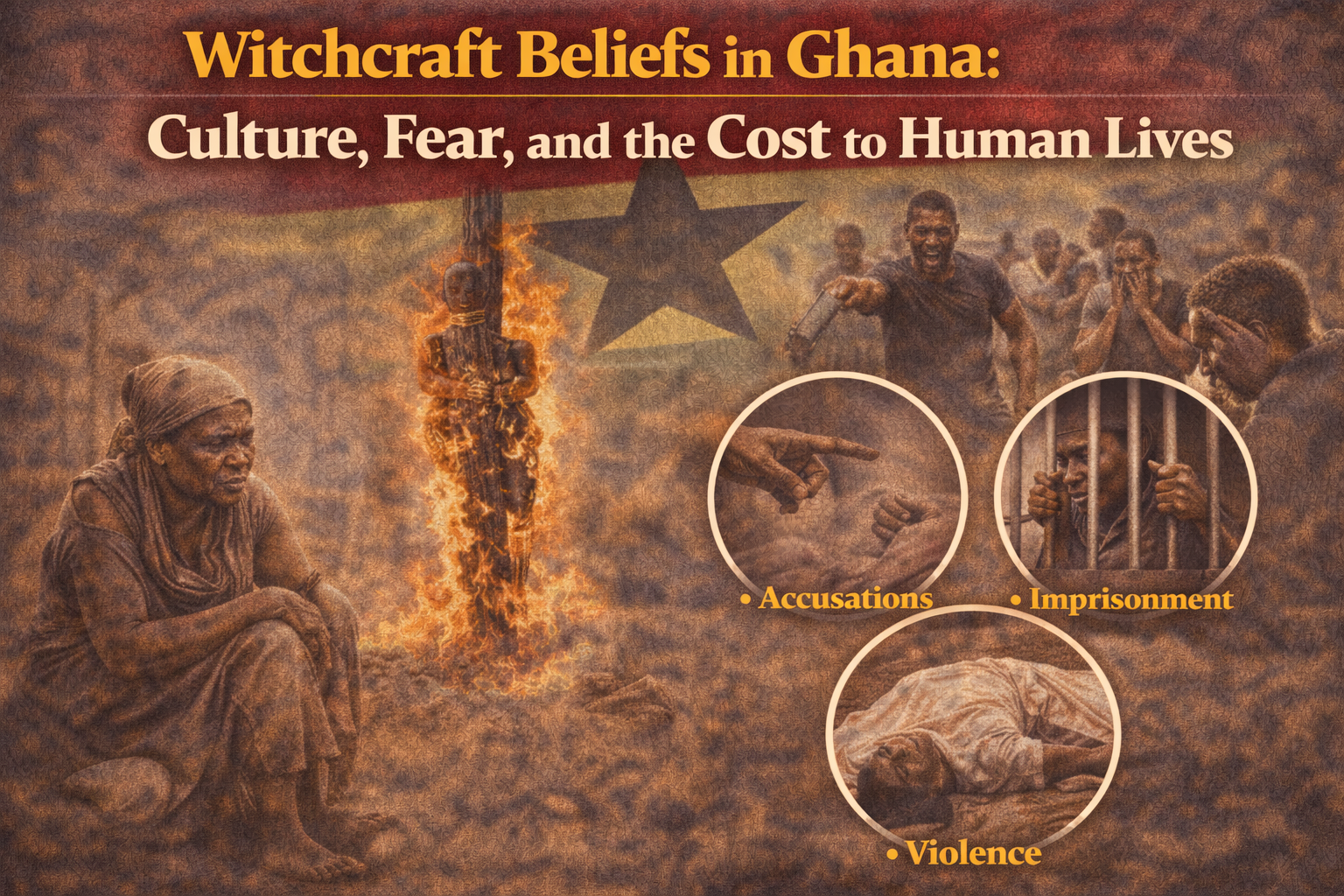
Violence against persons accused of witchcraft remains a troubling reality in parts of Ghana. Although our nation prides itself on hospitality, communal solidarity, and deep respect for human dignity, allegations of witchcraft too often trigger acts of cruelty that contradict these cherished values.

Children and the Future of the Nation Children are the future of every society. When a nation fails to nurture and guide its children properly, it mortgages its own future. Ghana today faces a troubling situation: unless deliberate efforts are made to mould children into disciplined, responsible, an

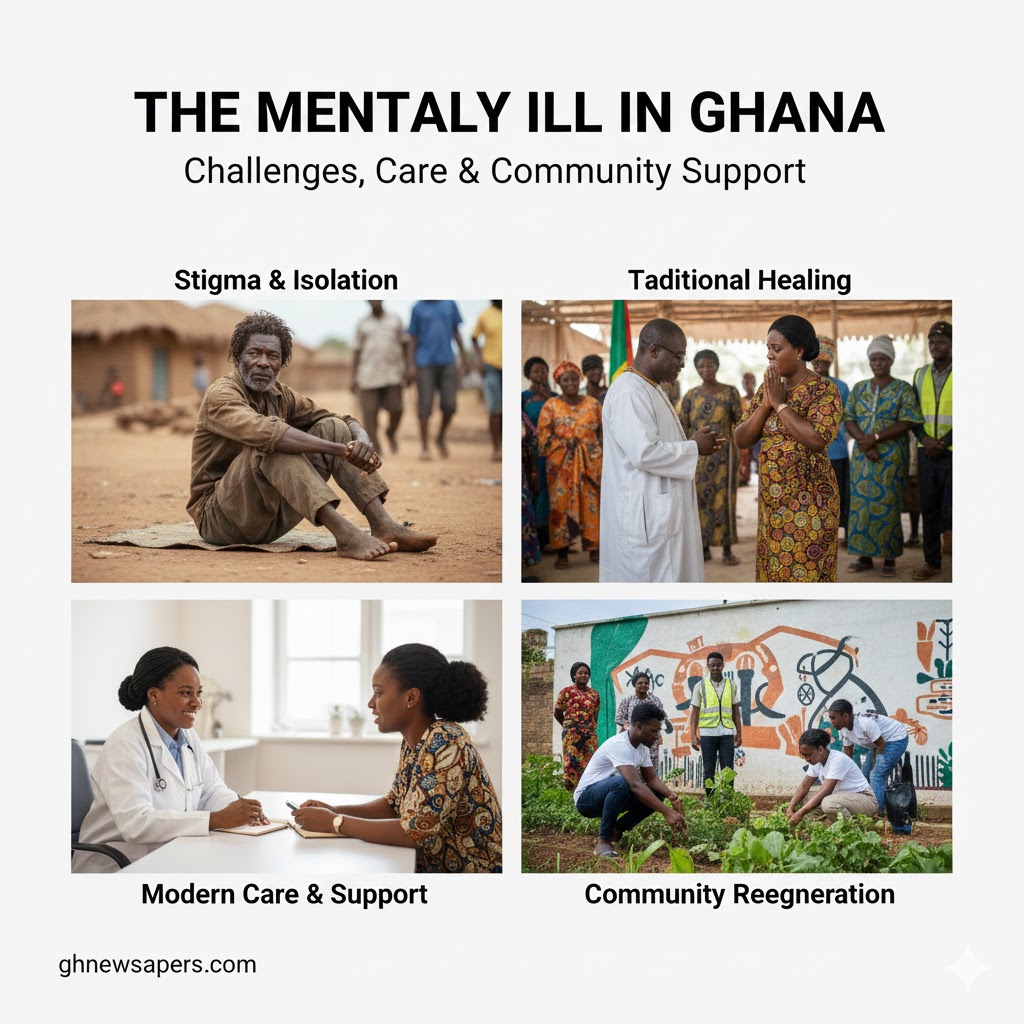
Life on the Streets: A Visible Social Failure On the streets of Ghana, many people living with mental illness wander without care, shelter, or dignity. Some are dressed in dirty, tattered clothing; others are barely clothed, and a few are completely naked. Their presence is a visible reminder of a d

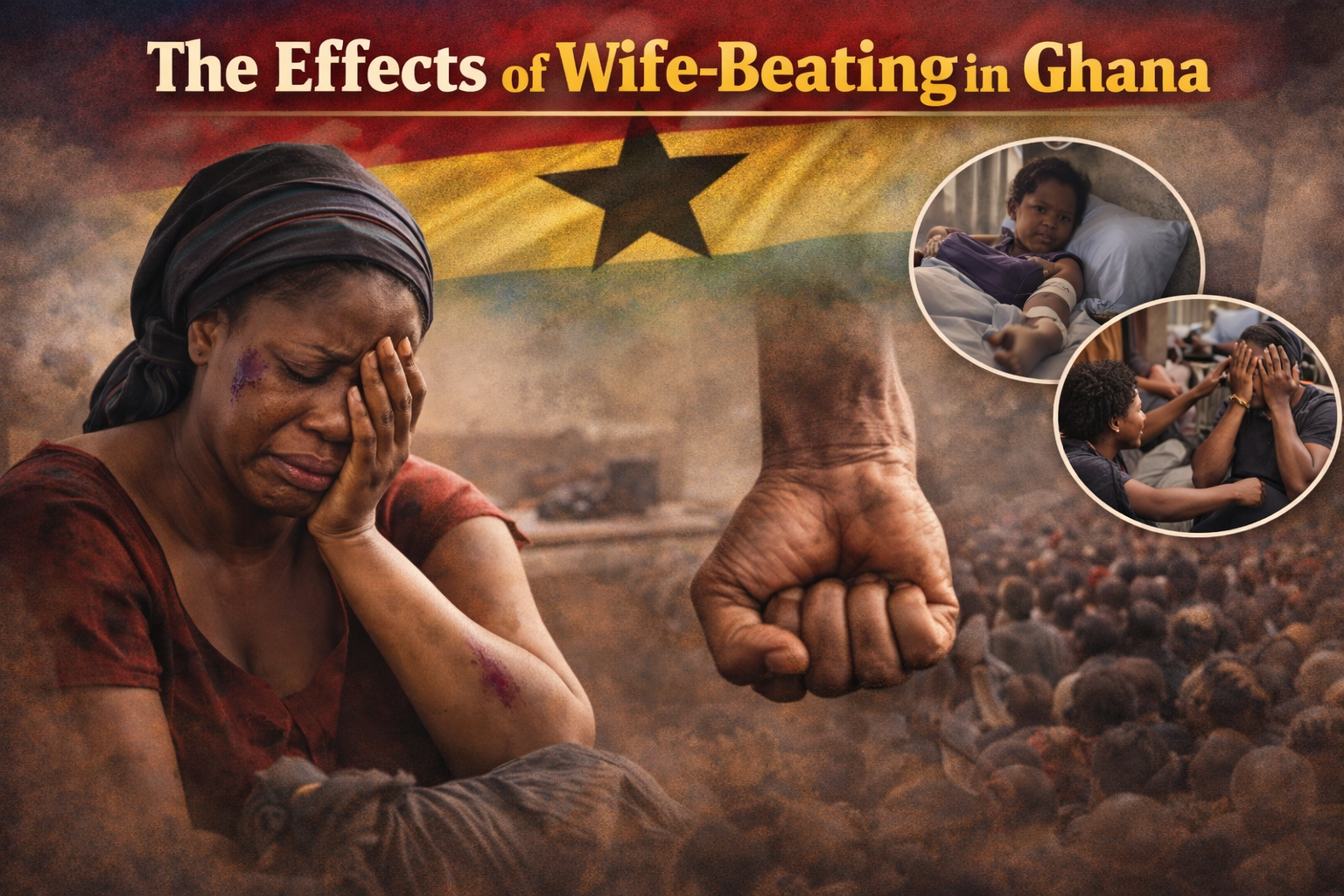
When Two Elephants Fight, the Earth Underneath Suffers Marriage is ideally meant to be a source of companionship, love, and emotional security between husband and wife. Yet in Ghana, as in many societies across the world, the promise of marital bliss is too often shattered by domestic violence, part

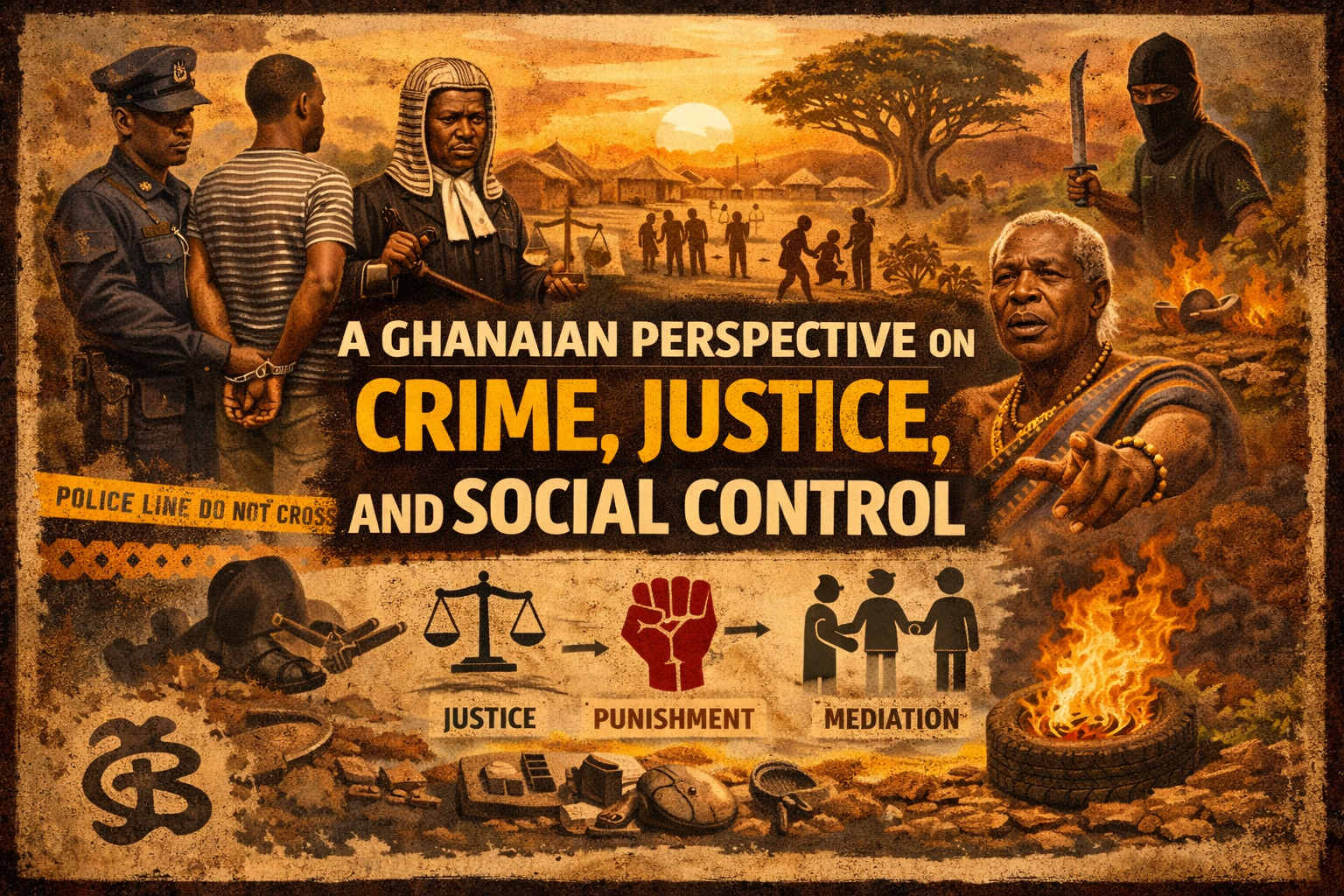
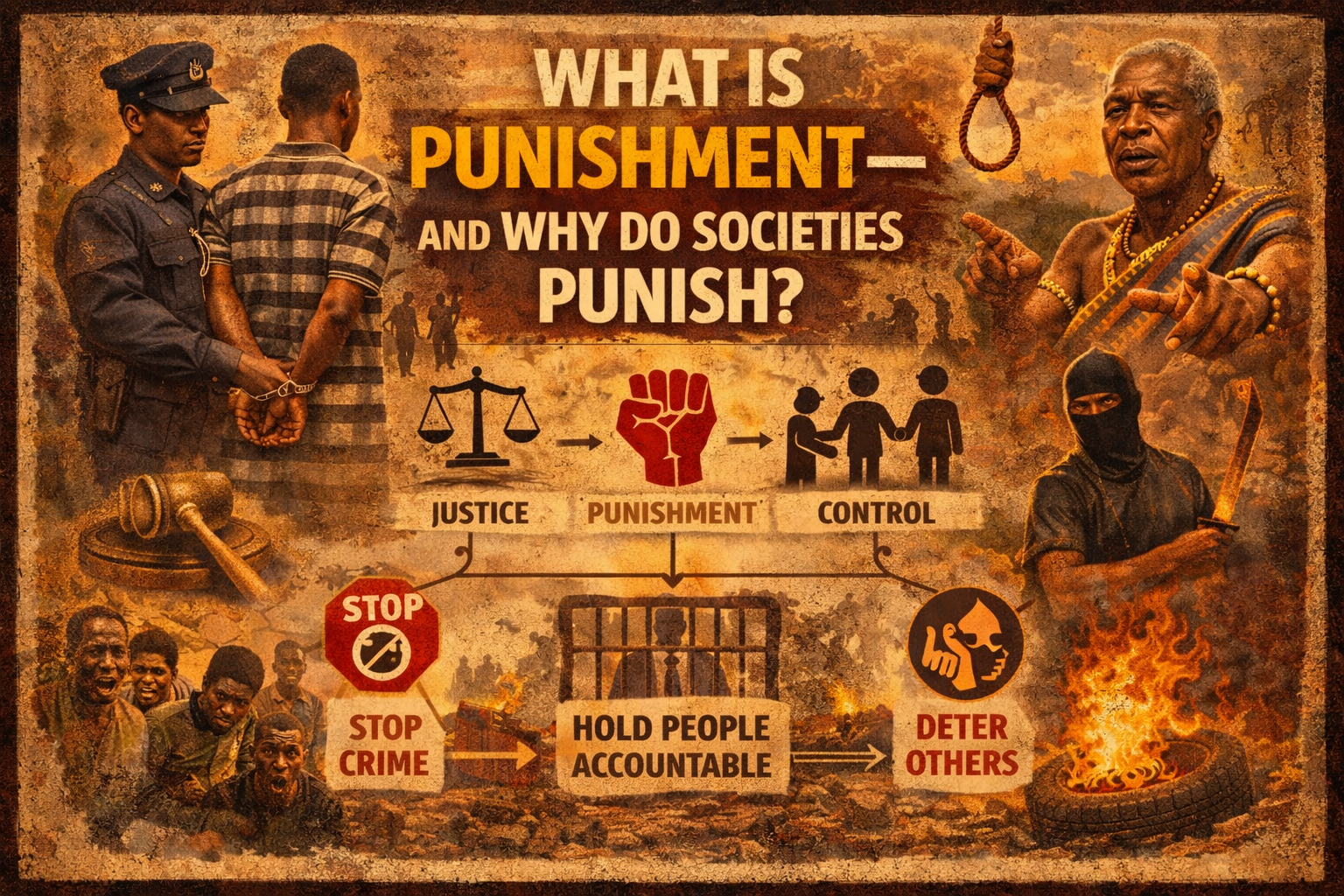
Punishment is a central feature of every organized society, including Ghana. While rewards are designed to encourage conformity and socially approved behavior, punishment exists to negatively sanction deviant behavior. When individuals act in ways that align with societal norms, they are often rewar

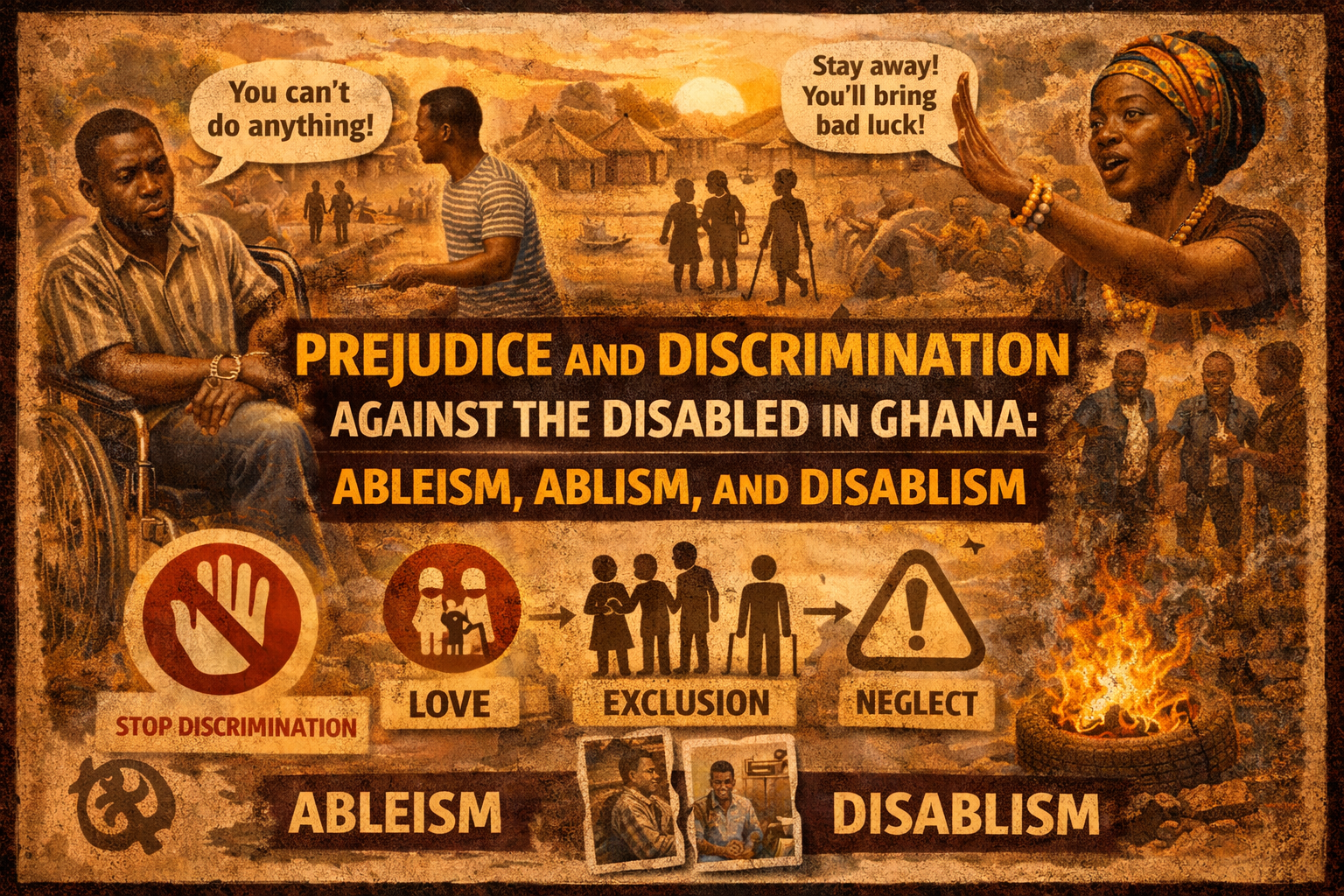
Sociologists use the term ableism to describe prejudice, discrimination, and social exclusion directed against persons with disabilities. The terms ablism and disablism are also used in the scholarly literature to refer to the same phenomenon, namely, the systematic disadvantaging of people whose bo

Witchcraft is commonly understood in Ghana as a supernatural power believed to be possessed by some individuals, enabling them to influence the behavior, health, fortune, or misfortune of others—either as victims or beneficiaries. Belief in witchcraft and witches remains widespread and deeply embedd

In every society, including Ghana, there exist disabled people living with various forms of disability. These disabilities take many shapes and forms. Some are physical, affecting mobility, sight, hearing, or bodily function. Others are mental or psychological, influencing cognition, emotional regul

Introduction: Sport as a Mirror of Ghana’s History Long before Ghana was known by its modern name, sport and physical competition were already embedded in the social, political, and spiritual life of its people. From the ancient kingdoms of the Gold Coast to independence in 1957 and into the modern
The article explores the negative impact of teasing in Ghanaian schools

The article explores the notion that the devil causes people to commit deviant and criminal acts

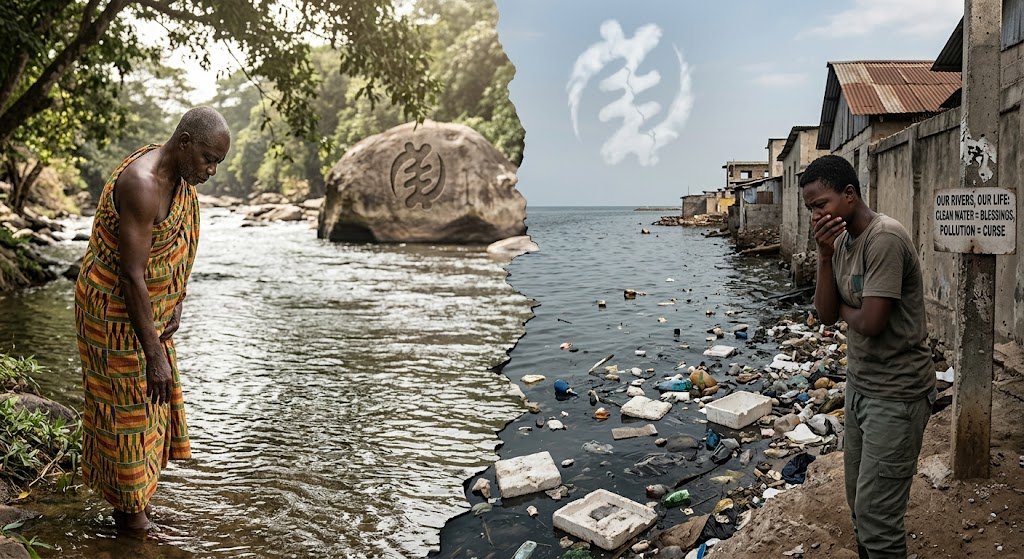
Filth Has Spiritual Consequences Okronkronyi Nyame Somafo Yawoh teaches that filth is spiritually derogating and spiritually taxing. According to His teachings, acts that pollute the natural environm

Introduction Lethal violence is a starkly gendered phenomenon. Globally, men are overwhelmingly the primary victims and perpetrators of homicide, typically driven by street crime, gang rivalries, and

A tactical analysis of what could be a historic encounter between Ghana and England.

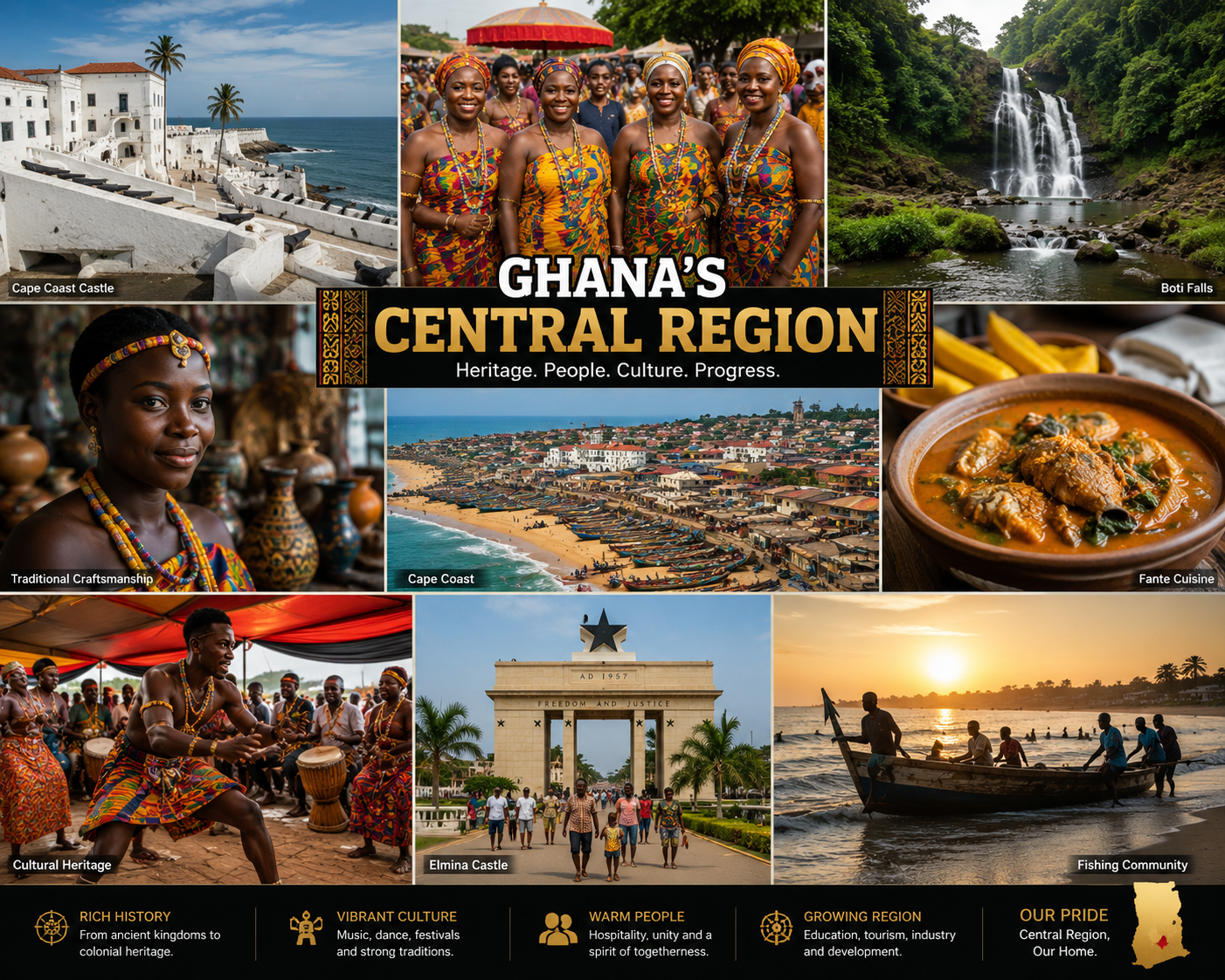
Introduction Among Ghana’s sixteen administrative regions, few possess the historical significance, educational prominence, and cultural richness of the Central Region. Located along Ghana’s southern

Introduction Among Ghana’s sixteen administrative regions, few can rival the Western Region in terms of natural wealth, cultural diversity, economic importance, and historical significance. Stretchin

Short commentary on the end result of the Ghana vs Panama match

With barely a few hours to the encounter between Ghana and Panama, we try to explore and understand the nature of football legacy that comes with this encounter.

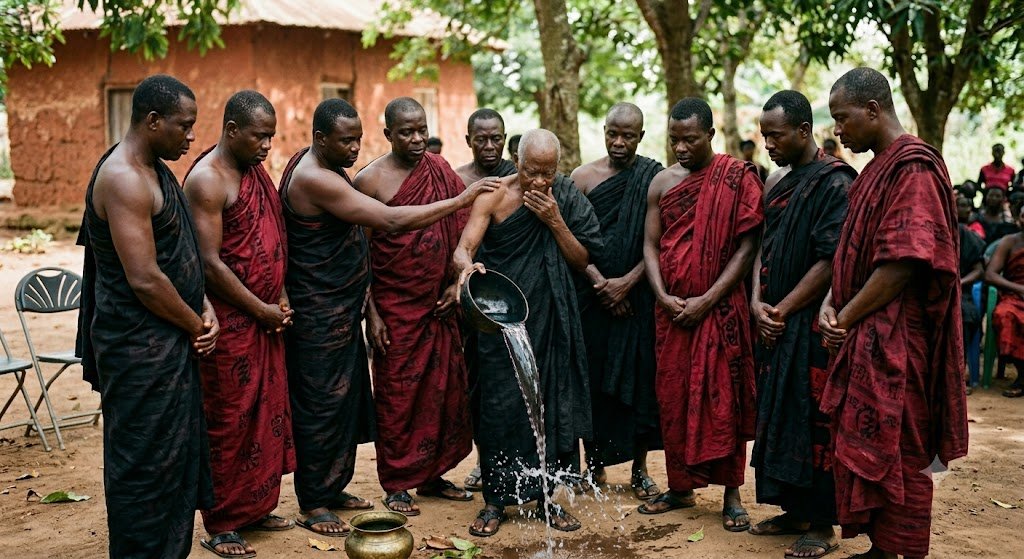
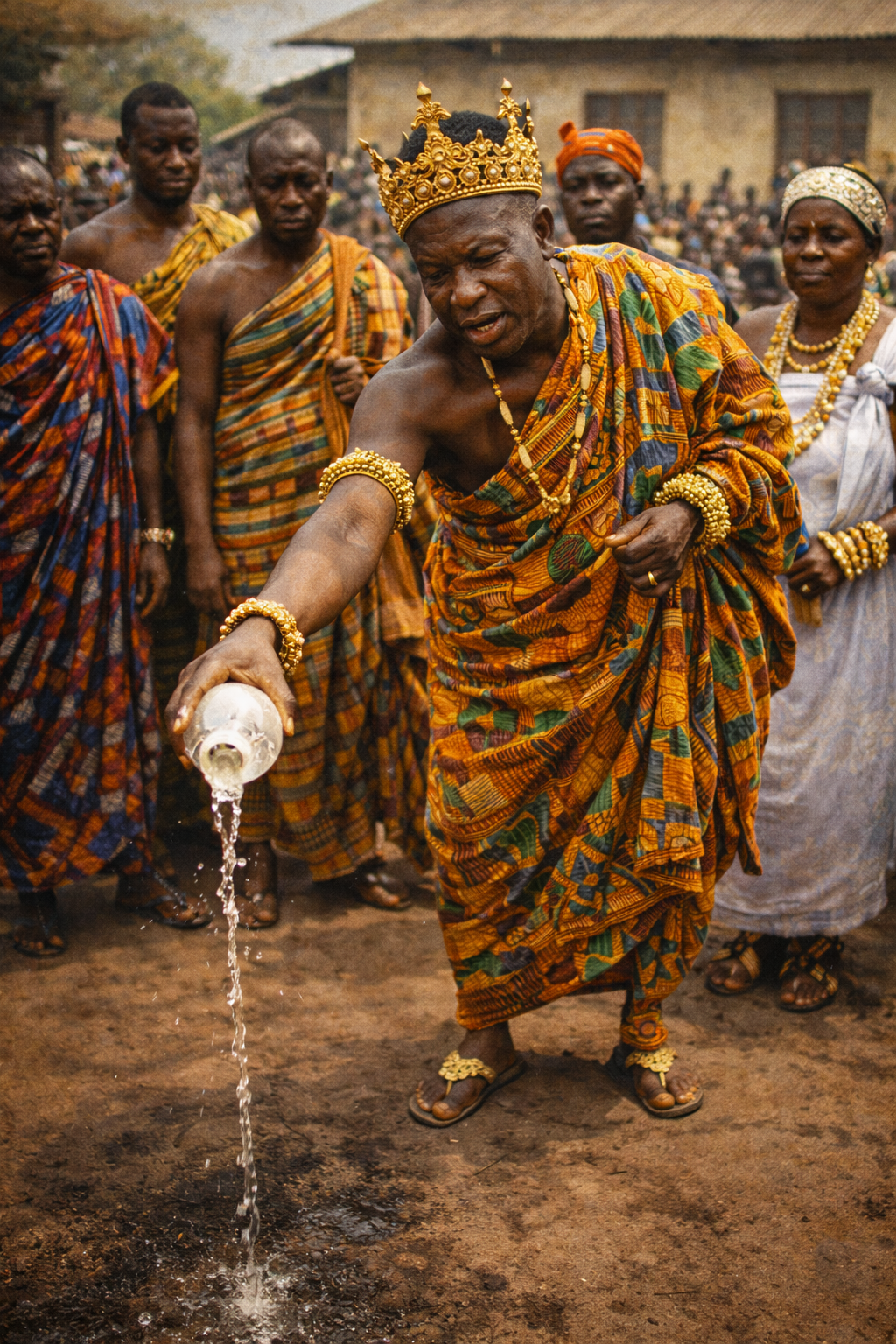
One of the most important features of Akan religious and funeral traditions is the pouring of libation, known in Twi as nsaguo or mpaeyie. The word nsaguo literally means the pouring of an alcoholic d

Concluding our series on the Black Stars’ remarkable 2010 World Cup campaign is a feature that reflects on its enduring significance for both Ghanaian and African football

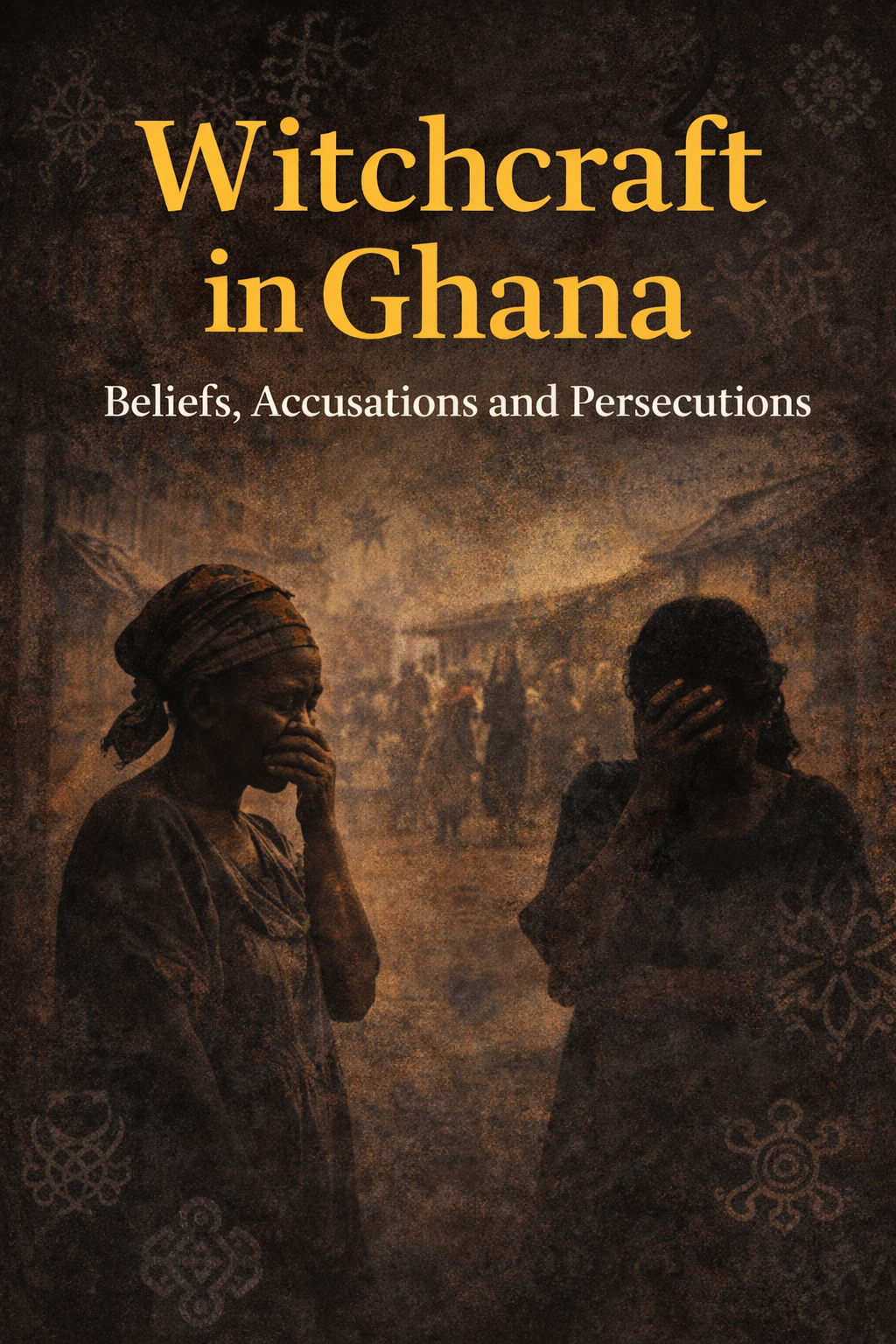
Understanding One of Ghana’s Most Enduring Social Questions Research on witchcraft in Ghana spans nearly a century and reflects the country’s continuing struggle to understand belief, accusation, fea

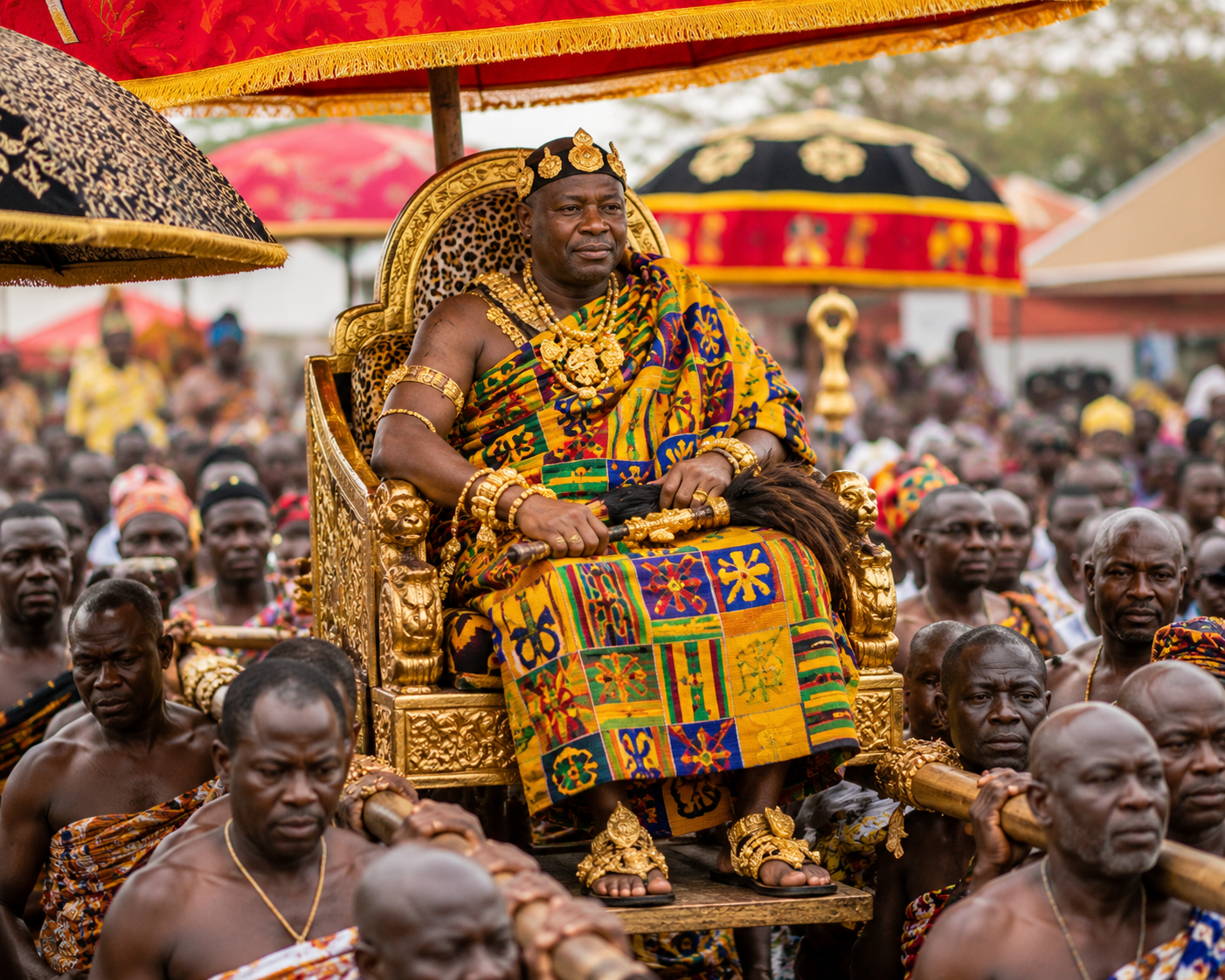
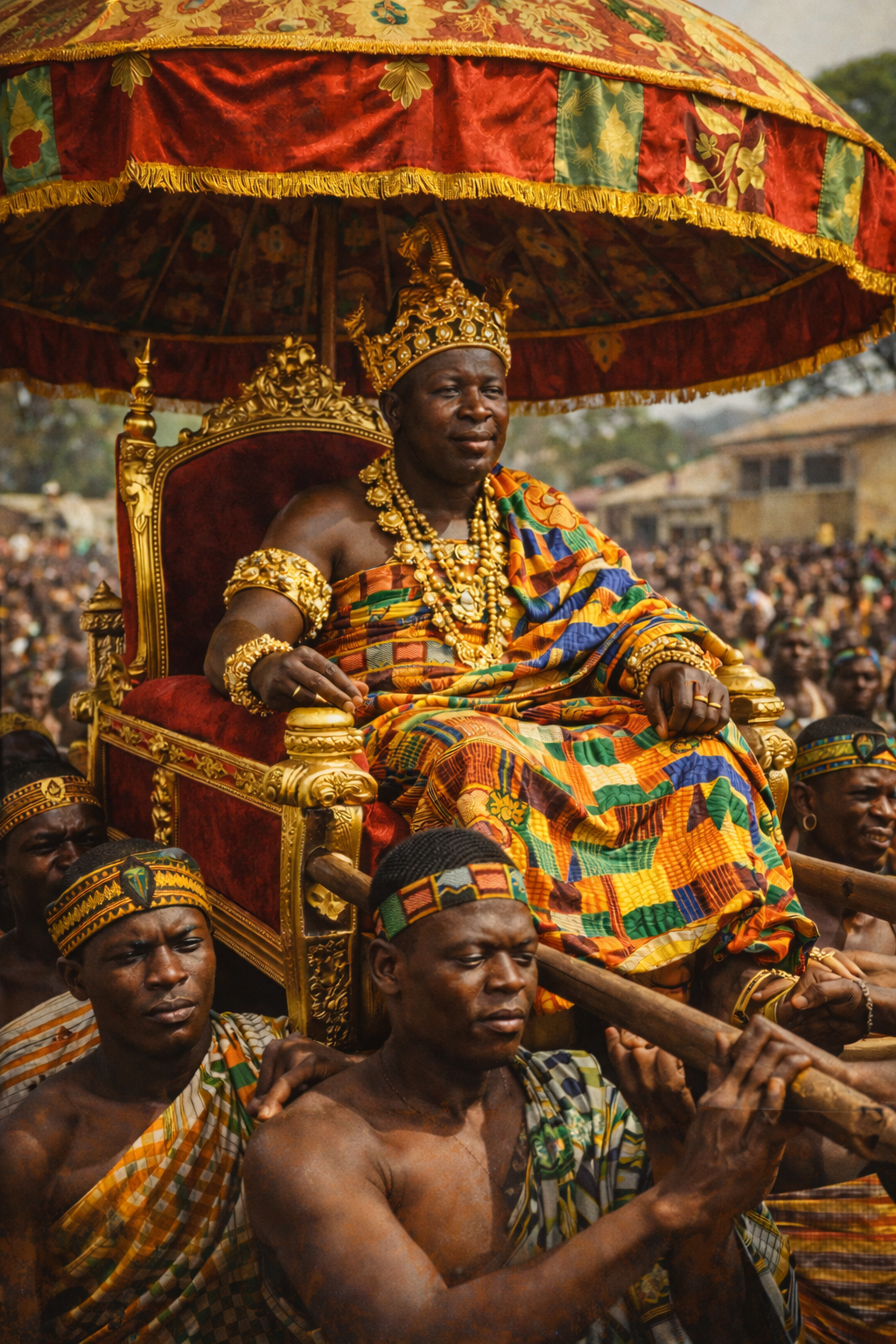
In Akan society in Ghana, a chief occupies a revered and sacred position. He is the custodian of the land, the representative of the ancestors, and the moral leader of the community. The stool symboli

This piece takes us back to another breathtaking highlight from the 2010 world cup where the Black Stars reaffirmed their authority in the game of football when the entire world was watching.

This article critiques the choice of the Ghanaian international Baba Rahman in a World Cup squad that lacks the qualities of athlectism and exuberant talent yet compensating with invisible clarity in experience.

Today's discussion in our series of coverage sports of the black stars heading into the world cup examines the provisional 28-man squad released by Black Stars head coach Carlos Queiroz.

A feature article from the Road to World Cup 2026 countdown series

As part of our dive down the memory lane with the Black Stars, we come to you with another incredible and important performance that highlights some of the best moments of the Ghana National team in the 2006 World Cup campaign.

When historians discuss the global spread of football, the story is often told through familiar names and places: English schools, British sailors, South American ports, and European clubs. Yet hidden

Asamoah Gyan — Beyond the 2010 Penalty There is another layer to Gyan’s ordeal that many people overlook. After the 2010 World Cup heartbreak, he again missed a crucial penalty during the 2012 Afric

The stadium clock in Cologne had barely ticked past the opening minute when Ghana announced itself to the world. A loose touch in the Czech Republic defence. A flash of movement. Then came the finish

From Childhood Fascination to Lifelong Pacifism My father used to tell us stories about the Second World War. As children, we listened with a mixture of awe and excitement. The accounts of military a

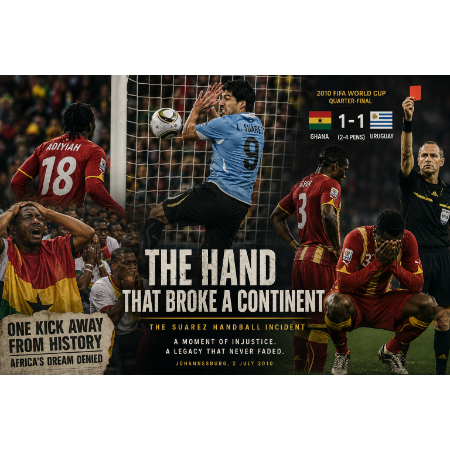
There are football matches that end with a scoreline, and there are matches that never truly end. The 2010 FIFA World Cup quarter-final between Ghana national football team and Uruguay national football team belongs firmly in the second category. More than fifteen years later, the image still burns

The story of Ghana’s “Dream Team” is not merely a sporting tale; it is a generational narrative—one that reflects continuity, discipline, and the organic evolution of talent within Ghanaian football. Though the phrase “Dream Team” is more commonly associated with Olympic squads, in Ghanaian discours

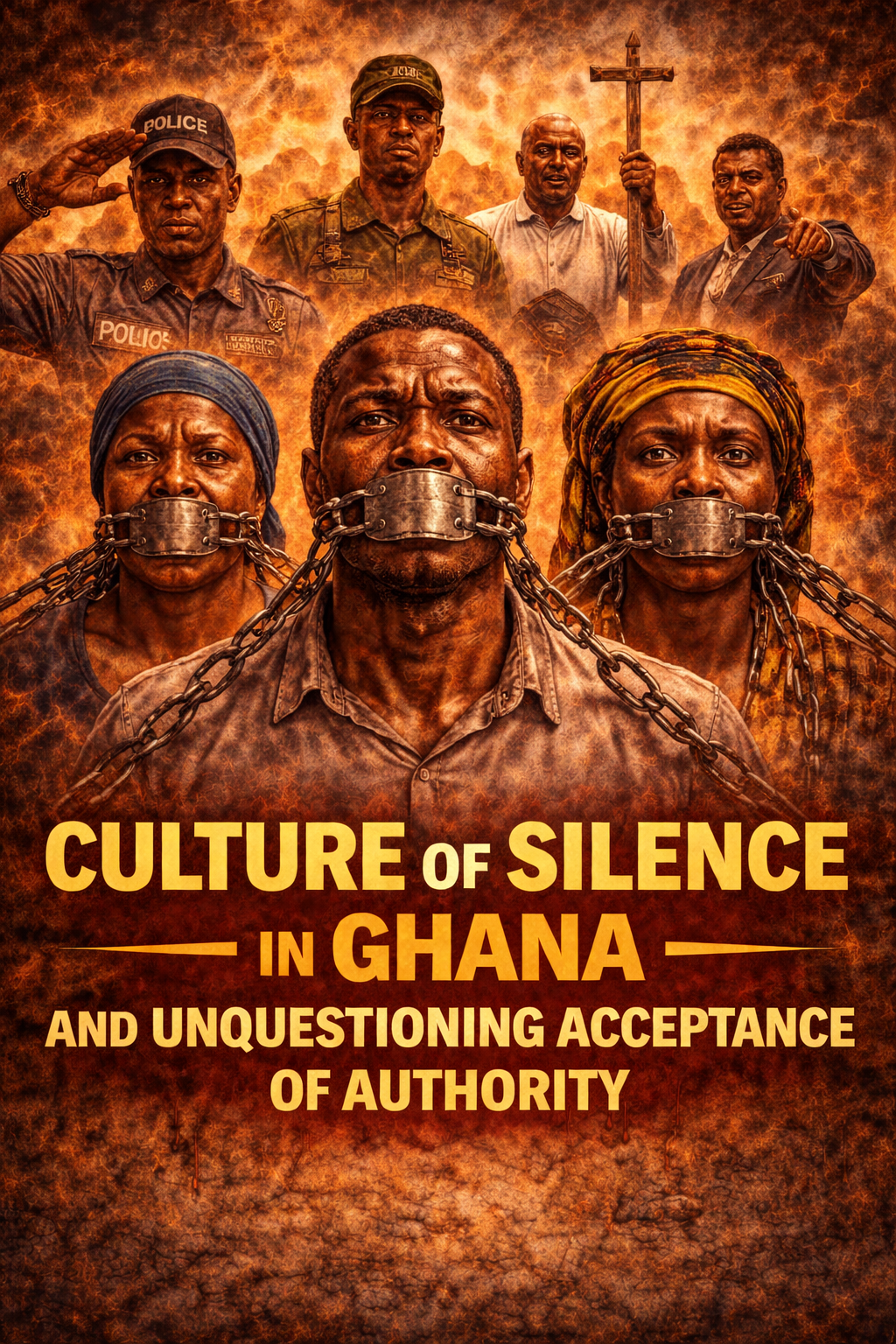
An observable feature of Ghanaian social life is a recurring tendency toward silence in moments that might otherwise call for resistance or confrontation. Even when individuals experience clear forms of mistreatment, there is often a strong social and cultural pull toward restraint rather than actio

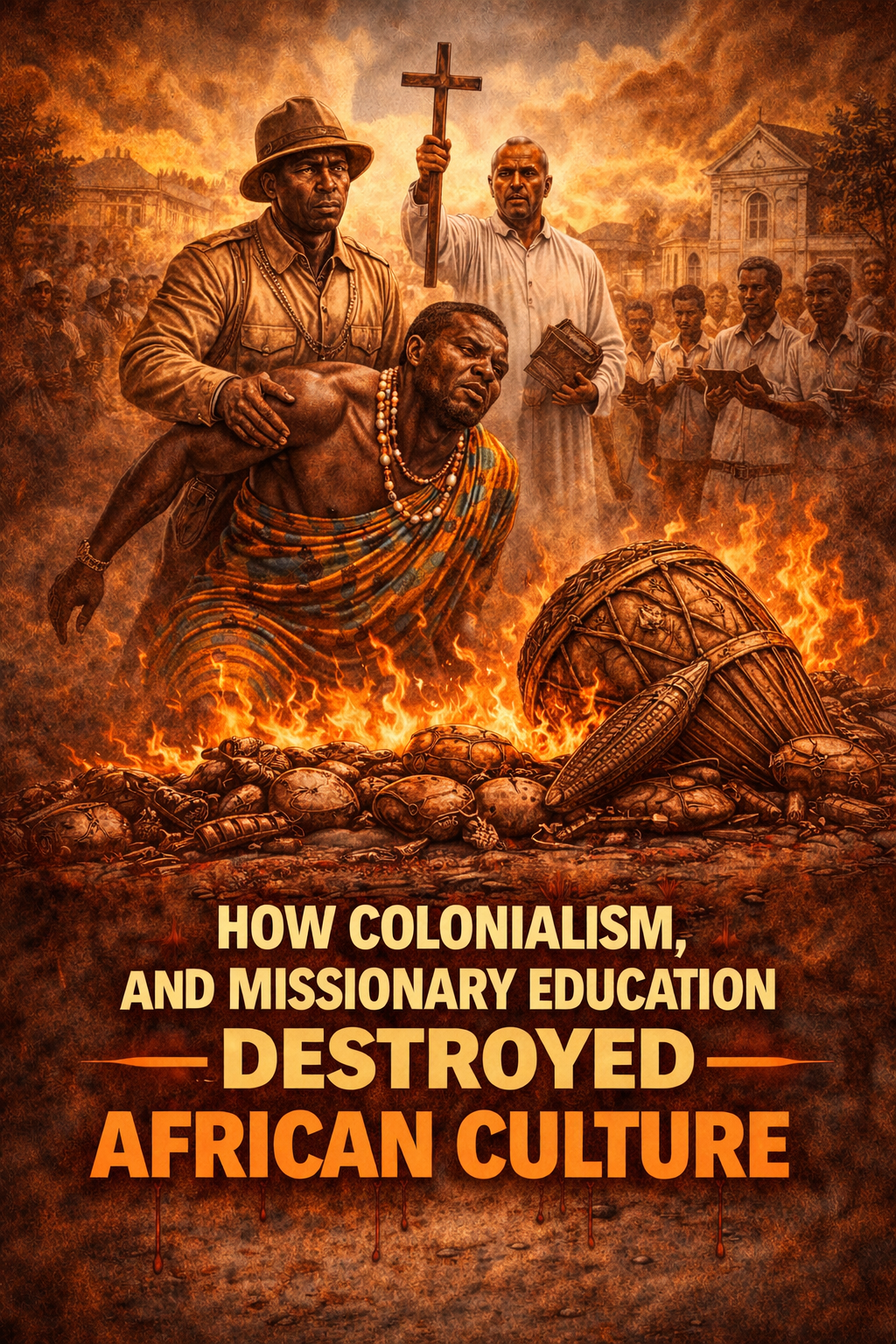
With colonialism came missionaries who sought to convert Africans to Christianity and, in the process, reshape African ways of life. This encounter was not culturally neutral. It involved a systematic attempt—sometimes subtle, often overt—to redefine African identity, values, and social institutions

Rules, Laws, and Social Order All human societies are governed by rules. These rules regulate behavior by defining what individuals may do and what they must refrain from doing. Without such rules, social life would be chaotic, unpredictable, and ultimately unsustainable. Rules make social interacti

Introduction: The Hidden Face of Family ViolenceHomicide refers to the killing of one person by another, and within this broad category lies a deeply troubling subset known as family homicide, which involves the killing of one family member by another. Although the family is often idealized as a hav

Introduction: A Name That Became a Symbol In the sociological imagination of the Gold Coast—what is today Ghana—names are never merely labels; they are identities, narratives, and sometimes prophecies. The name Abedi Pele transcends the ordinary. It is a fusion of biography, mythmaking, and cultural

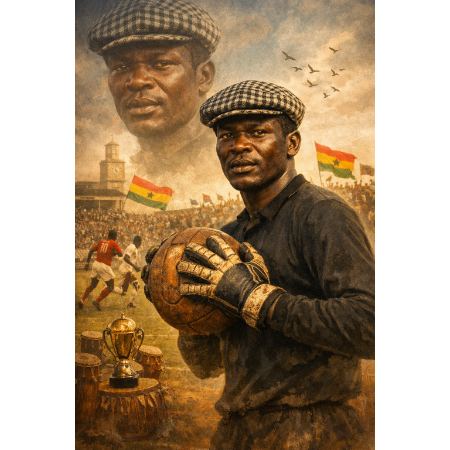
Robert Mensah: A Football Story and Tragedy in the Ghanaian Football In the annals of Ghanaian sporting history, few names evoke as much reverence, myth, and sorrow as Robert Mensah. His story is not merely about football; it is a narrative woven into the socio-cultural fabric of late colonial Gold

Few names in African sport command as much reverence as Azumah Nelson. In the annals of global boxing history, Nelson stands not merely as a champion but as an embodiment of discipline, intellect, and tactical brilliance. His nickname—“The Professor”—suggests a fighter whose victories were not only

When people discuss the early history of football, the narrative often begins in Britain and gradually expands to the rest of the world. Rarely, however, does the conversation turn toward West Africa—particularly the historic Gold Coast, present-day Ghana. Yet one of the most remarkable pioneers of

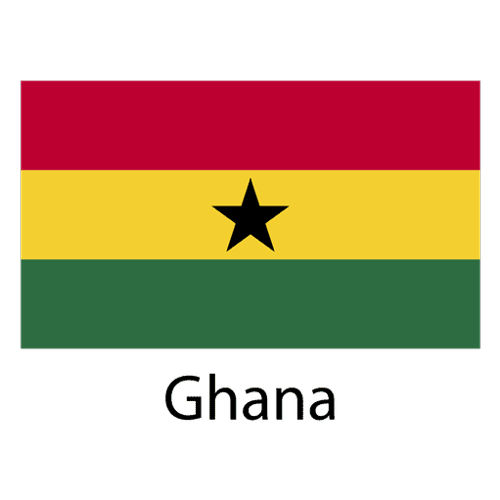
A Historic Emblem of Independence The Ghana national flag is more than a piece of cloth fluttering in the wind; it is a powerful symbol of the country’s history, aspirations, and identity. First officially adopted on March 6, 1957—the same day Ghana became the first African nation to gain independen

Among the Akan people of Ghana, pouring libation is one of the most important traditional religious practices. It is a solemn ritual through which people communicate with the spiritual world. The act symbolizes reverence for the ancestors, recognition of the Supreme Being, and a request for protecti

The Akan of GhanaThe Akan are an ethnic group that live in Ghana. They occupy a broad stretch of territory extending from the coastal areas to the central forest belt of the country. Historically and culturally, the Akan constitute one of the largest ethnolinguistic groups in Ghana and share closely

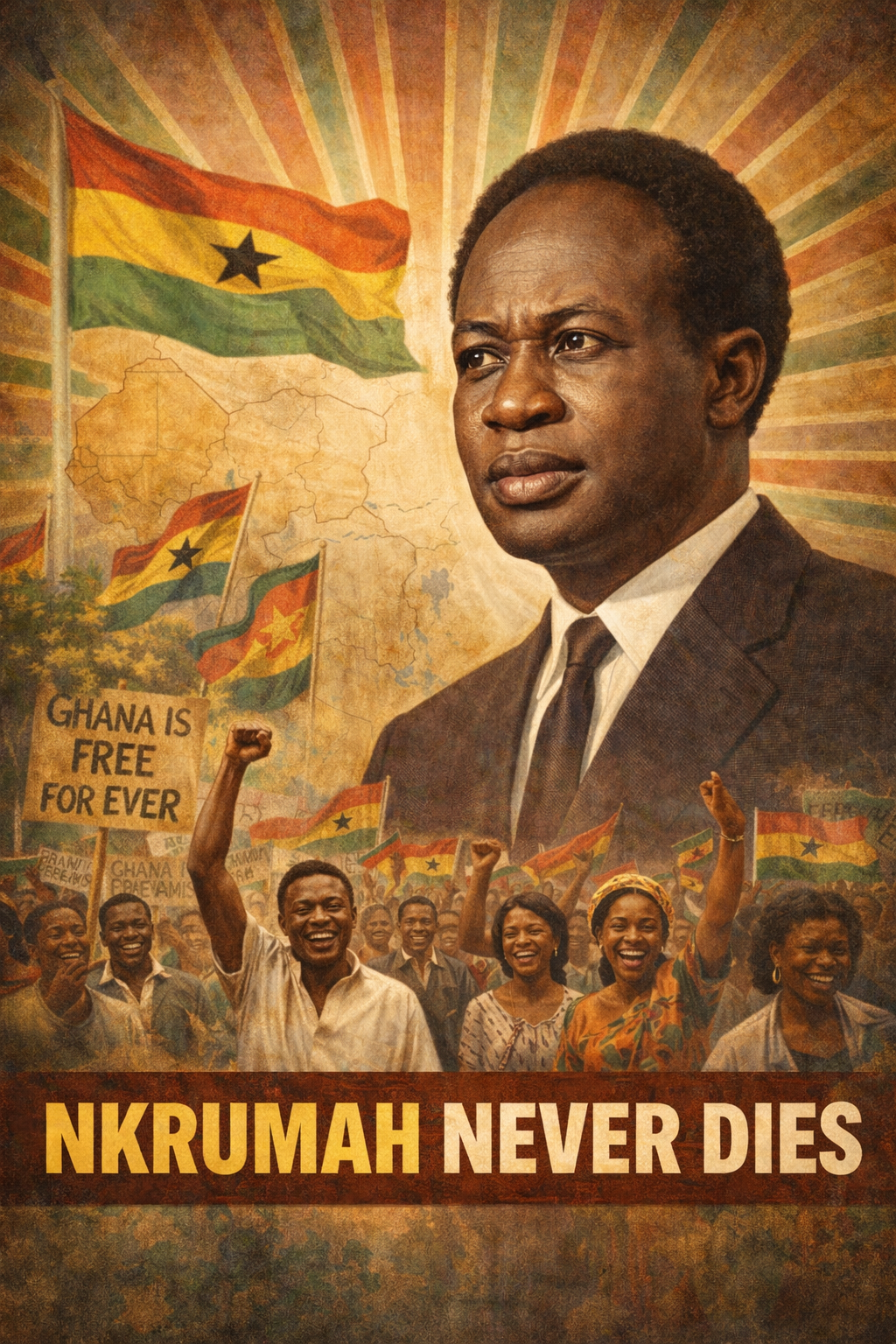
In the history of Ghana, few names command as much reverence and admiration as Kwame Nkrumah. More than half a century after his passing, the memory of the man who led the nation to freedom continues to inspire generations. His words echo in political discourse, his ideas shape national debates, and

In every society, there are culturally accepted symbols of success. There are also culturally approved means for attaining these symbols of success. These aspirations and goals form what can be called a society’s “dream.” In the same way that some people speak of their national dream, it is possible

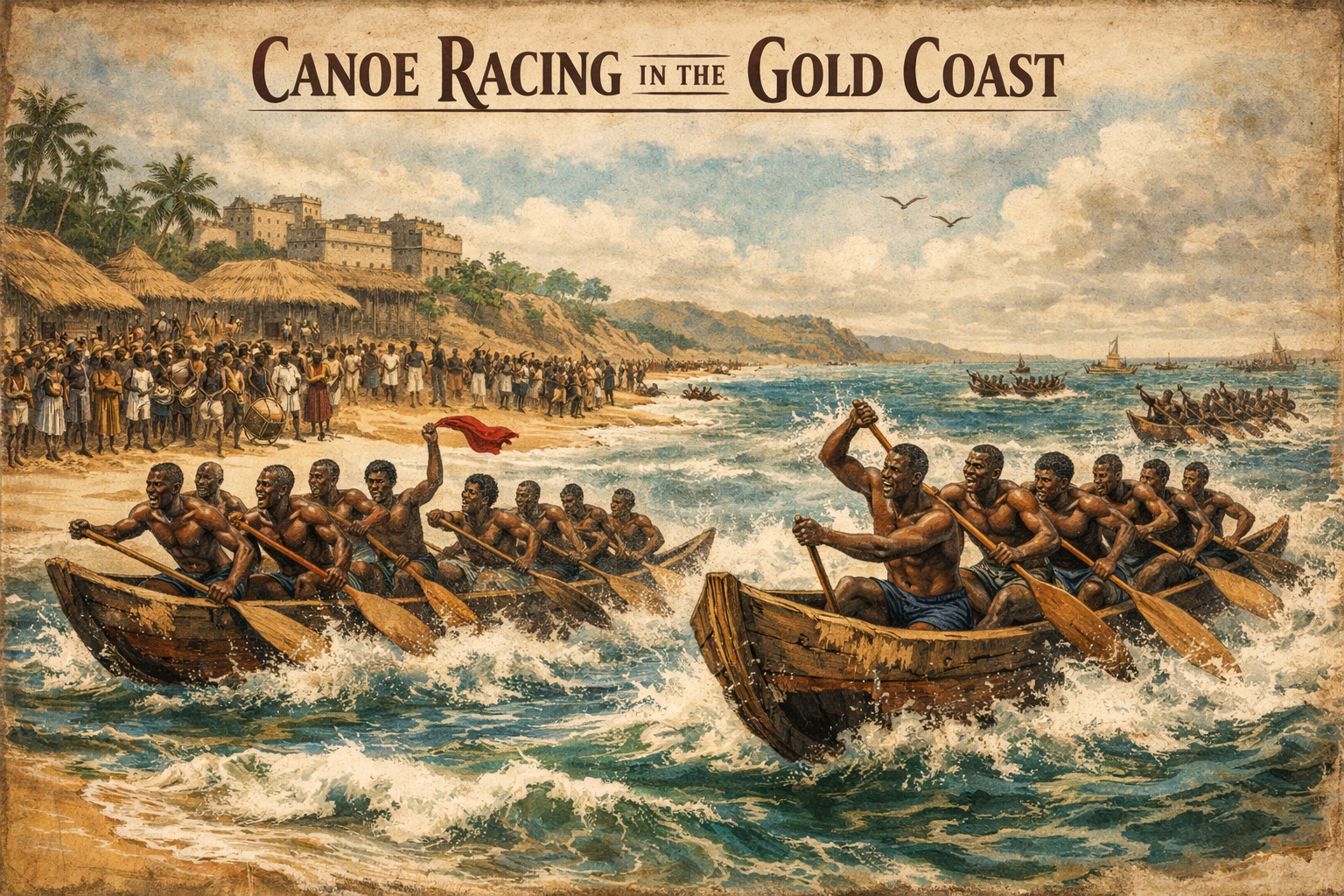
The Atlantic as Living Arena Along the Atlantic edge of the pre-colonial Gold Coast, long before European forts punctuated the shoreline, the sea was already a theatre of movement, daring, and communal pride. The coastal societies of present-day Ghana—particularly the Fante, Ga, and related Akan mar

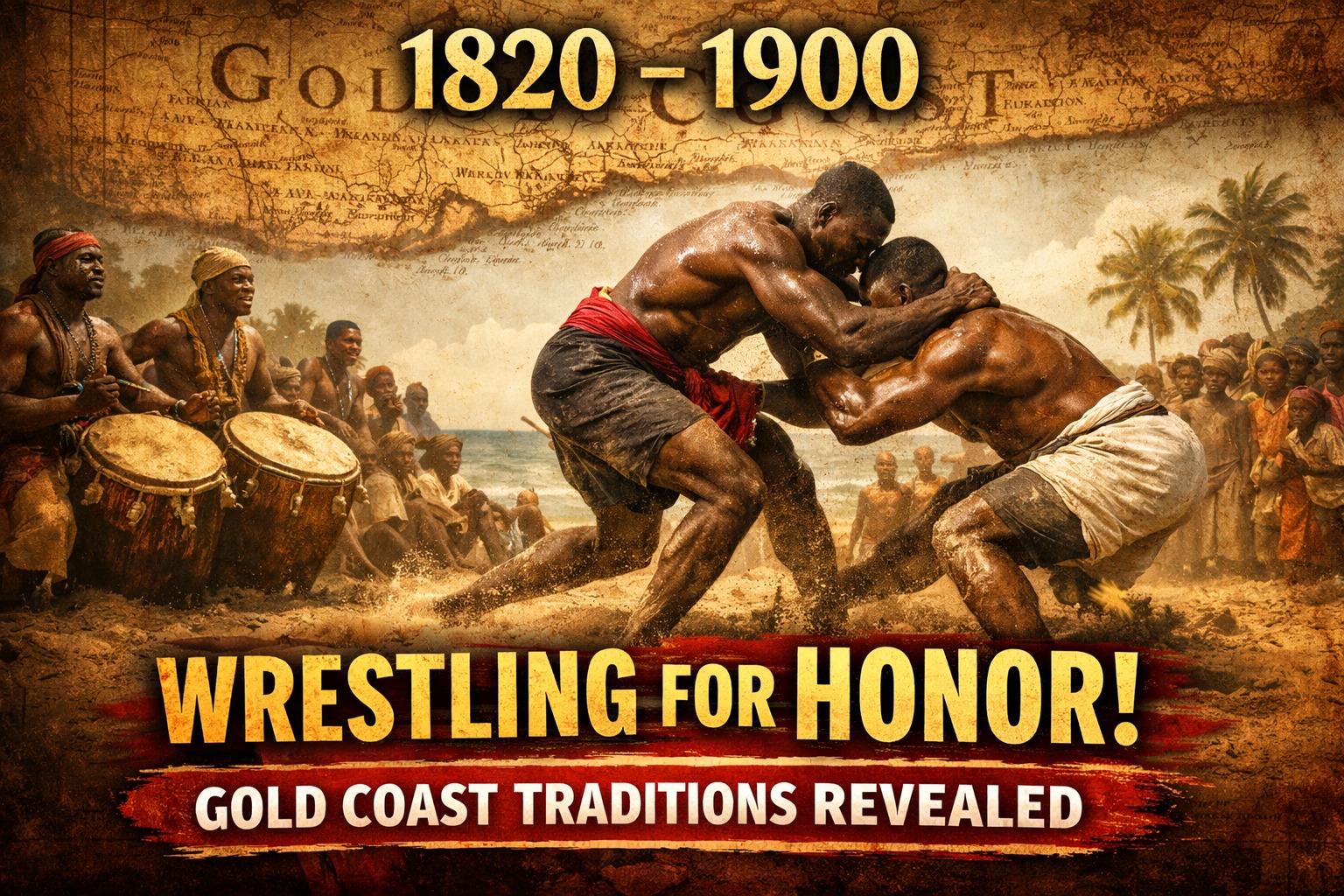
Long before colonial stadium lights and organised leagues, the sandy shores and village squares of the Gold Coast—today’s Ghana—were vibrant arenas where traditional wrestling was among the most respected cultural practices. From the early 19th century up to the turn of the 20th century, indigenous

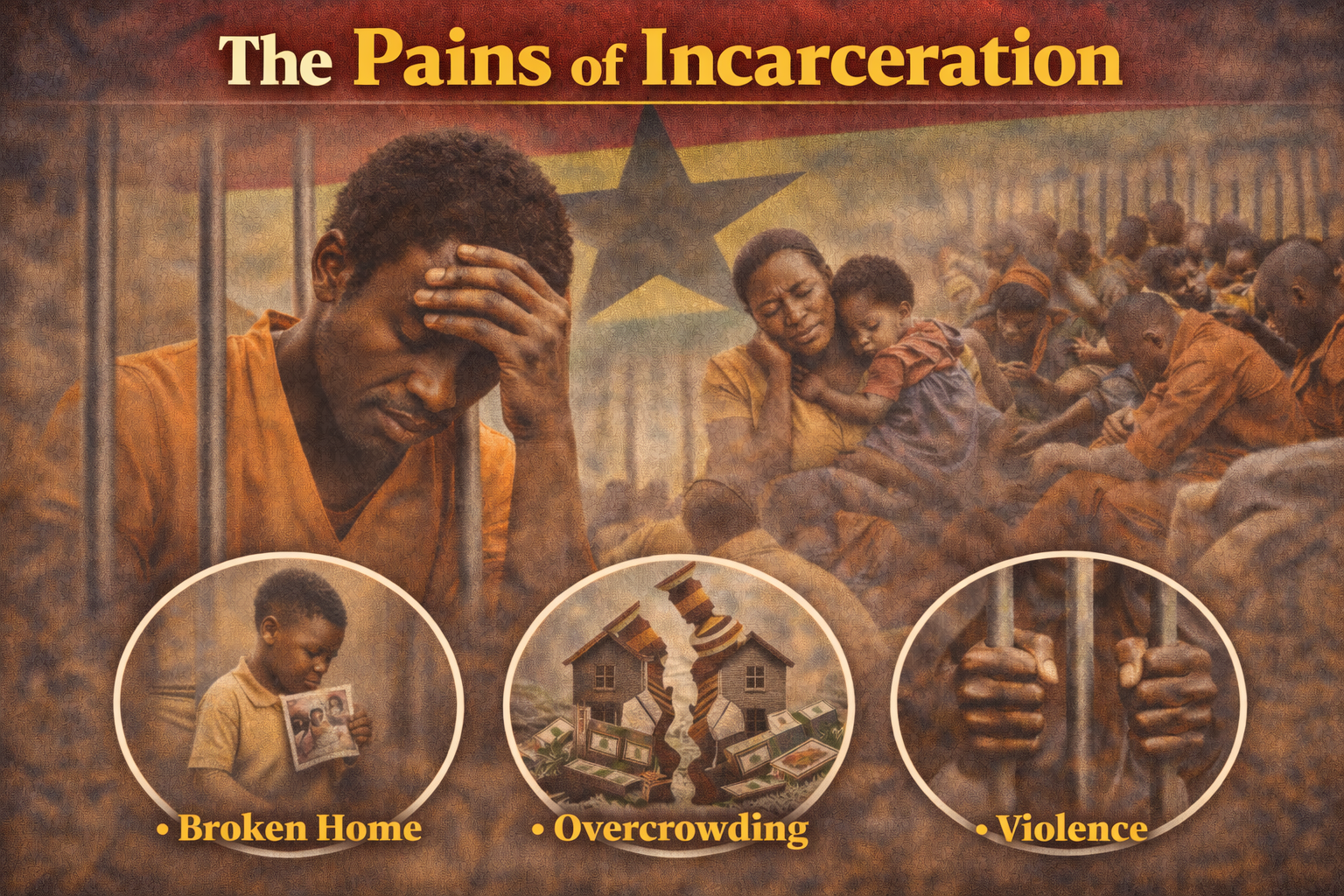
Imprisonment, also known as incarceration, is one of the most severe penalties imposed by courts in Ghana and elsewhere. Judges and magistrates have several sentencing options at their disposal, including fines, probation, community service, and custodial sentences. Prison is usually reserved for pe

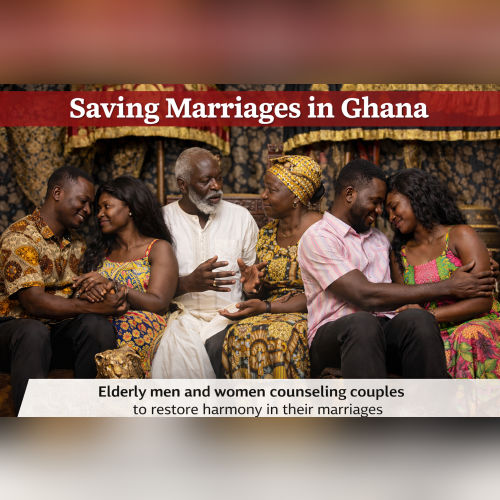
In the past, Ghanaian marriages endured. Separation was rare and divorce uncommon. Today, however, marriages are dissolving at an alarming rate. The critical question is this: what can be done to fortify marriages and restore their durability? Many of the challenges confronting contemporary marriage

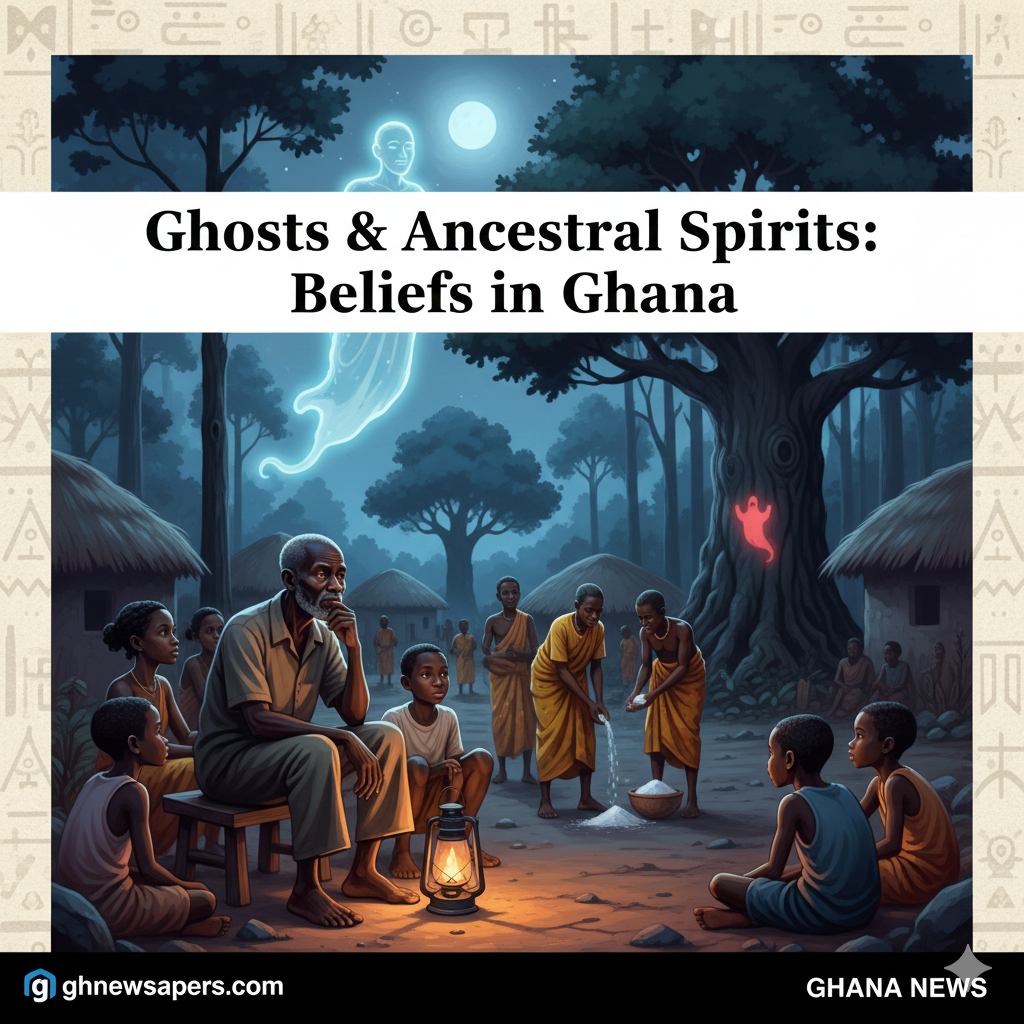
Widespread Beliefs in GhostsAlthough no large-scale self-report study has been conducted on belief in ghosts in Ghana, it is fair to say that belief in ghosts or apparitions is widespread across the country. These beliefs are especially strong among the Akan of southern Ghana, where ideas about deat

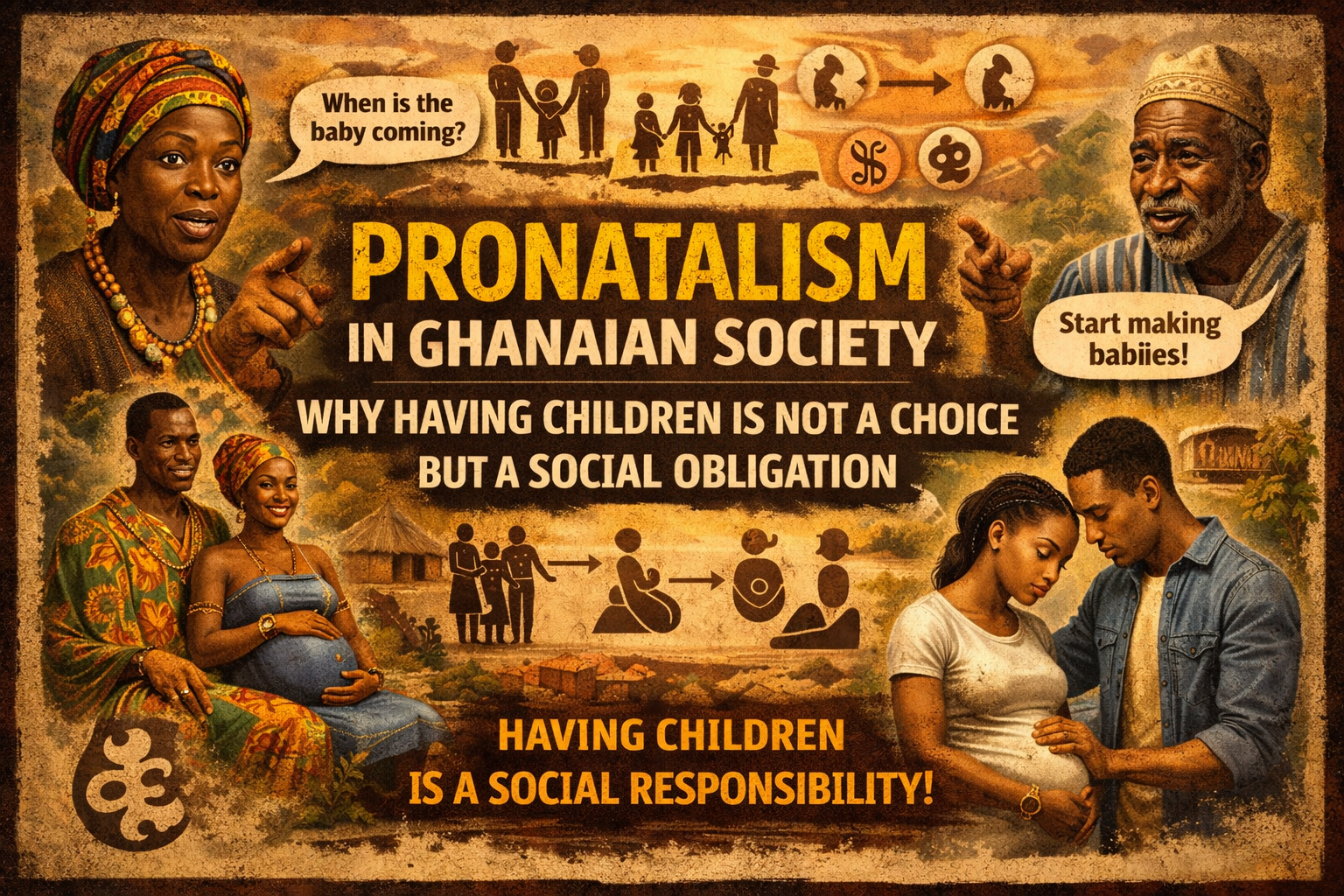
Pronatalism refers to a strong cultural and social preference for having children, often accompanied by expectations that adults should reproduce as a normal and desirable life course. In Ghanaian society, having one’s own child is not merely a personal choice; it is widely regarded as a social obli

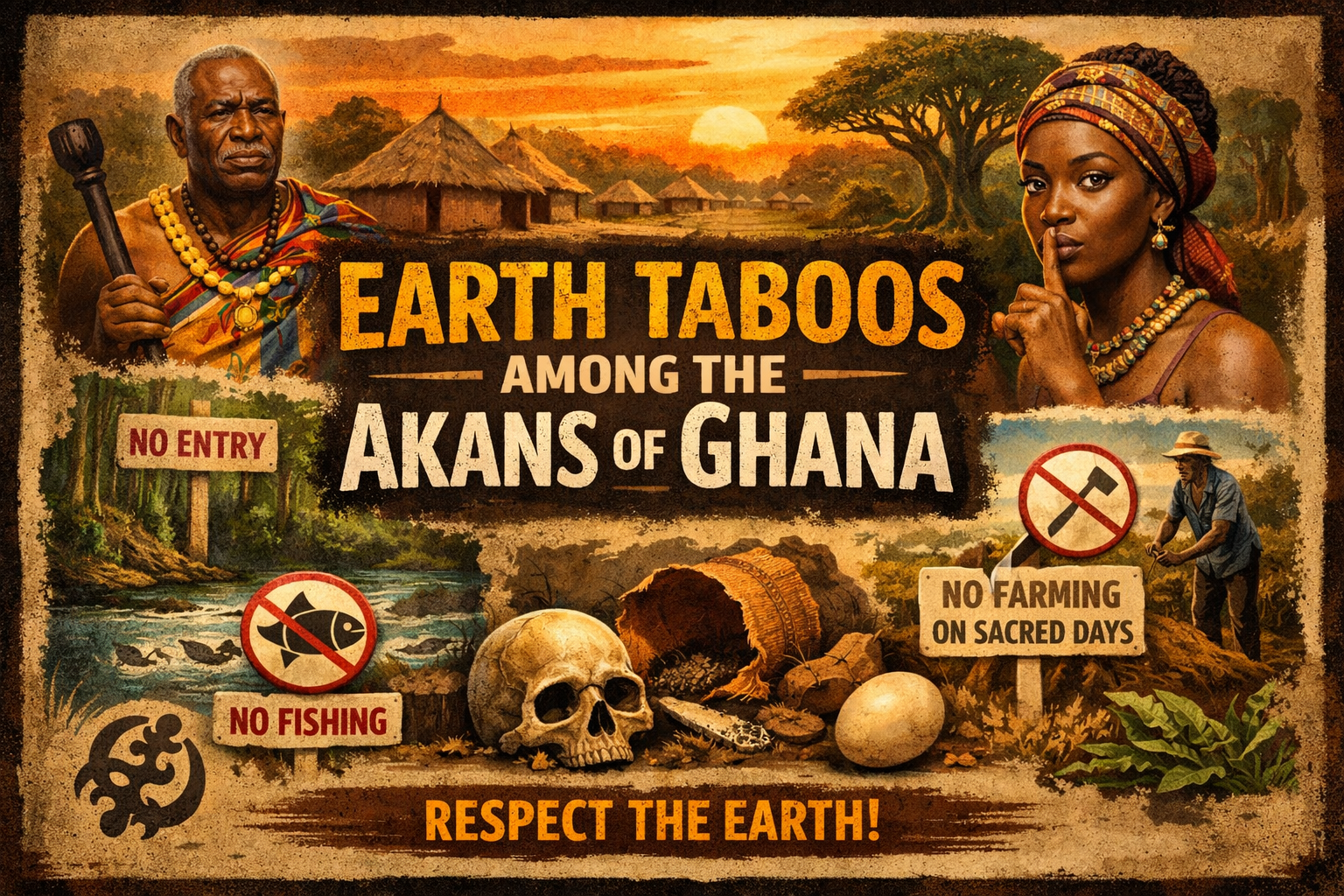
A taboo is an act so deeply forbidden that it provokes moral outrage, fear, or spiritual anxiety when violated. Taboos are cultural universals: every society draws invisible lines that must not be crossed. Yet these lines are not the same everywhere. What one society condemns as unthinkable may be o

Punishment is a central feature of every organized society. While rewards are designed to encourage conformity and socially approved behavior, punishment exists to negatively sanction deviant behavior. When individuals act in ways that align with societal norms, they are often rewarded through prais

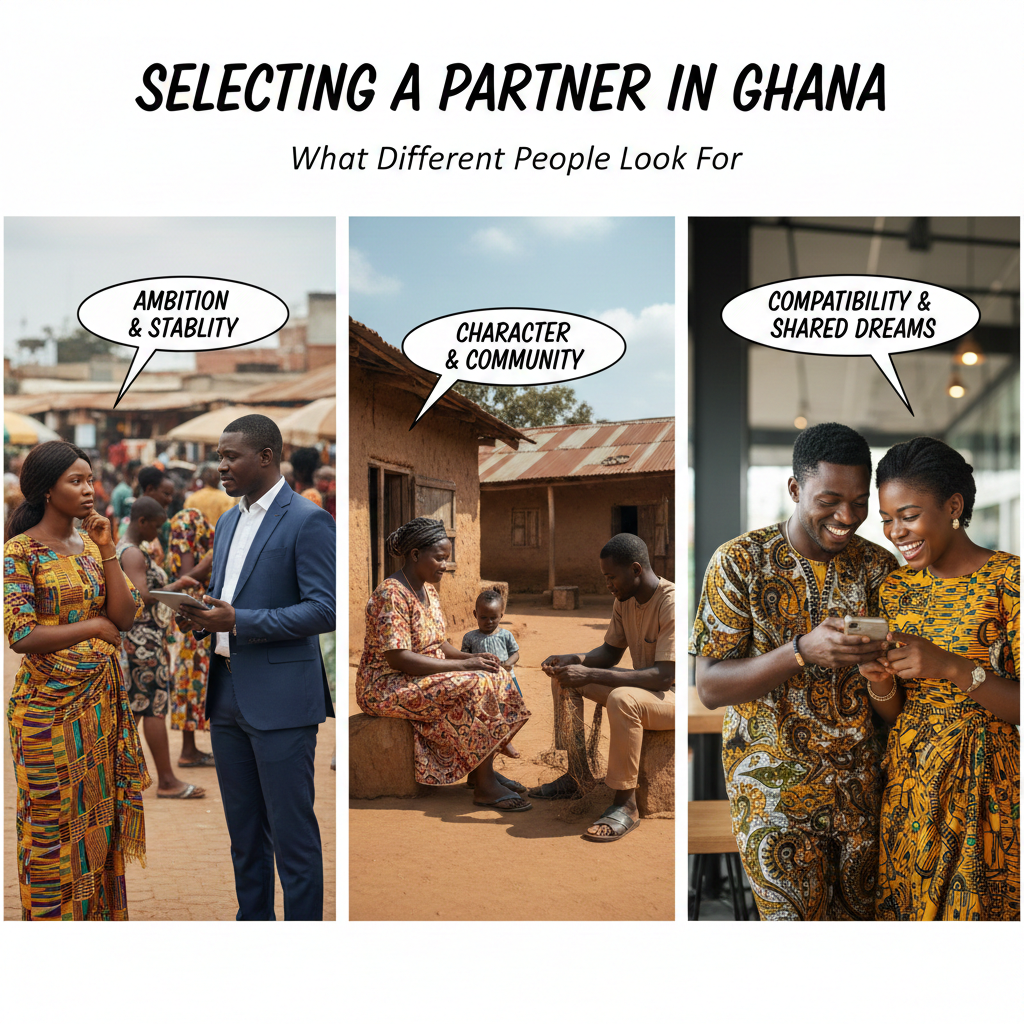
For many people, choosing a marital partner is a deliberate decision. Individuals often consider several factors before deciding who to marry. Sociologists study these choices and use specific terms to describe the different patterns people follow when selecting a spouse. Marrying Up and Marrying Do

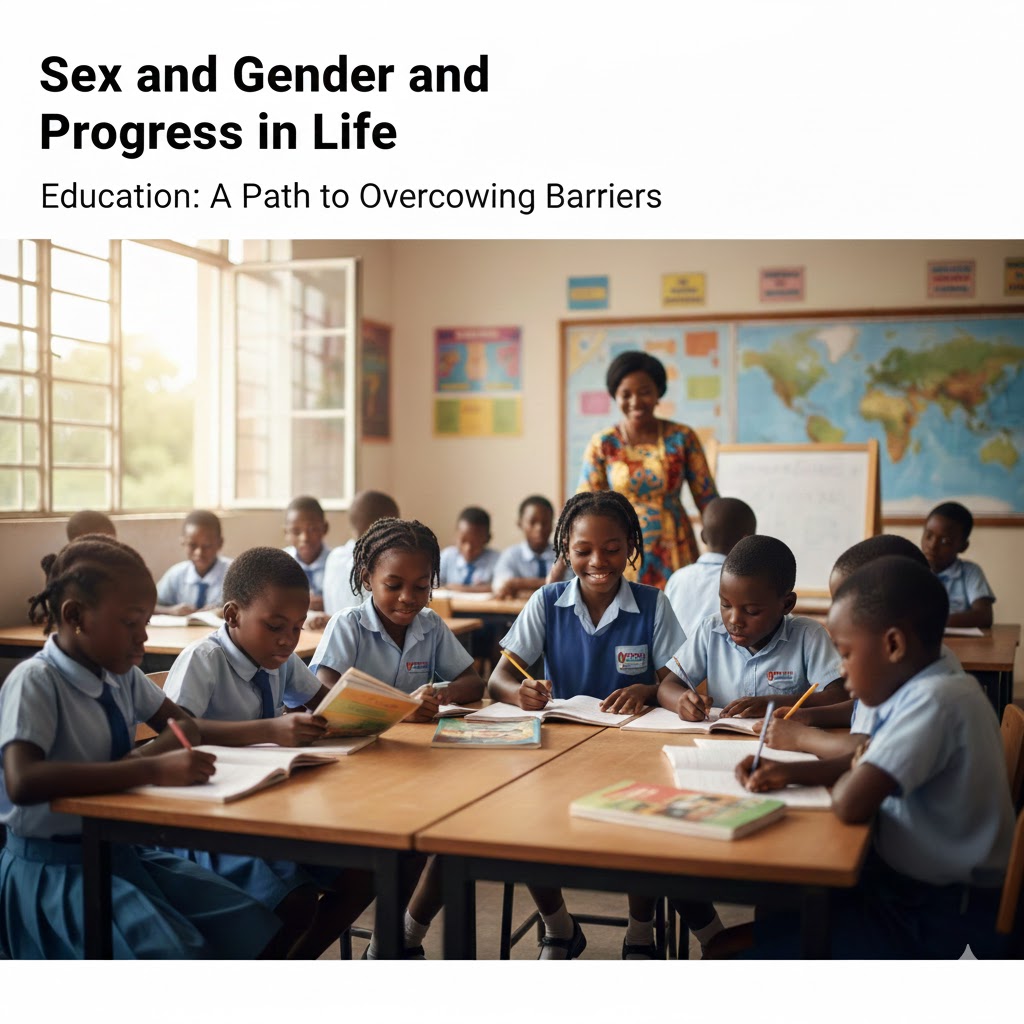
In every society, people occupy different positions called statuses. A status is simply the position a person holds in society. Throughout life, one person can have many statuses at the same time—for example, being a child, a parent, a worker, a student, or a citizen. Sociologists talk about two mai

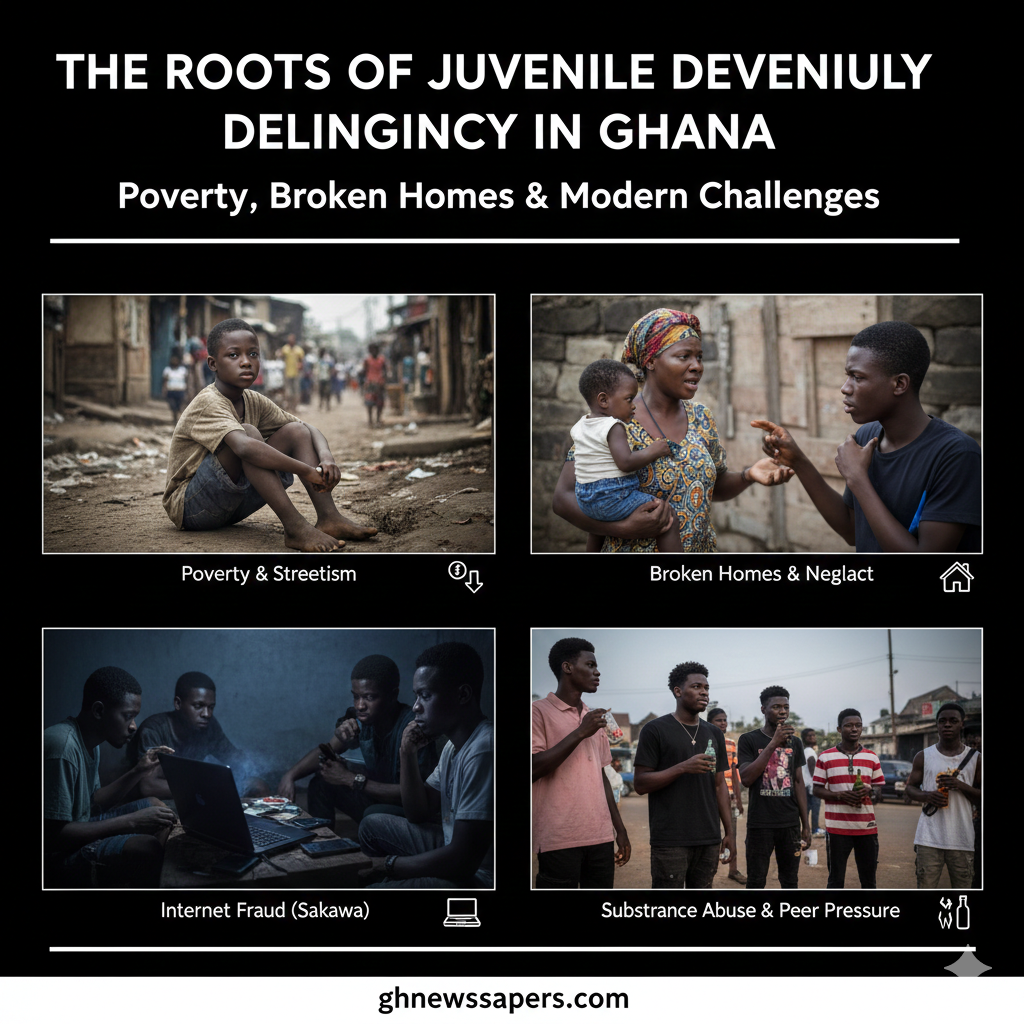
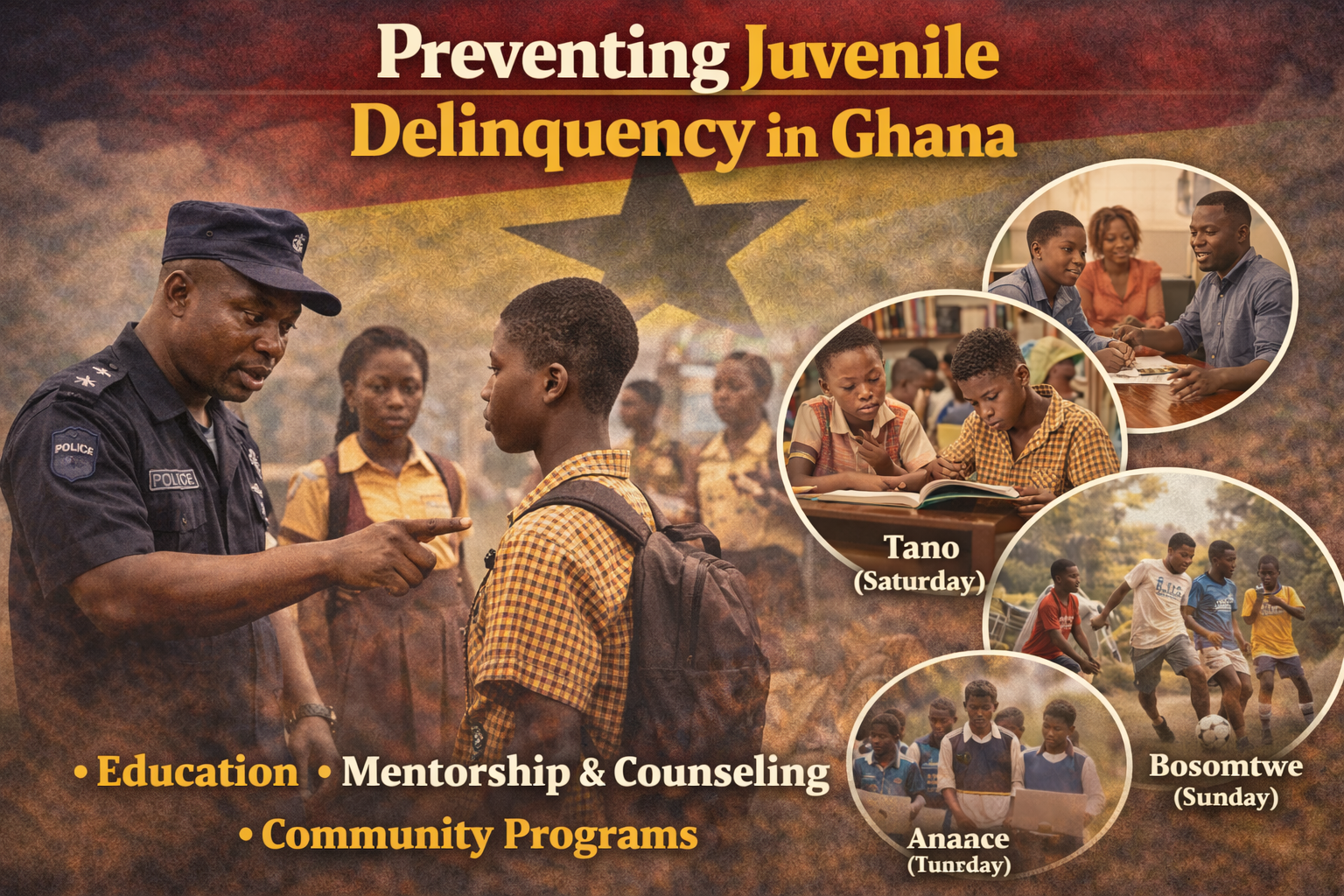
Children are the future of every society. Yet Ghana faces a serious challenge if urgent steps are not taken to ensure that today’s children are properly guided and nurtured to grow into law-abiding and responsible citizens. In recent years, there has been a noticeable increase in juvenile delinquenc

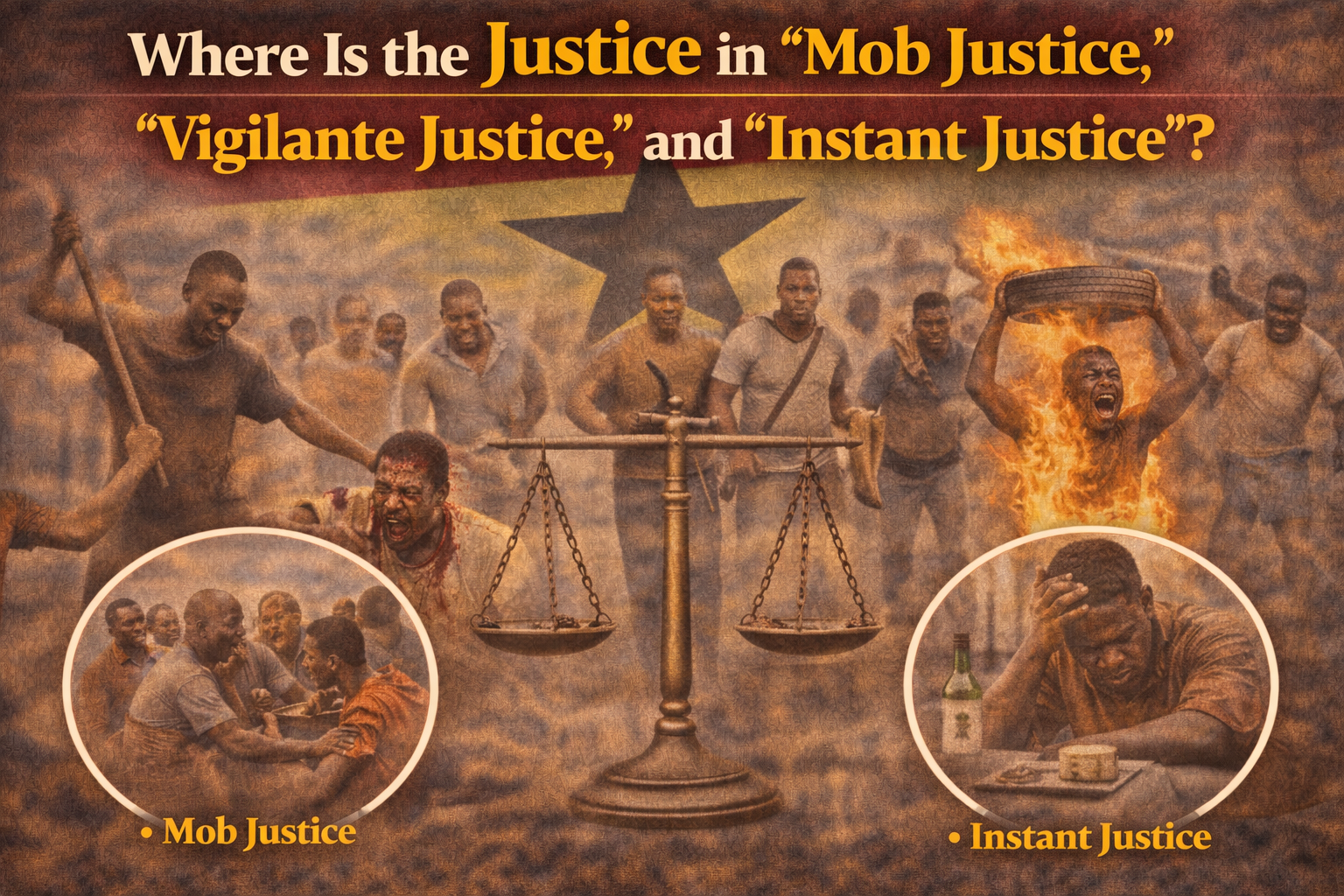
Some call it mob justice. Others describe it as instant justice or vigilante justice. But where, indeed, is the justice when a person is beaten, maimed, or killed without a proper trial or lawful conviction by the legally constituted justice system of the land? Every year in Ghana, scores of individ

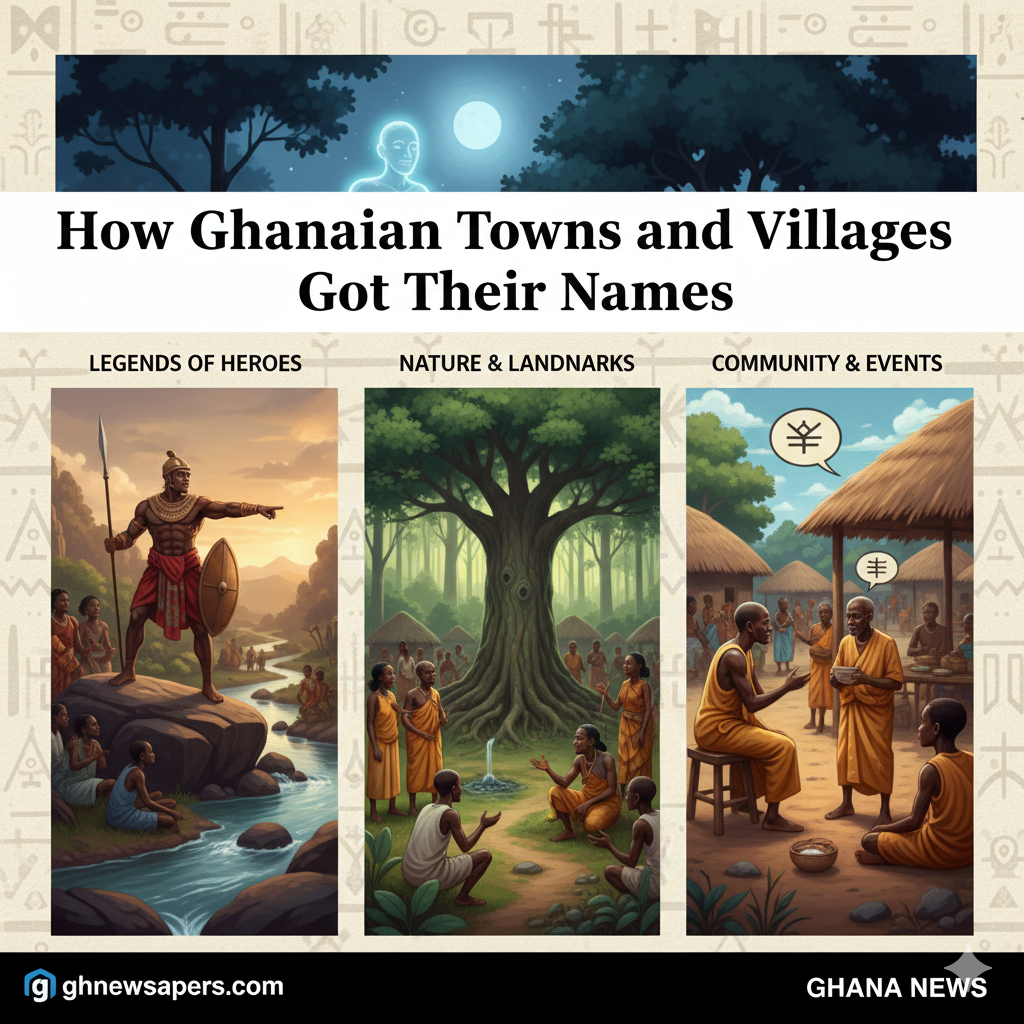
When entering a typical town or village in Ghana, a traveler is often welcomed by a metal signpost bearing the name of the place. These names are familiar to residents, yet many people rarely pause to ask an important question: How did this town get its name? In Ghana, as in many parts of the…

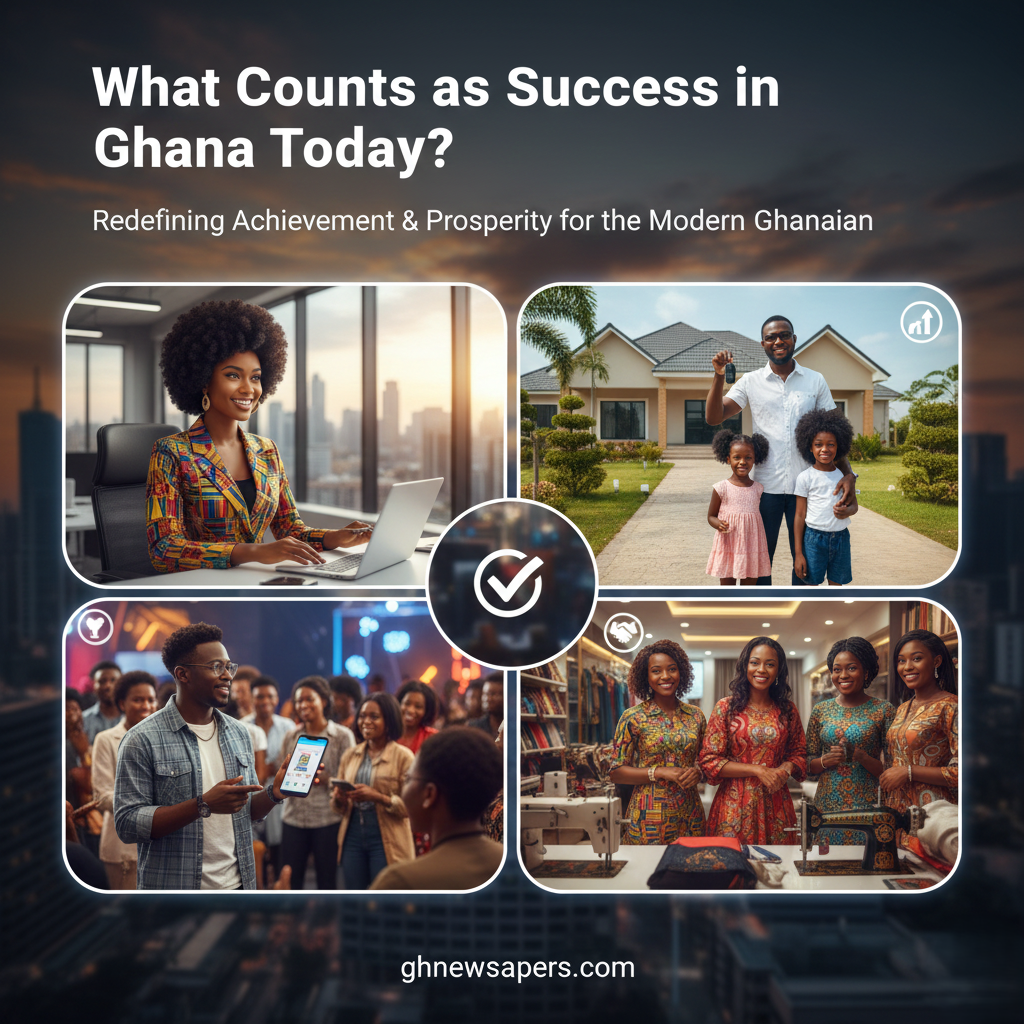
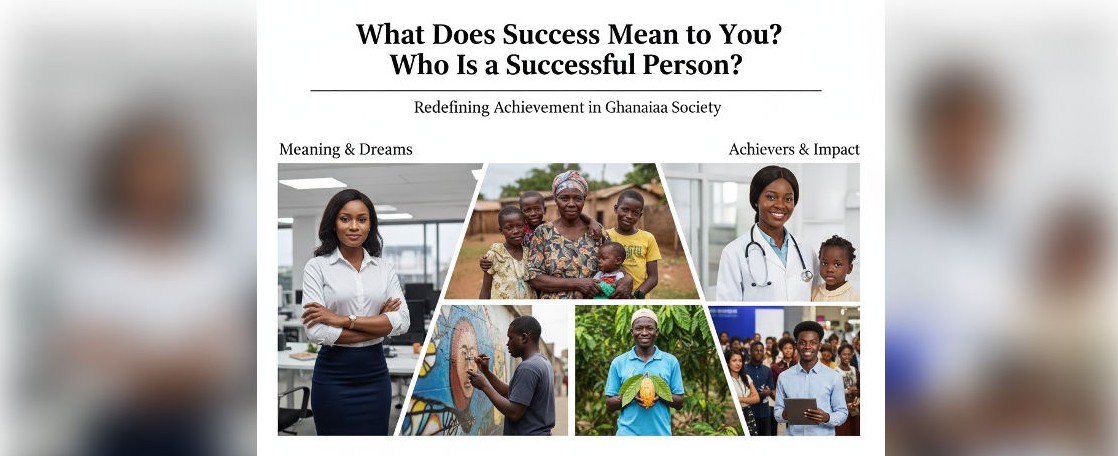
In Ghana, success is loudly celebrated, quietly envied, and endlessly debated. Yet, beneath the noise of social media displays, church testimonies, political slogans, and family expectations lies a deeper question we rarely pause to ask ourselves honestly: what does success truly mean to you? Not to

Almost everyone dreams of success. From childhood, we are taught to aspire, to achieve, and to “make it” in life. Parents encourage their children to succeed, communities celebrate successful people, and society often rewards those it considers accomplished. But an important question remains: What d

Prostitution is commonly defined as the exchange of sex for money. People who engage in prostitution provide sexual services in return for payment. A related question is whether exchanging sex for material items other than cash should also be considered prostitution. Some people say yes, others say

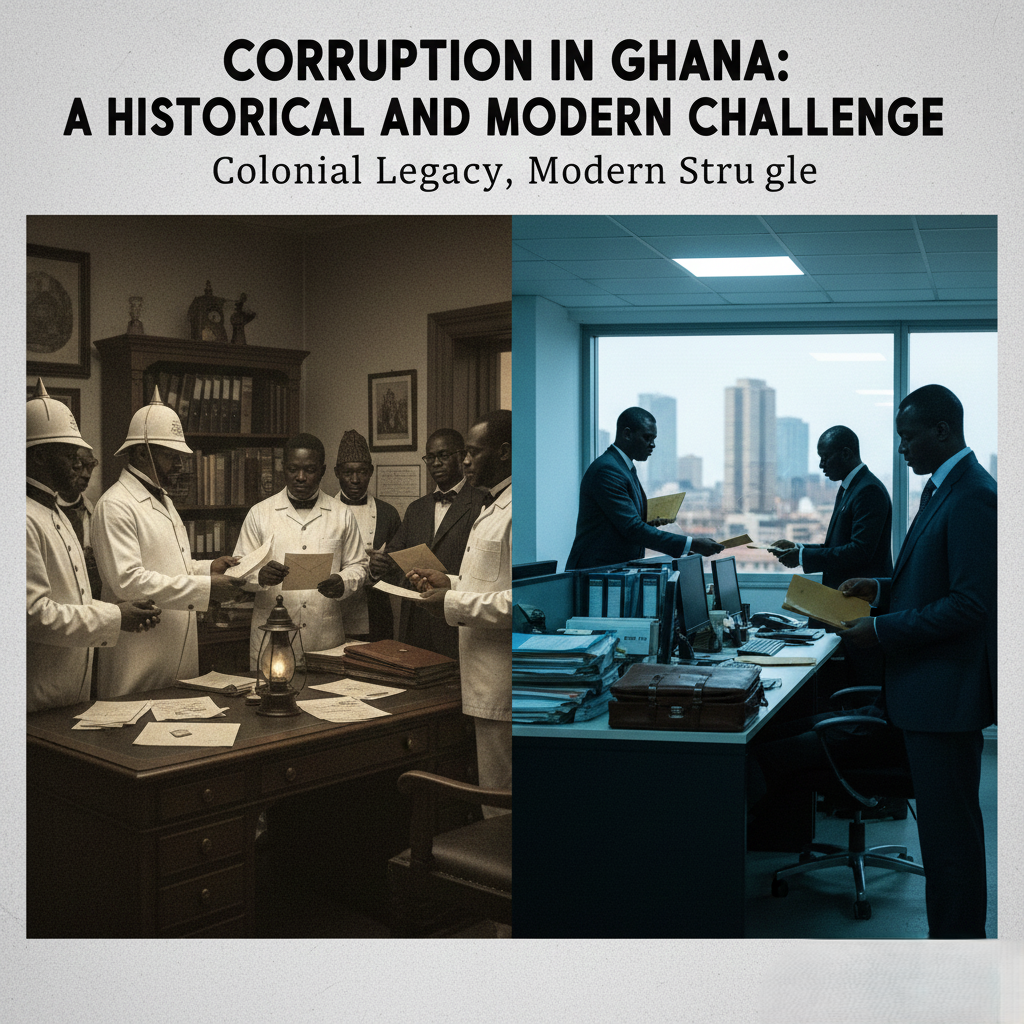
Corruption remains one of the most enduring social challenges confronting Ghana. Its roots stretch back to the colonial Gold Coast era (1821–1957) and continue to influence governance, public trust, and national development today. Understanding this long history is essential to appreciating why corr

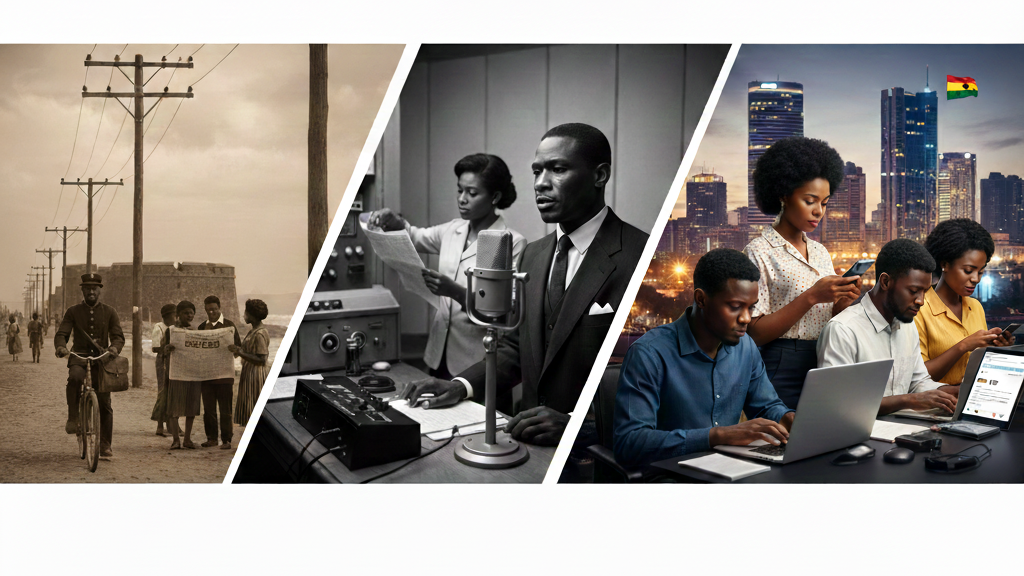
Few technological developments have reshaped Ghana as profoundly as the Advancement of communication technology. From the first telegraph lines laid by colonial authorities to today’s smartphones and internet-driven economy, communication has changed how Ghanaians trade, govern, organize, and connec