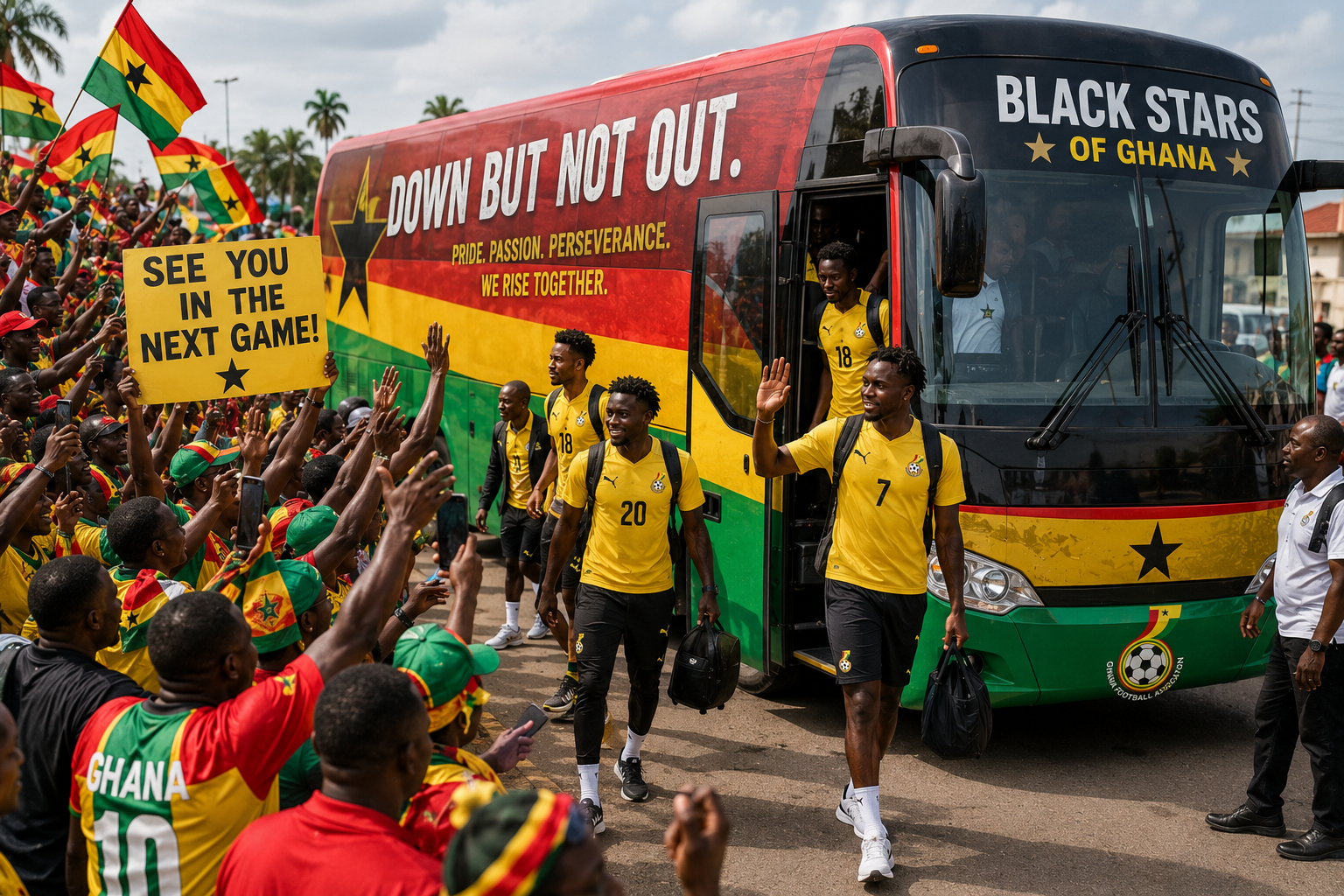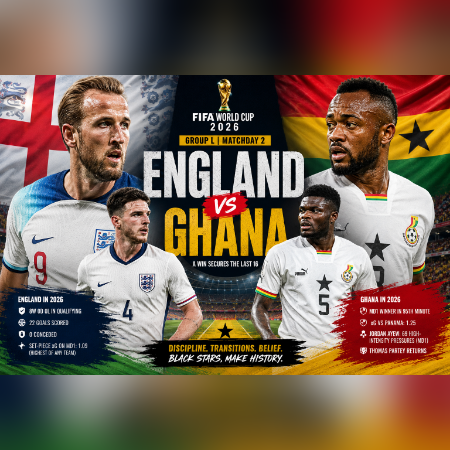
The memory still lingers in Ghanaian football consciousness: a nation gathered around television screens, hearts pounding as the Black Stars carried the hopes of an entire continent into football's grandest arena. From the electric nights of Germany in 2006 to the heartbreak of Johannesburg in 2010 and the redemption sought ever since, Ghana's World Cup story has never been a quiet one. It has always been dramatic, emotional, and profoundly human.
As the countdown to the match accelerates, another chapter beckons. A meeting with Panama may not immediately evoke the emotional weight of clashes against Uruguay, Germany, Portugal, or the United States. Yet beneath the surface lies a fascinating contest between two football nations that have spent much of the modern era fighting for recognition, battling geographical limitations, and proving that football's established hierarchy is far less permanent than it once appeared.
Ghana versus Panama is not simply a fixture. It is a collision of ambition.
For Ghana, it represents another opportunity to demonstrate why the Black Stars remain Africa's most influential World Cup story. For Panama, it is another chance to show that their remarkable rise from regional outsiders to World Cup participants was no accident.
The journey of Panama to football relevance remains one of the most compelling underdog stories of the twenty-first century. For decades, the nation lived in the shadow of regional powers Mexico, Costa Rica, and the United States. Football existed, but rarely on the global stage. The country's greatest sporting attention often belonged elsewhere.
Then came a generation determined to rewrite history.
Led by iconic figures such as Román Torres, Blas Pérez, Felipe Baloy, and Gabriel Gómez, Panama gradually transformed from plucky underdogs into genuine contenders. Their qualification for the 2018 FIFA World Cup in Russia remains one of the defining moments in the nation's sporting history.
The image of veteran defender Felipe Baloy scoring Panama's first-ever World Cup goal against England in Nizhny Novgorod remains unforgettable. England won comfortably, but the scoreline hardly mattered. Panama had arrived.
There is something familiar about that story for Ghanaians.
The Black Stars experienced a similar breakthrough in 2006 when they qualified for their first World Cup after decades of continental excellence. Ghana had won Africa Cup of Nations titles. Ghana had produced legendary footballers. Ghana had inspired generations across Africa. Yet until Germany 2006, there remained a lingering question about whether Ghana could translate its reputation onto football's biggest stage.
That question was emphatically answered.
Victories over the Czech Republic and the United States propelled Ghana into the knockout stages at the first attempt. Suddenly, the Black Stars were not merely participants. They were contenders.
In many ways, Panama today occupies a position similar to where Ghana once stood: respected, improving, but still striving to establish a lasting World Cup identity.
The contrast between the two football cultures is striking.
Ghana's football story stretches back generations. The names roll off the tongue like chapters in a national epic: Osei Kofi, Ibrahim Sunday, Abedi Pele, Tony Yeboah, Samuel Osei Kuffour, Michael Essien, Asamoah Gyan, Stephen Appiah, André Ayew, and Jordan Ayew.
Panama's football heritage is comparatively young. Their heroes are recent pioneers rather than long-established legends.
Yet that difference may actually make Panama dangerous.
Teams with little historical baggage often play with remarkable freedom. They are less constrained by expectations. They are accustomed to fighting for every inch of recognition.
Recent international tournaments have reinforced that reality. Panama have become increasingly competitive under modern tactical systems, combining physical intensity with disciplined organization. Their performances in CONCACAF competitions have demonstrated a growing maturity that cannot be ignored.
For Ghana, that presents a challenge.
The Black Stars have often looked most comfortable when confronting globally recognized powers. There is a clear historical pattern. Ghana's greatest World Cup performances have frequently come against opponents who expected to dominate possession and dictate play.
Against so-called peer nations or emerging challengers, however, Ghana have occasionally struggled to impose themselves. The issue is often psychological as much as tactical.
Panama will likely arrive with a simple objective: frustrate Ghana, remain compact, attack aggressively from transitions, and target defensive vulnerabilities.
That final point is perhaps the most important heading into 2026.
If there is one area of concern surrounding the current Black Stars generation, it is defensive consistency.
The attacking talent available to Ghana remains considerable. Antoine Semenyo brings power and directness. Jordan Ayew continues to offer experience and leadership. Ernest Nuamah provides pace and flair, while the emerging generation continues to push for opportunities on the international stage.
The questions emerge further back.
Too often in recent years, Ghana have appeared vulnerable when defending set pieces, managing transitions, or maintaining concentration during critical moments. These are precisely the situations Panama will seek to exploit.
Too often in recent years, Ghana have appeared vulnerable when defending set pieces, managing transitions, or maintaining concentration during critical moments. These are precisely the situations Panama will seek to exploit.
Historically, Ghana's greatest teams were built on defensive authority. Samuel Osei Kuffour embodied it. John Mensah personified it. Isaac Vorsah, Hans Sarpei, and others provided structure and resilience.
The 2010 quarter-final side is remembered for Asamoah Gyan's goals and the heartbreak against Uruguay, but that team reached the last eight because it was extraordinarily difficult to break down.
As World Cup 26 graces us with the occasion of footballing culture, rebuilding that defensive identity may prove just as important as finding goals.
There is also a broader symbolic significance to this matchup.
Ghana and Panama represent football's expanding geography. Neither nation belongs to the traditional elite. Neither enjoys the economic advantages of Europe's major powers or South America's historic giants.
Yet both have demonstrated that intelligent development, national belief, and talented generations can disrupt established hierarchies.
The 2026 World Cup itself embodies that evolution. Hosted across the United States, Canada, and Mexico, the tournament will feature an expanded field and greater opportunities for emerging nations to leave their mark.
For Ghana, that expansion should not be viewed merely as a chance to participate.
It should be viewed as an opportunity to compete.
The Black Stars remain Africa's most successful World Cup nation by knockout-stage appearances. No African side has reached more World Cup knockout rounds. That distinction matters. It reflects decades of achievement, resilience, and consistency on football's biggest stage.
But history alone guarantees nothing.
The next generation must earn its own place.
That is why encounters such as Ghana versus Panama matter. They offer a glimpse into the type of contests that often define tournament campaigns. Not glamorous showpieces. Not headline-grabbing clashes against global superpowers. Instead, they are the difficult, tactical, emotionally demanding matches that determine who advances and who goes home.
Panama will believe they can win.
Ghana should believe they must.
The difference between those two mindsets could decide the outcome.
My expectation is a narrow Ghana victory. The Black Stars possess superior individual quality and greater tournament pedigree. Players such as Antoine Semenyo, Jordan Ayew, and Ernest Nuamah have the ability to provide the attacking spark needed to break down stubborn opposition if Ghana can establish control of the game.
Yet the margin will likely be thin.
Panama's organization and determination should create problems, especially if Ghana's defensive frailties remain unresolved.
Prediction: Ghana 2–1 Panama.
It may not be comfortable. It may not be beautiful. But World Cups are rarely remembered for comfort.
Verdict
The significance of Ghana versus Panama extends beyond ninety minutes. It is a reminder that modern football increasingly belongs to nations willing to challenge old assumptions. Panama's rise demonstrates what belief can achieve. Ghana's history demonstrates what sustained excellence can become.
As the Black Stars look toward 2026, the lesson is clear. Talent alone is not enough. Reputation alone is not enough. The teams that succeed at World Cups are those that combine ambition with structure, flair with discipline, and confidence with defensive reliability.
Ghana unquestionably possess the attacking weapons to excite the world once again. Whether they can repair the vulnerabilities at the back may determine whether World Cup 26 becomes another memorable chapter or another missed opportunity.
Against Panama and beyond, that question will follow the Black Stars onto every pitch they step upon.