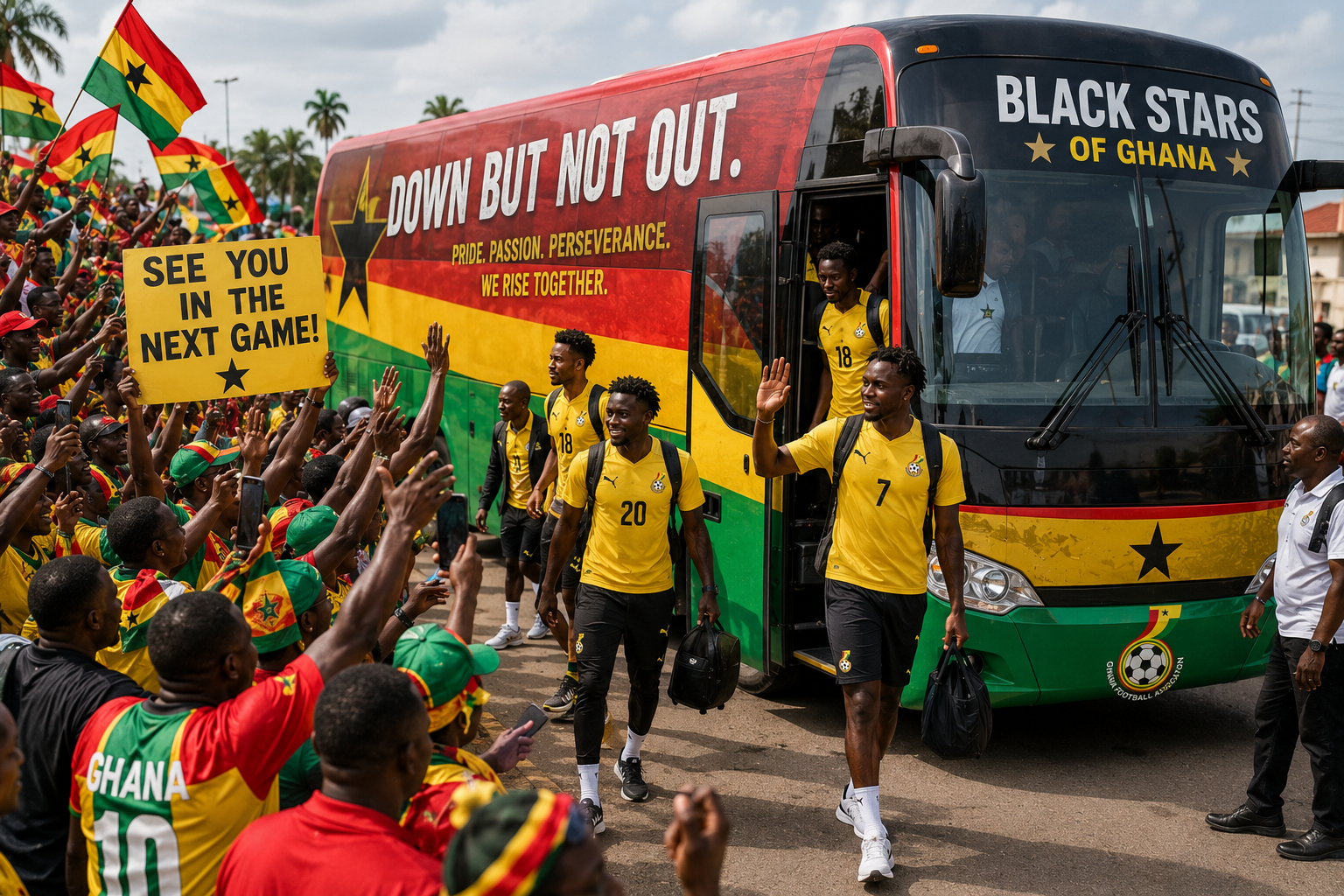
The mathematics of Group L are simple. Both England and Ghana opened with victories, and a win here would leave either side on six points with knockout qualification effectively secured before Matchday 3. For Ghana, however, this fixture is about more than qualification probability. It is a chance to prove that the tactical discipline shown against Panama can survive against one of the tournament favourites.
The challenge is enormous. England arrive with a perfect qualifying campaign (8 wins from 8, 22 scored, 0 conceded), an Opta win probability of 78.8%, and arguably the most dangerous set-piece attack seen in Matchday 1. Ghana arrive with confidence from Caleb Yirenkyi's dramatic winner, but also with evidence that they struggled to create chances from open play.
Tactical Setup
England's Expected 4-2-3-1
Thomas Tuchel's structure has been built on control. England's 4-2-3-1 uses a double pivot to dominate possession while allowing Jude Bellingham freedom between the lines behind Harry Kane.
Against Croatia, England produced 11 shots on target, the second-highest total of any team in Matchday 1. That number matters because it reflects sustained territorial dominance rather than isolated moments. England consistently moved the ball into advanced areas and forced Croatia's defensive block deeper and deeper.
Declan Rice is the platform. He dictates circulation, delivers dangerous dead balls and protects against transitions. Alongside him, England can commit numbers forward without losing defensive security.
The key feature of Tuchel's England is that they attack patiently but recover possession aggressively. Their qualifying campaign saw them concede just 2.1 expected goals across eight matches, while recording nine clean sheets in Tuchel's first ten games.
Ghana's Likely 4-5-1 Defensive Shape
Carlos Queiroz is unlikely to engage England high up the pitch.
The more realistic approach is a compact 4-5-1 out of possession, with Antoine Semenyo leading the first defensive line and the midfield remaining narrow to deny Bellingham space between the lines.
The Panama match provided a clear blueprint. Ghana produced zero shots in the first half and largely prioritised defensive structure over attacking ambition. Expect a similar approach here, but even more conservative.
The primary ball-winning zones will likely be:
Central midfield areas around Thomas Partey
Wide areas where England's full-backs push high
Transitional moments immediately after England lose possession
Queiroz will want England circulating possession in harmless areas before springing traps near the halfway line.
Where Ghana Is Vulnerable
The danger is obvious.
A deep block naturally invites pressure, and England are among the world's best teams at converting pressure into set pieces and second-ball opportunities.
Ghana's recent record against elite pressing teams is concerning:
Lost 5-1 to Austria
Lost 2-0 to Mexico
Lost 2-0 to Germany
Across those three matches, Ghana conceded 10 goals in the 360 minutes before the tournament began.
The biggest structural weakness is the gap that can emerge between midfield and defence once the block starts dropping too deep. If Bellingham receives freely in that pocket, England will create chances repeatedly.
The Key Duel: Declan Rice vs Thomas Partey
No individual battle will influence this match more.
Rice's Influence
Rice arrives in outstanding form.
For Arsenal in 2025-26, he delivered 48 chance-creating set-piece deliveries, the fourth-highest figure across Europe's top five leagues. Against Croatia, he assisted Kane's goal directly from a corner.
Rice's value goes beyond passing quality. He controls rhythm. England's ability to sustain attacks depends heavily on his positioning and ball recovery.
Partey's Importance
Partey's return changes Ghana's midfield entirely.
With 57 caps and 15 international goals, he remains Ghana's best ball-winning midfielder and their most reliable outlet under pressure.
Against England, Ghana cannot afford endless defensive phases. Partey must:
Win second balls.
Break England's counter-press.
Deliver early passes into transition runners.
Why This Battle Matters After 60 Minutes
England's possession game forces opponents into long defensive shifts.
If Rice consistently establishes England in Ghana's half, the Black Stars will spend energy defending rather than attacking.
That becomes dangerous late in matches. Ghana's winner against Panama came from a single huge chance worth 0.97 xG in the 95th minute, but they generated only 1.25 xG overall. England are unlikely to offer that many opportunities.
If Partey can disrupt England's rhythm and reduce Rice's influence, Ghana remain competitive. If Rice controls territory and dead balls, England's pressure will accumulate.
Set Pieces: Ghana's Biggest Defensive Concern
Statistically, this is the most dangerous area of the match.
England generated:
1.09 set-piece xG against Croatia (excluding penalties)
5 shots on target from set pieces
The highest set-piece xG total of any team on Matchday 1
The highest set-piece shots-on-target total of any team on Matchday 1
Those numbers are not normal.
They indicate a team creating genuine scoring opportunities rather than simply delivering hopeful crosses.
Rice's Delivery
Rice's corner for Kane's goal against Croatia highlighted England's primary weapon.
His delivery consistently attacks high-value zones between the penalty spot and six-yard box. Ghana cannot rely solely on zonal marking because England deliberately overload these spaces.
Kane's Movement
Kane's intelligence is as dangerous as his aerial ability.
He rarely attacks the first obvious zone. Instead, he often begins deeper before arriving late into gaps created by blockers and decoy runners.
With 1.03 xG generated against Croatia alone, England created elite-quality opportunities for their captain.
Ghana's Required Solution
Ghana need a hybrid defensive strategy:
Dedicated physical marker on Kane.
Partey attacking second balls.
Protection of the near-post zone.
Avoid unnecessary fouls around the penalty area.
If England repeatedly earn corners and free kicks, the statistical evidence suggests goals eventually follow.
Ghana's Counter-Attacking Plan
The Black Stars are unlikely to dominate possession.
Their route to success is transition football.
Antoine Semenyo
Semenyo is arguably Ghana's most important attacking player in this fixture.
His Premier League experience means he understands England's defenders and their tendencies. More importantly, he has the power to carry the ball over long distances during counters.
Kamaldeen Sulemana
Sulemana's acceleration offers direct penetration against a high defensive line.
If England's full-backs advance aggressively, he becomes a major outlet.
Ernest Nuamah
Nuamah provides similar vertical threat on the opposite flank.
His role will be to attack the space immediately after turnovers rather than participate in prolonged possession phases.
Can England Be Hurt In Transition?
There is one encouraging statistic for Ghana.
England conceded two goals against Croatia despite allowing only 0.70 xG.
That suggests moments of defensive vulnerability despite overall control.
England still won comfortably, but those goals demonstrated that quick attacks can bypass their structure when concentration drops.
For Ghana, every transition must be direct:
Win ball.
Find Partey.
Release Semenyo, Sulemana or Nuamah immediately.
Anything slower allows England's defensive organisation to recover.
The Kane Factor
Harry Kane enters this match with two World Cup goals already in 2026.
He also has:
9 World Cup goals overall
One fewer than Gary Lineker's England World Cup record
5 goals in 5 international appearances against African nations
The warning signs are obvious.
What His xG Tells Us
Kane's 1.03 xG against Croatia is arguably the most revealing statistic.
Expected goals above 1.0 generally indicate a striker is receiving multiple high-quality opportunities close to goal.
This is not Kane creating magic from low-percentage situations.
This is England consistently constructing premium chances for him.
How Ghana Can Limit Him
Stopping Kane begins before the ball reaches him.
Ghana must:
Deny Bellingham central space.
Limit Rice's crossing opportunities.
Prevent cut-backs from wide areas.
Contest every second ball around the box.
If Kane receives service comparable to what he enjoyed against Croatia, statistical probability suggests he will score.
Ghana's Historical World Cup Context
A positive result would be significant historically.
The Black Stars have only once won two group-stage matches at a single World Cup, during the 2006 tournament against the Czech Republic and the United States.
A result against England would therefore place this team in rare company.
Lessons From 2010
The 2010 quarter-final run remains Ghana's greatest World Cup achievement.
Tactically, the lesson is not about romance or history.
It is about discipline.
That team succeeded because it remained compact, defended central spaces aggressively and attacked with speed whenever possession was regained.
Those same principles apply here.
England are stronger than any opponent Ghana faced in 2010 before the quarter-finals, but the formula remains similar:
Defensive organisation.
Midfield discipline.
Ruthless transitions.
Without all three, England's quality eventually takes over.
Prediction
England 2-0 Ghana
The prediction is driven by three major statistical indicators:
England's defensive dominance: 22 goals scored and 0 conceded during qualifying, plus only 2.1 xG conceded across the entire campaign.
England's attacking volume: 11 shots on target against Croatia, second-most of any team in Matchday 1.
England's set-piece superiority: 1.09 set-piece xG and 5 set-piece shots on target, both tournament-leading Matchday 1 figures.
Ghana's defensive organisation should keep the contest competitive for long periods, especially with Partey returning to midfield.
However, Ghana's attacking numbers against Panama remain worrying. Zero first-half shots and only 1.25 xG overall suggest chance creation remains limited against organised opponents.
How Ghana Can Shock England
The upset scenario is clear:
Partey wins the midfield battle.
Jordan Ayew's pressing disrupts England's build-up.
Semenyo, Sulemana or Nuamah convert one early transition.
Ghana avoid conceding from set pieces.
If Ghana score first, Queiroz's deep-block structure becomes far more effective.
But based purely on the available evidence, England possess the stronger defence, the more productive attack, the superior set-piece threat and the tournament's most reliable centre-forward. The numbers point toward England, even if Ghana's counter-attacking weapons give them a genuine chance of making the favourites uncomfortable.