Filth Has Spiritual Consequences
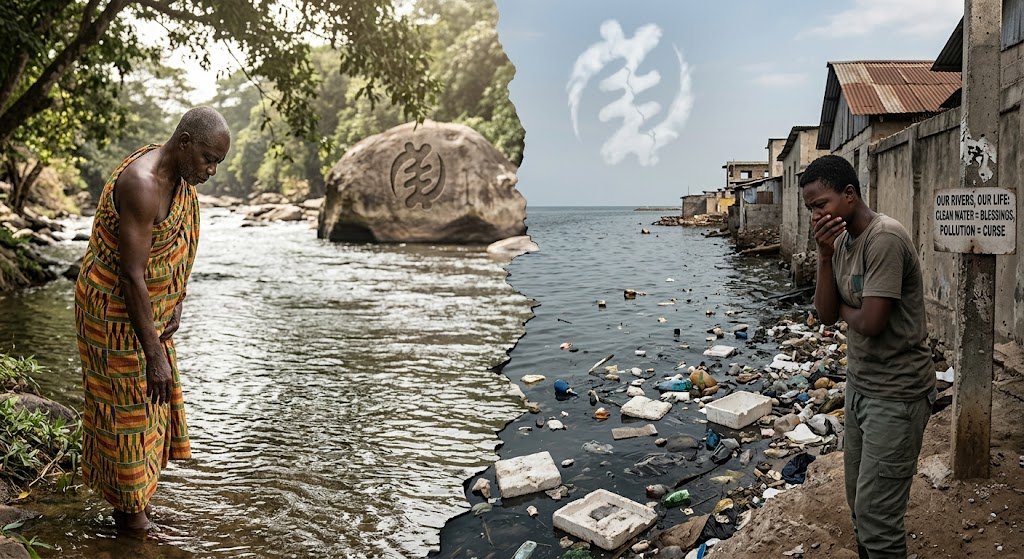
Okronkronyi Nyame Somafo Yawoh teaches that filth is spiritually derogating and spiritually taxing. According to His teachings, acts that pollute the natural environment carry consequences that extend beyond the physical realm and affect the spiritual and economic well-being of individuals and communities.
Pollution Is a Spiritual Offense
He emphasizes that defecating in coastal areas, rivers, streams, lagoons, and other water bodies is not merely an environmental offense but also a spiritual transgression. Likewise, disposing of garbage and other waste materials into rivers, streams, and the sea is regarded as a serious violation of divine and natural laws.
The Rivers and the Sea Collect Taxes
According to Okronkronyi Nyame Somafo Yawoh, rivers and seas impose what He describes as “financial taxes” on those who pollute them. These taxes are not collected through conventional means but through spiritual mechanisms that affect the lives of offenders. Individuals who contaminate water bodies may experience financial difficulties, economic setbacks, and other forms of hardship as a result of these spiritual sanctions.
The Price of Nonpayment
He further teaches that failure to pay these spiritual taxes can lead to what He metaphorically describes as imprisonment. This imprisonment does not necessarily involve physical confinement behind prison walls. Rather, it manifests itself in the form of stagnation, lack of progress, persistent poverty, repeated setbacks, and the inability to advance economically or socially.
When Communities Pollute
From this perspective, environmental pollution is linked directly to human welfare and prosperity. Communities that continually pollute rivers, streams, lagoons, and the sea may unknowingly expose themselves to spiritual penalties that hinder their development.
Why Coastal Communities Remain Poor
Okronkronyi Nyame Somafo Yawoh points to the widespread pollution of coastal waters and river bodies as one explanation for the persistent poverty observed in many coastal communities. In His view, residents of such areas often suffer economic deprivation because of the continual contamination of the sea and other water bodies through open defecation and indiscriminate disposal of waste.
Cleanliness Brings Progress
His teachings therefore call for greater environmental cleanliness, proper sanitation practices, and respect for rivers, streams, lagoons, and the sea. By keeping these natural resources clean, individuals and communities can avoid spiritual taxation and create conditions that promote health, prosperity, and progress.
Bring Back the "Tankas"
A Return to Sanitation Discipline
Okronkronyi Nyame Somafo Yawoh has called for the reintroduction of Sanitary Inspectors, popularly known in Ghana as the Town Council sanitary officers or "Tankas." According to Him, these officials played an important role in maintaining cleanliness and public health in communities across the country.
Inspecting Homes and Communities
He recalls that sanitary inspectors routinely visited homes to assess sanitary conditions and identify health hazards. They also patrolled neighborhoods to ensure that residents complied with environmental sanitation regulations and did not create filth in public spaces.
Fines and Imprisonment for Offenders
Under the old system, individuals found responsible for unsanitary conditions were held accountable for their actions. Offenders could be prosecuted in court and subjected to financial penalties. In more serious cases, custodial sentences could be imposed on persistent violators.
Deterrence Through Enforcement
Okronkronyi Nyame Somafo Yawoh believes that the reintroduction of sanitary inspectors would help address Ghana's sanitation challenges by promoting discipline and accountability. He argues that the possibility of prosecution, fines, and imprisonment would serve as a deterrent to those who engage in improper waste disposal, open defecation, and other practices that contribute to environmental pollution.
A Cleaner Ghana
In His view, effective sanitation enforcement, combined with public education on environmental responsibility, would help create cleaner communities, improve public health, and contribute to the social and economic development of the nation.