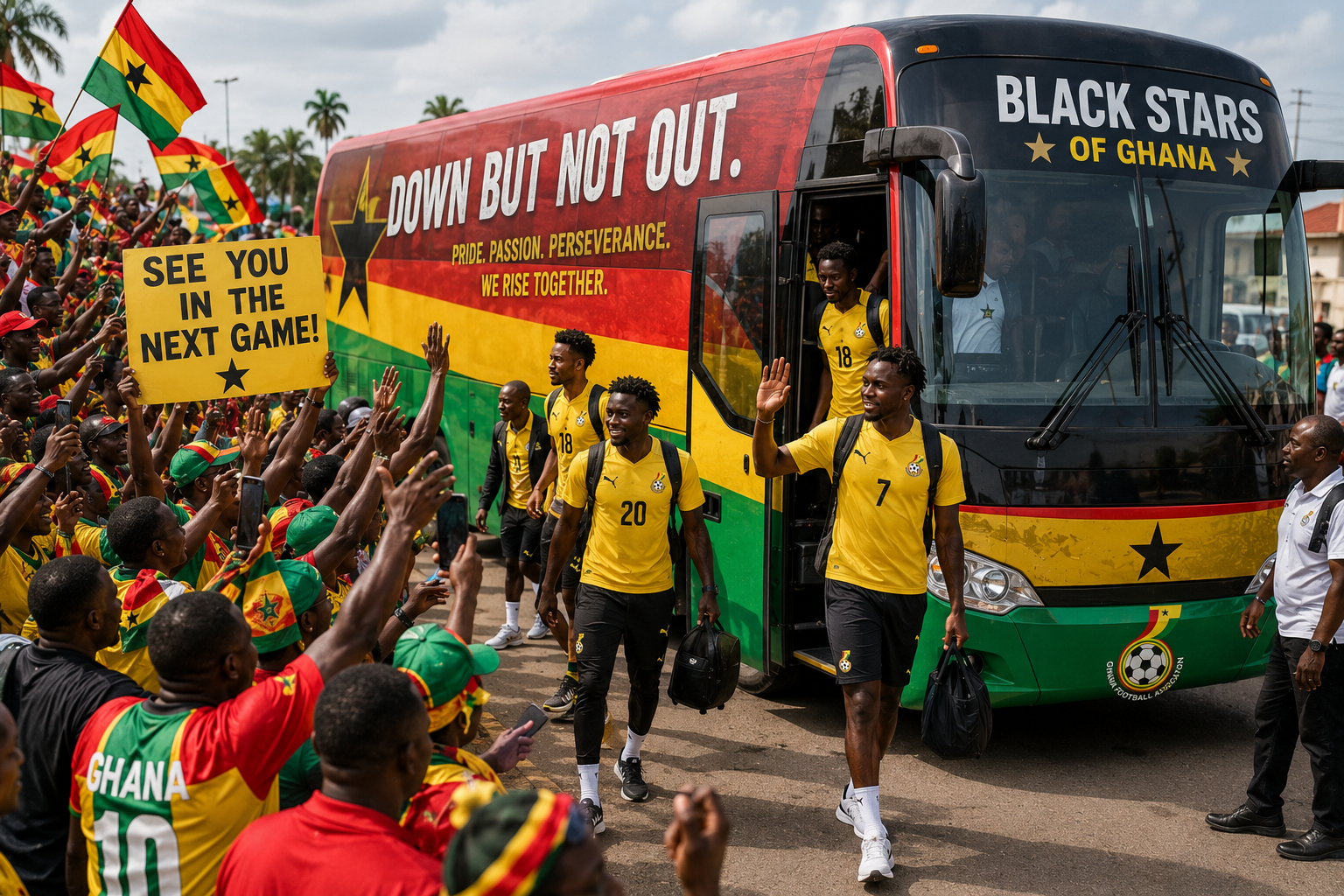
Carlos Queiroz’s provisional 28-man squad for the 2026 FIFA World Cup reveals far more than just player selection. It offers the clearest indication yet of how Ghana’s new coach intends to rebuild the identity of the Black Stars ahead of one of the most demanding tournaments in recent history.
The Portuguese manager, appointed only weeks before the tournament, has assembled a squad that prioritizes tactical discipline, defensive structure, physical intensity, and transitional football over flair-heavy improvisation.
For years, Ghanaian national teams have oscillated between moments of brilliance and periods of tactical chaos. Queiroz appears determined to eliminate that unpredictability. His 28-man provisional squad reflects the mindset of a coach who understands tournament football better than most.
This will be his fifth World Cup as a manager, and his selections suggest he is building a team designed not necessarily to entertain, but to survive and compete in a brutal Group L featuring England, Croatia, and Panama.
The Kudus Problem
The biggest storyline surrounding the squad is the absence of Mohammed Kudus due to injury. Kudus has been Ghana’s most dynamic attacking player over the last several years, capable of breaking defensive lines through dribbling, movement, and creativity.
Reuters reported that a setback in his recovery from a quad injury ruled him out of the tournament entirely.
His absence fundamentally changes Ghana’s tactical ceiling.
Without Kudus, the Black Stars lose their primary connector between midfield and attack. Queiroz therefore appears to have shifted toward a more collective and direct attacking model built around speed, pressing, and vertical movement.
That explains the importance of players such as Antoine Semenyo, Iñaki Williams, and Ernest Nuamah.
Semenyo, coming off an excellent club season, may now become the offensive centerpiece of the team. His physicality, pressing intensity, and improved finishing make him ideal for Queiroz’s transition-heavy system. Williams, meanwhile, brings elite movement and relentless work rate — qualities that become crucial in counterattacking football.
Nuamah’s return from a long ACL injury is one of the squad’s most encouraging developments.
At his best, he offers unpredictability and pace from wide areas, something Ghana desperately needs without Kudus. However, expecting him to immediately regain full sharpness after such a lengthy absence may be unrealistic.
Queiroz’s Defensive Blueprint
Perhaps the most telling aspect of the squad is its defensive composition.
Queiroz has historically built teams around compact defensive organization, and this Ghana squad reflects that philosophy perfectly. The recalls of Abdul Rahman Baba, Abdul Mumin, and Alidu Seidu point toward a coach who may be prioritizing experience, athletic recovery speed, and positional discipline.
Ghana’s group opponents possess enormous attacking quality, and Queiroz clearly values defenders capable of surviving sustained defensive pressure.
The midfield selections also reveal a careful balancing act between control and energy.
Thomas Partey remains the emotional and tactical anchor of the side. Even at this stage of his career, Partey’s positional intelligence and composure remain irreplaceable. Yet Queiroz appears aware that Partey alone cannot carry Ghana physically against younger, more dynamic opponents.
That explains the inclusion of energetic midfield profiles such as Kwasi Sibo and Caleb Yirenkyi. These players may lack star power, but they fit the tactical requirements of modern tournament football: pressing aggressively, covering spaces quickly, and supporting defensive transitions.
A Squad Built on Functionality
Interestingly, Queiroz has also shown willingness to invest in long-term potential. The inclusion of young Ajax prospect Paul Reverson suggests the coach is thinking beyond immediate results.
Although Reverson is unlikely to become a major figure at this tournament, his selection signals a desire to modernize Ghana’s talent pipeline.
One controversial aspect of the squad is the apparent lack of pure creativity in central areas. Ghana’s midfield is functional, athletic, and defensively responsible, but not especially inventive. Against compact teams — especially Panama — the Black Stars could struggle to create high-quality chances consistently.
Much will depend on whether Semenyo and Williams can generate moments individually.
Still, Queiroz has never been a coach obsessed with possession or aesthetic football. His reputation has been built on creating disciplined tournament teams that are difficult to break down.
Many fans online have already predicted a pragmatic and defensive Ghana side under his leadership. Various discussions surrounding his appointment frequently described the football as “negative,” but several supporters also acknowledged that he may be exactly the type of coach needed for a short-term World Cup rescue mission.
Final Verdict
That assessment may ultimately prove accurate.
Ghana no longer possesses the overwhelming midfield dominance of the Michael Essien or Sulley Muntari era. What it does possess is athleticism, European-level experience, and enough attacking pace to punish teams in transition.
The real question is whether Queiroz can build chemistry quickly enough. He has had limited preparation time since taking over in April, but Reuters reported that he has already traveled extensively to scout players and analyze more than 200 matches. That obsessive attention to detail is classic Queiroz: meticulous, cautious, and tournament-oriented.
Ultimately, this provisional 28-man squad feels less like a collection of stars and more like a carefully engineered survival unit. Ghana may not enter the 2026 World Cup as favorites, but under Carlos Queiroz they could become one of the tournament’s most stubborn and tactically disciplined sides.
In knockout football, that alone can be dangerously effective.