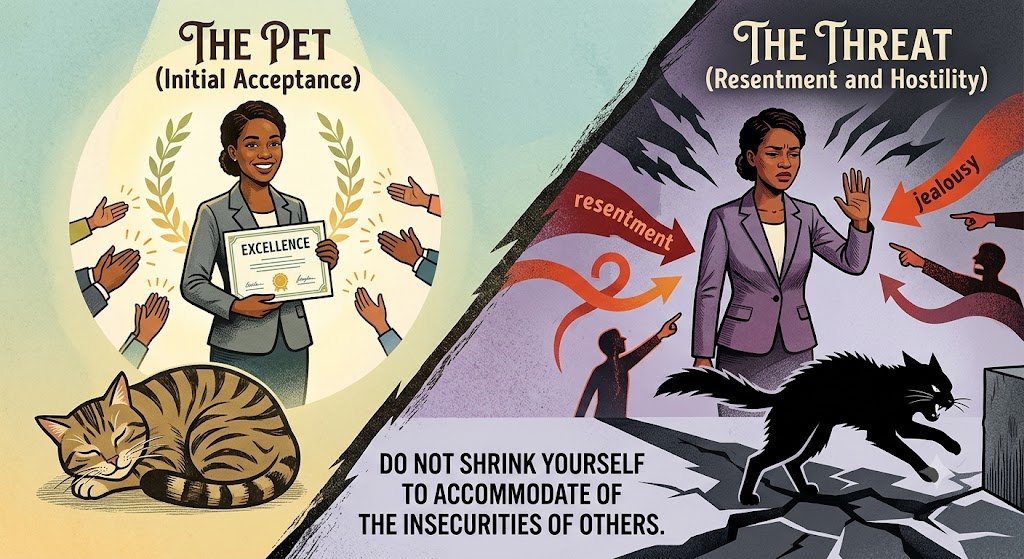
The Pet-to-Threat Phenomenon
Many Black people throughout the Diaspora share stories of what has come to be known as the "pet-to-threat" phenomenon. The pattern is remarkably consistent. Initial success, competence, and achievement often lead to acceptance, praise, and even admiration. Yet within months or years, the treatment changes. The very qualities that once attracted approval suddenly become sources of resentment.
At first, they love you. You are embraced, celebrated, and held up as an example. You are the "pet." But when you refuse to conform to the expectations others have imposed upon you, the relationship changes. The admiration fades. Suspicion, hostility, and criticism emerge. You become a "threat."
When Success Becomes a Problem
For many Black professionals, scholars, entrepreneurs, and leaders, this experience is all too familiar. As long as they remain within prescribed boundaries and do not challenge existing power structures, they are welcomed. However, once they begin to demonstrate independence, assert their expertise, or seek positions of influence, the atmosphere often shifts. Their accomplishments are minimized, their motives questioned, and their character scrutinized.
When you are Black, talented, intelligent, self-confident, and successful, some people struggle to reconcile these qualities with their preconceived notions and stereotypes. Rather than acknowledge your competence, they may label you as arrogant, difficult, or overly ambitious. Yet what is often perceived as arrogance is simply confidence, self-respect, and a refusal to diminish oneself to make others comfortable.
The Role of Insecurity and Threat Perception
The issue frequently lies not with the individual being criticized but with those who feel threatened. Insecurity can cause people to view another person's success as a challenge to their own status or self-worth. Instead of celebrating excellence, they interpret it as a personal affront. They expect deference and servility and become uncomfortable when confronted with someone who possesses both competence and confidence.
This dynamic is particularly painful because it often comes from people who initially appeared supportive. The transition from admiration to hostility can be confusing and discouraging. It may lead individuals to question themselves, downplay their accomplishments, or hesitate to pursue opportunities for fear of attracting negative attention.
Refusing to Be Discouraged
Such reactions, however, should not be allowed to derail one's aspirations. The opinions of others do not determine your worth. Nor should your goals be constrained by the limitations that others seek to impose upon you. Success inevitably attracts attention, and attention sometimes attracts envy. The challenge is to remain focused on your purpose rather than becoming distracted by the changing attitudes of those around you.
History is replete with examples of accomplished Black men and women who encountered resistance precisely because of their achievements. Their confidence was interpreted as arrogance, their leadership as aggression, and their ambition as a threat. Yet they persevered, recognizing that the discomfort of others was not a reflection of their own shortcomings.
The Lesson
The lesson is simple but profound: do not shrink yourself to accommodate the insecurities of others. Do not mistake confidence for arrogance simply because others do. Do not allow the transition from "pet" to "threat" to discourage you from pursuing excellence. Continue to develop your talents, pursue your goals, and walk confidently in your abilities.
After all, if your growth causes some people to see you as a threat, it may simply mean that you have outgrown the limited role they expected you to play.