A Nation Richly Endowed
Ghana is richly blessed with natural and human resources. The country possesses some of the world's finest deposits of gold and diamonds. It is endowed with bauxite, manganese, petroleum, and, more recently, lithium—resources that many nations can only dream of having.
Agriculture has also long been one of Ghana's strengths. The country is among the world's leading producers of cocoa and is blessed with fertile land capable of supporting the cultivation of coffee, oil palm, timber, and a wide variety of food crops.
Education, too, has been a source of national pride. Ghana introduced free and compulsory basic education decades ago and has produced generations of highly accomplished scholars, professionals, scientists, and technocrats who have distinguished themselves both at home and abroad.
In sports, Ghana has consistently punched above its weight. The nation has produced world-class boxers, athletes, and football stars who have brought honor and international recognition to the country.
The Paradox of Plenty
Yet, despite these blessings, Ghana continues to face persistent and seemingly intractable challenges. The country struggles to feed itself and spends enormous sums of money importing food items such as rice, tomatoes, poultry products, and meat. Unemployment remains stubbornly high, particularly among the youth. Many Ghanaians continue to leave the country in search of better opportunities abroad, often enduring great hardships in the process.
Why does a country so richly endowed continue to struggle? Why do problems that have persisted for decades seem resistant to every political and economic solution that has been proposed?
Is the Problem Spiritual?
Some would argue that the problem is spiritual.
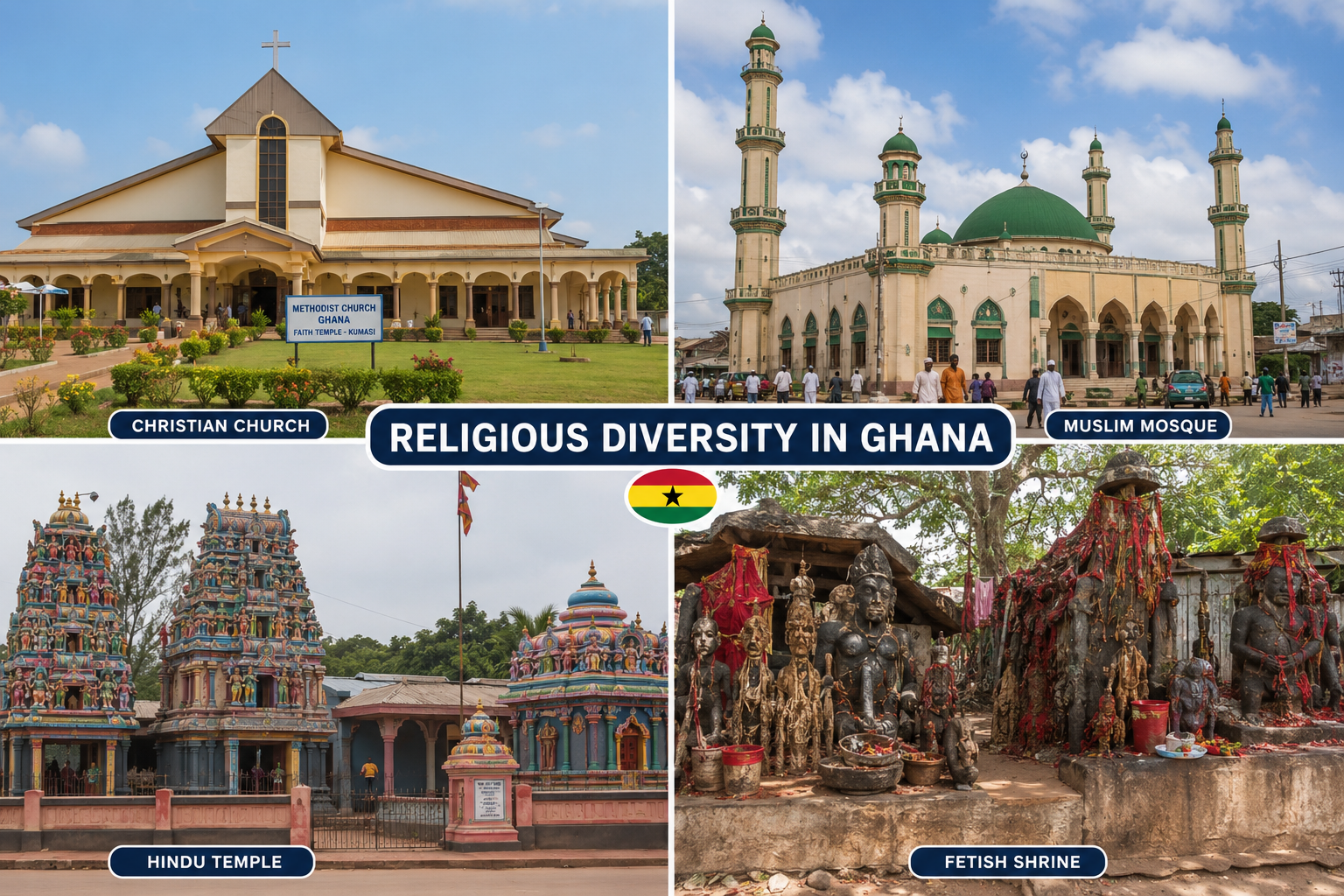
This raises an intriguing question. If Ghana's difficulties are spiritual in nature, why have decades of intense religious activity not produced the desired transformation? The country's landscape is dotted with thousands of churches and mosques. All-night prayer services are commonplace. Every evening, countless citizens spend hours in religious meetings, prayer vigils, and worship services, often from dusk until the early hours of the morning.
Ghanaians have prayed fervently for economic prosperity. They have prayed for a stable currency. They have prayed for an end to corruption, illegal mining, unemployment, and power shortages. National prayer campaigns have been organized to seek divine intervention during times of crisis.
When Prayer Does Not Seem Enough
Yet many of the nation's most pressing problems remain unresolved.
The cedi continues to experience periodic instability. Illegal mining, popularly known as galamsey, continues to devastate rivers and forests. Unemployment remains a major concern. Electricity shortages periodically resurface. During the COVID-19 pandemic, national prayer gatherings were organized across the country, yet the virus continued to spread, just as it did in many other deeply religious nations.
These realities raise uncomfortable but important questions. Is Ghana's challenge truly spiritual? If so, have we misunderstood the nature of the spiritual problem? After decades of fervent prayer, countless churches and mosques, and extraordinary religious devotion, is it possible that Ghanaians have been seeking solutions from the wrong spiritual source?
Beyond Prayer: The Human Factor
Or are the country's difficulties rooted less in the absence of prayer and more in failures of leadership, governance, accountability, discipline, planning, and collective responsibility?
Perhaps the more fundamental question is this: Can a nation pray its way to prosperity while neglecting hard work, competence, integrity, and sound management of its resources?
Religious faith can inspire hope, resilience, and moral behavior. However, faith alone cannot build roads, create jobs, manage public finances, improve schools, or protect rivers from environmental destruction. Those tasks require deliberate action, effective institutions, and responsible leadership.
A Question Worth Asking
As Ghana continues its search for solutions, it may be worthwhile to reflect on whether the nation's challenges are primarily spiritual, or whether they are, in large measure, the result of human choices and human failures.
The answer to that question may determine the country's future more than any prayer meeting ever could.