Introduction
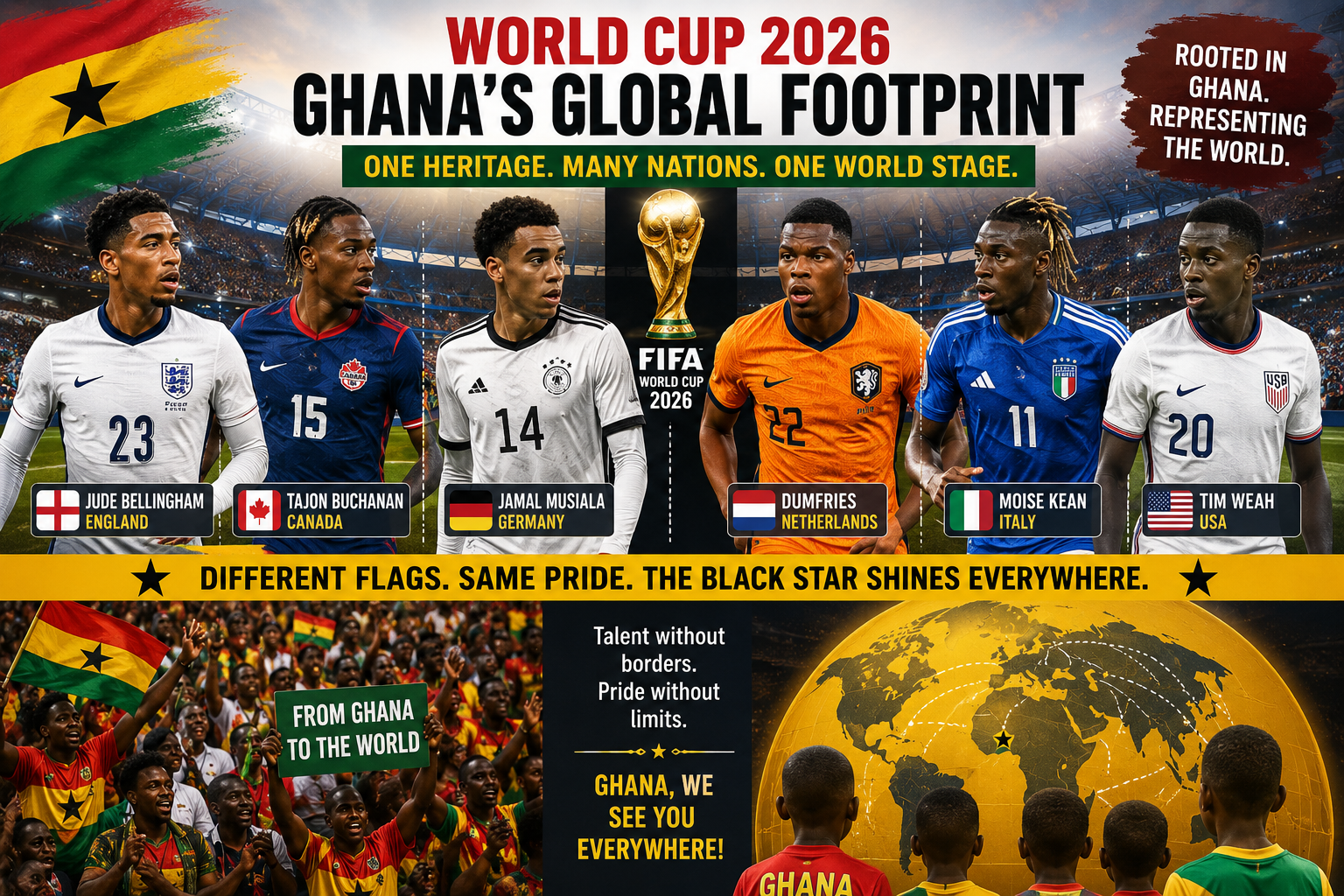
The influence of Ghana on world football extends far beyond the Black Stars. At the 2026 FIFA World Cup, players of Ghanaian heritage can be found representing several nations across Europe, Asia, and the Americas, highlighting the global reach of the Ghanaian diaspora.
Ghanaian Roots, Global Reach
One notable example is John Yeboah of Ecuador. Born in Germany to a Ghanaian father and an Ecuadorian mother, Yeboah has become an important member of Ecuador's national team. Another is Zion Suzuki, Japan's first-choice goalkeeper. Born in the United States to a Ghanaian father and a Japanese mother, Suzuki chose to represent Japan and has attracted international attention with his performances at the World Cup.
These players exemplify how people of Ghanaian origin continue to make significant contributions to football far beyond the borders of Ghana.
Ghanaian Heritage Across the Tournament
Several other World Cup participants also trace their roots to Ghana:
Zion Suzuki (Japan) – Born in the United States to a Ghanaian father and Japanese mother. John Yeboah (Ecuador) – Born in Germany to a Ghanaian father and an Ecuadorian mother. Brian Brobbey (Netherlands) – The Dutch striker is of Ghanaian descent and chose to represent the Netherlands. Memphis Depay (Netherlands) – One of the Netherlands' most accomplished players, whose father is Ghanaian. Jeremy Doku (Belgium) – The dynamic Belgian winger was born to Ghanaian parents. Kobbie Mainoo (England) – The talented English midfielder is the son of Ghanaian parents. Kevin Danso (Austria) – Born in Austria to Ghanaian parents and a regular member of the Austrian national team. Mohammed Muntari (Qatar) – Born in Kumasi, Ghana, before relocating to Qatar and becoming a Qatari international. More Than the Black Stars
The presence of these players underscores the far-reaching impact of Ghana and its diaspora on the global game. Some were born in Ghana and later settled abroad, while others were born overseas to Ghanaian parents. Together, they reflect the worldwide dispersion of Ghanaians and their enduring contributions to international football.
When the World Cup is played, Ghana is represented by more than the Black Stars alone. Through players wearing the colors of many different nations, Ghana's influence can be seen throughout the tournament. In that sense, Ghana is not only in Ghana—it is everywhere.