Introduction
The Akan have a wise saying: "If you plant plantain, you will harvest plantain; if you plant cassava, you will harvest cassava; and if you plant pineapples, you will harvest pineapples." The proverb reminds us that outcomes are determined by the seeds we sow. Good seeds produce good harvests, while poor seeds yield disappointing results.
This wisdom applies not only to farming but also to politics and governance. The quality of leadership a nation enjoys is often a reflection of the leaders its people choose. If citizens elect corrupt leaders, they should not be surprised when corruption flourishes. If they select weak leaders, they will likely receive weak governance. If they entrust power to selfish individuals, those individuals will often use public office to advance personal interests rather than the common good.
The Leadership Challenge Facing Africa
Across Africa, the quality of leadership remains one of the continent's most pressing challenges. Since independence, many African nations have experienced cycles of poor governance, military coups, corruption scandals, economic mismanagement, and political instability. While external factors such as colonialism, neo-colonialism, unfair trade relations, and foreign interference have contributed to Africa's difficulties, Africans must also acknowledge that leadership matters. No nation can make meaningful progress when it repeatedly places its destiny in the hands of incompetent, corrupt, or visionless leaders.
The time has come for Africans to become more deliberate and discerning in selecting their leaders. Elections should not be popularity contests. They should not be based on ethnic loyalties, regional affiliations, religious identities, gifts of money, bags of rice, or empty campaign promises. Elections should be opportunities to identify individuals with vision, integrity, competence, and a genuine commitment to national development.
Why Progressive Leadership Matters
Africa needs progressive leaders—leaders who are forward-looking, patriotic, disciplined, and committed to transforming their societies. Progressive leadership is not merely about making speeches or winning elections. It is about creating conditions that improve the lives of ordinary people. It is about investing in education, healthcare, infrastructure, agriculture, science, and technology. It is about fighting corruption, strengthening institutions, and ensuring that public resources are used for public benefit.
Progressive leaders recognize that national development requires long-term planning rather than short-term political calculations. They understand that the true measure of leadership is not the accumulation of personal wealth or political power but the extent to which the lives of citizens improve under their stewardship.
Lessons from Africa's Founding Generation
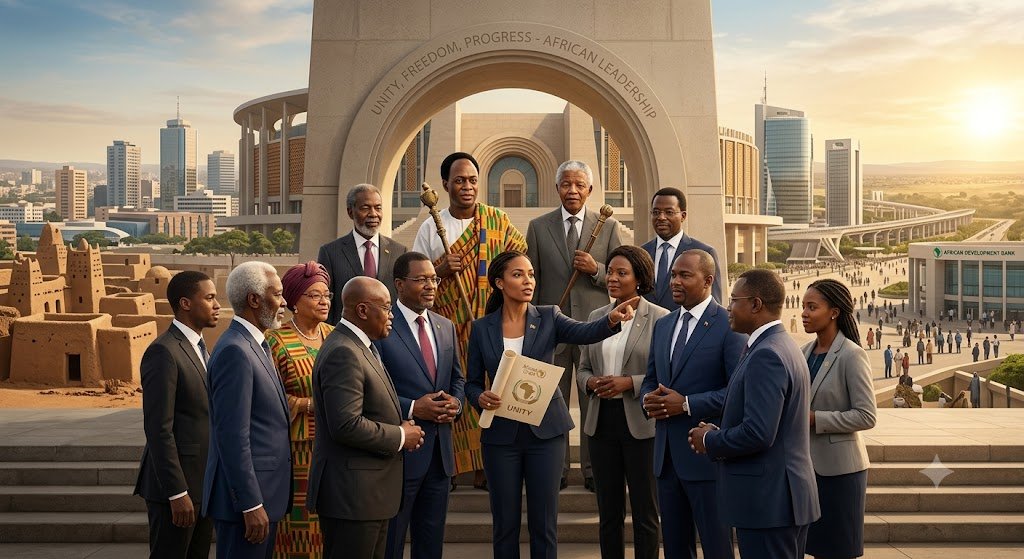
History offers examples of African leaders who sought to pursue ambitious visions for national and continental development. Among them was Kwame Nkrumah, whose dream extended beyond the borders of Ghana to encompass the political and economic unity of Africa. Nkrumah believed that Africa could only achieve genuine independence through collective action, industrialization, and self-reliance.
Similarly, Ahmed Sékou Touré championed African dignity and sovereignty, refusing to allow his country to remain dependent on former colonial powers. Modibo Keïta pursued policies aimed at economic independence and national development. Patrice Lumumba became a symbol of African nationalism and resistance to foreign domination. Julius Nyerere emphasized education, national unity, and self-reliance, while Kenneth Kaunda advocated humanism and social development.
These leaders were not perfect. Like all political figures, they made mistakes and faced criticisms. Some of their policies produced unintended consequences, and some struggled with economic challenges. Nevertheless, they possessed something that is often lacking among many contemporary leaders: a clear vision for national transformation and a deep commitment to the idea that Africa could chart its own path to development.
Even the controversial legacy of Robert Mugabe reminds us that African leadership should be evaluated in a balanced manner. While his later years were marked by serious political and economic difficulties, many Africans continue to admire his unwavering opposition to colonial domination and his insistence on African ownership of African resources.
Africa's Abundance Amid Persistent Poverty
Today, many African countries possess immense wealth in minerals, oil, gas, fertile land, forests, and human talent. The continent is richly endowed with natural and human resources. Yet millions of Africans continue to struggle with poverty, unemployment, inadequate healthcare, poor educational facilities, and unreliable infrastructure.
The problem is not simply a lack of resources. It is often a lack of visionary leadership and accountable governance. Too often, public resources that could be used to build schools, hospitals, roads, and industries are diverted through corruption, mismanagement, or waste. Too often, leaders prioritize political survival over national development.
The Responsibility of the African Voter
The future of Africa will depend significantly on the choices Africans make at the ballot box. Citizens must demand more from those who seek public office. They must ask difficult questions. What is the candidate's record of service? Does the candidate possess integrity? Does the candidate have a realistic development agenda? Is the candidate committed to national unity rather than division? Does the candidate place country above self?
Democracy can only thrive when citizens remain vigilant and informed. Voters must resist attempts to buy their votes or manipulate their emotions. They must evaluate candidates based on character, competence, and commitment to public service rather than ethnicity, religion, or political rhetoric.
The Role of Africa's Youth
Young Africans, who constitute the majority of the continent's population, have a particularly important role to play. They must refuse to be manipulated by politicians who exploit ethnic, religious, or regional divisions. They must become active participants in the democratic process and insist upon transparency, accountability, and competence.
The youth are not merely the leaders of tomorrow; they are stakeholders in Africa's present. Through civic engagement, community activism, informed voting, and public accountability, they can become a powerful force for positive political change across the continent.
The Harvest We Choose
Africa's destiny cannot be left to chance. The continent stands at a critical crossroads. The choices made today will shape the lives of future generations. If Africans continue to elect leaders who are corrupt, self-serving, and incompetent, they should expect more of the same disappointing results. However, if they choose leaders who are visionary, progressive, patriotic, and accountable, they can help usher in an era of prosperity, stability, and development.
The Akan proverb remains as relevant today as ever. If we plant plantain, we will harvest plantain. If we plant cassava, we will harvest cassava. Likewise, if Africans plant the seeds of progressive leadership, they will harvest the fruits of progressive governance. The time has come to choose wisely.
The added subheadings break the essay into logical sections and make it more suitable for newspaper publication, where readability and clear thematic transitions are important.