Witchcraft Prosecutions and Judicial Punishment in Early Modern Europe
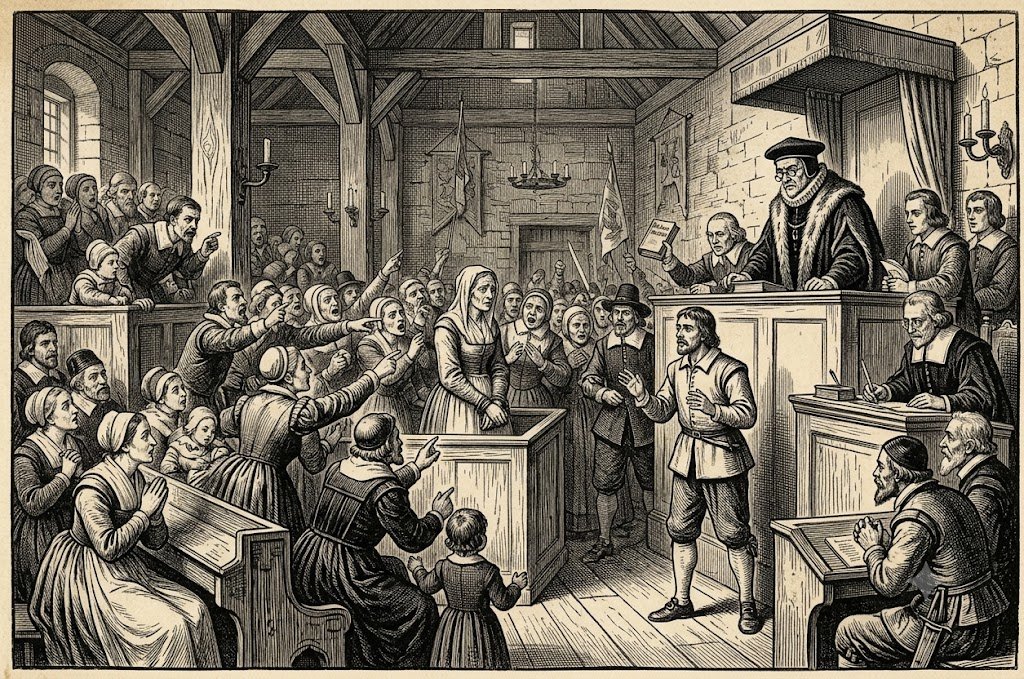
During the Early Modern period, accusations of witchcraft in Europe frequently culminated in formal judicial proceedings. These cases were adjudicated through state courts, and executions for witchcraft were therefore state-sanctioned punishments carried out after legal trials. Historical estimates suggest that between 40,000 and 60,000 individuals were executed across Europe for witchcraft-related offenses between the fifteenth and eighteenth centuries. Notably, European legal systems did not only target alleged witches themselves. Individuals who sought the services of witches or magical practitioners could also be prosecuted. Consulting someone believed to possess supernatural powers for healing, divination, or magical assistance could therefore expose a person to criminal liability.
Witchcraft, Magic, and Sorcery in European Thought
In the writings of European demonologists and witchcraft scholars, the concept of witchcraft was often closely intertwined with magic and sorcery. These terms were frequently used interchangeably, reflecting a conceptual framework in which diverse forms of supernatural manipulation were subsumed under the broader category of witchcraft. Within this intellectual tradition, Europeans commonly distinguished between white magic and black magic. White magic referred to magical practices intended to produce beneficial outcomes, while black magic referred to practices aimed at causing harm.
Sources and Transmission of Magical Power
European traditions also recognized multiple ways through which individuals could acquire magical powers. Some were believed to obtain such powers through deliberate efforts to establish contact with spiritual entities, while others inherited them from individuals who already possessed such abilities. In certain cases, magical knowledge could be transmitted through instruction from an experienced practitioner, often an elderly person who taught a younger apprentice the techniques of magical practice. Magical powers were also believed to be transferable through special objects or hereditary transmission from parents to children.
White Magic and Its Beneficent Functions
The powers associated with magic were considered morally ambivalent, capable of being used either for beneficent or harmful purposes. Acts of white magic were typically understood as attempts to bring about beneficial outcomes for oneself or others. Such practices included healing illnesses, engaging in prophecy or divination, locating lost objects, preparing love potions, and performing rituals intended to counter harmful magical influences. White magic might also be used to improve the fortunes of fishermen by increasing their catch, to ensure agricultural prosperity for farmers, to enhance women’s fertility, or to prevent storms and accidents. In many cases, it was invoked to address mysterious misfortunes or unexplained illnesses. Although certain practices—such as the preparation of love potions—might be morally ambiguous, the overall intention of white magic was generally perceived as beneficent, aimed at producing positive outcomes for individuals and communities.
Black Magic and the Origins of Witchcraft Accusations
Black magic, by contrast, was associated with the deliberate use of supernatural power to cause harm. It was commonly believed to produce illness, death, destructive storms, and other catastrophes affecting individuals or entire communities. When such misfortunes occurred, suspicion often fell upon individuals believed to possess malevolent magical powers. As a result, accusations of witchcraft frequently arose in the aftermath of perceived acts of black magic, sometimes culminating in prosecution and execution.
Comparing European and Ghanaian Witchcraft Beliefs
When these European beliefs are viewed comparatively alongside Ghanaian witchcraft traditions, both similarities and important differences become apparent. In Ghanaian societies, particularly among Akan communities, witchcraft is also understood as a form of supernatural power that can be used either for beneficial or harmful purposes. Among the Akan, a distinction is often made between beneficent witchcraft (bayi pa or bayi fitaa) and malevolent witchcraft (bayi bone). Beneficent witchcraft is believed to be used for positive purposes, such as helping family members succeed in life, ensuring prosperity, or providing protection from spiritual harm. Malevolent witchcraft, on the other hand, is believed to cause illness, misfortune, infertility, or death.
Transmission of Witchcraft Power: Similarities Across Cultures
Another important point of comparison concerns the transmission of witchcraft power. In both European and Ghanaian belief systems, witchcraft is often thought to be transmitted hereditarily within families. Similarly, in both contexts, individuals may acquire such powers through instruction from experienced practitioners or through contact with spiritual forces. However, there are also significant differences. Whereas Early Modern Europe often treated witchcraft as a criminal offense punishable by the state, in contemporary Ghana, accusations of witchcraft are rarely handled through formal judicial processes. Instead, such accusations are more commonly addressed through traditional, spiritual, or communal mechanisms, including consultations with diviners, priests, or other religious specialists.
Christian Demonology and Indigenous Cosmologies
European witchcraft persecutions were strongly influenced by Christian demonology, which frequently portrayed witches as individuals who had entered into pacts with the Devil. By contrast, Ghanaian witchcraft beliefs are generally embedded within indigenous cosmologies that emphasize spiritual power and mystical capacities inherent in certain individuals, rather than formal alliances with a diabolical figure.
Witchcraft as a Framework for Explaining Misfortune
Despite these differences, both European and Ghanaian traditions share a common underlying concern with explaining misfortune, regulating social relations, and identifying sources of supernatural harm. In both cultural settings, accusations of witchcraft have historically served as mechanisms through which communities interpret unexplained suffering, enforce moral norms, and negotiate tensions within social relationships. In this respect, witchcraft beliefs function not merely as explanations for adversity but also as important cultural institutions through which societies seek to maintain social order, assign responsibility, and make sense of uncertainty in everyday life.
Top of Form
Bottom of Form