Introduction
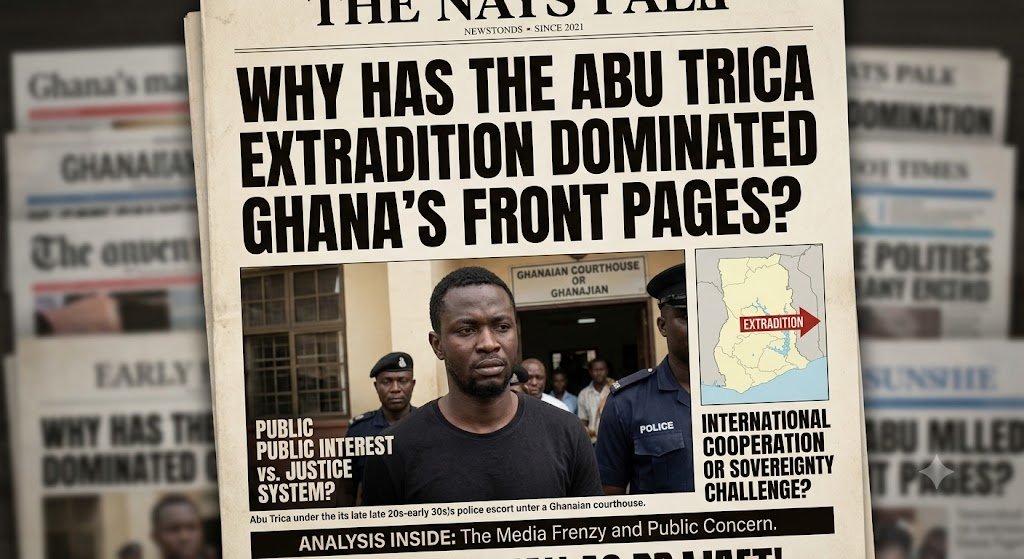
The extradition of Abu Trica from Ghana to the United States has generated enormous media attention in Ghana. Hardly a newspaper, radio station, television network, or online news platform has ignored the story.
What is particularly striking is that the coverage has not been confined to the inside pages. The story has repeatedly appeared on the front pages of newspapers across the country. In journalism, front-page space is highly prized and is generally reserved for stories considered to be of exceptional public interest or national importance.
Consider some of the recent headlines:
Daily Analyst: "Abu Trica Extradited" The New Publisher: "Lawyer Shocked Over Abu Trica Extradition" Republic Press: "Ghana Hands Abu Trica to U.S." Daily Banner: "Abu Trica Extradited to U.S. Over $8m Romance Scam" One could cite many more examples. The story has received extensive and sustained coverage across Ghana's print, broadcast, and electronic media.
Yet the prominence given to the story raises an interesting question.
Why has the Abu Trica extradition attracted such extraordinary media attention in Ghana?
What makes the story so important that it merits front-page treatment by so many newspapers?
Equally intriguing is another question.
The extradition was carried out at the request of U.S. authorities, and Abu Trica now faces legal proceedings in the United States. Yet despite following American news outlets, I have not encountered a single major newspaper, television network, or online news source that has given the story significant attention.
Why is that?
Why has a story that appears to be front-page news throughout Ghana generated little or no noticeable media interest in the international press?
What accounts for this apparent disparity?
Is it a reflection of differing media priorities? Different perceptions of newsworthiness? Different public interests? Or does it reveal something deeper about the concerns and preoccupations of audiences in different countries?
These are questions worth pondering.
The purpose of this article is not to provide answers. Rather, it is to draw attention to a fascinating contrast in media coverage and to invite readers to reflect on what it might mean.
Sometimes the questions themselves are more revealing than the answers.