Rastafarianism, often simply called the Rasta movement, originated in the Caribbean island of Jamaica in the 1930s. It developed among people of African descent who were seeking spiritual identity, dignity, and reconnection with Africa after centuries of slavery and colonial domination.
The movement drew inspiration from the coronation of Haile Selassie I in 1930 as emperor of Ethiopia. Many Rastafarians regard Selassie as a divine figure or as a symbol of African redemption. Ethiopia occupies a sacred place in Rastafarian thought and represents the spiritual homeland of Africans scattered across the globe.
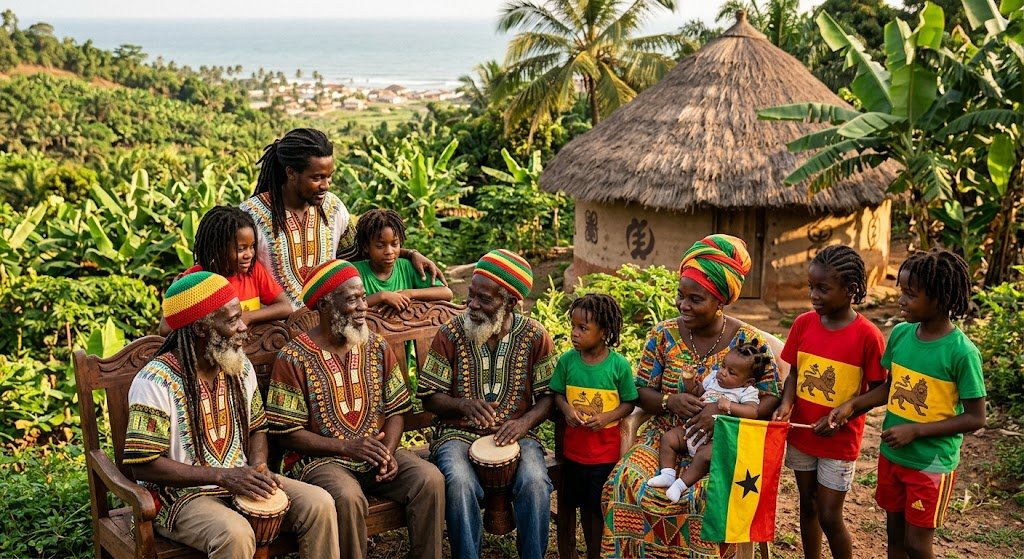
Today, Rastafarian communities exist in many parts of the world, including Ghana.
The Emergence of Rastafarianism in Ghana
Rastafarian ideas began to circulate in Ghana during the 1960s, a period marked by rising Pan-African consciousness. The newly independent nation under Kwame Nkrumah became a beacon for Africans in the diaspora seeking reconnection with the continent.
During this era, cultural exchanges between Ghana and the Caribbean intensified. Musicians, activists, and intellectuals carried Rastafarian ideas across the Atlantic. Reggae music, in particular, played a major role in introducing the philosophy to Ghanaian audiences.
By the 1970s and 1980s, small Rastafarian communities had begun to emerge in cities such as Accra and Kumasi. Young people drawn to reggae music, African consciousness, and alternative spirituality began adopting Rastafarian beliefs and cultural expressions.
The international popularity of reggae music—especially through the influence of Bob Marley—further expanded the movement’s appeal. Marley’s visits to Africa and his Pan-African message resonated strongly with Ghanaian youth.
Over time, Rastafarian communities also appeared in coastal areas such as Cape Coast and Takoradi, where tourism and cultural exchange brought Ghanaians into contact with members of the African diaspora.
Beliefs and Cultural Practices
Rastafarianism is not organized like a conventional religion with a single church or central authority. Rather, it is a spiritual movement built around shared beliefs and cultural practices.
Many Rastafarians wear their hair in dreadlocks, a symbolic rejection of Western cultural norms and a sign of spiritual commitment. The hairstyle is also inspired by biblical passages referring to the Nazarites.
Rastafarians often follow an Ital diet, emphasizing natural foods and avoiding heavily processed items. Many also promote vegetarianism and holistic living.
Music is central to Rastafarian culture. Reggae music, with its themes of liberation, resistance, and African pride, has become one of the movement’s most powerful vehicles of expression worldwide.
Controversies and Social Challenges
Despite its cultural influence, the Rastafarian movement in Ghana has sometimes faced misunderstanding and discrimination.
One recurring controversy concerns dreadlocks in schools. Some educational institutions have barred students with dreadlocks from attending classes, arguing that the hairstyle violates school regulations.
A widely discussed case occurred in 2021 when two Rastafarian students were initially denied admission to Achimota School because they refused to cut their dreadlocks. The decision sparked national debate about religious freedom and cultural rights.
The dispute eventually reached the courts, and the Ghana High Court ruled that the students should be allowed to attend school while maintaining their dreadlocks. The case became a landmark moment in discussions about religious liberty and cultural expression in Ghana.
Another contentious issue involves the use of cannabis, which some Rastafarians consider a sacred herb used in meditation and spiritual reflection. However, cannabis remains heavily regulated in Ghana under the country’s narcotics laws.
In 2020, Parliament of Ghana passed the Narcotics Control Commission Act, which decriminalized the cultivation of industrial hemp under license but maintained restrictions on recreational marijuana use. Rastafarian groups have argued that their religious use of cannabis should receive legal protection.
Rastafarians and Pan-African Identity
Despite these challenges, Rastafarians continue to play a visible role in Ghana’s cultural landscape. Their presence is evident in reggae music festivals, artistic communities, and Pan-African gatherings.
For many Rastafarians—both Ghanaians and members of the African diaspora—Ghana represents more than just a place of residence. It symbolizes a return to the ancestral homeland and a living expression of Pan-African unity.
As cultural connections between Africa and the Caribbean continue to grow, the Rastafarian movement remains a powerful reminder that the bonds linking Africa and its global diaspora are enduring and profound.